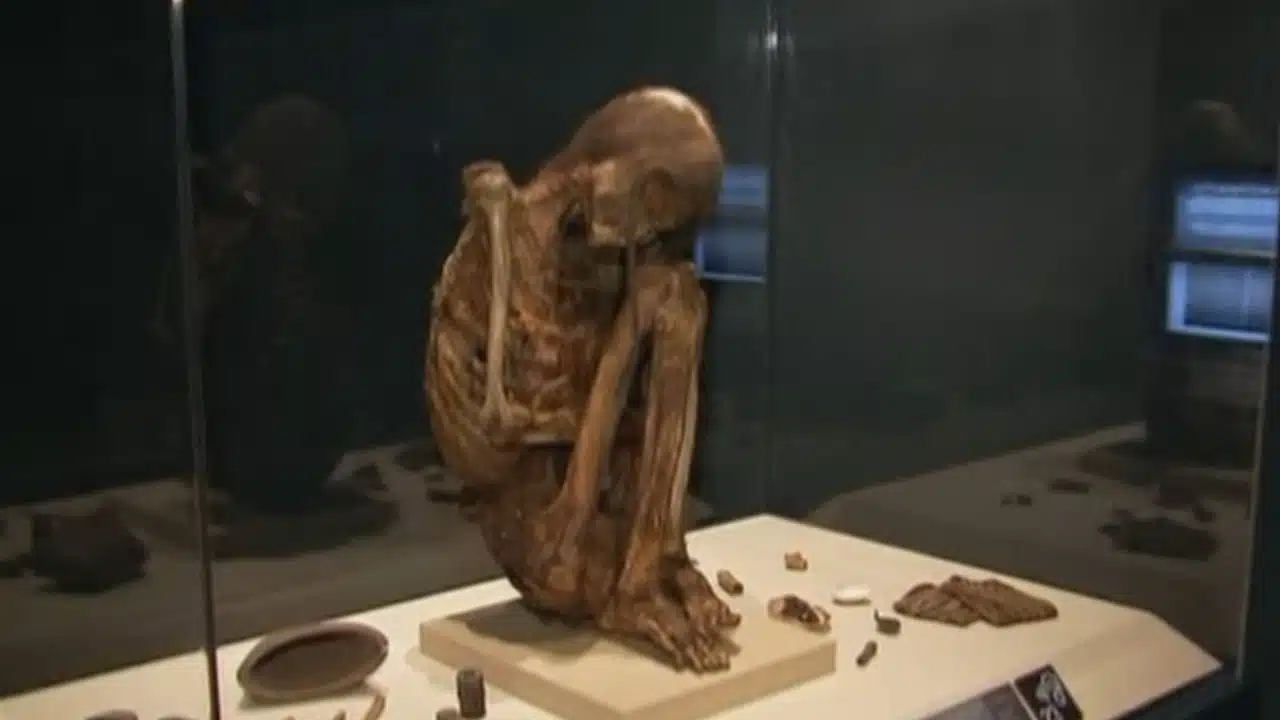
A groundbreaking scientific study suggests that some of the world’s earliest mummification practices may not have come from Egypt or South America, as long believed. Instead, the oldest mummies may have been created in Asia over 10,000 years ago through a process of smoke-drying the dead.
The research, published in the Proceedings of the National Academy of Sciences (PNAS), provides evidence that ancient hunter-gatherer societies in China and Southeast Asia may have preserved their deceased through low-heat exposure and smoke, thousands of years before the Egyptians perfected embalming or the Chinchorro people of South America developed their famous mummification techniques.
Ancient Discoveries in Unexpected Places
The study focuses on skeletons uncovered at more than 50 archaeological sites across southern China, Vietnam, Laos, Thailand, Malaysia, Indonesia, and the Philippines. These burial sites yielded bodies in unusual positions, often tightly crouched or hyper-flexed.
Archaeologists were initially puzzled by these contorted skeletons. In some cases, bones showed discoloration and scorch-like marks, but not in patterns consistent with cremation. Cremated bones typically show extreme burning, fragmentation, and high-temperature damage. Instead, these remains suggested controlled, low-temperature heating — a process more akin to drying with smoke than burning.
The oldest samples date back more than 10,000 years, with one specimen from northern Vietnam potentially as old as 14,000 years, making these possibly the earliest known examples of deliberate body preservation anywhere in the world.
Testing the Smoke-Drying Hypothesis
To test their theory, researchers compared bone samples from these sites with control samples taken from ancient Japanese burials, which showed no signs of heat exposure.
Advanced analysis, including X-ray diffraction and infrared spectroscopy, revealed that many of the Southeast Asian bones had undergone low-heat treatment. The microstructure of the bones and their chemical signatures suggested sustained exposure to smoke and moderate heat, not the extreme temperatures of cremation.
The intact state of the skeletons was another clue. If the intent had been cremation, bones would likely have been cracked, brittle, or reduced to ash. Instead, these bodies seemed to have been deliberately preserved — supporting the idea that smoke-drying was intentional and not a side-effect of burial conditions.
Why Smoke-Drying Made Sense in Humid Climates
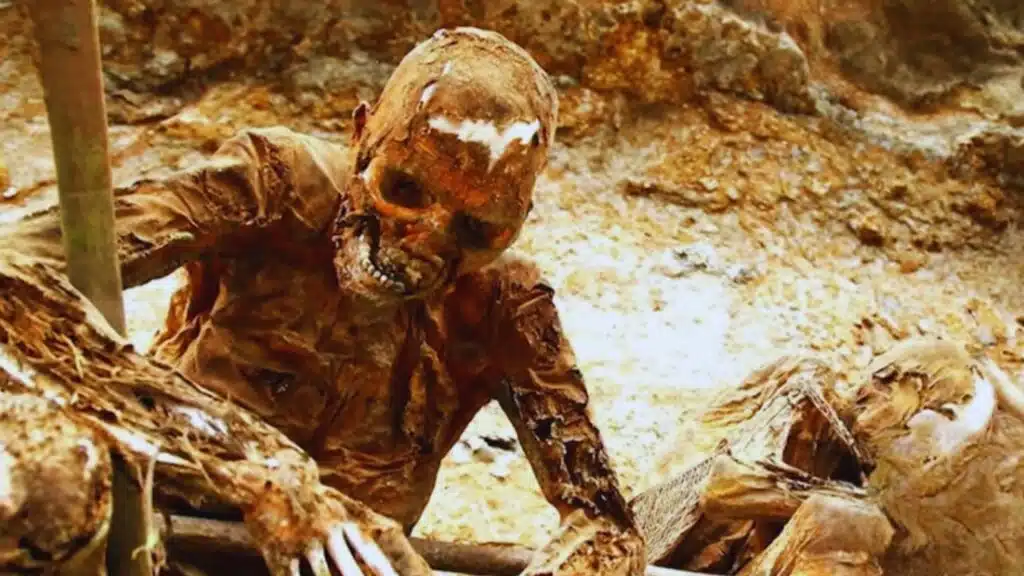
Unlike the Egyptian deserts or the Atacama coast of Chile, where hot, dry air naturally preserved bodies, Southeast Asia is hot and humid. In such climates, decay is rapid, and preservation of bodies requires active intervention.
Smoke-drying offered a solution. By binding the body tightly and suspending it over a low fire for weeks or months, communities could effectively remove moisture and deter insects and bacteria, slowing the decomposition process.
This technique also fits with ethnographic records from Papua, Indonesia and parts of Australia, where some groups practiced smoke-drying as recently as the 20th century. These traditions suggest cultural continuity across millennia.
Cultural and Spiritual Dimensions
Beyond practical preservation, smoke-drying likely carried deep cultural meaning.
- Connection with the Dead: The process allowed families to keep the deceased nearby for extended periods. Relatives could continue to interact with the body, treat it as a presence in daily life, and maintain emotional and spiritual bonds.
- Spiritual Beliefs: In some Indonesian traditions, smoke-dried bodies were believed to allow the soul to roam during the day and return to the body at night. This ensured that the dead remained part of the community, rather than leaving entirely.
- Ritual Significance: Binding, crouched positions, and long smoke-drying ceremonies would have created strong ritual and social practices around death, reinforcing cultural identity and collective memory.
Dr. Hsiao-chun Hung, senior research fellow at the Australian National University and co-author of the study, explained that this discovery highlights “the timeless wish that our loved ones might never leave us, but remain by our side forever.”
Comparison with Other Ancient Mummification Traditions
The new findings reshape the global history of mummification.
- Egyptian Mummies: The best-known mummies, dating back about 4,500 years, were embalmed with resins, oils, and bandages, often for religious reasons tied to the afterlife.
- Chinchorro Mummies of Chile: Around 7,000 years ago, the Chinchorro people deliberately preserved bodies using plants, clay, and natural drying in the Atacama Desert.
- Asian Smoke-Dried Mummies: These new findings push the timeline back further, showing that intentional body preservation may have been practiced in Asia thousands of years earlier, even among hunter-gatherer communities.
This discovery also suggests that the idea of mummification was not unique to Egypt or South America, but rather a broader human response to questions of mortality, memory, and the afterlife.
Scientific Cautions and Debates
While the findings are compelling, researchers acknowledge some uncertainties:
- Soft Tissue Absence: No skin or organs remain, making it hard to prove that these were mummies in the strict sense. It’s possible soft tissue once existed but decayed after thousands of years.
- Heat Levels: Some bones showed evidence of exposure to temperatures above 500°C. This raises questions about whether smoke-drying was always controlled or whether some bodies were partly burned.
- Cultural Variation: It remains unclear whether all these sites reflect a single widespread tradition or if multiple groups developed similar practices independently.
Despite these open questions, the evidence strongly indicates deliberate preservation practices that predate other known mummies by thousands of years.
Why This Matters for Human History
The discovery of smoke-dried mummies in Asia reshapes how historians and archaeologists understand early societies.
- It shows that even hunter-gatherer groups practiced complex mortuary rituals, demonstrating care and planning for the dead.
- It proves that mummification is not tied to “advanced states” like Egypt, but could emerge independently in small, mobile communities.
- It highlights the universality of human grief and remembrance — across cultures and eras, people sought ways to keep loved ones present even after death.
As researchers continue analyzing remains across Asia, more discoveries may further push back the timeline of mummification and expand our understanding of how ancient people connected life, death, and the sacred.
The Information is Collected from CBS News and NDTV.