You feel swamped by buzz around non-fungible tokens, not sure where to start. You want real use cases, not hype. NFT Trends That Will Dominate In 2025 will cut through the fog.
Analysts expect NFT sales to hit 231.98 billion dollars by 2030. We list 10 top trends and give clear steps on gaming NFTs, tokenized real estate, DeFi tools, and NFT marketplaces.
You will see how to boost your digital identity and ownership with smart contracts, digital collectibles, and blockchain technology. Keep reading.
Key Takeaways
- Analysts expect NFT sales to reach $231.98 billion by 2030. They say gaming NFTs, tokenized real estate, and DeFi tools will drive growth.
- Platforms like Propy and Roofstock let users buy condo slices as NFTs. Smart contracts on blockchain track each title.
- Nike logged $185 million in Nikeland sales on Roblox. Adidas raised $175 million via ALTS drops on Ethereum in brand-driven NFT marketing.
- Ethereum moved to proof-of-stake in 2022. It cut NFT energy use by 99.9% and spurred greener chains like Flow and Algorand.
- The U.S. SEC opened NFT probes in 2023. New laws will cover fractional real estate and gaming NFTs to curb fraud.
Utility-Driven NFTs
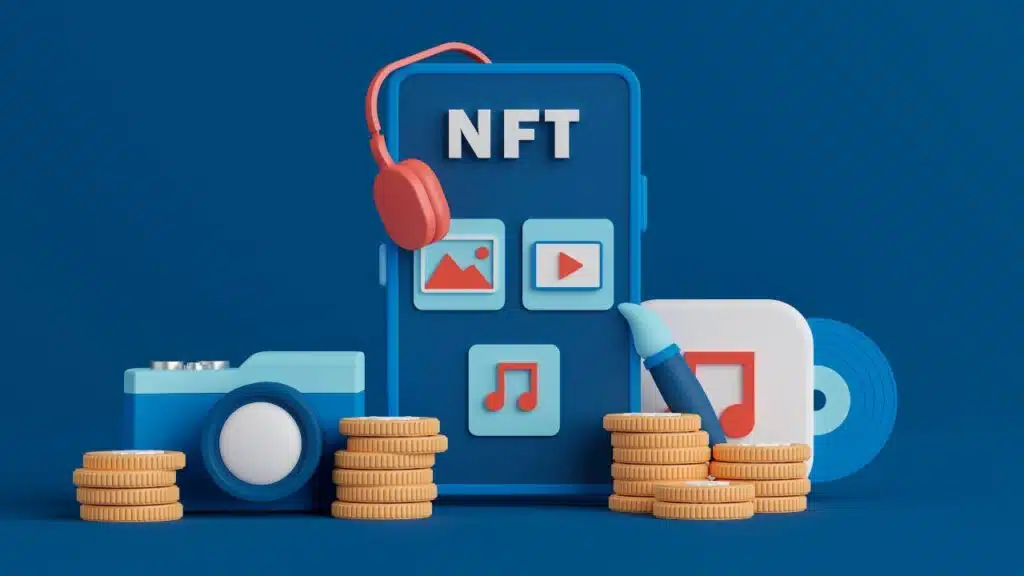
NFTs fuel event ticketing on blockchains, cutting out scalpers and stopping fake passes. A concert pass tied to a wallet proves digital ownership. Smart contracts lock each transfer, so fraud drops.
Music projects mint tokens that grant backstage access. Some dynamic NFTs shift art after each show.
Real estate NFTs let investors claim fractional ownership in a condo. NFT marketplaces host those tokenized assets on blockchain networks. Each title lives on a ledger, boosting transparency.
Users stake NFTs as collateral in decentralized finance loans. Gamers hold gaming NFTs in a popular game and earn tokens. Intellectual property NFTs guard music, art, and patents.
Real-World Asset Tokenization
Physical assets jump onto blockchains, letting investors share slices of property through fractional ownership tokens. Propy and Roofstock handle most tokenized real estate deals today, moving deeds with smart contracts.
Luxury watches, artworks, and real estate NFTs now turn into digital collectibles for trading. This shift uses blockchain technology to guarantee clear titles, cut fees, and speed up trades.
The RWA NFT market expands fast in 2025, unlocking fresh chances in digital assets. Crypto enthusiasts tap into tokenized real estate to diversify portfolios and dodge illiquid markets.
Owning a slice of a mansion feels like grabbing a pizza piece instead of paying for the whole pie. Smart contracts handle rental yields, letting owners collect earnings without a middleman.
Tokenized assets now appear on leading NFT marketplaces alongside art and gaming NFTs.
AI-Generated NFT Collections
Artists feed GAN models snippets of art and code. Generative adversarial networks craft new pixel heroes. Midjourney, Stable Diffusion, DALL-E spin ideas into digital collectibles.
AI batches mint hundreds of avatars on Ethereum via smart contracts. Collectors track shared digital ownership on blockchain ledgers.
Platforms like Coinsclone provide NFT marketplace development services. They include smart contracts for minting, fractional ownership features. Companies add AI-assisted valuation tools that track trends in NFT market.
Developers use this data to power dynamic NFTs with live pricing.
Metaverse Integration and Virtual Ownership
Digital collectibles power a sustainable digital economy in Web3 gaming and metaverse environments. Decentraland uses non-fungible tokens to let players buy, sell, and own virtual real estate.
Axie Infinity lets gamers earn crypto through play, rewarding effort with tokenized assets. Users feel real ownership as they trade in-game items on blockchain technology.
The metaverse relies on NFTs for virtual ownership and cross-platform moves. The Sandbox offers interoperable skins, land parcels, and builds that travel between metaverse platforms.
Smart contracts in nft marketplace development keep trades secure, fast, and public. Gamers share digital identities, wear virtual fashion, and stake NFTs for rewards.
Gaming NFTs and In-Game Economies
Game studios use blockchain technology to mint non-fungible tokens as digital collectibles. Players gain real ownership of in-game assets like skins, land, and weapons. Platforms like Decentraland, Axie Infinity, and The Sandbox let users trade items on the nft market.
Smart contracts lock each transfer. Users can stake tokens. They can use gaming nfts as collateral in decentralized finance loans.
This model supports DeFi products. A gamer can stake a rare sword and borrow stablecoins against it. The practice drives value for developers and players. Ethereum code handles each process.
Companies tie tokens to secure digital identities.
Corporate Adoption of NFTs for Branding and Marketing
Big brands tap non-fungible tokens to grow digital ownership and loyalty. Nike built Nikeland on Roblox and logged $185 million in NFT sales. Adidas moved $175 million in its ALTS drops on Ethereum smart contracts.
Meta, Google, Gucci, and Louis Vuitton rejoined the NFT market with event ticketing and digital fashion drops. Companies track authenticity with blockchain technology and turn digital collectibles into marketing assets.
Social Media Platforms Incorporating NFT Features
Instagram, Twitter, and TikTok add NFT galleries. Users link wallets like MetaMask to show digital collectibles. Platforms use blockchain technology and smart contracts on Ethereum, Polygon, Solana, and Flow.
Some let fans send NFTs in direct chats or set utility nfts as stickers. The service had 2 billion monthly active users in 2022 and opened NFT previews in August 2022. This step boosts nft marketplace development inside the app.
Twitter rolled out NFT avatars for Blue subscribers in January 2022. People showcase pixel art as profile pics and prove digital ownership via smart contracts. TikTok tests NFT stickers and filters with in-feed trading.
These moves boost gaming nfts, event ticketing, and digital identity on social feeds. Fans trade digital assets without ever leaving the main feed.
Sustainable and Energy-Efficient NFT Practices
Blockchains now chop power waste with Proof-of-Stake consensus. Ethereum cut energy consumption by more than 99.9% in 2022. That massive shift reshaped cryptocurrencies and digital ownership.
Creators now mint non-fungible tokens on layer-1 chains, Flow, or Algorand. Gamers swap in-game assets on a metaverse platform and hit zero lag. Smart contracts handle trades in seconds.
This trend drives greener tech in blockchain technology.
Companies fund carbon offsetting to shrink NFT footprints. A marketplace issues ERC-20 tokens tied to wind and solar farms. Fans buy special coins that pay for each ton of CO2. That step cuts emissions linked to proof-of-work mining.
Sellers clock clear energy stats on most NFT marketplaces. Traders spot real time green data on digital art deals. Such sustainable practices drive growth in nft marketplace development.
Bitcoin NFTs and the Rise of Ordinals
Bitcoin NFTs tie art to single satoshis. The Ordinals protocol marks each satoshi with data. Collectors can claim digital ownership on BTC. The trend taps blockchain technology for rare art tokens.
It moves digital assets beyond usual Ethereum tokens.
Apps now list Ordinals in top NFT marketplaces. They use inscription scripts instead of smart contracts. Artists embed images, writers post text, fans trade these digital collectibles.
This surge signals wider non fungible tokens use on Bitcoin. It shows how simple code can expand digital items.
Cross-Platform NFT Interoperability
Cross-platform NFT interoperability moves digital assets across chains. Bridges act like highways, sending collectibles from one network to another. Marketplaces add multi-chain support, fiat and crypto integration, and gas-free options.
This setup gives gamers and collectors more power, and sparks a wider NFT market. Smart contracts verify each step on shared digital ledgers.
Supply chain groups use blockchain verification to track each item’s path. That same method lets dynamic NFTs roam across platforms and logs. Folks use fractional ownership models to share stakes, and move those pieces on various marketplaces.
Sidechains and connectors speed up transactions, so fees stay low. Communities trade gaming NFTs, utility NFTs like event tickets, and art pieces smoothly across networks.
DeFi and NFT Merging for Financial Products
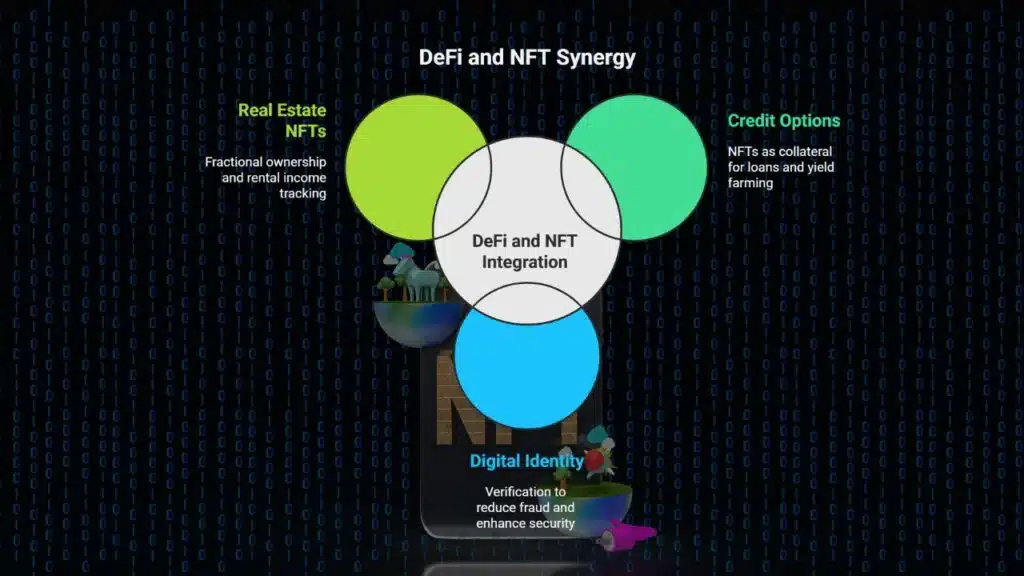
DeFi merges with NFTs to power new credit options. NFTs serve as collateral on lending protocols and yield aggregators. Protocols treat digital collectibles from Axie Infinity or NBA Top Shot as assets.
A protocol grants a loan against a Bored Ape Yacht Club token. Users stake that token in a liquidity pool and earn yield farming rewards. Smart contracts lock tokens until the borrower repays.
Platforms verify digital identity to cut fraud risk. This setup boosts digital ownership and secures flexible lending.
Real estate NFTs sell property shares on-chain. Investors gain fractional ownership of a townhome or an office block. Smart contracts govern each share and track rental income. Non-fungible tokens act as proof of digital ownership and identity.
Holders lock these tokens as collateral for new loans. Lenders issue credit against that collateral. Certain platforms let users stake fractions in yield farms for interest. A secure wallet ties each token to a single user.
Soulbound Tokens for Identity Verification
Teams issue soulbound tokens for digital identity via smart contracts on blockchain networks. These tokens lock to a user wallet in MetaMask. Institutions like schools and airlines mint them in 2022 and beyond.
Users hold a digital certificate that proves identity without exposing private data. Vitalik Buterin first described this idea on Ethereum. It sets a new standard for non-fungible tokens.
Music festivals and sports venues scan these tokens at gates. Membership programs issue them for perks. Users show their wallets to prove eligibility. Developers code them with smart contracts in seconds.
This trend uses blockchain technology for secure digital ownership. It slashes fraud and speeds up on-boarding.
Regulation and Legal Changes in the NFT Space
Regulators now treat non-fungible tokens as possible securities. The U.S. SEC opened probes on some digital art projects in 2023. Firms must meet compliance rules and run KYC reviews in nft marketplaces.
Auditors scan smart contracts on blockchain technology to spot fraudulent trades. Investors grew wary after big scams and rug pulls wiped out funds overnight. Critics blamed lack of utility and too many utility nfts for the 2022 market crash.
That steep drop showed how wild crypto prices can swing.
Lawmakers plan new rules for fractional ownership of real estate nfts and gaming nfts. They will demand stronger due diligence on project teams and strict audits on nft collateral.
Some regulators watch intellectual property nfts and event ticketing as hot spots for fraud. A clear rulebook could tame a bubble in digital collectibles. The change may push tokenized real estate into a safer era.
Developers must build with compliance from day one or face fines.
Takeaways
Big shifts will reshape digital ownership. Utility NFTs will attach perks to real products. Property tokens will carve up homes into shares. AI algorithms will churn art drops fast.
Metaverse platforms will grant land rights via smart contracts. DeFi apps will blend finance with collectibles. Identity tokens will lock profiles on shared ledgers. New rules will steer every trade.
Expect an NFT era that keeps surprising.
FAQs
1. What NFT trends will dominate the market in 2025?
Gaming NFTs will lead the pack, dynamic NFTs will shape shift, and utility-driven NFTs will add real use. We will see tokenized real estate, and event ticketing on chains. Expect more metaverse platforms, and virtual world goods.
2. How will digital identity boost NFT safety?
Smart contracts on blockchain technology tie each token to a digital identity. They log every move in NFT marketplaces, cutting hacking and fraud.
3. What makes dynamic NFTs special?
A dynamic NFT can change art or perks over time, like a game card that grows wings. It links to real data, and rewards your progress.
4. How does fractional ownership work with real estate NFTs?
It splits a property into digital assets, called tokenized real estate. You buy slices of a building, and this opens real estate to small investors.
5. Are there solutions to NFT energy use criticisms?
Critics point at greenhouse gas emissions from proof of work chains. New blockchain technologies use proof of stake, and green energy sources, to cut power use.
6. How do DeFi and NFTs come together?
You stake NFTs as collateral in decentralized finance, letting you borrow or earn yield on your digital collectibles.