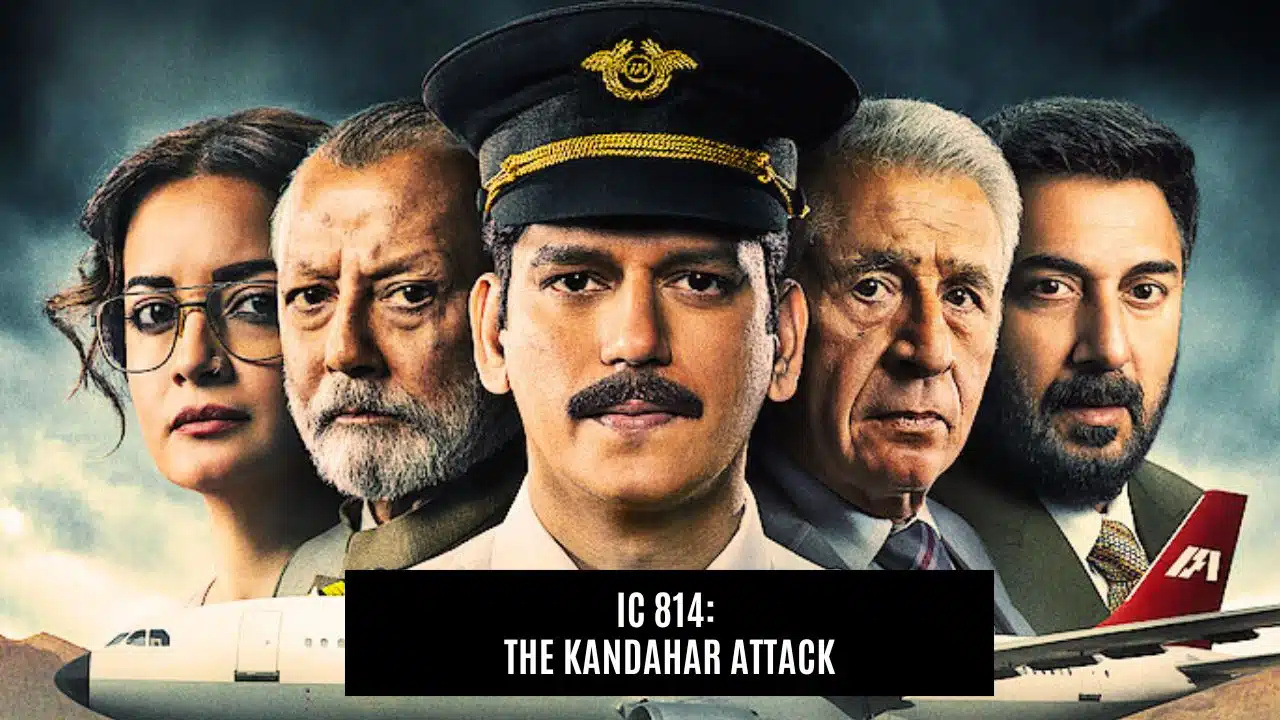
On August 30, Netflix released a highly anticipated drama series titled IC 814: The Kandahar Attack. The series, inspired by real-life events from 1999, has already captured significant attention. It recounts the dramatic hijacking of Indian Airlines Flight IC 814, which was en route from Kathmandu, Nepal, to Delhi, India. This event is etched in the memories of many, as the hijacking unfolded into an international crisis when the plane was forced to land in Kandahar, Afghanistan, then under Taliban control. The series explores the intense experiences of the passengers and crew aboard the flight and delves into the high-stakes decisions and negotiations that took place behind the scenes among top-level Indian bureaucrats and diplomats.
The release of IC 814: The Kandahar Attack was expected to generate interest due to its subject matter. However, the series has quickly become mired in controversy, attracting criticism from various quarters. The Ministry of Information & Broadcasting (I&B) has taken serious note of the matter, issuing a summons to Netflix India’s head, Monika Shergill, to address the growing concerns. Social media, too, is ablaze with reactions, with many users expressing their outrage and disappointment over certain aspects of the show.
The Hijacking Incident: A Brief Recap
The hijacking of Flight IC 814 remains one of the most significant and traumatic events in India’s recent history. On December 24, 1999, five armed terrorists hijacked the Indian Airlines flight shortly after it took off from Kathmandu. The plane, carrying 176 passengers and crew members, was initially forced to land in Amritsar, India, but due to delays in response, the hijackers managed to take off again, eventually landing in Kandahar.
The situation became even more precarious when the Taliban, who controlled Afghanistan at the time, became involved. The hijackers demanded the release of three militants held in Indian prisons—Maulana Masood Azhar, Ahmed Omar Saeed Sheikh, and Mushtaq Ahmed Zargar—in exchange for the hostages. After a week of tense negotiations and international pressure, the Indian government reluctantly agreed to the demands, resulting in the release of the prisoners in exchange for the hostages.
Controversy Surrounding the Series’ Portrayal of Hijackers
While the historical context of the series is gripping, IC 814: The Kandahar Attack has sparked controversy due to its portrayal of the hijackers. Directed by Anubhav Sinha, who is known for his socially conscious films like Thappad and Article 15, the series attempts to provide a nuanced portrayal of the events. However, the controversy centers on the decision to refer to the hijackers by code names in the series—Chief, Doctor, Burger, Bhola, and Shankar—rather than their real names.
According to official records from the Ministry of External Affairs (MEA), the hijackers were identified as Ibrahim Athar, Shahid Akhtar Sayed, Sunny Ahmed Qazi, Mistry Zahoor Ibrahim, and Shakir. These names are well-documented and known to the public. However, in the series, the hijackers are referred to by their code names, which were reportedly used by the terrorists during the hijacking itself. The use of code names like Bhola and Shankar—names that are traditionally associated with Hindu culture—has caused significant outrage.
Public Outcry and Accusations of Hinduphobia
The use of Hindu names for the hijackers has led to a public outcry, with many viewers and social media users accusing Netflix of promoting Hinduphobia. Critics argue that the decision to use names like Bhola and Shankar for radical Islamic fundamentalists is not only insensitive but also misleading. They believe it could contribute to negative stereotypes and misperceptions about Hindus.
The backlash on social media has been swift and intense, with the hashtag #BoycottNetflix trending on X (formerly Twitter) for several days. Users have expressed their anger, calling out Netflix for what they perceive as a deliberate attempt to malign Hindu culture. Some have even pointed to previous instances where Netflix content has been accused of being anti-Hindu, further fueling the controversy.
Government Intervention: Summons Issued to Netflix India Head
The growing controversy has not gone unnoticed by the Indian government. The Ministry of Information & Broadcasting, responsible for regulating content in India, has intervened in the matter. The ministry has issued a summons to Monika Shergill, Netflix India’s head, asking her to address the concerns raised by the public and provide an explanation for the portrayal of the hijackers in the series.
This is a significant move by the government, reflecting the seriousness with which it is taking the issue. The summons is seen as part of the broader effort by the Indian government to ensure that content on streaming platforms adheres to cultural sensitivities and does not offend religious or national sentiments. The I&B Ministry’s involvement also highlights the increasing scrutiny that global streaming platforms like Netflix are facing in India, where cultural and religious issues are deeply intertwined with public sentiment.
Netflix’s Track Record of Controversial Content
The controversy surrounding IC 814: The Kandahar Attack is not an isolated incident for Netflix in India. The streaming giant has faced similar accusations in the past. For instance, Netflix’s original series Leila, which depicted a dystopian future where a totalitarian regime enforces rigid social divisions, was criticized for its portrayal of Hindu customs and beliefs. Similarly, the film Maharaj, which dealt with the subject of religious conversions, also faced backlash from certain sections of the audience.
These controversies have contributed to a perception among some viewers that Netflix is biased against Hindu culture and traditions. This perception has been exacerbated by the platform’s global reach, making the impact of such controversies even more significant. As a result, Netflix has found itself in the difficult position of balancing creative freedom with the need to respect cultural and religious sentiments, particularly in a diverse and sensitive market like India.
Broader Implications for Streaming Platforms in India
The controversy surrounding IC 814: The Kandahar Attack raises broader questions about the role of streaming platforms in shaping public discourse and cultural narratives. As platforms like Netflix, Amazon Prime Video, and Disney+ Hotstar continue to expand their presence in India, they are increasingly finding themselves at the center of cultural and political debates. The challenge for these platforms is to navigate the complex landscape of Indian society, where issues of religion, culture, and politics are deeply interconnected.
This incident also highlights the evolving regulatory environment for streaming platforms in India. In recent years, the Indian government has taken steps to increase oversight of digital content, including the introduction of new guidelines for streaming platforms. These guidelines require platforms to establish a grievance redressal mechanism and ensure that content does not offend the sensibilities of any community or group. The summons to Netflix India’s head can be seen as part of this broader regulatory effort.
What Lies Ahead for Netflix and the Series?
As the controversy continues to unfold, all eyes are on Netflix to see how the platform will respond. The company has yet to issue an official statement on the matter, but it is expected that Netflix will need to take significant steps to address the concerns raised by both the public and the government. This could include making changes to the series or issuing clarifications about the intentions behind the portrayal of the hijackers.
The outcome of this controversy could have far-reaching implications for Netflix and other streaming platforms operating in India. It underscores the need for these platforms to be more mindful of cultural sensitivities and to engage with local communities in a more meaningful way. At the same time, it raises important questions about the limits of creative expression and the responsibilities of global media companies in respecting the diverse cultural landscapes in which they operate.
As of now, it remains to be seen how Netflix will navigate this complex situation. The platform’s response will not only determine the future of IC 814: The Kandahar Attack but could also shape the broader discourse on the role of streaming platforms in India’s cultural and political landscape. The stakes are high, and Netflix will need to tread carefully to avoid further backlash and ensure that it continues to be a popular platform for Indian viewers.
The Information is Collected from Netflix and Yahoo.