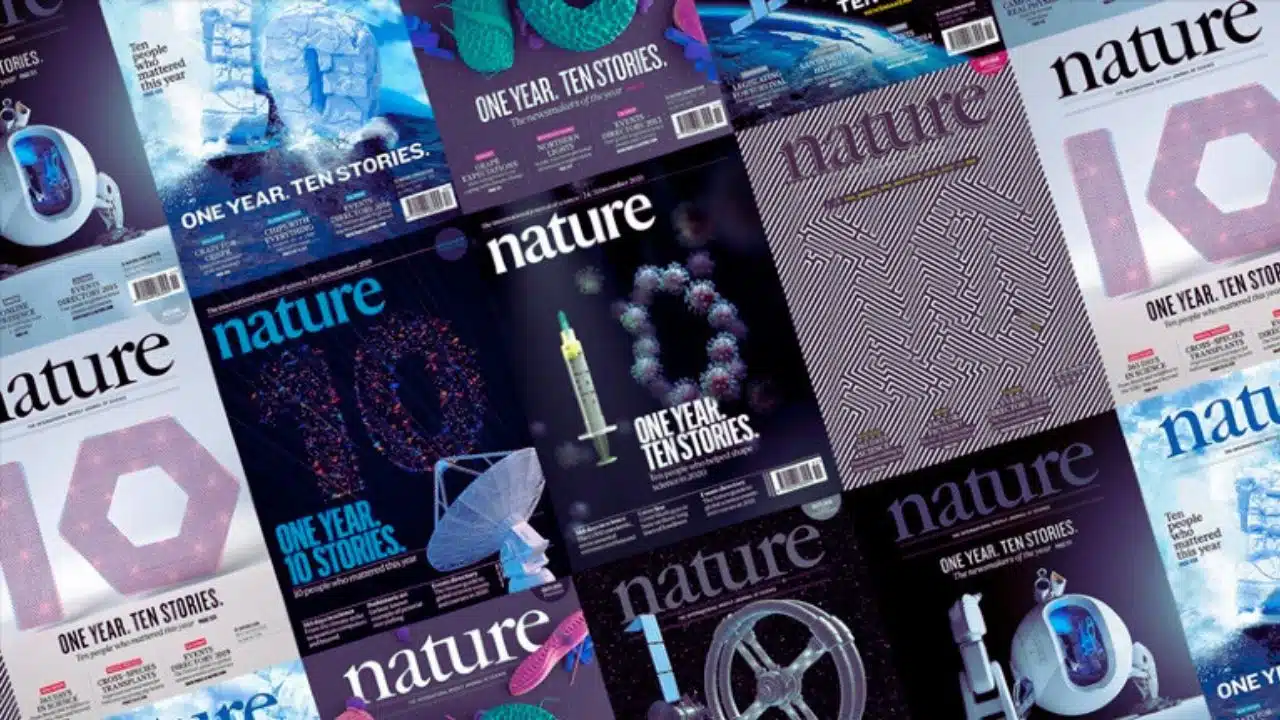
Nature’s annual Nature’s 10 list for 2025 spotlights ten people at the center of the year’s most important scientific stories, from a toddler who received a pioneering gene-editing therapy to a financier who disrupted the global AI race.
Nature’s 10 for 2026
The journal Nature has released its 2025 Nature’s 10: Ten people who shaped science in 2025, highlighting individuals whose actions and discoveries defined some of the year’s biggest research breakthroughs. The list, published in early December 2025, spans deep-sea exploration, astronomy, gene and cell therapies, global public health, research integrity, and artificial intelligence.
Instead of ranking scientists by citations or prizes, Nature’s editors select people who sat at the center of major science stories and whose work captures broader shifts in research and policy. This year’s choices underline how science in 2025 was shaped not only by lab discoveries, but also by political battles, ethical watchdogs, and technologies that could reshape entire industries.
Key scientists named by Nature
Nature’s 2025 list brings together ten very different figures, from a civil servant who defied political pressure in Washington to a Chinese entrepreneur whose low-cost AI model is changing how researchers use machine learning. Below is an overview of who they are, what they did in 2025, and where they work.
The 10 people who shaped science in 2025 (Nature’s 10)
| Scientist / Figure | Field / Role | 2025 Impact Highlight | Country / Region |
| Susan Monarez | Public health, CDC director | Stood up to political pressure over vaccine policy at the US Centers for Disease Control and Prevention, and was fired after refusing to push measures not backed by science. | United States |
| Achal Agrawal | Data science, research integrity | Exposed patterns of problematic publications and retractions in Indian universities, helping trigger changes in how higher-education institutions are evaluated. | India |
| Tony Tyson | Astrophysics, instrumentation | Visionary behind the Vera Rubin Observatory’s digital camera, crucial to launching a new observatory in Chile that will map the distant Universe in unprecedented detail. | United States / Chile |
| Precious Matsoso | Global health policy | Led negotiations that produced the world’s first pandemic-preparedness treaty, aiming to strengthen global responses to future outbreaks. | South Africa / Global |
| Sarah Tabrizi | Neurology, gene therapy | Helped deliver a gene therapy that slowed the progression of Huntington’s disease in clinical studies, a milestone after decades of failed attempts. | United Kingdom |
| Mengran Du | Deep-sea geoscience | Led dives to about 9,000 meters below the ocean surface, documenting a previously unseen deep-sea ecosystem teeming with strange life. | China |
| Luciano Moreira | Infectious disease control | Opened the first large-scale factory producing Wolbachia-infected mosquitoes to curb dengue transmission by releasing millions of modified insects. | Brazil |
| Liang Wenfeng | Finance & artificial intelligence | Launched DeepSeek, an efficient open weight large language model that rivals top systems at far lower cost, giving researchers and developers broad access to advanced AI tools. | China |
| Yifat Merbl | Systems biology, immunology | Revealed that cellular proteasomes can generate antimicrobial peptides, uncovering a previously unknown arm of the human immune response. | Israel |
| KJ Muldoon | Patient and symbol of gene editing | As a toddler, became the first person to receive an ultra-personalized CRISPR-based therapy for a rare metabolic disorder, with early results suggesting the condition was effectively reversed. | United States |
Nature’s article and related coverage emphasize that the list mixes career scientists with people who became symbolic figures in wider debates and breakthroughs, such as a baby at the center of a landmark gene-editing treatment. Several entries, including the CDC director and the pandemic-treaty negotiator, underline how science is inseparable from politics and global governance in 2025.
Breakthroughs and trends in 2025 science
The 2025 list highlights a year in which frontiers of the physical world were pushed both outwards into space and downwards into the deepest parts of the ocean. Tony Tyson’s decades-long work helped bring the Vera Rubin Observatory online in Chile, promising vast surveys of the night sky that will transform studies of dark matter, dark energy and transient cosmic events. At the other extreme, Mengran Du’s team used a submersible to reach around 9,000 meters and revealed a rich deep-sea ecosystem that had never been documented in such detail.
Biomedical science is another dominant theme, with several entries focused on translating genetic and molecular insights into real-world therapies. Sarah Tabrizi’s Huntington’s disease work and the personalized CRISPR treatment given to KJ Muldoon point to a future in which ultra-targeted genetic interventions could become viable for rare, previously untreatable conditions. Yifat Merbl’s discovery that proteasomes can produce antimicrobial peptides suggests new ways to harness the immune system against infections and possibly other diseases.
Public health and governance run through the stories of Luciano Moreira, Precious Matsoso and Susan Monarez. Moreira’s Wolbachia mosquito factory in Brazil is a major test of using modified insects at industrial scale to reduce dengue, a virus that is surging in many tropical cities. Matsoso’s pandemic treaty negotiations seek to lock in lessons from COVID-19 by improving surveillance, data sharing, and equitable access to countermeasures before the next crisis hits. Monarez’s short tenure and dismissal as CDC director, after resisting pressure from the Trump administration to endorse unsupported vaccine policies, illustrates the ongoing struggle to keep public-health decisions anchored in evidence.
The inclusion of Liang Wenfeng and Achal Agrawal reflects how power over information—whether through AI models or scientific publishing—has become central to research in 2025. DeepSeek’s release as an open weight model means scientists can download and adapt a cutting-edge language model without paying the high access fees charged by many competitors, lowering barriers for labs worldwide. Agrawal’s investigations into retractions and questionable papers in India have pushed universities and policymakers to rethink incentives and ranking systems that may encourage quantity over quality.
Why Nature’s 10 matters
Nature’s 10 has become a recognizable year-end feature that offers a snapshot of how science is evolving, complementing coverage of Nobel prizes and other awards. Unlike traditional prizes that often focus on long-term achievements, the list targets people who were pivotal to scientific narratives in a specific year, including whistleblowers, policymakers and, occasionally, non-scientist protagonists such as patients. The 2025 selection makes clear that shaping science can mean designing instruments, negotiating treaties, calling out misconduct, or embodying the risks and hopes of first-in-human treatments.
For readers and policymakers, the list also signals which areas are likely to dominate research agendas over the coming decade. The prominence of gene therapies, pandemic preparedness, AI infrastructure and climate-relevant science such as deep-ocean and astronomical observation suggests where funding, regulation and public debate are heading. By highlighting individuals from countries including Brazil, China, India, Israel, South Africa, the United Kingdom and the United States, Nature also reflects the increasingly multipolar geography of high-impact research.
What comes next
Several of the initiatives featured in Nature’s 10 for 2025 are only at the beginning of their impact. The Vera Rubin Observatory is expected to generate enormous datasets over the coming years, providing new insights into the structure of the Universe and producing discoveries that range from near-Earth asteroids to distant supernovae. Large-scale releases of Wolbachia mosquitoes and the implementation of the pandemic treaty will be closely watched tests of whether innovative tools and new governance frameworks can genuinely reduce disease burden and improve global coordination.
In biomedicine and AI, regulators and ethicists will need to keep pace with the rapid advances symbolized by personalized CRISPR therapies and open-weight AI models such as DeepSeek. Future debates are likely to focus on equitable access, safety monitoring, and how to share benefits with the communities and patients whose participation makes these breakthroughs possible. For Nature’s editors and readers, the 2025 list is both a look back at a remarkable year in science and an early guide to the people and fields that will shape the next wave of discovery.