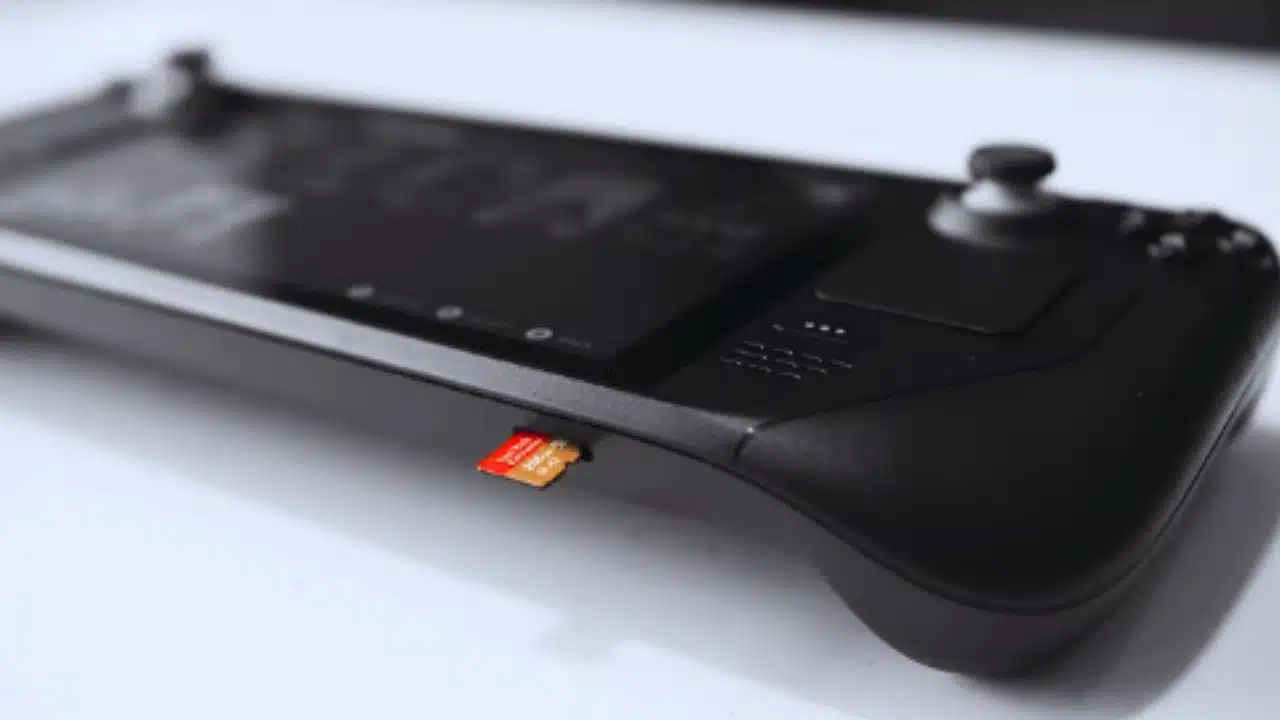
The Steam Deck has revolutionized portable gaming by giving players access to an enormous library of PC titles that can be enjoyed on the go or hooked up to a TV, much like how the Nintendo Switch made console gaming portable and versatile back in 2017. With its built-in microSD card slot, the Steam Deck allows users to expand storage effortlessly by inserting a small card, enabling them to carry dozens or even hundreds of games without being limited by the device’s internal drive.
This feature has been a game-changer for gamers who travel or switch between setups, as it supports seamless file transfers and quick access to titles from the vast Steam catalog, which includes everything from indie darlings to AAA blockbusters. Valve’s recent hardware announcements build on this foundation, promising to make microSD cards an even more central part of the gaming experience across multiple devices.
New Devices Join the Steam Family
In November 2025, Valve unveiled a trio of new hardware products set to launch in early 2026 the Steam Machine, the Steam Frame VR headset, and a redesigned Steam Controller, all designed to create a unified ecosystem around SteamOS. The Steam Machine is a compact, console-like PC roughly the size of a Nintendo GameCube, optimized for living room setups where it can tuck neatly under shelves or AV equipment; it boasts a semi-custom AMD Zen 4 processor with 6 cores and 12 threads clocking up to 4.8 GHz at a 30W TDP, paired with an AMD RDNA3 GPU featuring 28 compute units running at 2.45 GHz for sustained performance. This setup delivers impressive 4K gaming at 60 frames per second with ray tracing support, making it capable of handling demanding titles like Cyberpunk 2077 or Elden Ring at high settings, and it includes easy-to-access SSD upgrades for further customization.
The Steam Frame stands out as a standalone VR headset with a lightweight, modular design weighing just 440 grams total, including a rear-mounted battery for balanced comfort during extended sessions. Powered by a Qualcomm Snapdragon 8 Gen 3 ARM processor with 16GB of LPDDR5X RAM and options for 256GB or 1TB UFS storage (expandable via microSD), it runs a VR-optimized version of SteamOS, supporting Linux, Windows, and Android games through Valve’s Proton compatibility layer. Key features include inside-out tracking using four grayscale cameras for precise motion capture without base stations, eye-tracking for foveated rendering that boosts performance by focusing high resolution only where the user looks, and dual 2160×2160 LCD displays with pancake lenses offering a wide field of view and sharp visuals comparable to the Meta Quest 3.
Audio comes from dual stereo speakers per side, oriented to minimize crosstalk, and it includes a 6 GHz Wi-Fi 6E wireless adapter for low-latency PC streaming, eliminating common Wi-Fi bottlenecks like router interference or congestion. Early hands-on tests showed smooth performance in games like Half-Life: Alyx streamed from a PC, with no visible compression artifacts and responsive controls, though its LCD panels lack the deep blacks of OLED for darker scenes.
Rounding out the lineup, the new Steam Controller features dual touchpads, analog sticks, a D-pad, gyro aiming, and customizable capacitive buttons for versatile input, with enhanced haptics and wireless reliability tailored for both VR and traditional gaming. All three devices share the Linux-based SteamOS, which provides a consistent interface across hardware, from desktop mode for productivity tasks like web browsing to full-screen gaming, and even supports dual-booting Windows for broader compatibility.
MicroSD Cards Enable Seamless Game Sharing
A standout feature across the Steam Deck, Steam Machine, and Steam Frame is their microSD card slots, which allow games stored on a properly formatted card to appear instantly in your Steam library on any compatible device without needing to redownload large files. This interoperability means you can pop a card from your Steam Deck into the Steam Machine for couch co-op sessions or into the Steam Frame for immersive VR play, picking up right where you left off, as long as the game is verified for the target hardware. Valve’s Proton layer ensures broad compatibility, so even non-native Linux titles run smoothly, and the system auto-adjusts graphics settings via APIs to match each device’s capabilities.
Valve hardware engineer Yazan Aldehayyat highlighted during a demo at Valve’s headquarters that this card-swapping functionality turns microSD into a modern equivalent of classic game cartridges, but with the flexibility to hold an entire library rather than a single title. For instance, a 1TB microSD card could store over 100 games depending on their sizes, making it ideal for users who own diverse collections spanning genres like action-adventure, RPGs, and simulations. Launching in early 2026, these devices emphasize out-of-the-box convenience: unbox, insert your card, sign into Steam, and dive into play—no setup hassles or waiting hours for installs. This ecosystem approach fosters portability, letting gamers fluidly transition between handheld, console, and VR experiences while maintaining progress and ownership of their digital libraries.
Speed Limits and Real-World Performance
While the microSD support is innovative, Valve has opted for UHS-I readers in all these devices, capping read speeds at about 100MB/s, which is notably slower than internal SSDs or advanced microSD formats. This choice prioritizes cost and simplicity, but it could lead to longer load times in open-world games like Starfield, where developers recommend SSDs to avoid texture pop-in or stuttering. In testing, however, Aldehayyat assured that UHS-I performs adequately for the majority of titles, especially those optimized for Steam Deck, and most users won’t notice bottlenecks in everyday play.
The Steam Machine’s powerful AMD hardware shines here, offering six times the graphical prowess of the Steam Deck for smoother 4K output, while the Steam Frame’s foveated streaming leverages eye-tracking to deliver PC-level visuals wirelessly at stable frame rates, even in complex environments. Controllers track flawlessly with 18 IR LEDs for better occlusion handling, and the system’s desktop mode extends utility beyond gaming to tasks like video editing or streaming. By focusing on ease and affordability, Valve positions these devices as accessible entry points into high-end gaming, potentially challenging established players in the console and VR markets with their integrated ecosystem.
How Nintendo’s Approach Differs?
Nintendo’s strategy with the Switch 2 takes a different path, mandating microSD Express cards for expansion to achieve speeds up to 880MB/s through PCIe interfaces, which drastically cut load times compared to standard microSD and better suit fast-paced games. Legacy microSD cards from the original Switch are incompatible, requiring users to invest in new Express variants from brands like Samsung for full functionality, which ensures optimal performance but adds upfront costs.
The Switch 2’s “game-key” cards represent an intriguing hybrid these physical cartridges function as digital licenses rather than storage media, prompting an initial internet download of the full game to the console’s internal memory or an Express card. To play, the key must remain inserted, acting like a security token to verify ownership, but it allows resale or transfer to another console without tying the license to a single account.
This model promotes physical collectibility while relying on digital distribution for the bulk of the data, though it necessitates a stable connection for first-time setups and doesn’t offer the same cross-device portability as Valve’s microSD solution. Overall, Nintendo emphasizes speed and ownership flexibility, contrasting Valve’s focus on shared, expandable libraries across a broader hardware family.