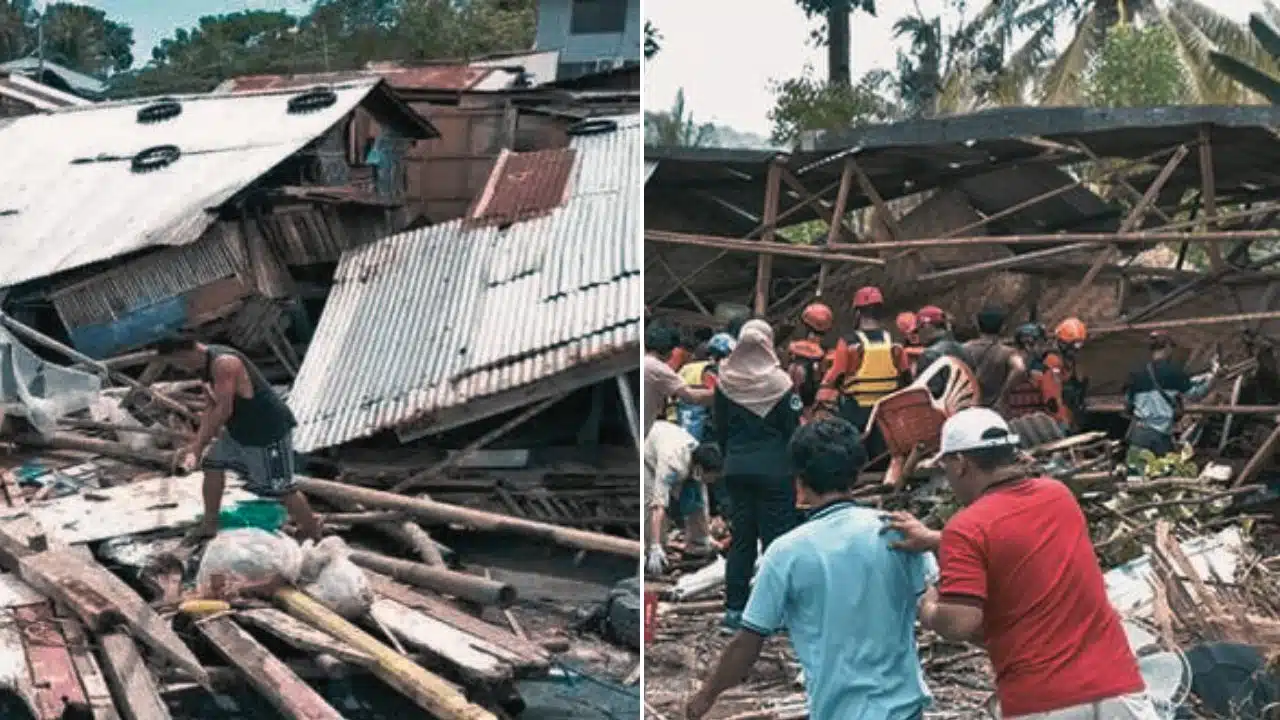
A powerful and shallow magnitude 7.5 earthquake struck off the coast of Mindanao in the southern Philippines on Friday morning, triggering evacuations and a tsunami warning that has since been lifted. The quake, which occurred at approximately 9:43 AM local time (PST), sent residents fleeing from buildings and prompted a swift response from disaster agencies. While the immediate tsunami threat has subsided, authorities are assessing the extent of the damage and urging continued caution due to the risk of aftershocks..
What Happened
The tectonic earthquake struck on Friday, October 10, 2025, with its epicenter in the Philippine Sea. The Philippine Institute of Volcanology and Seismology (PHIVOLCS) reported the quake’s shallow depth contributed to the intensity of the shaking felt across the Mindanao region and even in parts of the Visayas (Philippine Institute of Volcanology and Seismology). The tremor caused widespread panic, with videos circulating on social media showing people evacuating homes, schools, and hospitals. In Davao City, the largest city near the epicenter with a population of about 5.4 million, classes were suspended as a precautionary measure (Hindustan Times).
Immediately following the quake, PHIVOLCS issued a tsunami warning for the coastal areas of Davao Oriental, Surigao Del Sur, and other nearby provinces, advising residents to evacuate to higher ground. The Pacific Tsunami Warning Center also issued an alert, indicating that hazardous waves were possible within 300 kilometers of the epicenter (The Economic Times). However, the tsunami threat was later canceled after monitoring stations recorded only minor sea-level fluctuations.
Latest Data & Statistics
As of the latest reports, the full extent of the damage is still being assessed. Here are the key figures:
- Casualties: At least one fatality has been confirmed, with reports of dozens of injuries, including at least 50 students in Gov. Generoso who were hospitalized after fainting or experiencing dizziness (Hindustan Times).
- Aftershocks: Numerous aftershocks have been recorded since the main quake, with some reaching magnitudes of 4.9 and 4.2, raising concerns about the stability of already compromised structures (The Economic Times).
- Affected Population: While a precise number of affected individuals is yet to be determined, thousands in coastal communities were evacuated. The initial tsunami warning covered seven provinces, including Eastern Samar, Dinagat Islands, Davao Oriental, Southern Leyte, Surigao Del Norte, Surigao Del Sur, and Leyte (U.S. Embassy in the Philippines).
Official Responses & Expert Analysis
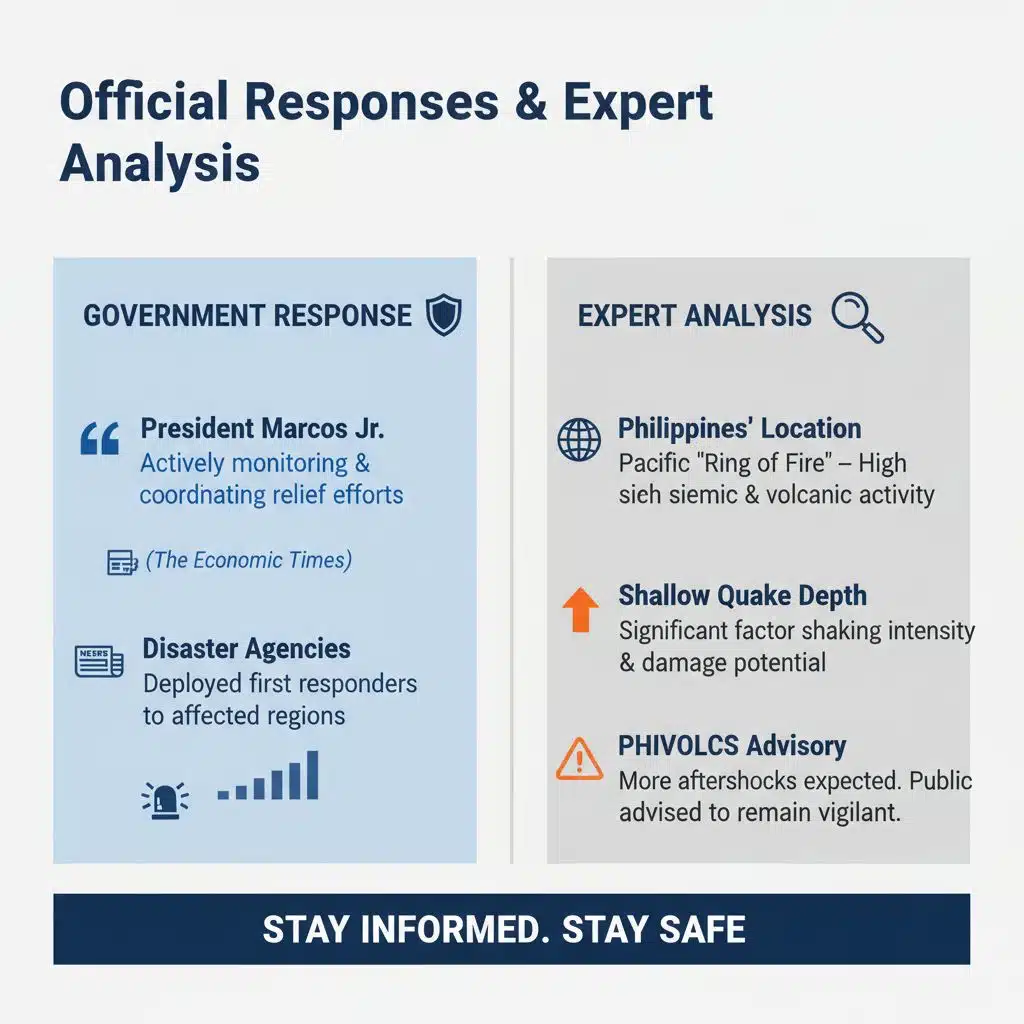
President Ferdinand Marcos Jr. stated that the government is actively monitoring the situation and coordinating relief efforts. “We are working round the clock to ensure help reaches everyone who needs it,” he said in a statement (The Economic Times). The Office of Civil Defense and other disaster management agencies have deployed first responders to the affected regions.
Experts note that the Philippines is located on the Pacific “Ring of Fire,” an area of high seismic and volcanic activity, making it prone to earthquakes. The shallow depth of this particular quake is a significant factor in the intensity of the ground shaking and the potential for damage. PHIVOLCS has warned that more aftershocks are expected and has advised the public to remain vigilant.
Impact on People
The earthquake has caused significant disruption and fear among the residents of Mindanao. An eyewitness in Davao City described the scene: “People darted out of houses and buildings as the ground shook and electricity went off.” Power lines were seen swaying violently, and cracks appeared in several buildings. The psychological impact of such a powerful tremor, coupled with the initial tsunami threat, is substantial. For many, this event is a stark reminder of the ever-present danger of natural disasters in the region.
What to Watch Next
The coming days will be critical for assessing the full impact of the earthquake. Key developments to watch include:
- Updated reports from the National Disaster Risk Reduction and Management Council (NDRRMC) on casualties and damage.
- The frequency and magnitude of aftershocks.
- The progress of relief and recovery operations in the affected areas.
- Assessments of damage to critical infrastructure, including roads, bridges, and power lines.
The magnitude 7.5 earthquake that struck off the coast of Mindanao serves as a powerful reminder of the Philippines’ vulnerability to seismic events. While the lifting of the tsunami warning has brought a sense of relief, the focus now shifts to the significant task of damage assessment and providing aid to those affected. The government’s response in the coming days will be crucial in mitigating the long-term impact of this natural disaster.