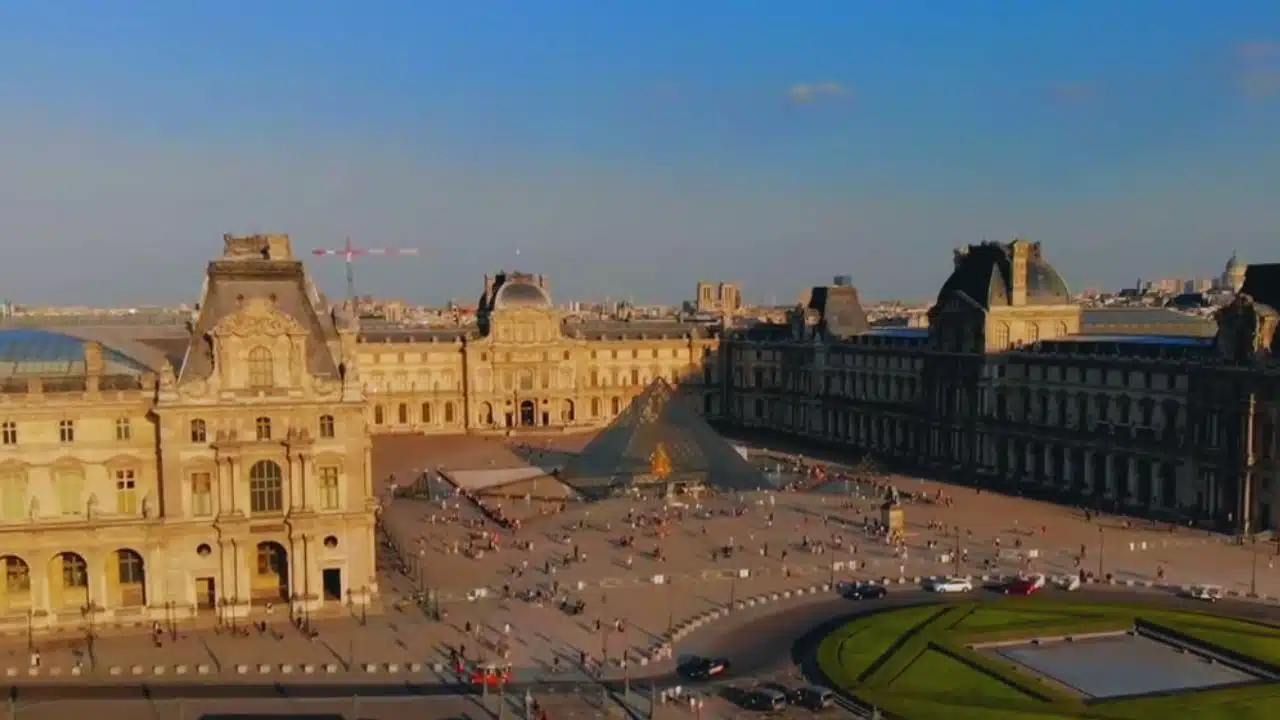
French prosecutors announced Thursday that five new suspects have been arrested in connection with the audacious, daylight Louvre jewellery theft that stunned France less than two weeks ago. The arrests bring the total number of suspects in custody to seven, though the €88 million ($102 million) cache of priceless French Crown Jewels remains missing.
Paris Prosecutor Laure Beccuau confirmed the development, stating the arrests were made Wednesday evening in co-ordinated raids in Paris and its northern suburbs, particularly the Seine-Saint-Denis region. The operation marks a significant escalation in the massive manhunt for the gang that exposed critical security flaws at the world’s most-visited museum.
The investigation is now focused on two fronts: dismantling the criminal network responsible and a desperate, international race to recover the heritage items before they are broken apart and lost forever.
The New Arrests: A ‘Commando’ Member and Support Network
The announcement on Thursday, October 30, 2025, provides new momentum to an investigation that has gripped the nation. According to Prosecutor Beccuau, the latest suspects are believed to be part of the wider network that planned and executed the heist.
One of the men detained was a target of the investigators—we have traces of DNA linking him to the robbery,” Beccuau told RTL radio. This individual is suspected of being one of the direct participants, or “commando” members, who entered the museum.
The other four individuals are being investigated for providing logistical support, information, or aiding in the planning of the spectacular robbery.
These five arrests follow the detention of the first two primary suspects on Saturday, October 25. Those two men—a 34-year-old Algerian national arrested at Charles de Gaulle Airport attempting to board a flight to Algeria, and a 39-year-old with a history of burglary—have “partially admitted” their involvement, according to the prosecutor’s office.
Investigators believe the first two suspects were the men who, disguised in high-visibility vests, entered the Apollo Gallery and smashed the display cases. Their DNA was reportedly found on a discarded scooter and one of the broken display cases.
The Race Against Time: ‘The Jewels are Unsellable’
Despite the seven arrests, the primary objective of the operation—the recovery of the jewels—has not been met. The eight stolen pieces, which include treasures once belonging to Empress Eugénie and Empress Marie-Louise, are still missing.
In a press conference on Wednesday, Prosecutor Beccuau made a direct appeal to the thieves or anyone who may be in possession of the items.
These jewels are now, of course, unsellable,” Beccuau stated. Anyone who buys them would be guilty of concealment of stolen goods. There is still time to give them back.”
The fear among art recovery experts and historians is that the thieves, finding the items too famous to sell whole, will break them apart. The immense historical and cultural value of the pieces lies in their provenance and craftsmanship, but their material value in gems and gold is also substantial. Experts warn the stones could be recut and the settings melted down, effectively erasing them from history.
The stolen items are a core part of France’s 19th-century royal heritage.
What Was Stolen (A Partial List):
- From Empress Marie-Louise (Napoleon I’s wife): An emerald and diamond necklace and a pair of matching earrings.
- From Queen Marie-Amélie and Queen Hortense: A sapphire diadem, necklace, and one earring.
- From Empress Eugénie (wife of Napoleon III): A diamond tiara and a large corsage-bow brooch made of 2,634 diamonds.
One item, the diamond-and-emerald-encrusted crown of Empress Eugénie, was dropped by the thieves as they fled and recovered outside the museum, though it was damaged.
Anatomy of a National Humiliation
The theft, which took place just after 9:30 AM on Sunday, October 19, has been described as a “national humiliation” and has triggered a reckoning over security at France’s most revered cultural institutions.
The ‘Seven-Minute’ Heist: The details of the robbery reveal a plan of shocking audacity and precision.
- 9:30 AM (approx.): A truck equipped with a furniture lift parked on the side of the museum facing the Seine.
- 9:34 AM: Two men, disguised as maintenance workers, used the lift to ascend to a first-floor balcony of the Apollo Gallery.
- They smashed an unsecured window and entered the gallery, which houses the Crown Jewels.
- Using power tools, they smashed two display cases.
- 9:38 AM: The men exited the gallery, having spent just 3 minutes and 58 seconds inside.
- They descended on the lift and fled on motor scooters driven by two accomplices. The entire operation lasted less than eight minutes.
The fallout was immediate, with French politicians demanding to know how such a vulnerability could exist.
‘A Terrible Failure’: Louvre Security Under Fire
The investigation has confirmed the worst fears about the museum’s security infrastructure. During a hearing with French lawmakers, Paris Police Chief Patrice Faure admitted the theft exposed “serious weaknesses” in the Louvre’s defenses.
Faure told senators that “a technological step has not been taken,” revealing that parts of the museum’s vast video surveillance network are still “analog,” producing lower-quality images that are slow to share in real-time.
In a stunning admission, officials also noted that the first alert to police did not come from the Louvre’s internal alarms but from a civilian—a cyclist on the street who witnessed the men on the freight lift and dialed the emergency line.
A Delayed Upgrade: A major security modernization project for the Louvre, valued at $93 million (€80 million), is in progress but has been plagued by delays. Police Chief Faure confirmed to lawmakers that the upgrade, which includes 37 miles of new cabling, “will not be finished before 2029–2030.”
Culture Minister Rachida Dati, while resisting calls for the Louvre director’s resignation, conceded that “security gaps did exist.
The seven suspects can be held for up to 96 hours under French anti-gang and organized crime laws before they must be either charged or released. The focus of their interrogations will be twofold: identifying the remaining members of the gang, including any potential mastermind, and, most urgently, locating the jewels.
INTERPOL has already added the stolen items to its Stolen Works of Art database, alerting law enforcement and art dealers worldwide.
For France, the arrests are a victory for its elite Brigade de Répression du Banditisme (BRB) investigative unit. But it is a victory tempered by the stark reality that the nation’s treasures, stolen in broad daylight from their supposedly secure home, may never be seen again.
The Information is Collected from BBC and AOL.