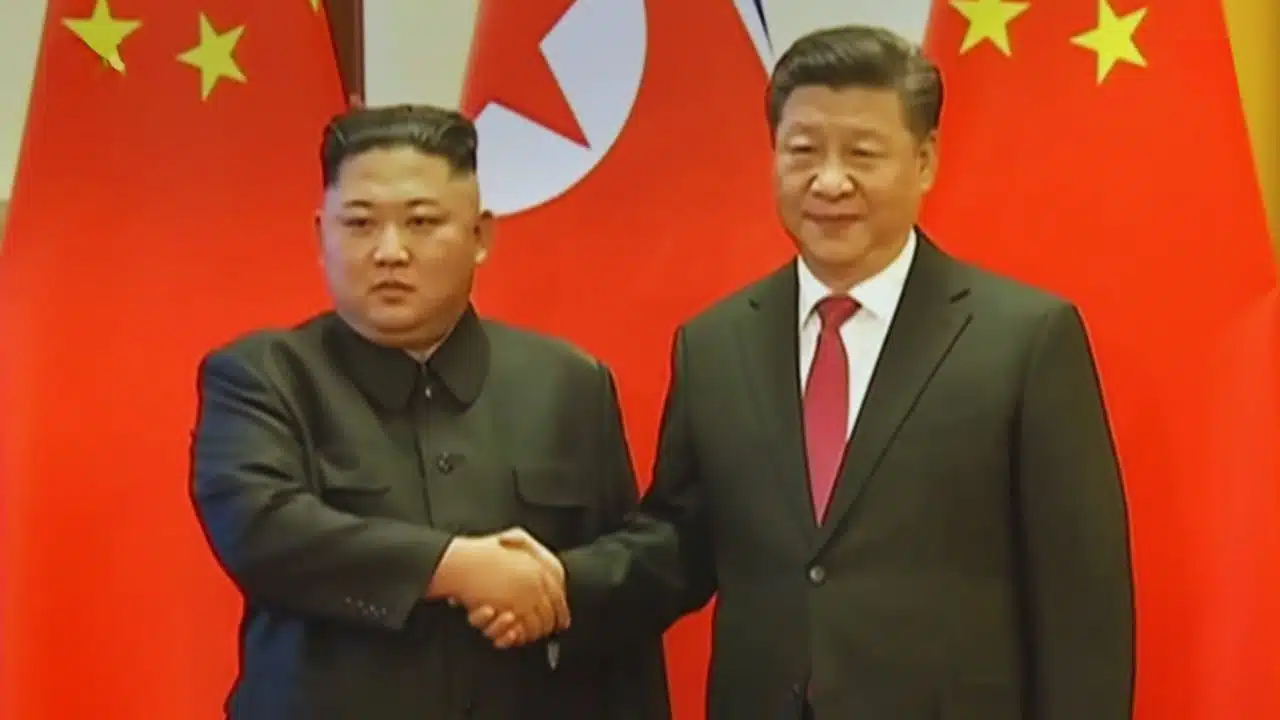
North Korean leader Kim Jong Un will travel to Beijing next week to attend a large-scale Chinese military parade, marking his first official visit to China in six years. The announcement was made jointly by Chinese and North Korean officials on Thursday.
The visit is significant because it places Kim alongside major world leaders at a multilateral event for the first time since he inherited power in December 2011 following the death of his father, Kim Jong Il. Unlike past summits—which were mainly bilateral meetings with leaders such as U.S. President Donald Trump, Russian President Vladimir Putin, and former South Korean President Moon Jae-in—this event places Kim on a global stage with dozens of heads of state.
Why the Parade Matters for Beijing, Moscow, and Pyongyang
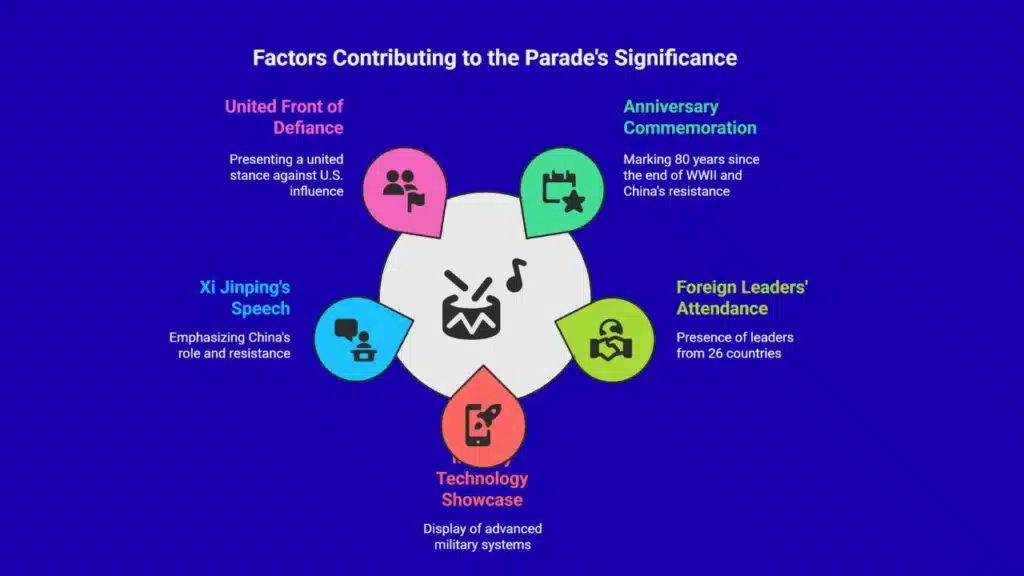
The parade is being held to commemorate the 80th anniversary of the end of World War II and China’s resistance against Japan’s wartime aggression. According to China’s foreign ministry, leaders from 26 foreign countries will attend, with the highlight being the presence of Xi Jinping, Vladimir Putin, and Kim Jong Un together for the first time.
- The event is expected to showcase China’s newest military technology, including advanced missile systems, stealth aircraft, and drones.
- A major speech from Xi Jinping is also anticipated, emphasizing China’s role in safeguarding stability in Asia while sending a message of resistance against U.S. influence.
The symbolism is clear: China, Russia, and North Korea—three nations facing ongoing confrontations with the U.S. and its allies—are presenting a united front of defiance.
Kim’s Motivations: Breaking Isolation and Projecting Power
Analysts say Kim’s attendance carries more weight than just diplomacy.
- It signals his intent to show North Korea as a “normal” state participating in major international events.
- It helps him form solidarity with pro-China and pro-Russia Global South countries, many of whom share skepticism toward U.S.-led alliances.
- It boosts his personal stature as a leader who is not confined to isolation but welcomed in Beijing alongside global heavyweights.
According to Moon Seong Mook, a researcher at the Korea Research Institute for National Strategy, Kim likely views this as a chance to “project strength abroad while strengthening his bargaining power at home.”
The Russia Factor: Military and Economic Lifeline
North Korea has increasingly leaned on Russia for support since the outbreak of the Ukraine war.
- Military cooperation: Pyongyang has reportedly supplied troops, artillery shells, and other ammunition to aid Russia’s war effort.
- Economic trade-offs: In return, Moscow has provided economic assistance and possible military technology transfers—helping North Korea withstand crippling U.S.-led sanctions.
- Formal alliance: In 2024, North Korea and Russia signed the Treaty on Comprehensive Strategic Partnership, cementing security and defense cooperation at a level not seen since the Cold War.
This alignment with Moscow has emboldened Kim, allowing him to step out of diplomatic isolation and enter Beijing from a position of greater confidence.
Who Else Will Attend the Parade?
Besides Xi, Putin, and Kim, the list of confirmed leaders reflects an alternative diplomatic order led by China and Russia.
Expected attendees include:
- Iran – President Masoud Pezeshkian
- Belarus – President Alexander Lukashenko
- Cuba – President Miguel Díaz-Canel
- Serbia – President Aleksandar Vučić
- Indonesia, Myanmar, Pakistan, Malaysia, and Vietnam
Notably absent are leaders from the U.S., Japan, and other Western countries, who declined invitations partly due to opposition to Russia’s invasion of Ukraine. Their absence highlights the deepening East–West divide.
Xi, Putin, and Kim: A Trilateral Moment in History
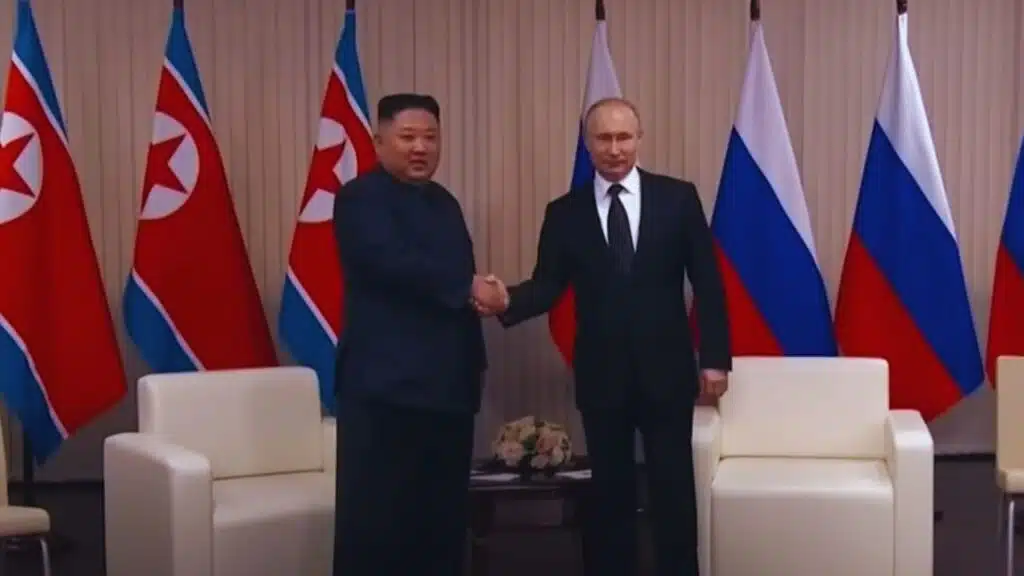
This is the first time Xi, Putin, and Kim will all appear at the same international event. While China, North Korea, and Russia have met bilaterally, no trilateral summit has ever been convened.
Experts view this gathering as a visible statement of alignment, even if it falls short of a formal three-way alliance. Soo Kim, a former CIA analyst, notes that this appearance “sends a strong signal to Washington, Seoul, and Tokyo about the consolidation of power in the Beijing–Moscow–Pyongyang axis.”
The three leaders are united in opposing the growing U.S.–South Korea–Japan trilateral alliance, which has expanded joint military drills and intelligence sharing.
Balancing China and Russia: Kim’s Diplomatic Tightrope
While Kim has prioritized ties with Russia recently, China remains North Korea’s primary economic lifeline.
- In 2023, about 97% of North Korea’s external trade was with China, compared to just 1.2% with Russia, according to South Korean government data.
- Beijing provides critical aid, fuel, and food supplies that sustain the North Korean regime.
Analysts suggest that Kim is using the Beijing visit to rebalance his foreign policy—showing Moscow that Pyongyang values its support, while also repairing any strains with Beijing caused by North Korea’s closeness with Russia.
Could Kim Signal Interest in U.S. Talks?
Another angle to Kim’s Beijing visit is his long-running relationship with Donald Trump.
- Kim met Trump three times between 2018 and 2019, including at the Korean Demilitarized Zone (DMZ) where Trump famously crossed into North Korea.
- Despite stalled nuclear talks, Trump has recently expressed interest in resuming dialogue with Pyongyang if he returns to power.
- By appearing in Beijing, Kim could be preparing to reengage Washington from a stronger position, backed by both China and Russia.
Leif-Eric Easley, a professor at Ewha Womans University, argues: “To restart diplomacy with the U.S., Kim first needs to reassure China and rebuild that relationship. Attending Beijing’s parade is a visible and symbolic way of doing so.”
Domestic Considerations: Preparing for Major Celebrations
Beyond diplomacy, Kim also faces domestic political needs.
North Korea is preparing for two major events:
- The 80th anniversary of the ruling Workers’ Party of Korea in October.
- A party congress scheduled early next year.
These events will demand significant financial and logistical resources, which Kim may seek from Beijing in the form of aid or trade concessions.
What This Means for the Global Balance
This parade could mark a turning point in Asia’s power dynamics:
- It showcases a counterbalance to U.S.-led alliances in the Indo-Pacific.
- It signals that China, Russia, and North Korea are willing to appear united—even if their cooperation has limits.
- It puts pressure on South Korea, Japan, and the U.S. to strengthen deterrence measures, possibly accelerating regional arms buildups.
A Parade with Global Ripples
Kim Jong Un’s return to Beijing is far more than a symbolic parade visit. It reflects:
- North Korea’s deepening reliance on Russia for survival and strategic leverage.
- China’s pivotal role as Pyongyang’s essential economic partner.
- A shared message of defiance against the U.S. and its allies in Asia.
Whether this newfound visibility leads to tangible military or diplomatic breakthroughs remains uncertain. What is clear is that this parade—featuring Kim, Xi, and Putin together—will stand as a defining geopolitical image of 2025, shaping perceptions of alliances and rivalries in the years to come.
The Information is Collected from AP News and BBC.