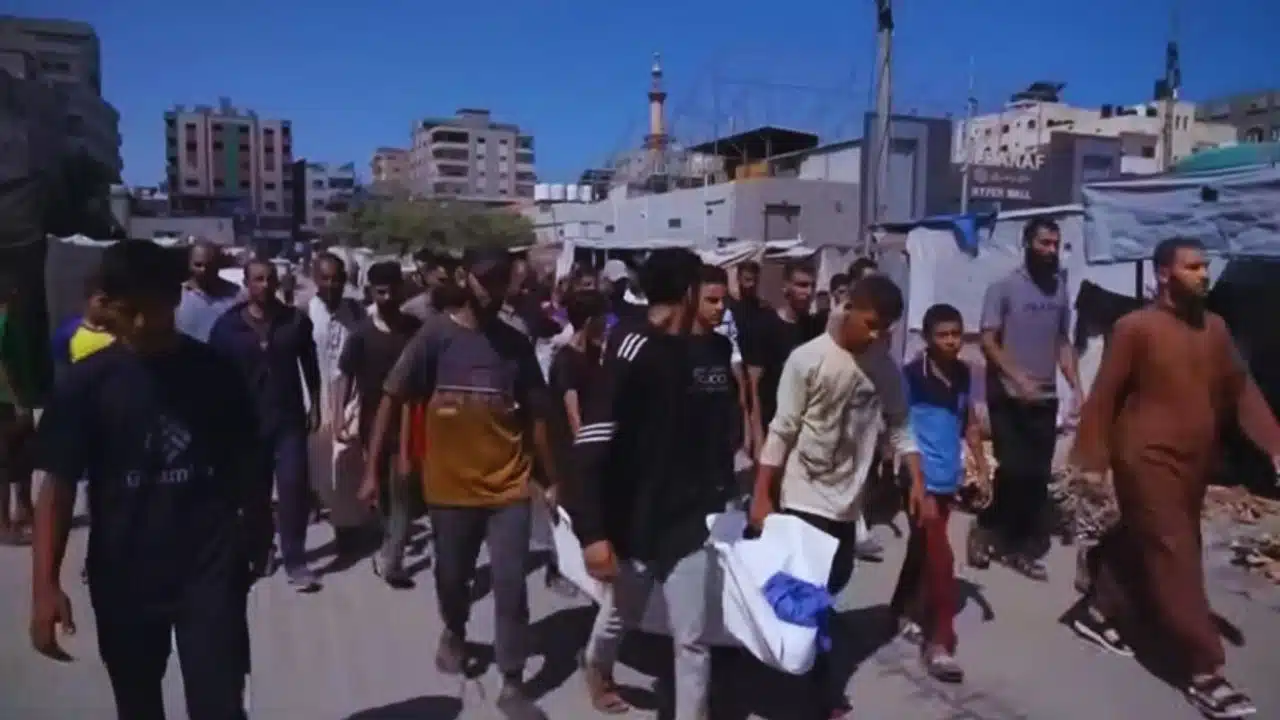
Israeli airstrikes continue to devastate the Gaza Strip, with a crowded market and a water collection point among the latest targets. On Sunday, at least 95 Palestinians were killed, including children and a prominent medical professional, in what is being described by humanitarian groups as one of the deadliest single-day attacks in recent weeks.
The Palestinian Ministry of Health confirmed that an Israeli strike on a bustling market in Gaza City killed at least 17 people. Among the dead was Dr. Ahmed Qandil, a well-known medical figure in the local community.
In a separate strike on the Nuseirat refugee camp in central Gaza, Israeli forces targeted a water distribution area. At least 10 civilians were killed there, including seven children who had gathered to collect drinking water. Medical teams reported that another 17 individuals were injured in the same incident.
Israeli Military Response and Accountability Concerns
The Israeli military has yet to comment on the strike that hit the Gaza City market. However, regarding the Nuseirat incident, it claimed the missile was intended for a Palestinian fighter but malfunctioned due to a technical error. This statement has not been independently verified.
International legal experts are questioning Israel’s explanation. Jessica Dorsey, an assistant professor of international law at Utrecht University in the Netherlands, expressed skepticism about the pattern of repeated civilian harm.
“While mistakes happen in warfare, the consistency of civilian casualties over the past 21 months raises serious questions about Israel’s conduct,” Dorsey told Al Jazeera. “With Israel’s advanced military technology, the expectation is for increased precision and accountability, not growing irresponsibility.”
Soaring Death Toll and Humanitarian Crisis
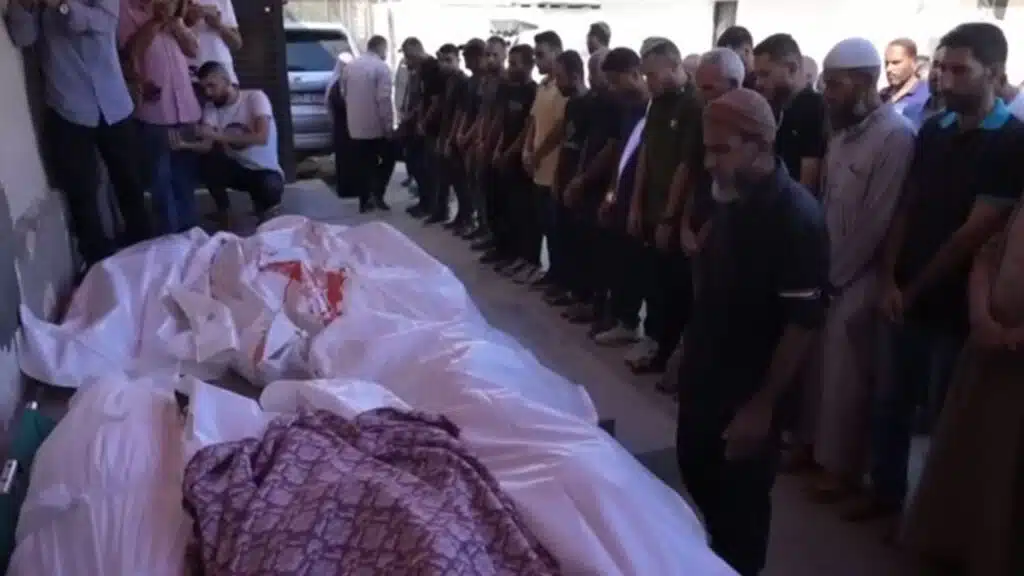
The Palestinian Ministry of Health announced that the overall death toll from the ongoing conflict, which began on October 7, 2023, has now surpassed 58,026. More than half of those killed are women and children. Additionally, over 138,500 people have been injured.
The war has also caused widespread famine and displacement. According to the United Nations Relief and Works Agency for Palestine Refugees (UNRWA), more than 2.1 million residents in Gaza are teetering on the edge of starvation due to Israel’s continuing blockade.
UNRWA reported the death of a seven-month-old girl named Salam, who died of severe malnutrition while under their care. Her death adds to the grim tally of at least 67 children who have reportedly died from malnutrition since the start of the war.
UNICEF: A Growing Child Survival Emergency
UNICEF raised the alarm about the worsening situation for children in Gaza. In June alone, over 5,800 children were diagnosed with malnutrition, and more than 1,000 of them were in severe or critical condition. The organization warned this marks the fourth consecutive monthly rise in malnutrition cases.
“This is not just a nutrition issue—it’s a child survival emergency,” UNICEF stated on its official X (formerly Twitter) account.
Fuel Shortage Threatens Health and Sanitation Systems
Eight UN agencies, including UNICEF, the World Food Programme (WFP), the World Health Organization (WHO), and the UN’s Office for the Coordination of Humanitarian Affairs (OCHA), issued a joint statement warning that Israel’s blockade on fuel shipments into Gaza could lead to the total shutdown of essential services.
“Without adequate fuel, we may have to cease all humanitarian operations. That means no hospitals, no clean water, no sanitation, and no food delivery systems,” the agencies said. They called on Israel to immediately allow sufficient and consistent fuel access to prevent further catastrophe.
Allegations Against Aid Distribution Points
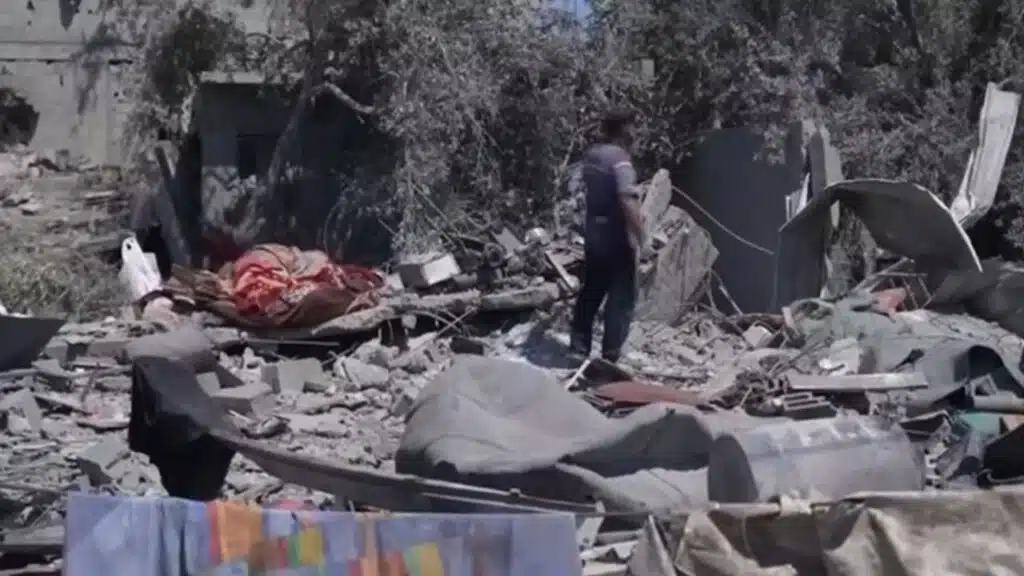
Gaza’s Government Media Office accused Israel and private security forces operating at aid distribution centers of targeting civilians intentionally. The office described the U.S.-backed Gaza Humanitarian Foundation (GHF) aid points as “death traps,” alleging they were part of a broader campaign of “genocide engineering under U.S. sponsorship.”
According to the office, since GHF began operations in May, at least 805 people have been killed and 5,250 others injured while trying to collect humanitarian aid.
Ceasefire Negotiations: Progress Stalled Amid Disagreements
Ceasefire talks are ongoing in Doha, Qatar, but progress has been slow. U.S. President Donald Trump expressed optimism, stating he hopes a ceasefire agreement “gets straightened out” soon. His envoy to the Middle East, Steve Witkoff, echoed that sentiment, noting that discussions were continuing on the sidelines of the FIFA Club World Cup Final in the United States.
However, the proposed 60-day U.S.-backed truce remains deadlocked. Each side blames the other for the delays.
Muhammad al-Hindi, deputy leader of Palestinian Islamic Jihad, told Al Jazeera that the resistance groups are demanding three guarantees: an end to Israeli aggression, full withdrawal from Gaza, and safe distribution of humanitarian aid. He accused Israel of focusing solely on the issue of hostages while ignoring broader humanitarian concerns.
“Israel is trying to bypass these fundamental demands and force civilians into bombed-out zones disguised as aid zones. We cannot sign off on a surrender,” al-Hindi said.
Israeli Political Turmoil Amid Conflict
Meanwhile, back in Israel, Prime Minister Benjamin Netanyahu’s close adviser, Jonatan Urich, may face indictment for leaking classified military intelligence. The Attorney General, Gali Baharav-Miara, confirmed that Urich and another aide are being investigated for sharing sensitive information with the German newspaper Bild in August.
The leaked intelligence concerned the deaths of six Israeli hostages in Gaza, a development that had ignited widespread public outrage. The Bild report aligned closely with Netanyahu’s messaging and is suspected to have been a deliberate move to influence public sentiment and deflect criticism over ceasefire breakdowns.
Netanyahu has rejected the investigation as politically driven, calling it a “witch hunt.” Urich also denied any wrongdoing.
Previous Truce Broken as Violence Escalates
The current crisis follows the collapse of a two-month ceasefire that began in January. During that period, 38 hostages were released. However, Israel resumed military operations after breaking the truce, citing a lack of cooperation from Hamas.
Since then, civilian casualties have soared, and diplomatic efforts for peace have struggled to make headway. With no clear resolution in sight, the humanitarian catastrophe in Gaza continues to deepen by the day.
The Information is Collected from Al Jazeera and Euronews.