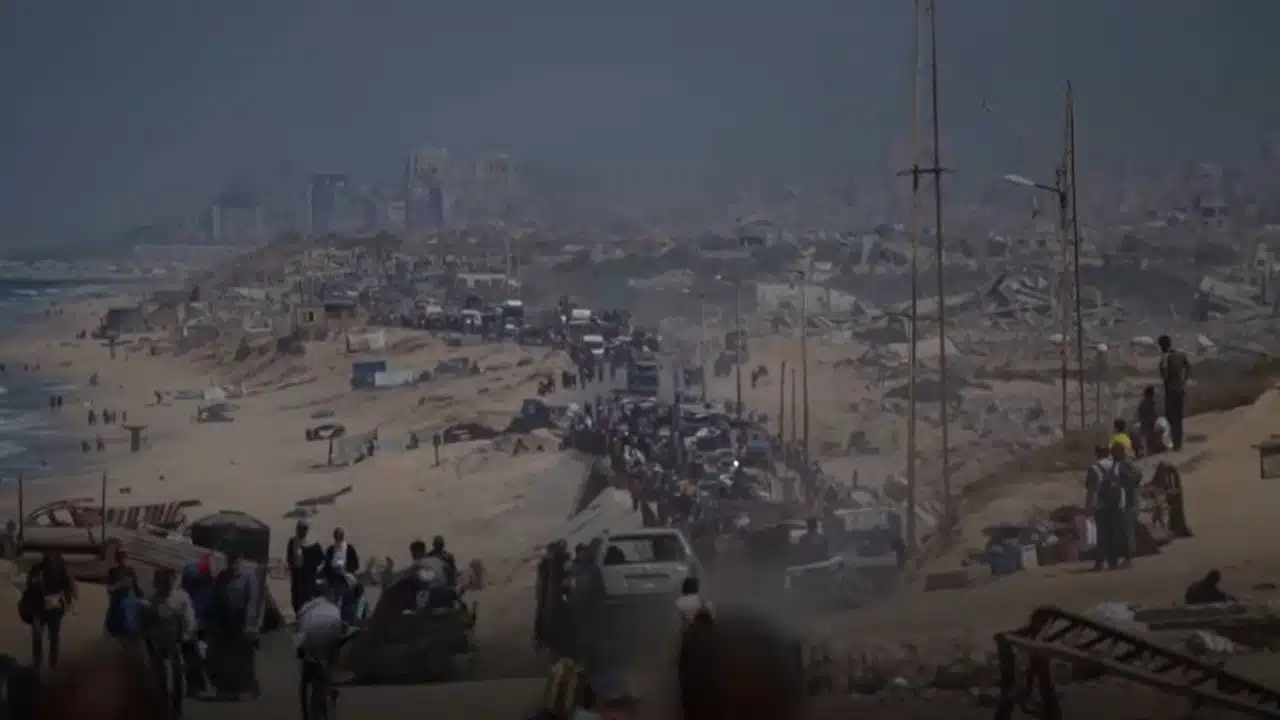
Israel’s military kept up its large-scale assault on Gaza City and other parts of the Gaza Strip on Saturday. According to Gaza’s Health Ministry, at least 34 Palestinians were killed in the latest round of strikes and ground operations. The Israeli Defense Forces (IDF) say their campaign is focused on dismantling Hamas’ underground tunnels, booby-trapped positions, and high-rise buildings believed to house militant infrastructure.
The military has described these operations as part of a broader push to seize full control of Gaza City, which has been one of the central battlegrounds in the nearly two-year war. Reports from the ground describe relentless bombardments that have shaken entire neighborhoods, particularly in Sheikh Radwan and Tel al-Hawa, where Israeli forces have intensified strikes to prepare for a westward advance.
Strategic Demolition of High-Rise Towers
The IDF confirmed it has demolished up to 20 major towers in the city over the past two weeks, arguing that Hamas has been using them for command centers, weapons storage, and sniper positions. Many of these buildings were symbols of Gaza City’s urban skyline, now reduced to rubble. Israeli commanders claim these demolitions deny Hamas tactical advantages, while humanitarian organizations warn that the destruction has left thousands of civilians without homes or shelter.
Military analysts point out that by targeting Gaza’s vertical infrastructure, Israel is attempting not just to weaken Hamas but also to make Gaza City increasingly uninhabitable, accelerating population displacement.
Displacement on a Massive Scale
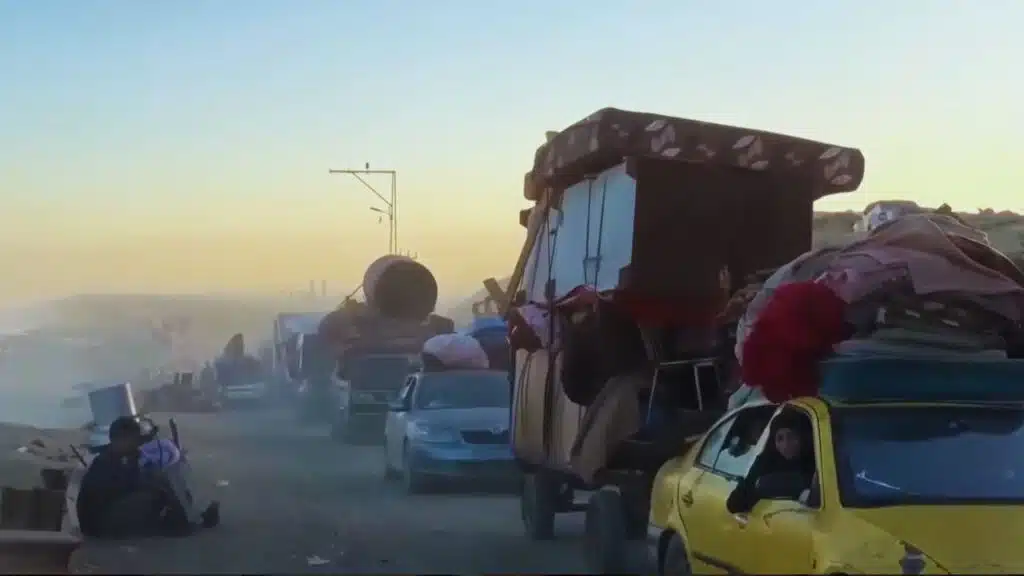
The humanitarian fallout has been catastrophic. Israeli authorities estimate that about 350,000 people have fled Gaza City since the start of September, seeking refuge further south. Palestinian sources say the total number could be even higher, with some 600,000 to 900,000 people still trapped in the city. Families report moving multiple times as neighborhoods are bombarded, with many ending up in overcrowded shelters or open fields with little access to food, clean water, or medical care.
The United Nations has repeatedly raised concerns about a worsening famine. Gaza’s health officials say shortages of medicine, electricity, and clean water are driving a humanitarian crisis that continues to spiral. Israel rejects accusations of deliberately creating famine, insisting that Hamas diverts aid and exaggerates conditions for political purposes.
Hostages at Risk
Hamas’ armed wing, the al-Qassam Brigades, published images of Israeli hostages on Telegram on Saturday, warning that their lives are directly endangered by Israel’s ongoing operations. Out of the 251 hostages seized during Hamas’ October 7, 2023, attacks on Israel, 48 remain in Gaza, with around 20 believed to still be alive.
The hostage issue has been one of the most painful and politically sensitive dimensions of the conflict. Families of those still missing continue to pressure Israel’s government to prioritize negotiations, but the military leadership maintains that decisive force is the only way to secure their release.
International Developments: Recognition of a Palestinian State
The escalation comes just days before a major diplomatic milestone. Ten countries, including Australia, Belgium, Britain, and Canada, have announced that they will formally recognize an independent Palestinian state on Monday, ahead of the annual United Nations General Assembly in New York.
This move follows a growing international push to revive the two-state solution, which many governments see as the only viable path to ending decades of conflict. Israel, however, rejects unilateral recognition efforts, arguing that statehood should only be achieved through direct negotiations and after Hamas is disarmed.
A War Entering Its Second Year
The current conflict began when Hamas fighters launched a coordinated cross-border assault on October 7, 2023, killing about 1,200 people in Israel and taking 251 hostages. Israel responded with one of the most intense military campaigns in its history.
Since then, according to Gaza health authorities, over 65,000 Palestinians have been killed, and the majority of Gaza’s 2.3 million people have been displaced, often multiple times. Entire neighborhoods have been leveled, hospitals and schools have been damaged, and essential infrastructure has collapsed.
Israel insists that Hamas bears full responsibility for prolonging the war, saying the group could end the conflict if it agreed to surrender, release all hostages, disarm, and disband its forces. Hamas counters that it will not accept disarmament unless a sovereign Palestinian state is created, with control over its own territory.
Global Reaction and Humanitarian Alarm
Human rights organizations warn that Gaza is facing one of the worst humanitarian crises in modern history, with widespread hunger, disease, and lack of shelter. The World Food Programme and other UN agencies continue to report that large parts of the population are at risk of starvation.
Meanwhile, pressure on Israel is mounting from both allies and critics. While Washington continues to back Israel’s right to self-defense, several European governments have expressed alarm at the scale of civilian casualties and destruction. Regional powers such as Egypt and Jordan have called for immediate ceasefire talks, but negotiations remain stalled.
As Israel presses deeper into Gaza City and prepares for potentially decisive battles in its central and western districts, the fate of hundreds of thousands of civilians hangs in the balance. With the UN General Assembly about to begin, the world’s attention will be divided between diplomatic recognition of Palestine and the relentless destruction unfolding in Gaza.
What happens in the coming weeks could set the course not just for the war but for the long-term shape of the Israeli-Palestinian conflict.
The information is Collected from Sky News and MSN.