You might ask, is hanako san real or just an urban legend? The tale dates back to the 1950s, when school folklore spread through kids’ whispers in bathroom stalls.
This post uses clear analysis and Q&A to sort myth from fact. Keep reading.
Key Takeaways
- Hanako-san began in 1950s Japan after World War II. Folklorists cite Matthew Meyer (2010), Michael Dylan Foster (2015), and an NPR feature (2014).
- Three death tales exist: she died under rubble in a 1945 air raid, was killed by a stranger, or took her own life after bullying.
- The ritual asks you to knock three times on the third stall door and say, “Hanako-san, are you here?” as a schoolyard dare.
- She appears in films (Matsuoka 1995; Tsutsumi 1998; Yamada 2013), manga/anime (Toilet-Bound Hanako-kun 2014; 2020), and games (Spirit Hunter; Yo-kai Watch).
- Experts like Jan Harold Brunvand find no proof and call her an urban legend. Debates on Reddit and skeptic sites keep the story alive.
Where Did the Hanako-san Legend Originate?
Folklorists trace Hanako-san to the 1950s school hallways in Japan. A wave of ghost stories rose after World War Two. Urban legends textbooks list her as a top tale. Yōkai fans see her as a school spirit.
She still marks Japanese culture today.
Matthew Meyer and Michael Dylan Foster wrote papers on her. Kunio Yanagita, Keigo Seki, Lafcadio Hearn and Shigeru Mizuki studied her name. Inoue Enry covered her in early essays. Her tale appears in The Book of Yokai, a 2015 guide to strange spirits.
Jan Harold Brunvand and Patricia Turner cite her as a prime ghost story example.
How Did Hanako-san Die?
One story says she died under rubble while playing hide and seek in a school bathroom stall during a 1945 air raid. A parent or stranger killed her inside that same stall, in another version.
Urban legends made her tale a chilling ghost story.
A third version claims she killed herself in that cramped stall after relentless bullying. NPR covered her case in 2014, tracing it to childhood trauma and haunting folklore. Matthew Meyer noted this account in 2010, linking it to Japanese culture and death fears.
How Can You Summon Hanako-san?
Summoning Hanako-san feels like a risky schoolyard dare. It taps into old Japanese folklore.
- Enter the girls’ toilet on level three of a school, where the summoning ritual says the spirit haunts like a ghost.
- Approach the third stall door, the exact spot the legend marks.
- Knock three times, each rap echoing off cold tiles.
- Ask in a firm voice, “Hanako-san, are you here?” to spark her reply.
- Listen closely for a whisper, she may murmur, “Yes, I am.”
- Watch for a pale hand or sudden pull into the stall, signs of a supernatural visit.
- Treat it as a schoolyard dare among Japanese schoolchildren, who spread the rumor like wildfire.
- Note that schools banned dangerous rites after Kokkuri-san scares turned real.
- Heed warnings against mental or spiritual fallout without trained supervision.
- Shun real demon summoning; occult texts say it demands at least five years of study.
Different Versions of the Hanako-san Story
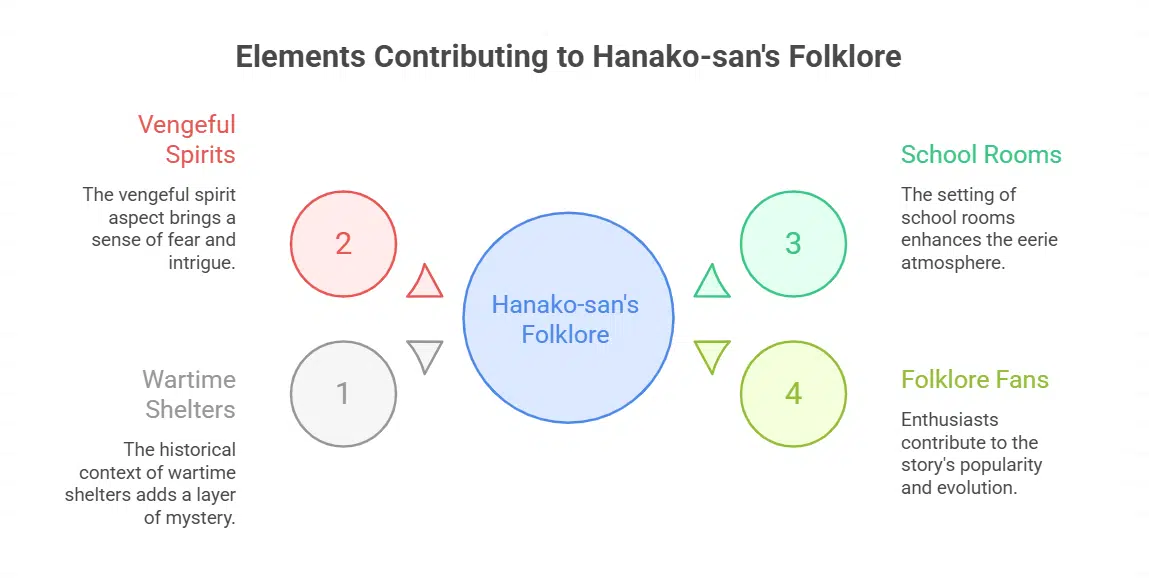
Hanako-san stories twist like old film reels, from wartime shelters to vengeful spirits in school rooms. Folklore fans point their devices at cold walls, chasing phantom readings like cats after a laser dot.
What Happened to Hanako-san During an Air Raid?
One origin tale says Hanako-san died during a World War II air raid near a school. Kids dove into a stall to play hide-and-seek, then bombs dropped. That blast crushed her hiding spot.
It became a haunting wartime urban legend that shows deep childhood trauma in Japanese culture.
Folklore studies, like Matthew Meyer’s 2010 A-Yokai-A-Day, popularized this version. It stands among the earliest documented forms of the legend. The supernatural ghost story still chills readers with echoes of 1940s horror and childlike play gone wrong.
Who Is the Madman in the Hanako-san Legend?
A twisted guardian haunts bathroom stalls in this urban legend. Some tell how a murderous father killed his own child named Hanako-san. Other tales swap in an unknown stranger as the madman.
This horror story paints adults as monsters, tapping childhood fears, trauma, and death.
Uncle John’s the Haunted Outhouse Bathroom Reader for Kids Only! 2013 names this dark version. Tour guides whisper it in ghost tours, sharing folklore and myth. They note it stands apart from air raid and suicide variants.
Many call it a chilling paranormal legend.
What Is the Suicide Version of Hanako-san’s Story?
Some pass down an urban legend that Hanako-san took her own life in a school bathroom. Bullies drove her into isolation. This version highlights youth suicide and mental health in Japanese school culture.
It reflects how social issues lead to real tragedy. Experts cite the account in the 2013 guide, Yokai Attack! The Japanese Monster Survival Guide. Folklore fans see it as a cautionary tale on bullying and isolation.
Readers see this tragedy in cultural analysis. The guidebook calls it a modern spin on classic tales. Scholars note how peer cruelty can push students past their limit. Some link the myth to official reports and mental health studies from 2009.
Fans debate its truth but agree it warns against cruelty.
What Does Hanako-san Look Like?
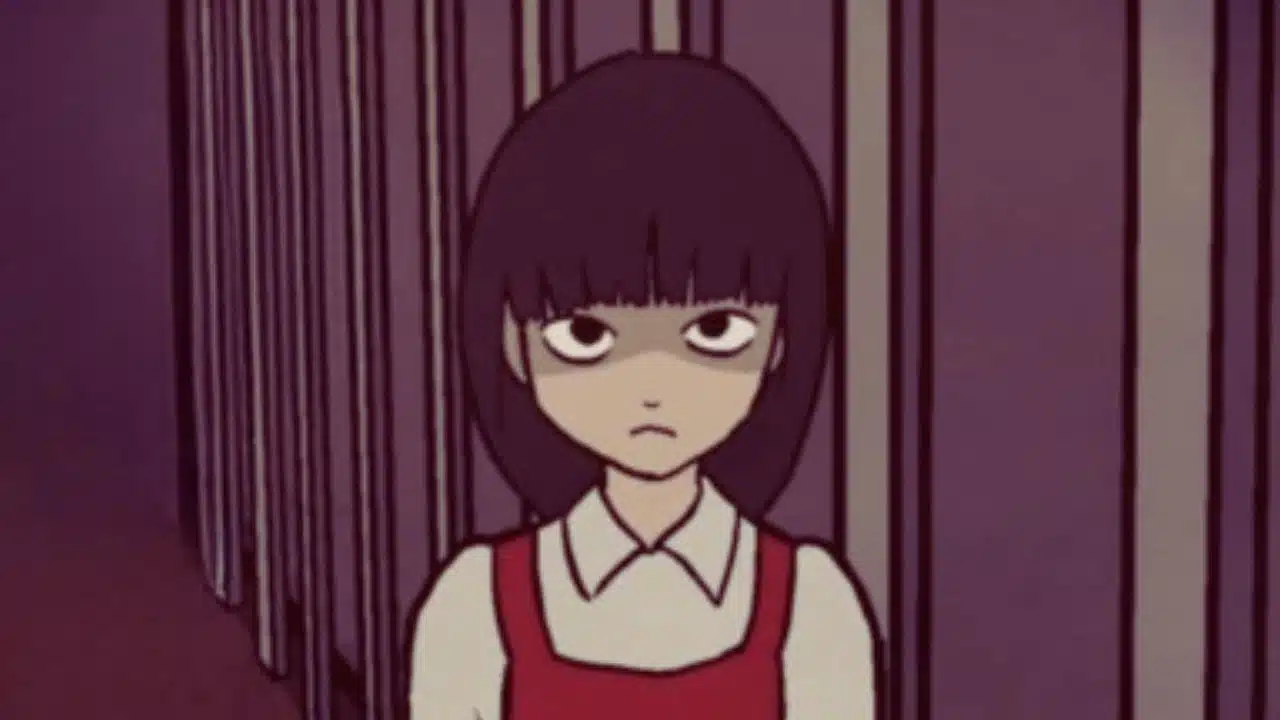
Artists draw Hanako-san as a young girl with a bobbed haircut. She wears a red skirt or dress. That image feels iconic in Japanese culture and urban legend art. Her pale face and dark eyes make a scary apparition.
This spirit ties to the yūrei class of ghost in Japanese folklore.
Her ghostly hand may slip from a toilet during summoning rituals. Fans sometimes see a three headed lizard if they spy on her. Creators adapt this design in anime, manga, and film.
The visual style adds supernatural flair and horror to stories and games.
How Has Hanako-san Influenced Japanese Culture?
Hanako-san leapt out of bathroom folklore into films, animation, comics, and arcade games, sparking new scares across Japan—read on to see her lasting mark.
How Is Hanako-san Portrayed in Films, Anime, and Manga?
Joji Matsuoka’s 1995 film shows Hanako as a tender spirit. Yukihiko Tsutsumi directs a 1998 sequel that paints her as a vengeful ghost. Masafumi Yamada restarts the saga in 2013.
Cinema fans sense a supernatural twist in each folklore scene.
Sakae Esuno’s manga casts Hanako in a surreal maze. Aidairo launched Toilet-Bound Hanako-kun in 2014, Lerche studio aired its anime in 2020. Koji Shiraishi slots her into a horror anthology titled Senritsu Kaiki File Kowasugi! File 04.
She pops up in Kyoukai no Rinne, GeGeGe no Kitaro, and Ghost Stories. A 2020 short story named Who’s at the Door? uses Hanako to spark chills. Anime fans track her moves through Japanese culture.
Which Video Games Are Inspired by Hanako-san?
Hanako-san haunts more than bathroom stalls. She appears in many video games as a famed yōkai.
- Spirit Hunter: Death Mark II features Hanako-san as the first ghost met. Players must open a haunted stall door to face her spirit.
- Yo-kai Watch renames her Toiletta in the English release. Fans chase toilet spirits in a bright, cartoon style world.
- Breath of Fire II shocks a non-player character with her name in a bathroom scene. A single shout, “Aaaugh, it’s Hanako,” still makes fans laugh and shiver.
- Various horror and supernatural titles borrow her ghostly traits. They add bathroom scares to tap into urban legend fear.
What Paranormal Beliefs Surround Hanako-san?
Children in Japan tried a spirit board named Kokkuri-san until schools banned the game. A risky rite summons a ghost to a classroom toilet. Reports show a pale hand reaching through porcelain, or the brave may drop into its bowl.
Some seekers even face a three-headed lizard crawling from pipes. Demonology experts say such rituals can wreck a mind or soul.
Traditional believers urge at least five years of study before any summoning ritual. Media often show a cutesy phantom but real folklore warns against friendly ghosts. Spirit specialists warn that amateur rites can open harsh portals.
Many students still whisper about this haunting ceremony in halls. Faith in the paranormal stays high among school kids.
Is Hanako-san a Benevolent or Malevolent Spirit?
Filmmakers painted Hanako-san as a friendly spirit in a 1995 movie, offering gentle comfort. The 1998 motion picture cast her in full vengeance mode, a malevolent force behind the toilet door.
School folklore blends legend and chilling myth, with some kids hearing a shy laugh and others facing a harsh encounter.
An urban idol called 14th Generation Toilet Hanako-san explores dark themes, hinting at haunting backstories. Old tales warn that prying into her space can summon a three-headed lizard, a vivid punishment for disrespect.
Fans of a manga series and its anime journal her as a complex spirit, mixing kindly guidance with tricky pranks. Videogame quests also shape her mythology, turning each encounter into a fresh twist on benevolence and menace.
How Does Hanako-san Compare to Bloody Mary and Other Legends?
Readers see how Hanako-san stands side by side with other mirror and bathroom ghosts.
| Legend | Origin & Ritual | Traits | Cultural Links | Analysis Tools |
|---|---|---|---|---|
| Hanako-san | Japan Summoned at stall door |
School yōkai Kind or wrathful |
Films, anime, manga | Comparative analysis Narrative mapping |
| Bloody Mary | West Mirror chant |
Vengeful shade Bloody eyes |
Urban legend lore Horror games |
Folklore studies Cross-cultural review |
| Aka Manto | Japan Toilet question |
Offers red or blue cape | School horror tales | Theme mapping Folklore comparison |
| Akaname | Japan Bathhouse lurker |
Filth-licking demon | Yōkai art Storybooks |
Creature taxonomy Cultural context |
| Madam Koi Koi | Nigeria School hall steps |
Night stalker | African ghost tale | Legend tracing Oral history |
| Moaning Myrtle | England Pipe haunt |
Crying spirit Book icon |
Harry Potter series | Literary analysis Character study |
| Teke Teke | Japan Rail path chase |
Severed torso phantom | Horror manga Urban lore |
Urban legend mapping Horror motif study |
Is There Any Evidence That Hanako-san Exists?
Scholars find no scientific proof for Hanako-san. Folklorist Jan Harold Brunvand calls the tale an urban legend. Children drive its spread with schoolyard anecdotes. Cultural storytelling keeps it alive.
The question, Is There Any Evidence That Hanako-san Exists? meets only hearsay. Media portrayals in film, anime, and video games stir curiosity, but they lack any factual basis. Summon calls at sleepovers serve as harmless pranks, not rituals.
No survey or case study has ever confirmed a real haunting.
What Do Experts Say About the Hanako-san Phenomenon?
Folklorist Matthew Meyer analyzed Hanako-san in A-Yokai-A-Day (2010). Michael Dylan Foster explores her in The Book of Yōkai (2015). NPR ran a feature on her in The Creepiest Ghost And Monster Stories From Around The World (2014).
Hiroko Yoda and Matt Alt list her in Yokai Attack! The Japanese Monster Survival Guide (2013). Jim Harper digs into her story in Flowers from Hell: The Modern Japanese Horror Film (2009).
Linda Dgh, Gary Alan Fine and Patricia Turner study her through cultural psychology. Websites like Snopes and Hoax Slayer treat her as a classic urban legend.
These sources show she stands at the crossroad of yōkai myth and ghost lore. Experts call her tale a lens for child fears and school rituals. They use folklore and urban legend analysis to map her spread.
This story shows how horror and mythology shape our collective mind.
What Are the Popular Debates: Real Spirit or Urban Legend?
The Hanako-san topic sparks fire in chat rooms and pubs alike. People split over spirit claims and urban tales.
- Ghost hunters on Reddit’s r/hanakokun, with 49,000+ members, share tales of toilet knocks and strange voices to back a genuine spirit claim.
- Skeptics point at the lack of solid proof and the legend’s shape shifting as signs of an urban legend.
- Paranormal fans highlight repeated sightings in schools and parks, then they treat rituals like knock-knock chants as reality tests.
- Experts link the Hanako-san saga to collective storytelling and fear management in cultural narratives.
- Anime and manga plots, plus video games, inject new twists, shaping belief systems and keeping the myth fresh.
- Dr. Yamada, a folklore scholar, ties its power to shared myths born from wartime fear and community lore.
- Some myths blame a madman or a wartime air raid, while others tell of a lonely schoolgirl’s tragic leap.
- Rituals that mimic old toilet games, like three taps then a call, add a thrill that fans won’t shake off.
- Debates often compare Hanako-san to Bloody Mary and other urban legends to spot patterns in our myth making.
- The lack of real evidence, plus the tale’s adaptability, keeps both believers and doubters hooked.
Why Does the Hanako-san Legend Still Endure?
Fans have shared this urban legend for over 70 years. Films, anime, manga, and video games keep the legend alive. Kids dare each other in ritual games in school restrooms to call her out.
People link it to school anxieties, unknown horrors, and ghostly encounters. That supernatural vibe fuels late night chills.
An online group called r/hanakokun shows fans still chat and share updates. Media representation, from songs to video games, shows cultural adaptation of her myth. Her tale links Japanese folklore to ghost stories from many lands.
Each retelling taps into fresh takes on ritual and collective fear.
Takeaways
Hanako-san remains one of Japan’s most enduring and spine-chilling urban legends, captivating both skeptics and believers alike. Whether seen as a cautionary tale, a cultural ghost story, or a manifestation of deep-rooted fears, her presence continues to haunt school corridors and popular imagination. While no definitive proof exists to confirm her reality, the mystery itself is what keeps the legend alive—passed down through generations, retold in films, anime, and whispered among students late at night.
Ultimately, the question isn’t just “Is Hanako-san real?” but rather why do we still feel compelled to believe in her? That lingering uncertainty is what makes Hanako-san’s story so unforgettable.
FAQs
1. What is Hanako-san in Japanese folklore?
The spirit is a school bathroom ghost girl. It is part of a dark urban legend. Kids whisper its story across generations. It lives in that cold stall, like a shadow that sticks.
2. Do any real sightings prove Hanako-san is real?
Some claim they saw her eyes in a mirror, others heard a soft knock, like a tap from beyond. Video and photo evidence blurs into doubt. No scientist can pin her down. The mystery stays alive in chatter and chills.
3. What makes the haunted bathroom stall so creepy?
That old tile smells of stories and fear. A single empty stall can feel alive. If you knock three times and call her name, the lights might flicker. Thin walls echo each tap, it feels like walking into a trapdoor in time.
4. How can I handle a spooky encounter with her?
Stay calm, breathe slow. Speak kindly, then back away. A kind word can ease her spirit. Laugh it off like a gentle breeze, then swap stories with friends under the sun. No need to keep the chill alive alone.