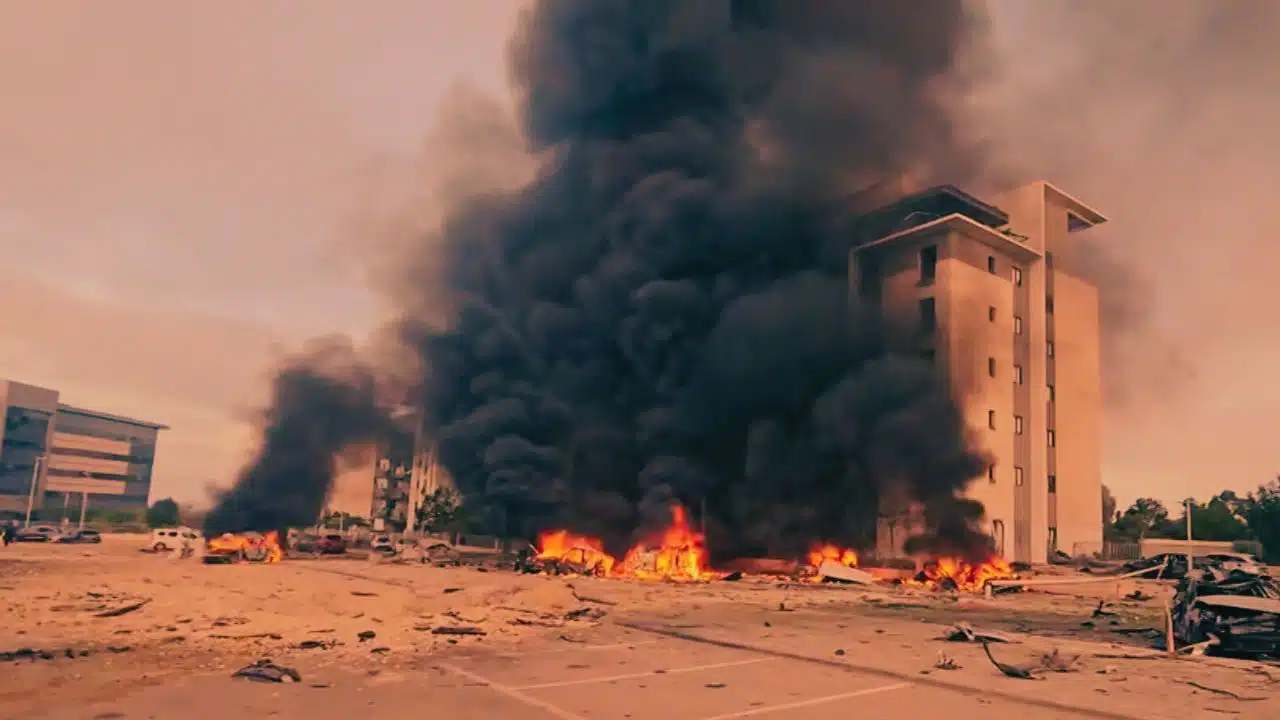
Iran launched an extensive missile strike against Israel, firing between 20 and 30 ballistic missiles targeting multiple regions: Greater Tel Aviv (Gush Dan), Haifa, Beersheba, and surrounding Negev areas.
Casualties & Initial Damage
-
Injuries: Between 17 and 23 people were wounded; about 3 to 4 are in serious condition in hospitals across Israel .
-
Beersheba: One missile struck the Soroka Medical Center, damaging infrastructure and injuring around 50 patients and staff during a partial evacuation on June 19.
-
Haifa and Gush Dan saw multiple missile explosions, with visible smoke clouds over neighborhoods and emergency services dispatched to blast zones .
Civilian and Tech Infrastructure Targeted
-
The Gav Yam Negev Advanced Technologies Park, a hub for cyber and defense development, was struck. Fires erupted among parking lots, residential buildings, and a sensitive Microsoft office.
-
A childcare center in Beersheba was destroyed after hours—no one was hurt.
Rail Disruption
-
The Beersheba North–University station was temporarily shut after sustaining strike-related damage. It has since resumed service.
Israel’s Strategic Counter-Strikes Across Iran
Air Campaign Highlights
Beginning June 13, Israel initiated “Operation Rising Lion”, deploying over 60 fighter jets in multiple waves. By June 20, the combined use of jets and drones escalated to approximately 200 aircraft, dropping more than 120 precision-guided munitions on Iranian territory.
Key Facilities Struck
-
Nuclear Enrichment Sites: Strikes severely damaged the Natanz Pilot Fuel Enrichment Plant (rich with advanced centrifuges) and disrupted uranium conversion facilities at Esfahan. The IAEA confirms heavy water research reactor at Khondab in Arak was hit, though it was not yet operational.
-
Fordow Enrichment Plant: Conflicting reports suggest limited above-ground damage.
-
Missile & Defense Infrastructure: Iran’s missile storage and launcher complexes—including Shahab, Sejjil, and Qiam systems—along with IRGC bases in Kermanshah, Tabriz, Tehran, and underground sites, were heavily targeted.
-
Military Headquarters: Buildings linked to the IRGC and Quds Force in Tehran were struck, as were the Ministry of Defense and intelligence departments.
-
Airbases & Naval Sites: Targets include strategic airbases like Mehrabad and Tabriz, along with the Abadan naval base and facilities in Bushehr and Zanjan.
-
Energy Infrastructure: Israel struck the South Pars gas field and Fajr-e Jam refinery in Bushehr province.
Casualties & Displacement
-
Iranian military and civilian toll stands at over 650 killed, with more than 1,300 injured, according to HRANA.
-
Key nuclear scientists and IRGC commanders were among the dead, including a confirmed fatality in Tehran’s Gisha district via drone strike .
-
The strikes have sparked a civilian exodus from Tehran, with many fleeing amid fears of bombings and infrastructure collapse.
Nuclear & Environmental Threat Assessment
Contamination Risks
-
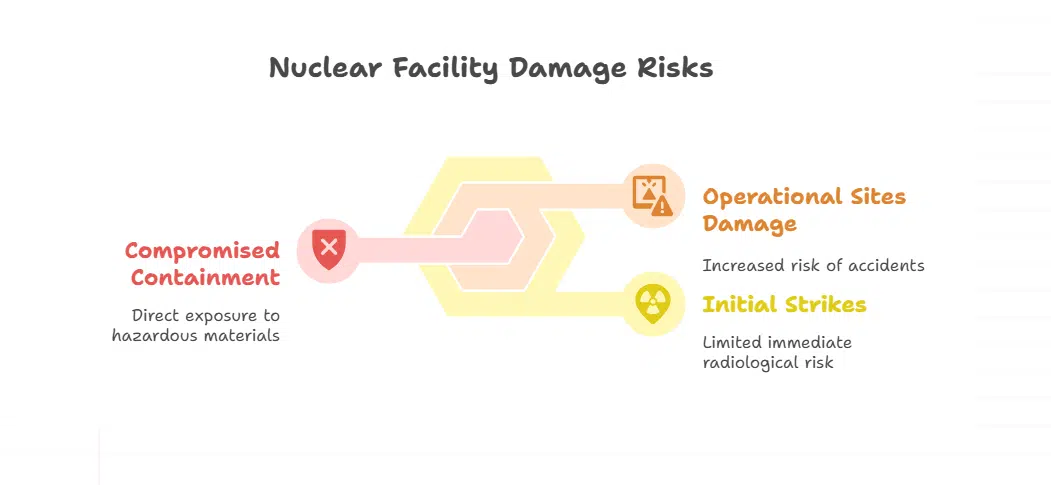
According to the IAEA, initial strikes near uranium enrichment and chemical facilities pose limited radiological risk due to their passive status; however, damage at operational sites remains concerning.
-
Damage near nuclear reactors like Khondab and processing centers in Esfahan, Natanz, Arak carries the potential for chemical exposure—especially toxic uranium compounds—if containment structures are compromised.
Bushehr’s Crisis Potential
-
The most severe nuclear risk lies at the Bushehr nuclear power plant. An attack here could result in widespread radioactive fallout affecting the Gulf states’ desalination systems, putting millions at risk.
-
IAEA officials, UN leadership, and regional governments are strongly advising against targeting Bushehr due to the catastrophic environmental and public health consequences .
Diplomatic Landscape & Global Response
Ceasefire Talks & Preconditions
-
Geneva negotiations led by EU diplomats featured Iran’s Foreign Minister Araghchi signaling openness to resuming talks if Israel pauses its military operations. Europe pressed for progress without preconditions and coordination with the U.S.
Global Appeals for Restraint
-
UN Secretary-General and IAEA chief emphasized urgent de-escalation, warning of nuclear disaster risks and broader conflict expansion .
-
Countries like Russia, China, and members of the Arab League have echoed these calls, highlighting global stability concerns .
U.S. Position & Military Preparedness
-
President Trump warned against escalation, stating Iran is not winning and expressed willingness to engage diplomatically, though U.S. military deployment remains on standby pending a decision in the next two weeks .
-
Meanwhile, logistical support such as aerial refueling assets for U.S. forces in the region suggests readiness to back Israel if required .
Current Conflict Snapshot
| Aspect | Iran → Israel | Israel → Iran |
|---|---|---|
| Force Employed | 20–30 ballistic missiles, drones | 60+ jets, 200 aircraft, drones, 120+ bombs/drone strikes |
| Key Impact Zones | Gush Dan, Haifa, Beersheba (hospital, daycare, tech park) | Natanz, Esfahan, Khondab/Arak, Fordow, missile depots, airbases, civilian areas |
| Israeli Casualties | 17–23 wounded, including severe cases | — |
| Iranian Casualties | — | 650+ fatalities, 1,300+ wounded (military & civilian) |
| Nuclear Threat Level | — | Low-to-moderate at enrichment sites; high at Bushehr if struck |
| Diplomatic Standing | — | Geneva talks stalled; U.S. decision pending; de-escalation pressure rising |
| Regional Fallout | — | Gulf states monitoring radiation; displacement in Tehran; global concern |
Why This Matters
This military escalation marks a historic evolution in the Iran–Israel confrontation. Iranian strikes have transcended purely military targets to include hospitals, daycares, and tech infrastructure. Israel has responded with unprecedented, near-deep strikes against nuclear, missile, military, and energy facilities—including those near or in Tehran—causing large-scale human displacement and serious humanitarian risk.
Nuclear contamination, once limited, now threatens to affect the broader Middle East and key international communities, particularly Gulf nations reliant on desalinated water. Diplomatic progress is stalling: Iran maintains a pause by Israel is essential, while Israel insists striking Iran’s nuclear capacities remains essential for national survival. While the U.S. holds off full engagement, military support escalation remains possible within weeks, potentially dragging in regional and global powers.
In short, the conflict now carries strategic, humanitarian, and environmental consequences far beyond its traditional scope—spanning health emergencies, refugee crises, and global diplomatic fractures.