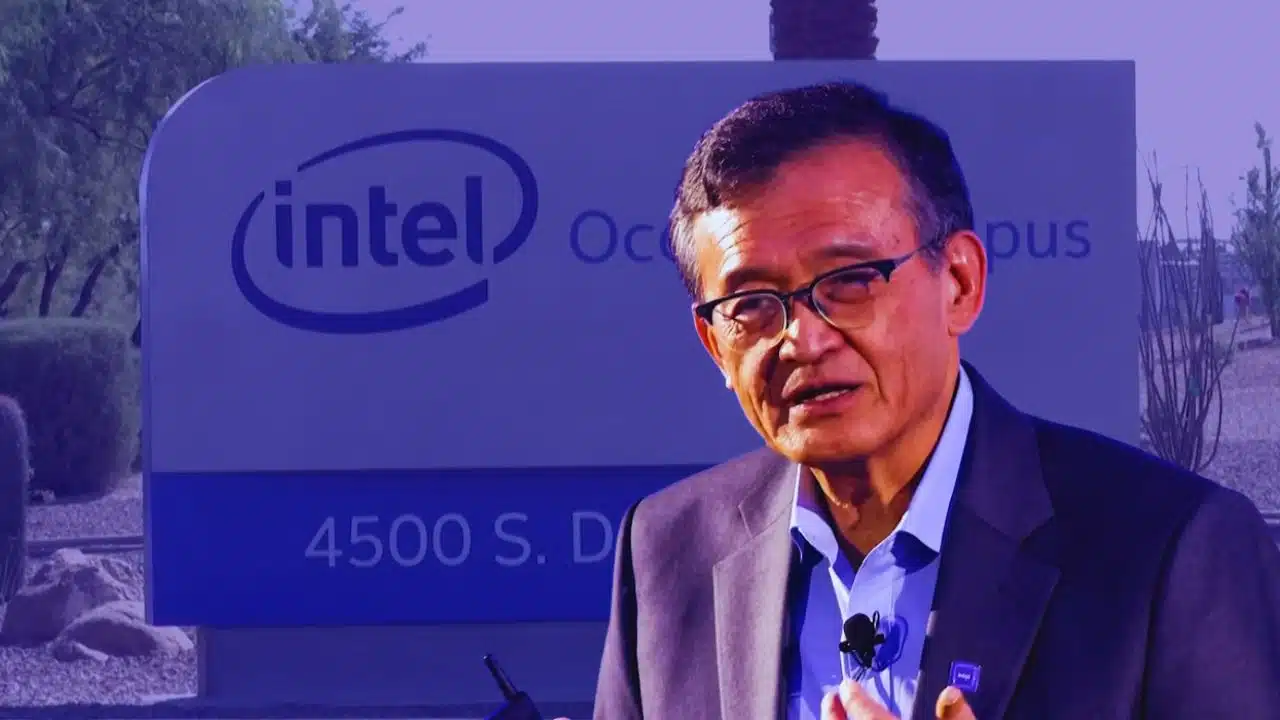
On August 7, 2025, U.S. President Donald Trump took to his social media platform, Truth Social, to deliver a sharp and highly unusual public demand: that Intel’s newly appointed CEO, Lip-Bu Tan, must resign immediately. Trump described Tan as “highly conflicted” and declared there was “no other solution” to the issue.
This direct intervention came just one day after Senator Tom Cotton (R-Arkansas) sent a formal letter to Intel’s board, raising serious national security concerns about Tan’s personal and business ties to Chinese companies—some of which, Cotton alleged, are connected to the People’s Liberation Army (PLA).
Trump’s post triggered a sharp reaction on Wall Street, with Intel shares falling by nearly 3% in intraday trading. Market analysts noted that such an explicit demand from a former president targeting the leadership of one of America’s most strategically important technology firms is rare and politically significant.
The Three Key Questions That Sparked the Crisis
According to Cotton’s August 5, 2025 letter, which was obtained by multiple news outlets including Reuters, AP, and The Wall Street Journal, Intel’s board must respond to three specific questions by August 15, 2025. These questions go to the heart of whether Tan’s leadership poses a conflict of interest for a company so deeply embedded in U.S. defense and economic strategy:
- Board Awareness of Subpoenas: “Was the Board aware of Cadence’s subpoenas before hiring Mr. Tan as CEO? If so, what measures were taken to address concerns about Cadence’s activities under Mr. Tan?”
This refers to legal issues involving Cadence Design Systems, where Tan previously served as CEO. - Divestment of Chinese Interests: “Did the Board require Mr. Tan to divest from positions in semiconductor firms linked to the Chinese Communist Party or the PLA, as well as any other entities in China that could present a conflict of interest?”
- Disclosure to U.S. Government: “Given Intel’s role under the Secure Enclave program, has Mr. Tan disclosed all remaining investments, professional roles, or other ties to Chinese companies to the U.S. government?”
Cotton underscored that Intel holds multibillion-dollar government contracts, meaning transparency is not optional but an obligation tied to national security.
National Security Stakes: Why This Matters Beyond Intel
The confrontation is not simply a corporate dispute—it strikes at the core of U.S. semiconductor independence and technology security. Intel has received $8 billion in subsidies from the CHIPS and Science Act, the largest grant awarded to any single company, to help re-establish domestic chip production and reduce reliance on Asia.
Given the strategic importance of semiconductors in everything from smartphones to advanced weapons systems, any perception of compromised leadership raises alarm in Washington.
Multiple intelligence experts have warned that China’s military-civil fusion policy actively seeks partnerships with overseas experts and investors to advance its technological base, especially in microelectronics.
The Background on Lip-Bu Tan’s China Links
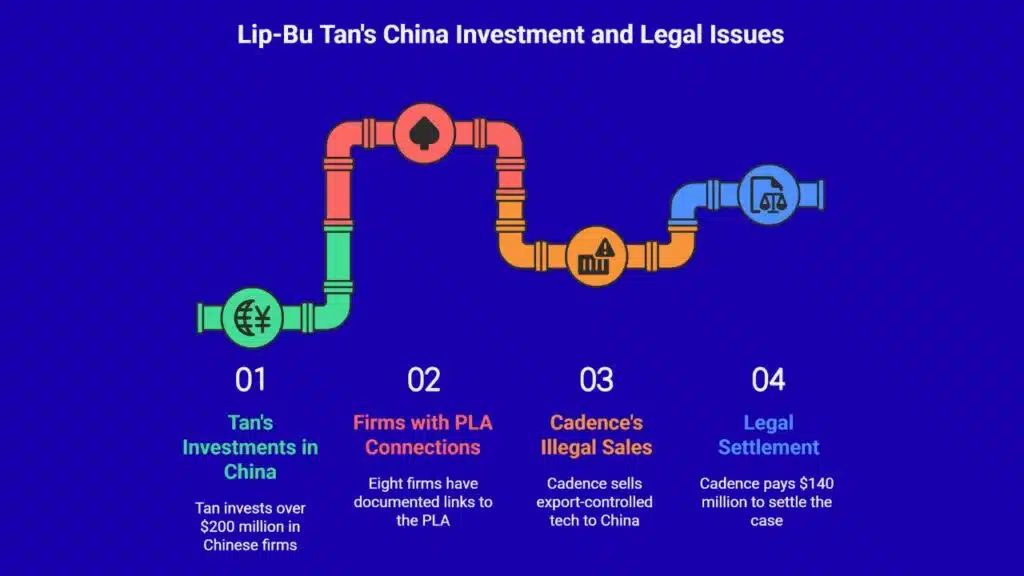
Reports from Reuters and The Wall Street Journal indicate that between 2012 and 2024, Tan invested over $200 million in hundreds of Chinese advanced manufacturing and semiconductor companies. At least eight of these firms have documented connections to the PLA.
Further complicating matters, Cadence Design Systems, where Tan was CEO from 2009 to 2021, pleaded guilty in July 2025 to illegally selling export-controlled U.S. technologies to a Chinese military university. The company agreed to pay $140 million to settle the case with the U.S. Department of Justice. The illegal sales occurred during Tan’s tenure as CEO.
Intel CEO’s Defiant Response: Denial and Defense
Hours after Trump’s post, Tan sent an internal memo to Intel employees, parts of which were later confirmed by AP and MarketWatch. In it, Tan pushed back hard against the allegations:
- He labeled much of the criticism as “misinformation” about his past leadership at Walden International (his venture capital firm) and Cadence Design Systems.
- He insisted he has “always operated within the highest legal and ethical standards”.
- He described leading Intel as “not just a job – it’s a privilege”.
- He said Intel is already engaging with the Administration to provide clarity and address concerns.
Tan also emphasized his alignment with U.S. national security priorities, despite his international business portfolio.
Internal Intel Power Struggles Add to the Drama
This national security firestorm comes at a time when Intel is already navigating internal tensions. Sources told The Wall Street Journal that Intel’s board has resisted some of Tan’s major strategic proposals, including:
- Raising new capital from global markets.
- Acquiring an AI startup to expand Intel’s artificial intelligence capabilities.
- Retaining all domestic manufacturing assets, instead of considering spin-offs or partnerships.
Chairman Frank Yeary and other board members have reportedly favored more aggressive restructuring, while Tan has prioritized U.S. manufacturing resilience—a stance that appeals to Washington but adds cost pressure.
Intel’s Current Challenges: Market and Workforce Pressures
The company faces a tough competitive environment:
- Layoffs: Intel has announced a 15% workforce reduction to cut costs.
- Plant Investment Delays: Some planned U.S. semiconductor fabrication facilities are now on hold due to financial constraints.
- Market Share Pressure: Intel continues to lose ground to rivals TSMC, Samsung, and AMD in key chip segments.
The China controversy has now added a geopolitical dimension to these operational struggles.
White House and Lawmaker Signals
While the White House did not comment directly on Trump’s statement, a senior official told Reuters that Trump “remains fully committed to safeguarding our country’s national and economic security” and that this includes ensuring American companies are “led by men and women who Americans can trust.”
Senator Cotton has warned that if Intel’s board fails to respond satisfactorily by the August 15 deadline, Congress could consider further action—including hearings or legislation targeting leadership at critical tech firms.
Timeline of Key Events
| Date | Event |
| March 2025 | Lip-Bu Tan appointed CEO of Intel. |
| July 2025 | Cadence Design Systems pleads guilty to illegal tech sales to Chinese military university; $140M settlement. |
| Aug 5, 2025 | Senator Tom Cotton sends letter to Intel board with three national security questions. |
| Aug 7, 2025 | Donald Trump demands Tan’s resignation on Truth Social. Intel shares drop nearly 3%. |
| Aug 7, 2025 (later) | Tan issues internal memo denying wrongdoing. |
| Aug 15, 2025 | Deadline for Intel board to respond to Cotton’s letter. |
What Happens Next
The outcome may hinge on three factors:
- Intel’s official response to Senator Cotton’s letter.
- Board confidence in Tan amid mounting political pressure.
- Market reaction if Washington escalates oversight of tech company leadership with foreign ties.
Given Intel’s central role in America’s semiconductor strategy, the stakes are not just corporate—they are national.
If you want, I can now prepare a fact-checked “explainer box” on why Chinese PLA links in semiconductor leadership are treated as a red-flag threat by U.S. intelligence agencies. That would make the story even more valuable for readers. Would you like me to add that?
The Information is collected from NBC News and BBC.