
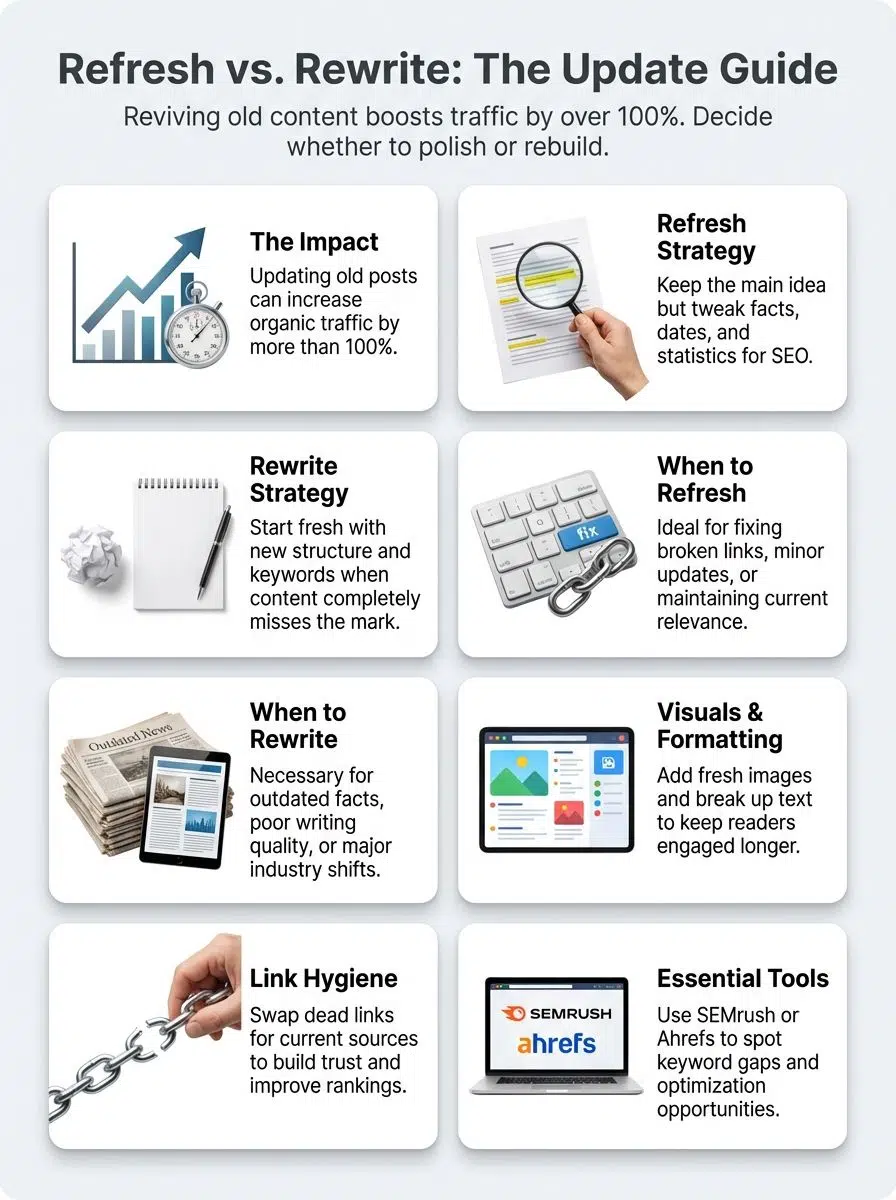
Your old blog posts might not bring in the web traffic they once did. Maybe you notice less user engagement, or your information feels stale, almost like milk left out too long. This is a common problem for anyone using blogs as part of their content strategy. Here is a quick fact: Updating old content can boost organic traffic by more than 100 percent in many cases. You do not always have to start from scratch; sometimes, a small refresh will do the trick, while other times, only a rewrite will work.
This guide on how to update old content makes it easy to choose which path fits your needs best. We’ll show step-by-step how you can improve SEO optimization and breathe new life into older posts, all without losing your mind or wasting time. Ready to make your old content shine? Keep reading!
Understanding the Difference Between Refreshing and Rewriting
Refreshing and rewriting sound similar, but they act like cousins rather than twins. One gives your content a quick boost, while the other starts fresh with new ideas and words.
What Does Refreshing Content Mean?
Refreshing content means making small but powerful updates to your old blog posts or web pages. You keep the main idea but tweak facts, dates, stats, and keywords for better SEO optimization.
For example, you might swap out a broken link for a 2025 report or update an outdated stat with new research. You might add a catchy image or rewrite a confusing sentence so it reads clear as day.
This quick tune-up helps boost organic traffic and user engagement without starting from scratch. Even famous sites like HubSpot check and refresh their articles to stay relevant in search results.
“Refreshing can raise your web traffic by up to 106 percent over time if done right—proof that a little polish goes a long way for content performance!”
When Should You Rewrite Content?
Making small fixes can keep a page fresh, but sometimes a full rewrite works better. If your content misses the mark or fails to attract organic traffic, it may need more than simple tweaks.
Outdated facts, broken links, or old data from before 2022 can frustrate readers and scare away search engines alike.
Google updates its algorithm dozens of times each year. In fact, the March 2024 Core Update completely changed how Google evaluates “helpful content,” punishing pages that feel like filler.
If your blog post on SEO optimization from five years ago does not reflect today’s best practices, you need a rewrite. If industry trends have changed or if your competitor’s pages rank higher with richer information, rewriting becomes key for better user engagement.
Rewriting lets you add missing details, fix tone problems, insert new keyword research findings, and restructure the whole article for easier reading. This approach helps recover lost engagement and aligns your content strategy with what readers look for today.
Why Updating Old Content is Important
Old blog posts can act like stale bread; no one wants a bite. Give your content a fresh twist, and watch readers flock back for more.
Boost SEO Rankings
Updating your content can push your pages higher in search results. Google rewards fresh information and clear answers, so you want to stay ahead. Add new keywords from recent searches to help people find you faster.
Swap out old stats with the latest figures or examples, like adding 2024 data on web traffic or organic growth. Content edits often give quick wins for SEO optimization by fixing broken links and improving headlines.
A recent study showed that Google rewrites nearly 76% of title tags in search results. By optimizing your headline during an update to match what users actually click, you can regain control over how your site appears.
More eyes land on updated pages since Google crawls them more often, driving up user engagement and bringing back lost clicks. Keep things simple and helpful, because both bots and readers love it when they find straight answers quickly!
Recover Lost Traffic and Engagement
Old blog posts can start to fade into the shadows, losing their spot in search results and falling behind fresh content. Many sites see traffic drops of 20 percent or more in a single year after Google updates its algorithm or as new competitors pop up.
Bringing these old stars back to life with a smart content update turns the spotlight on them again. SEO optimization helps blogs move up in rankings, bringing back organic traffic that slipped away like sand through your fingers.
User engagement often sinks when information feels out-of-date or dull. Readers flock back for answers they know are current and helpful.
- Fix Broken Links: A tool like Ahrefs Webmaster Tools can find every 404 error on your site for free.
- Update Visuals: Add a 2025 chart or graph to keep users on the page longer.
- Refresh Examples: Replace a Myspace reference with a TikTok one to stay relevant.
- Check Format: Break up long text walls that look bad on mobile screens.
Time to check which pieces need just a quick polish before tackling outdated ones; some only need minor fixes to shine again.
Align with Current Trends and Audience Needs
People change, trends shift, and what worked in 2020 might sound old hat today. Fresh content should match what readers want right now. If your post talks about SEO optimization but ignores voice search or mobile users, it feels out of date fast.
In 2024, Google emphasized that user intent matters most for web traffic and rankings. Staying up to speed means weaving in trending topics or new buzzwords into your writing.
Sometimes a small tweak does the trick; swap outdated stats with numbers from this year or mention recent changes in content marketing strategies. The more you speak your reader’s language and answer their needs, the more likely they’ll stick around.
When to Refresh Content
Sometimes your blog just needs a little sprucing up, like dusting off an old book and adding fresh notes in the margins. Small changes and clever tweaks can make yesterday’s news feel brand new for today’s readers.
Minor Updates to Maintain Relevance
Small tweaks help keep your content alive. Update facts, dates, or stats to reflect the latest information. Swap out old product names for new ones. Refresh links that lead readers to better sources and fix those pesky broken ones right away.
You could even change a line or two, so your message matches the reader’s needs today. Add keywords from recent SEO research to boost organic traffic and improve user engagement. Edit titles or subheadings for clarity without changing everything else.
Adding New Keywords and Insights
Fresh keywords can help boost your content strategy, giving new life to old posts. Trends shift fast; yesterday’s hot phrase might cool tomorrow.
For example, “organic traffic” or “content update” might now rank higher in search results than older keyword choices. Google often rewards web pages that blend fresh insights with updated SEO-based terms.
A great pro-tip from the SEO community on Reddit is to look for “striking distance” keywords in Google Search Console. These are terms where you rank between positions 8 and 20.
Adding a paragraph or an FAQ section targeting these specific terms can often bump you onto the first page. Mixing new insights helps grow user engagement and improves blog management at the same time.
When to Rewrite Content
Sometimes, a quick fix just will not cut it, and you need to start fresh. Big changes in your field or weak writing spark the need for a full rewrite that gives new life to old posts.
Outdated or Poorly Written Content
Outdated content drags down your site’s SEO performance and lowers user engagement. Facts change, data ages fast, and search engines favor pages with updated info.
Poorly written posts often confuse readers or push them away with weak structure or unclear ideas. In 2025, data shows that AI Overviews often steal clicks from generic articles, meaning your content needs to be deeply unique to survive.

A blog post filled with old trends or clunky sentences won’t climb web traffic charts or grab organic traffic. Industry standards shift as quickly as a wink; what was once helpful might now steer people wrong.
Strong content strategy always includes regular content audits for better content optimization and continued growth in user trust. Updating or rewriting clears out the digital cobwebs so visitors find value in every visit.
Major Shifts in Industry Trends or Information
Bad writing is only one piece of the puzzle. Big changes in your industry call for a rewrite, too.
Think about how Google’s search algorithm changed in March 2024. Rankings flipped on their heads, so old content didn’t match new SEO optimization guidelines. If your blog once talked about Facebook but now TikTok rules the web traffic scene, that article needs more than a quick update.
Fresh data and trends can make content go stale fast. For example, marketing experts like Neil Patel share new keyword research tips every year.
Your readers want current info suited to today’s strategies and habits. They do not want advice from five years ago that hurts user engagement or organic traffic growth, instead of boosting it!
Reasons to Opt for Rewriting Over Refreshing
Sometimes, a simple facelift won’t cut it, a full rewrite can give your content new life. Outdated posts with tired words often need a fresh voice to keep readers hooked and coming back for more.
Irrelevance of Existing Content
Old content can lose its value fast. If the facts no longer match what is true now, users get confused. Content that talks about events or trends from years ago feels like finding a newspaper in the attic—interesting but useless for today’s needs.
Outdated blog posts may steer people wrong or drop your SEO optimization down a peg. Imagine searching for current tips on content marketing and landing on advice that still treats MySpace as cutting-edge.
Search engines do not reward pages filled with stale info. Organic traffic slips away if readers find better answers elsewhere. Fresh information keeps your site lively and invites new user engagement every time someone visits.
Subpar Quality of Original Writing
Weak writing pulls down your SEO performance and content marketing. If a blog post has confusing sentences, grammar mistakes, or unclear ideas, readers click away fast.
Google tracks how long people stay on your page; short visits hurt organic traffic and user engagement. Content with poor structure loses trust quickly.
Readers stop reading if it feels sloppy or hard to follow. A clear rewrite improves both keyword use and information architecture, helping you reach a wider audience through better content strategy and web traffic growth.
Opportunities to Address New Topics
Sometimes, rewriting gives you a blank slate. This is your chance to talk about new trends or answer fresh questions from your audience.
For example, maybe Google changed its search rules in 2024 or TikTok became huge for content marketing last year. You can add these points to old posts, which brings more value and attracts organic traffic.
A full rewrite lets you fit in new keywords and chase what readers want right now. Maybe your first post missed the boat on recent data or skipped hot topics like AI tools for SEO optimization. Add that spark during your update so users trust your blog management tips even more.
Strategies for Refreshing Content
Give your content a quick facelift with smart edits, fresh sources, and sharper visuals. Stick around to learn the tricks that make an old post shine like new.
Update Links to Recent Sources
Old content often holds links to articles or studies from years ago. These can become outdated or even broken over time, which lowers trust and hurts your website’s SEO optimization.
Swap out these old links with recent sources from trusted sites like government agencies, top news outlets, or up-to-date research journals. Google values fresh information and rewards you with higher rankings for doing so. A quick way to start is by running a content audit using tools like Screaming Frog or Ahrefs. Check each link in your blog post. Replace any that are too old or lead to dead pages.
For example, trade out a 2017 report for one published in 2025 if it fits your topic better. This small step boosts organic traffic and shows readers you care about accurate information.
Add Media, Images, and Visuals
Readers often skim. Adding fresh media, images, and visuals helps grab their attention fast. People remember information better if they see it with pictures or charts.
Google rewards pages with updated visuals in SEO ranking because these pages keep visitors engaged longer. Short videos increase user engagement by up to 80 percent compared to plain text alone, according to recent marketing reports.
Even a before-and-after screenshot can show improvements after a content update and boost your web traffic numbers. Pick high-quality graphics that match the message for the best results in your content strategy and blog management efforts.
Improve Formatting and Readability
Speaking of using sharp images and fun visuals, fixing up the structure can pack just as much punch. Breaking text into short paragraphs helps readers skim with ease.
Simple fonts, bigger headers, and bullet lists guide the eye like friendly signposts on a busy street. White space matters too; it stops your blog from looking stuffed like an overfilled suitcase.
Good formatting boosts SEO optimization because search engines love well-organized content. Set apart quotes or key points with bold text for added zing.
Strategies for Rewriting Content
Give your words a new suit; a fresh angle works wonders. Sprinkle in facts, examples, and a bit of storytelling to keep readers glued to the screen.
Reframe Content With New Perspectives
Writers can breathe life into old posts by shifting the point of view or adding fresh insights. Try stepping into your reader’s shoes; see what questions they might ask today that readers never wondered about in 2018.
Old blog content may mention Myspace, but your audience scrolls TikTok now. Swap those references, and people will pay attention. Try using recent case studies or real-life stories to show how trends changed over time.
A post on web traffic tips from five years ago could update statistics for 2025 and include new SEO optimization rules Google rolled out last year. Change up your tone, too; write with humor if it fits your brand voice, so even a recycled topic feels new again.
Expand Sections with Detailed Data and Examples
Adding detailed data makes content stand out in terms of SEO optimization and user engagement. For example, instead of saying “traffic increased,” say, “organic traffic rose by 40% after updating internal links in October 2023.”
Show proof using real numbers or stories. Mention Google’s algorithm updates from March 2024 as a reason to include new facts. Insert charts or bullet points that break down big ideas into bite-sized pieces.
Use short case studies showing how a blog management tweak led to higher web traffic. Include new research or quick interviews where possible. Readers get more value when they spot fresh stats, recent survey results, or direct quotes from experts like Neil Patel on content strategy updates.
Tools to Help Update Content Effectively
Some smart tools can spot gaps in your writing, while others help you find the right keywords fast. Use these to polish your old posts, breathe new life into them, and stay ahead of the content game.
Keyword Research Tools
Keyword research tools like Google Keyword Planner, Semrush, and Ahrefs help find words your audience uses. These tools suggest keywords that can boost SEO optimization and organic traffic.
By spotting fresh keywords tied to your content strategy or blog management plan, you fill gaps in old posts with better search terms. Ubersuggest is another user-friendly option for beginners. Using the right keyword tool lets you see what ranks well and what needs a lift. Plugging these new phrases into your post gives each update extra punch for content marketing and web traffic gains.
With just a few clicks, you turn stale topics into gold mines of user engagement using data from trusted sources like Moz or AnswerThePublic.
Content Optimization Platforms
Content optimization platforms make blog management and SEO optimization easier. These tools spot weak spots in your old posts. They help you find missing keywords, improve information architecture, and boost organic traffic quickly.
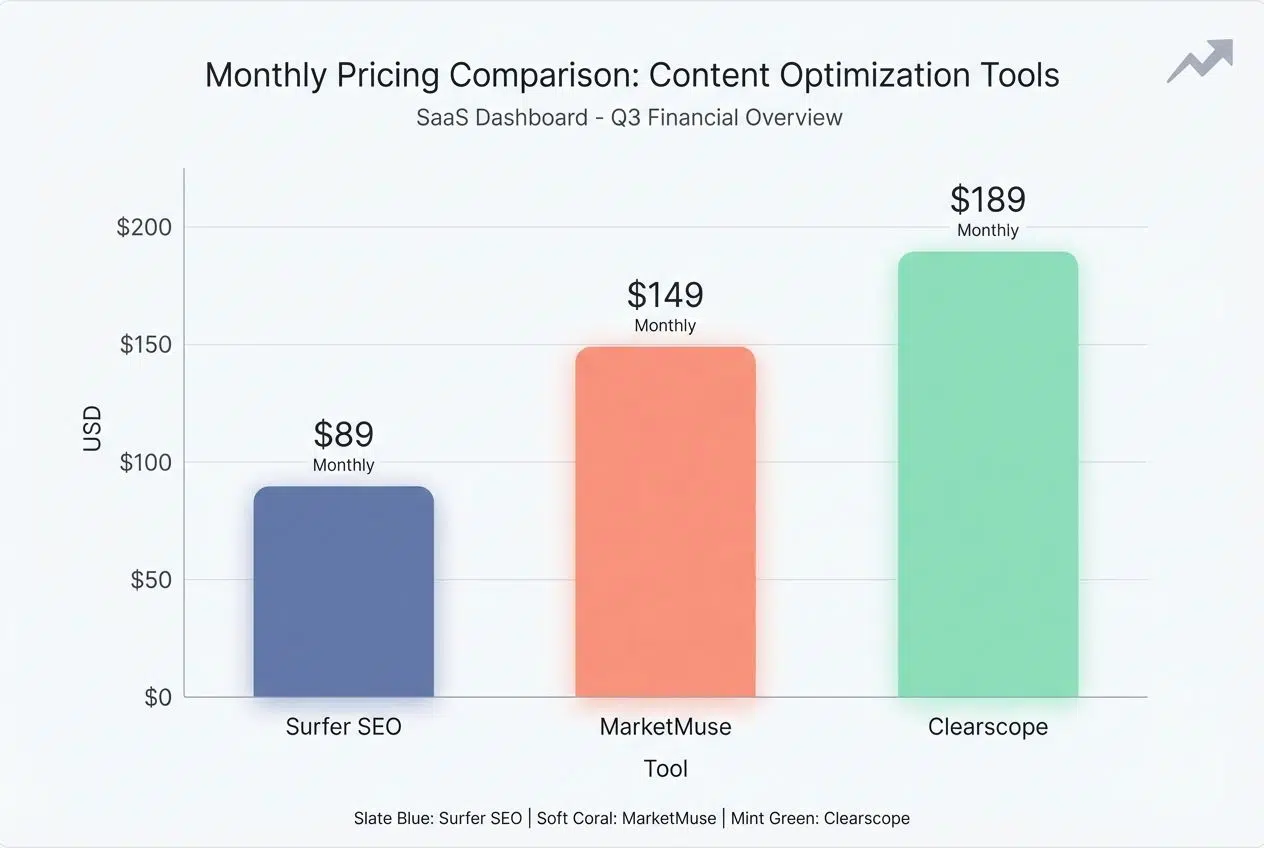
Choosing the right one depends on your budget and needs. Here is a quick look at how the top tools compare in 2025:
| Tool Name | Best For | Approximate Cost (Monthly) |
|---|---|---|
| Surfer SEO | Technical data & NLP scoring | Starts at ~$89 |
| Clearscope | Ease of use & content grading | Starts at ~$189 |
| MarketMuse | Strategic planning & content inventory | Free tier available / ~$149 |
You will also get tips on better formatting, user engagement, and where to place updated media. Some tools even audit links for broken sources or outdated facts.
Using a strong platform as part of your content strategy supports every step of the content audit process and saves you hours each month. Next up are smart ways to use these platforms during rewriting tasks for better results.
Wrapping Up
Freshening up your old blog posts can breathe new life into them. SEO optimization helps attract more organic traffic and boosts user engagement fast. Use a content audit to spot what needs a quick update or a total rewrite, then make changes that match today’s audience and trends. Adding new keywords or fixing broken links keeps things current and useful.
A strong content strategy makes all updates smooth as silk, whether you refresh or revamp an article from top to bottom. Small tweaks like sharper images or better formatting improve web traffic and content performance in big ways.
Each update counts. Even small fixes can mean big gains for your blog management efforts.