You wake to odd drips in your bathroom. A burst pipe floods your floor. How To Handle A Plumbing Emergency seems tough when water races unchecked, but you can slow it.
A water heater older than 12 years can spring a leak and flood your home fast. This guide shows 15 easy moves, from shutting off the main water supply at the shutoff valve, to using pipe tape, to stacking towels and buckets.
You will also know when to call a licensed emergency plumber. Read on.
Key Takeaways
- Follow 15 steps to shut off your main water valve and each fixture’s valve to halt leaks in minutes.
- Turn off your water heater by flipping the breaker for electric units or setting the gas pilot to “off.” Note that tanks over 10–12 years old often fail.
- Seal leaks with pipe tape, rubber plugs, or hose clamps. Catch drips with towels and buckets, and swap wet towels often to prevent mold.
- Take date-stamped photos of all damage—wet walls, puddles, frozen pipes—for insurance. Then clear floors, move valuables, and shut off power in the leak zone.
- Keep an emergency kit near your main valve with a wrench, plunger, plumber’s tape, bucket, gloves, pipe wrap, mini heat lamp, O-rings, and spare washers. Label each item for quick use.
Shut Off the Main Water Supply
Closing the main water supply is like pulling a plug on a flood. It stops water damage fast and holds back burst pipes until help arrives.
- Find the main shutoff valve near the water meter or where the main water line enters your home. It usually sits in a concrete box or mounts on a wall.
- Grip the valve handle with a wrench or pliers and turn it clockwise. Stop when it feels snug to halt water flow.
- Open a sink or tub faucet to check for a no drip flow. No water means the valve is closed.
- Seal the valve handle with tape or a zip tie if it wiggles. This keeps it from opening by accident.
- Note the valve spot on a sketch and keep it with your emergency plumbing kit. Quick access saves minutes in a crisis.
- Share the valve location with household members. A team move can curb water damage faster.
- Call an emergency plumber and mention that the main water supply is off. They can guide your next steps.
Locate and Turn Off Fixture-Specific Valves
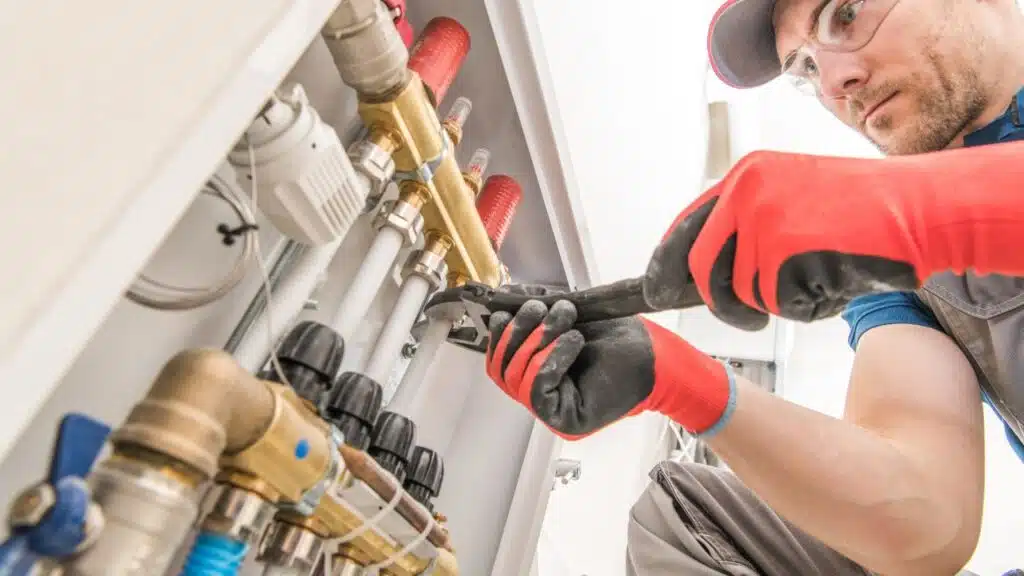
Shut off water at each fixture valve. This step stops drips and floods quickly.
- Locate the wheel valve behind your toilet, twist it fully closed, to stop a running toilet or an overflowing toilet.
- Open the cabinet under a sink and turn the plastic knob clockwise to cut water to that plumbing fixture.
- Spot the angle stop valves behind the washing machine, then use an adjustable wrench or valve key to seal off supply hoses.
- Pull back the access panel beneath your dishwasher and switch off the lever valve feeding the tub to halt leaks.
- Move the fridge away from the wall, find the small ball valve on the ice maker line, then close it tight to block drips.
- Head outside to the hose bib, fit a valve key, twist the valve until it won’t move, this guards against frozen pipes.
- Detect a sulfur smell near your water heater and close the gas shut-off valve at the burner feed, then evacuate the room immediately.
Turn Off the Water Heater to Prevent Damage
Water heaters can overheat fast in a plumbing emergency. You need to kill power or fuel, before damage grows.
- Locate the gas control knob or thermostat on the tank to find the shutoff point.
- Flip the breaker panel switch for electric models to cut hot water flow instantly.
- Turn the pilot control to off on gas units, this stops fuel and lowers burst risk.
- Inspect the pressure relief lever and close it, to avoid sudden tank failure.
- Let the heater cool for ten minutes before you touch any pipes or fittings.
- Note your unit’s age; most tanks last ten years, some electric types run up to fifteen.
Assess the Plumbing Issue and Identify the Source
Scan fixtures and joints with a flashlight. Feel faucet heat, extreme warmth points to a water heater fault. Check drip pan under that unit for puddles that signal leaks. Burst pipes show as wet spots on walls or floors.
Low water pressure can hint at clogs or cracks before water damage worsens.
Sniff around drains for a sewage odor. That smell signals a backed-up sewage line or gas leak, call an emergency plumber fast. Cold nights often freeze pipes outdoors. Handle frozen pipes by thawing each section gently with a hair dryer on low heat.
Do not use open flame near plastic fittings.
Contain Water Damage Using Towels and Buckets
Water can soak through wood and drywall in minutes. You need a plan that stops it fast.
- Spread thick towels around a burst pipe to catch every drop.
- Slip buckets under a dripping showerhead or water heater leak to trap spills.
- Roll damp towels into a sausage shape and press them against wall cracks.
- Change soaked towels often to block mold and avoid structural damage.
- Angle a bucket so leaks hit the center and stay contained.
- Wring towels over a sink drain to free up floor space quickly.
- Blot drywall with soft rags to stop stains from setting in.
- Stow extra buckets near the main water line for quick reach.
- Note water height on bucket sides with a marker for insurance proof.
- Toss wet towels into the washer to kill moisture in minutes.
Use Temporary Fixes like Pipe Tape or Plugs
A quick patch can stop that trickle fast. Use common items like sealing tape or a rubber stopper.
- Slip tape around the wet spot on a metal supply line. It shrinks tight; it blocks leaks fast. Run a rag under the wrap to spot seepage.
- Push an expansion stopper into the cut end of a plastic feed line damaged by burst pipes. Turn the screw until it locks in place. This halts excess flow, cuts water damage risk.
- Clamp a rubber patch over a hairline crack on a metal tube. Tighten the bolt until the patch hugs the breach. Wait a few minutes, then scan for drips.
- Wrap a hose band around a small split in a lavatory fixture line. Fold a towel under the repair to catch pools. Check pressure; keep flow low if needed.
- Fit a threaded cap over a broken branch line. Press in a rubber seal, then twist on tight. It buys you time until a licensed plumber arrives.
- Slide in a compression sleeve over a leaky elbow. Spin the nut fully so the sleeve grips. Peek under the fitting to catch fresh drips.
- Place a bucket under any residual stream to shield floors. Swap towels around the breach to trap moisture. Call a licensed emergency plumber once you buy enough time.
Avoid Using Fixtures Connected to the Problem Area
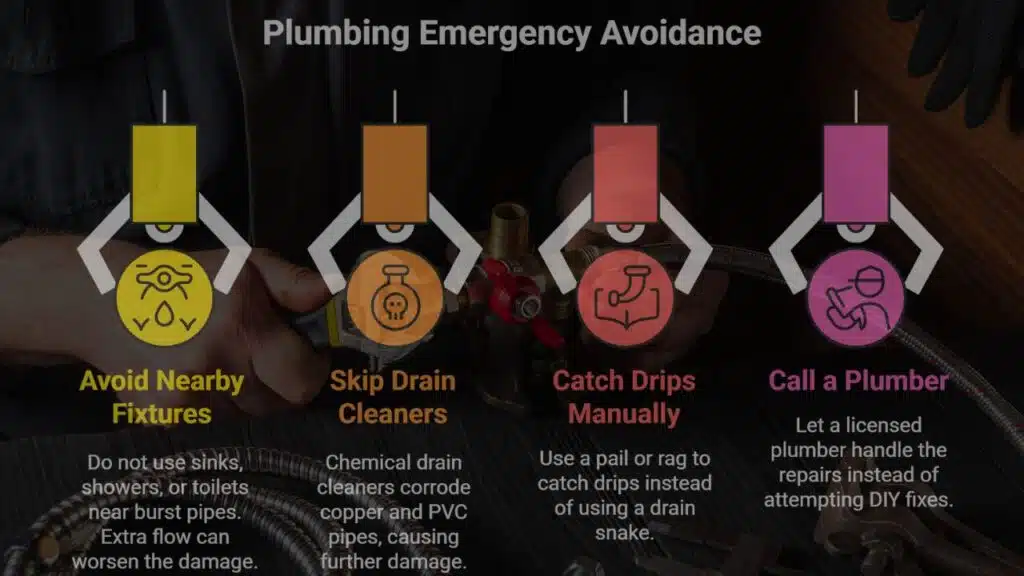
In a plumbing emergency, avoid using nearby taps or fixtures. Don’t run sinks, showers, or an overflowing toilet near a burst pipe. Extra flow can swell the crack and trigger water damage fast.
Pipes can gush through your ceiling in minutes, soaking drywall and wood beams. Skip chemical drain cleaners, they corrode copper and PVC. Grab a pail or rag to catch drips, not a drain snake.
Let a licensed plumber wield the monkey wrench, not your DIY hopes.
Document the Damage with Photos for Insurance
Use a camera or mobile device to record each leak and soaked wall. Snap shots of water damage under fixtures and in ceilings.
- Aim the camera at floor puddles around the main water line to show water damage after a pipe thawing failure.
- Shoot the full view of the sagging ceiling under a burst pipe to prove the risk of mold damage if untreated.
- Zoom in on leaking joints near compression fittings under the sink and plumbing fixtures to highlight a running leak that hit drywall.
- Capture closeups of a dripping flapper valve in an overflowing toilet to support your insurance claim.
- Take photos of wet insulation around a hot water heater after water heater leaks or a water heater failure.
- Record any backed-up sewage at floor drains or sump pumps to back up a sewer backups claim.
- Show frozen pipes in cold spots with frost and ice to document a plumbing emergency.
- Stamp each image with date and time, then sync to cloud storage to keep proof ready for your insurance adjuster.
Clear the Area to Protect Valuables and Electronics
Shift valuables out of harm’s way to limit water damage in plumbing emergencies. Remove electronics from wet floors to keep devices safe.
- Switch off power: locate the service panel, turn off the main breaker to cut electricity in the leak zone.
- Store paperwork: gather photos, files, maps, place them on high shelves or in sealed bins.
- Lift gadgets: move electronics onto a sturdy cart away from leaking pipes.
- Relocate jewelry: stash rings and watches in plastic boxes far from water.
- Secure artwork: wrap frames in clear plastic and carry them to a dry room.
- Pack tools: grab wrenches, pliers, pipe tape in a bin to clear floors for a pro.
- Set towels: place absorbent cloths under drips to catch stray water.
- Herd pets: move dogs or cats into a safe space so an emergency plumber can work.
- Coil cords: wrap loose wires, keep them off damp floors to prevent shocks.
- Clear pathways: remove buckets, rugs, shoes, so a licensed plumber can reach the problem fast.
Contact a Licensed Emergency Plumber Immediately
A single drip can spark water damage fast. Don’t stall when you spot a leak near the shutoff valve. Contact a certified emergency plumber immediately. Your swift action can save walls and nerves.
Prepare an Emergency Plumbing Kit for Future Use
Gather a wrench, plunger, plumber tape, bucket and gloves in a sturdy box. Slip in a leak detection system that costs a few hundred dollars and links to the main water line to stop water damage fast.
Add pipe wrap and a mini heat lamp to fight frozen pipes. Toss in spare O-rings, rubber washers and a small torch for pipe thawing.
Label each tool so you can act fast during plumbing emergencies. This kit can halt a burst pipe or seal a slow water leak until your licensed plumber arrives.
Takeaways
These 15 steps help you shut off the main valve and wrap a burst pipe with seal tape. You stopped the flood from getting worse. A bucket caught drips until help arrived. You saved floors and furniture.
A quick photo speeds up an insurance claim. A call to a licensed plumber brings peace of mind.
FAQs
1. What first step stops water damage in a plumbing emergency?
Turn off the primary supply pipe at the main valve. Grab towels and start a bucket brigade to mop up puddles. Then call for help.
2. How do I handle a ruptured line before pros arrive?
Shut the primary supply pipe fast. Press a pipe patch or use strong tape to nip the leak in the bud. Keep a bucket under the drip.
3. How can I thaw an ice-blocked pipe safely?
Warm the line with a hair dryer or hot towels. Stay clear of open flames. Watch the pipe as it thaws, and check for new drips or low water pressure.
4. When should I call a rapid response plumber?
If you smell a fume leak or see a sagging ceiling, pick up the phone. If the tank leak drips near an outlet, do not wait. You want a certified plumber on the way.
5. How do I clear a blocked drain or backed-up sewage quickly?
Use a plunger, or feed a drain snake down the pipe. Flush hot water down a sink or showerhead. Skip harsh chemicals that can harm pipes.
6. What if a gushing bowl or spill from bowl won’t quit?
Turn off the water valve under the toilet seat. Keep a bucket ready to catch the flow. Then contact a certified plumber and stay dry.