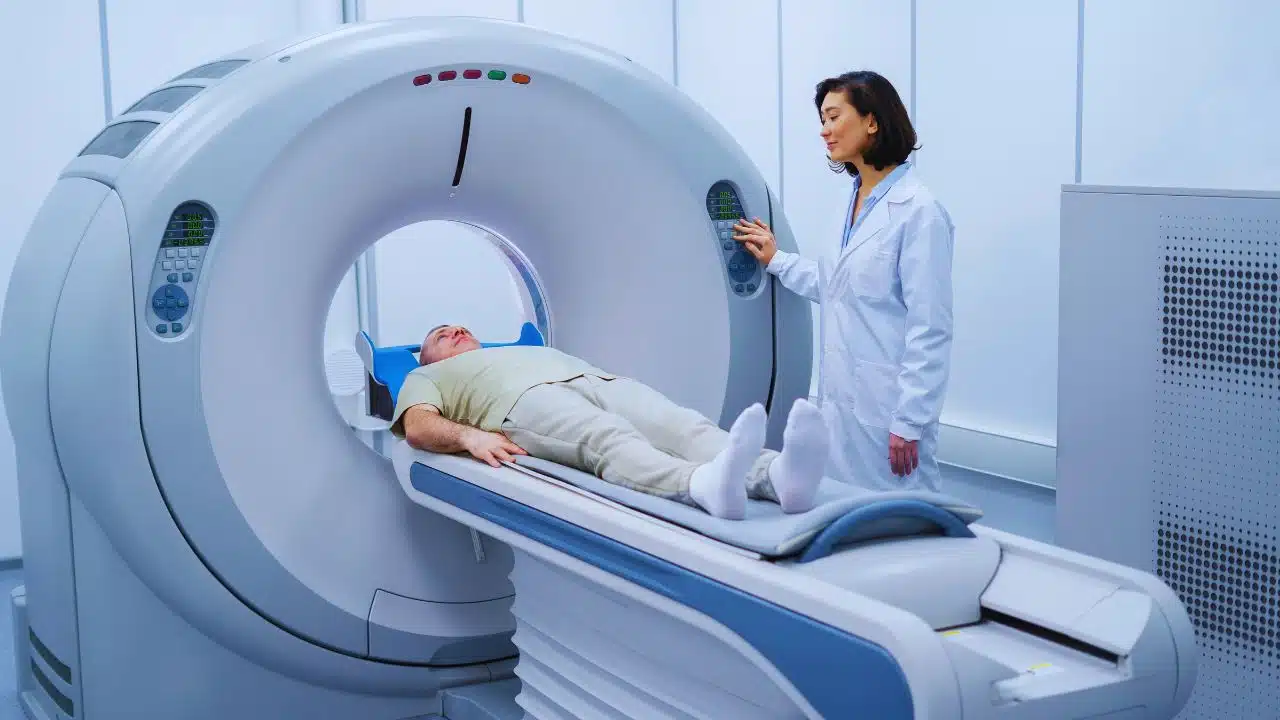
For healthcare providers seeking to improve diagnostic capabilities, choosing the right MRI machine can be the difference between success and failure. Healthcare providers must undergo several evaluation cycles to fully understand the factors that ensure a successful investment in MRI machines. In this guide, we discuss selecting MRI equipment, emphasizing some of the most important factors to remember and including some suggestions.
Understanding MRI Machine Types
Hospitals sometimes consider a refurbished MRI machine for sale to enhance diagnostic capabilities. Different kinds of MRI machines have various configurations and features. They are categorized primarily by the strength of the magnetic field.
Low-field machines are less expensive than high-field systems but typically produce lower-resolution images. However, high-field machines produce higher quality images and help make precise diagnoses.
Another difference is between open and closed systems. Closed systems tend to be designed for image quality, but open MRI machines provide comfort, especially for claustrophobic patients. Evaluating what the facility needs will identify the correct type.
Evaluating Technical Specifications
Data shows that technical specifications are a major deciding factor. These include the strength of the magnetic field, the strength of the gradient, and the coil technology. A denser magnetic field typically produces a clearer image. The speed and accuracy of image acquisition are dependent on gradient strength, and the incorporation of advanced coil technology can improve the quality of the acquired CMR images.
Secondly, the functionality of the machine should also be evaluated in terms of its software capabilities. Modern machines typically upgrade with the latest imaging software to facilitate accurate diagnosis. It is also important that the machine can fit into already existing technology in the facility.
Considering Budget Constraints
One key consideration in purchasing an MRI is budget. The costs can vary widely depending on the type of machine, features, and brand. High-end systems offer advanced functionalities, but not all facilities may require them. However, it’s crucial to balance budget constraints and desired features.
A beneficial way to relieve this pressure is to explore some financing options. First, they offer settlement and installment plans, enabling facility access to the latest technology with no immediate cash outlay. To reach a decision, it is essential to evaluate the long-term costs, including maintenance and operation, before concluding.
Assessing Space and Infrastructure Needs
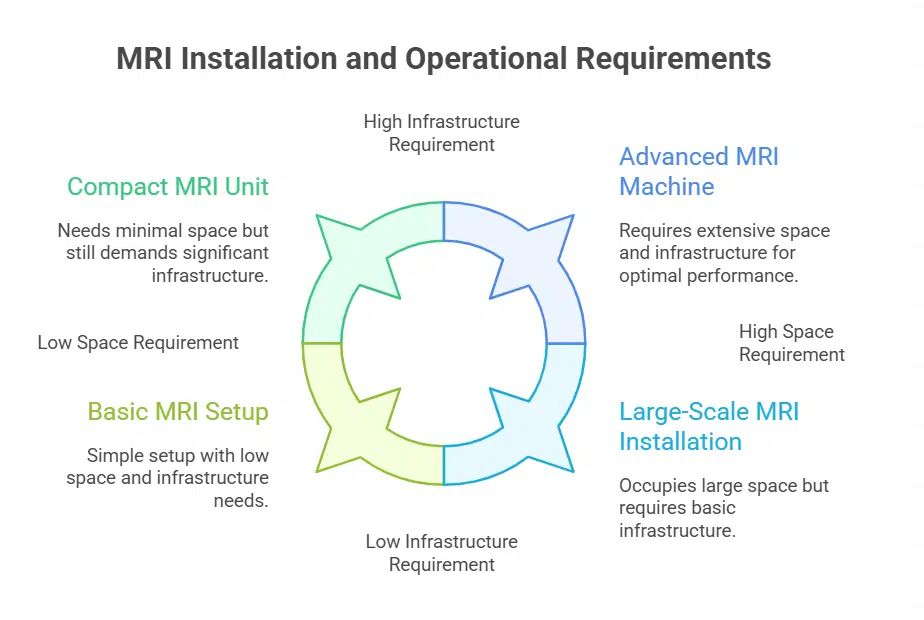
At first, it may not seem like MRI space is all that important, but this is far from true! These machines require plenty of space, not only for installation but also for functioning. They also need proper shielding to avoid magnetic influence. It’s vital to be certain that the facility can accommodate these conditions before it is purchased.
The readiness of the infrastructure, power supply, and cooling systems must also be estimated. Remember that some machines are likelier to work in a specific environment, so check first.
Exploring Warranty and Support Services
Warranty and support services are indispensable parts of the buying process. A comprehensive warranty provides added security against any defects or failures. Long-term peace of mind requires familiarity with the terms and length of the warranty.
Value-added services: Support, including installation, training, and technical assistance, enhances the value of the purchase. Good customer support means that you can avoid long periods of downtime and be sure everything runs smoothly. These services should be evaluated beforehand so the requisite aid can be provided to the facility when required.
Researching Vendor Reputation
The choice of the vendor is as important as the choice of the machine. Looking up vendor history, customer reviews, and quality of services gives you a favorable idea of how reliable they are. When we purchase equipment from the market, we go for a trusted vendor, which will provide better support and ensure we have fine equipment quality (straight from the factory).
Speak to other healthcare professionals who have used particular vendors for practical recommendations. Working with a trusted vendor will facilitate the purchase process and provide better after-sales support.
Conclusion
Selecting the appropriate MRI machine option requires careful consideration of several factors. This process involves understanding the types of machines, reviewing the technical specifications, and considering the budget limitations. Finally, these factors, along with the assessment of space, warranty options, and prioritizing patient comfort, can assist in making a decision.
Partnering with a well-known vendor promotes the purchasing experience, allowing healthcare facilities to procure equipment according to their requirements. Facilities can, therefore, invest value wisely, improving their diagnostics and, ultimately, patient care.