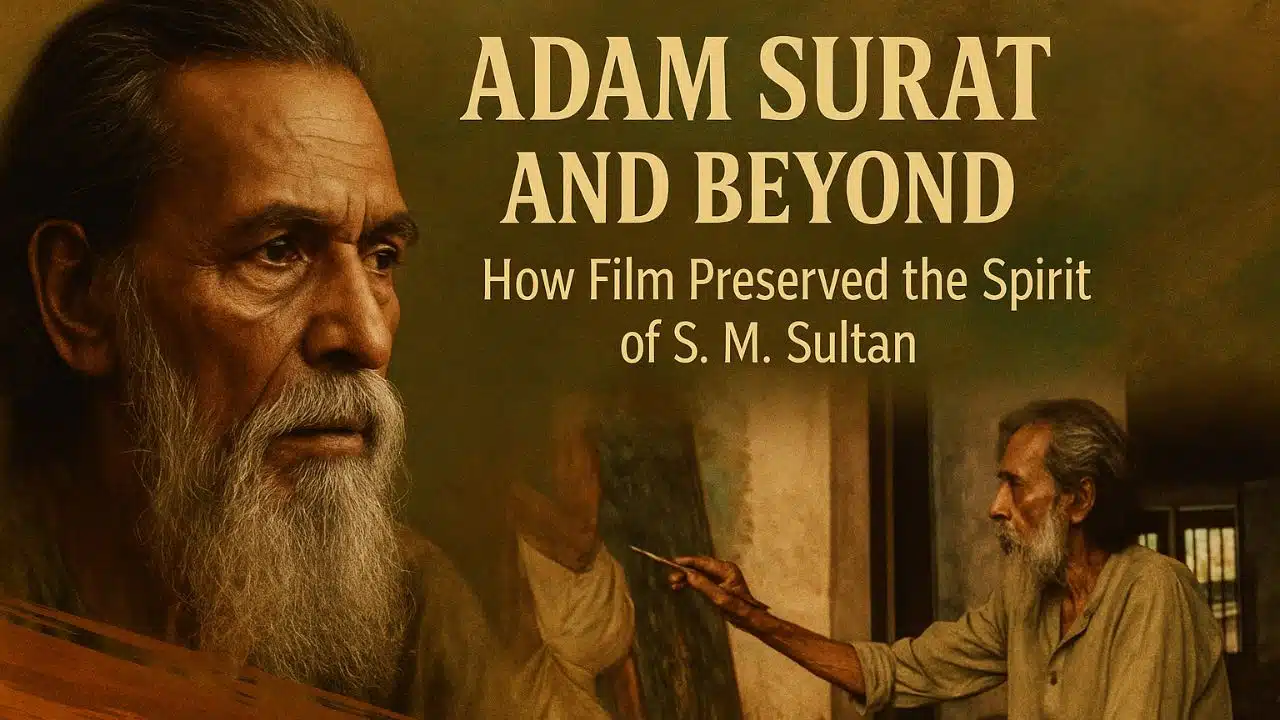
On 10 August 1923, in a small village called Machimdia in Narail, a boy was born who would one day become one of Bangladesh’s greatest artists. His name was Sheikh Mohammed Sultan, better known as S. M. Sultan.
Known for his powerful depictions of rural farmers—often painted with exaggerated, muscular bodies—Sultan celebrated the strength and dignity of the common people of Bengal.
In 1989, award-winning filmmaker Tareque Masud created a documentary titled Adam Surat (meaning The Inner Adam or Inner Strength). This film became more than just a documentary—it became a time capsule that preserved Sultan’s voice, movements, philosophy, and surroundings for future generations.
On his 102nd birth anniversary, it is worth looking back at Adam Surat and how film helped keep the spirit of this legendary painter alive—long after his brushes were set down.
Who Was S. M. Sultan?
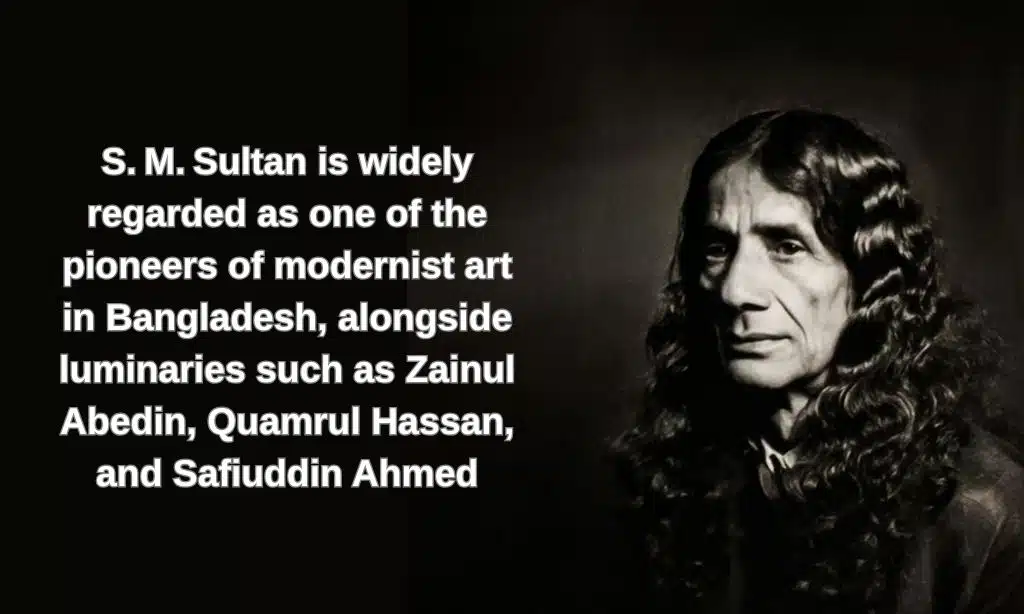
| Full Name | Sheikh Mohammed Sultan |
|---|---|
| Born | 10 August 1923, Machimdia, Narail, Bengal Presidency (now Bangladesh) |
| Died | 10 October 1994, Narail, Bangladesh |
| Profession | Painter |
| Art Style | Figurative, rural themes, muscular peasant figures |
| Education | Government School of Art, Calcutta |
| Major Awards | Ekushey Padak (1982), Bangladesh Charu Shilpi Sangsad Award (1986), Independence Day Award (1993) |
| Notable Works | Series of paintings depicting rural farmers and laborers |
| Legacy | S. M. Sultan Memorial Museum, S. M. Sultan Bengal Art College |
Sultan’s early life was far from easy. He left formal schooling early but showed remarkable talent for drawing. With the help of patrons and mentors, he entered the Government School of Art in Calcutta.
Initially influenced by Western Impressionism, Sultan gradually developed a bold, decolonial style rooted in Bangladeshi rural life.
Adam Surat—The Documentary That Immortalized Sultan
Adam Surat was directed by Tareque Masud, a filmmaker deeply committed to telling authentic Bangladeshi stories.
Masud began filming in the early 1980s, spending seven years capturing Sultan’s daily life in Narail. The project was challenging because Sultan was reclusive and disliked media attention.
Why the Name “Adam Surat”?
The Bengali phrase “Adam Surat” can be interpreted as “The Image of Man” or “Inner Strength.” It reflected Sultan’s belief that art should represent human dignity and truth, not materialistic glamour.
Timeline Table – The Making of Adam Surat
| Year | Event |
|---|---|
| Early 1980s | Tareque Masud begins conceptualizing the documentary |
| 1982–1988 | Filming takes place in Narail and other locations |
| 1989 | Adam Surat is released in Bangladesh |
| 1990s–2000s | The film gains recognition in art and documentary circles |
| Today | Adam Surat remains a key cultural archive of S. M. Sultan’s life |
Themes and Narrative of the Film
The documentary shows Sultan living simply—often barefoot—among villagers. His home doubled as his studio, and children frequently visited to watch him paint.
Art Philosophy
Sultan speaks in the film about the purpose of art—to awaken people, not to please wealthy buyers.
Resistance to Commercialism
Unlike many artists who seek fame and profit, Sultan refused to sell many of his works, keeping them for exhibitions and public viewing.
What Adam Surat Revealed About S. M. Sultan
-
Deep Love for Rural Bangladesh—His paintings reflect the toil and pride of farmers and fishermen.
-
A Life of Simplicity—He lived in modest conditions, focusing on art rather than material wealth.
-
Philosophy of Strength—Muscular bodies in his art symbolized the power and resilience of the working class.
-
Humility and Wisdom—Despite global recognition, he stayed rooted in his village.
Beyond Adam Surat—Continuing the Legacy
While Adam Surat captured S. M. Sultan’s life and philosophy on film, his legacy did not end when the camera stopped rolling. Over the years, a variety of initiatives, institutions, and cultural movements have ensured that Sultan’s work and message continue to inspire both seasoned artists and new generations.
Museums and Memorials
-
S. M. Sultan Memorial Museum in Narail preserves his home, studio, and many artworks.
-
Bangladesh National Museum holds a large collection of his paintings.
S. M. Sultan Bengal Art College
Founded in 2009 by the Bengal Foundation, this college trains young artists, keeping Sultan’s vision alive.
Annual Celebrations
Narail hosts art festivals, exhibitions, and painting competitions in his honor.
Why Film Was Crucial in Preserving His Spirit
-
Captures His Voice and Mannerisms—Viewers can hear Sultan speak in his own words.
-
Shows His Environment—The village, studio, and daily life give context to his art.
-
Emotional Connection—Film conveys his warmth and authenticity in a way photographs cannot.
Lessons for Today’s Artists and Filmmakers
-
Stay True to Your Roots—Like Sultan, create from your culture and experiences.
-
Art Is a Responsibility—Use creativity to serve society, not just personal gain.
-
Preserve Stories in Multiple Mediums—Film, photography, and digital archives all matter.
Takeaways
Adam Surat is more than a documentary—it is a living portrait of S. M. Sultan. It captures the spirit of a man who painted the strength of the people and lived humbly among them.
On his 102nd birth anniversary, watching Adam Surat is a way to honor his life and understand his message: Art belongs to the people, and its power lies in truth.