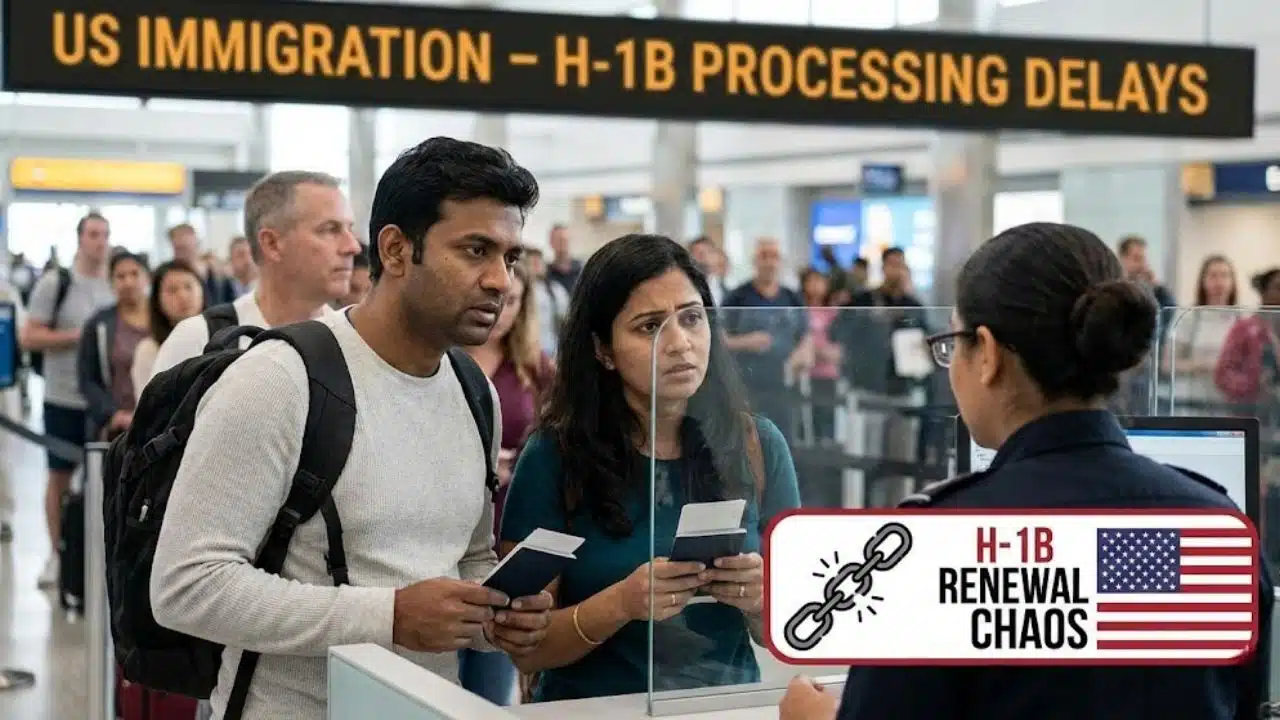
Thousands of Indian professionals working in the United States are facing an unexpected and deeply unsettling situation after returning to India this month for routine visa formalities. Many of them are now unsure whether they will be able to return to the U.S. anytime soon. The uncertainty stems from the sudden cancellation and postponement of visa interview appointments related to American work permits, particularly the H-1B visa category.
For many of these workers, travel to India during December is a long-planned decision. The period coincides with the holiday season in the United States, making it a convenient time to visit family while completing mandatory visa renewals. However, what was expected to be a routine process has turned into a prolonged and stressful wait.
Mass Cancellation of Visa Appointments
Indian nationals who had visa interview appointments scheduled between December 15 and December 26 have been particularly affected. According to immigration experts cited by major U.S. media outlets, thousands of appointments during this window were abruptly canceled without much advance notice.
In many cases, applicants received emails informing them that their interviews would not take place as planned. New appointment dates were offered several months later, often in late spring or early summer. Even then, there is no assurance that those rescheduled appointments will not be canceled again at the last minute.
As a result, a large number of Indian professionals are now stuck in India with no clear timeline for returning to their jobs in the United States.
Why December Is Critical for H-1B Workers
The H-1B visa is a non-immigrant work visa that allows skilled foreign professionals to work in the United States for up to six years. Indian nationals form the largest group of H-1B visa holders, especially in sectors such as information technology, engineering, healthcare, and finance.
December is a preferred time for visa renewals because many U.S. companies operate with reduced staffing during the holiday season. Employees often use this period to travel, renew their visa stamps, and return without disrupting major projects. The sudden disruption during this peak renewal window has therefore had widespread consequences.
U.S. Government Cites Delays in Interview Scheduling
The U.S. Department of State has informed visa applicants via email that delays are occurring in organizing work permit interviews. Officials have attributed these delays to new procedural requirements introduced by the administration of President Donald Trump.
The U.S. government has stated that the changes are aimed at strengthening national security and ensuring that visa applicants do not pose any risk to American citizens. However, the implementation of these measures has slowed down visa processing across multiple consulates.
New Social Media Vetting Rules Add to the Backlog
One of the major reasons behind the delays is the introduction of expanded social media screening. Under the new rules, visa applicants are required to disclose their social media handles and online activity as part of the vetting process.
This additional layer of scrutiny has significantly increased the time required to process each application. Immigration lawyers note that consulates are now handling fewer interviews per day, which has led to widespread appointment cancellations and a growing backlog.
Workers Stranded Between Two Countries
The impact of these delays is being felt most acutely by Indian professionals who had already completed their travel plans. Many of them left their homes, families, and jobs in the U.S. assuming they would return within weeks.
Instead, they now find themselves stuck in India, unable to resume work physically in the United States. While some employers are allowing temporary remote work, this is not a long-term solution. Certain jobs, particularly those requiring on-site presence, cannot be performed remotely due to legal or operational constraints.
Growing Anxiety Over Employment and Legal Status
For many affected workers, the uncertainty is not just about travel but also about job security. Extended absence from the U.S. workplace can create complications with employers, especially in highly competitive industries.
There are also concerns about maintaining lawful immigration status. Visa holders worry about compliance issues, potential employment termination, and the long-term impact on future immigration applications, including green card processing.
Families are also bearing the emotional burden. In some cases, spouses and children remain in the United States while the primary visa holder is stranded in India, leading to prolonged separation and emotional stress.
Trump Administration’s Tougher Stance on H-1B Visas
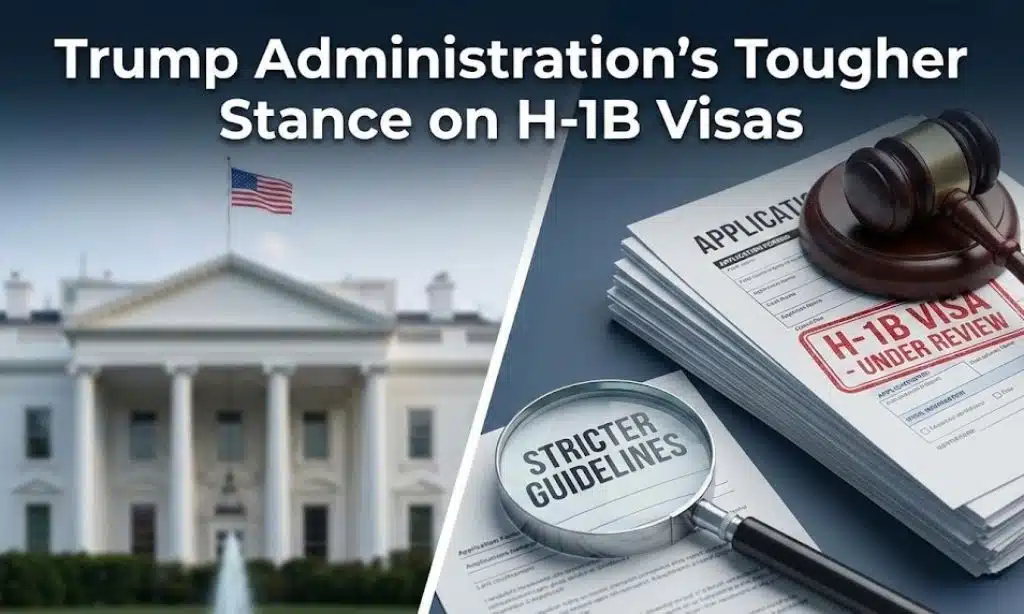
The delays are part of a broader shift in U.S. immigration policy under President Trump’s leadership. The administration has repeatedly argued that the H-1B visa program has been misused and that it disadvantages American workers.
Earlier this year, the administration introduced a significant financial burden on U.S. companies hiring foreign professionals by imposing a $100,000 fee on certain H-1B visa applications. The stated objective was to discourage excessive reliance on foreign labor and encourage companies to hire American workers instead.
Additionally, the administration has increased oversight into how companies select foreign employees and justify the need for hiring from abroad.
Debate Over Economic Impact
Supporters of the stricter policies argue that limiting foreign worker intake will reduce unemployment among U.S. citizens. According to this view, American workers are being overlooked while companies turn to cheaper or more flexible foreign labor.
However, many U.S. companies strongly disagree with this assessment. Industry leaders, especially in the technology sector, warn that restricting access to skilled global talent could harm innovation, productivity, and overall economic growth.
They argue that highly skilled foreign professionals complement the U.S. workforce rather than replace it, and that abrupt policy changes create uncertainty for businesses planning long-term projects.
Legal Experts See Limited Immediate Solutions
Immigration lawyers cited in U.S. media reports have pointed out that affected visa holders currently have very limited options. Emergency appointment requests are rarely approved unless there are exceptional circumstances, and legal challenges to the delays are unlikely to produce quick results.
Most applicants are left with no choice but to wait, regularly check appointment systems, and hope for earlier interview slots to open.
No Clear Timeline for Resolution
As of now, there is no official timeline for when the appointment backlog will be cleared. U.S. consulates have not provided concrete assurances about processing speed or future cancellations.
Until the situation stabilizes, immigration experts are advising H-1B visa holders to avoid international travel unless absolutely necessary.
What was once a predictable and manageable visa renewal process has become a major source of anxiety for thousands of Indian professionals. Sudden appointment cancellations, extended delays, and changing immigration policies have left many stranded, uncertain about their careers, legal status, and family lives.
The situation highlights the far-reaching impact of immigration policy changes and the challenges faced by global professionals in an increasingly restrictive environment. Until clearer guidance and smoother processing are restored, Indian H-1B workers remain caught between two countries, waiting for answers.