
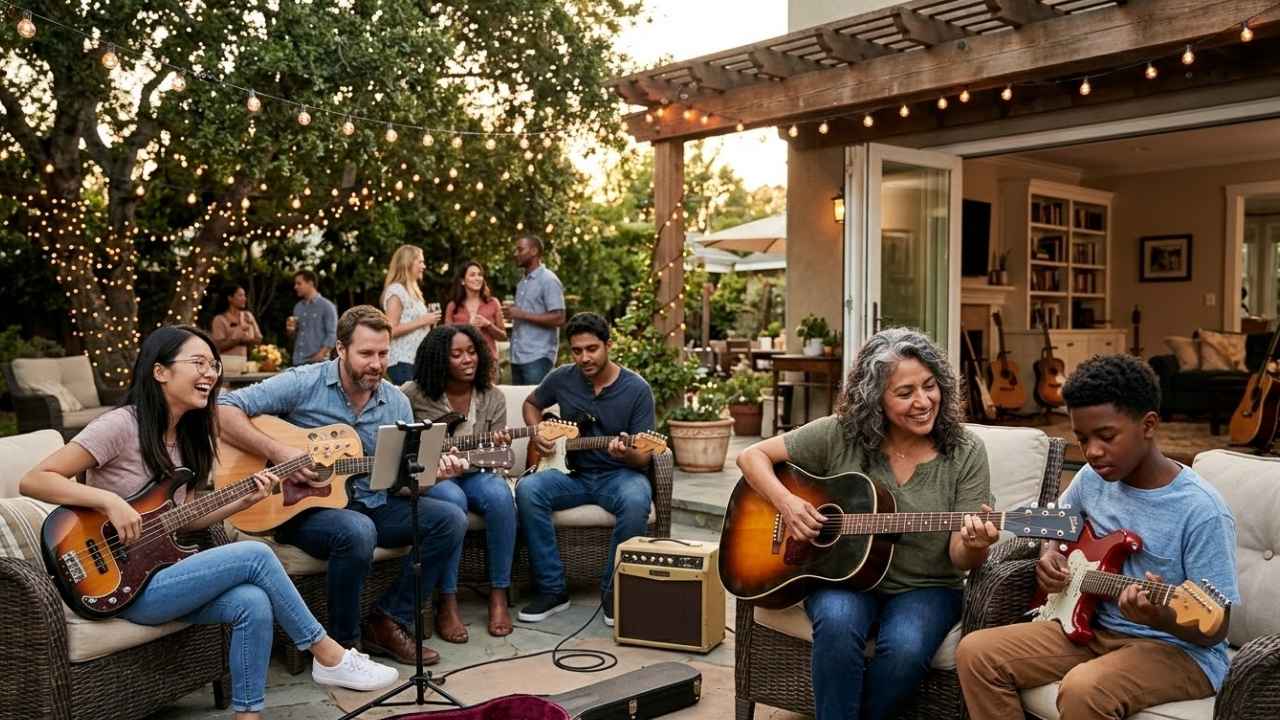
The guitar has always had a way of circling back into the spotlight. It disappears for a few years while electronic beats and laptop production take center stage, then suddenly it returns with a quiet confidence that reminds everyone why it never really left. Lately that return has been impossible to ignore. Music shops are reporting a steady uptick in sales, social media is full of beginners proudly sharing their first chords, and seasoned players are pulling dusty cases out of closets. The guitar is having another moment, and this time it feels both nostalgic and fresh.
For many people, picking up a guitar right now is less about chasing rock stardom and more about reconnecting with something tactile and creative. In an age where so much work and entertainment happens on screens, the simple act of pressing down strings and hearing sound fill a room feels oddly grounding.
A New Wave Of Players Finds Its Sound
Every generation tends to rediscover the guitar in its own way. The current wave includes teenagers learning riffs from TikTok clips, adults revisiting instruments they abandoned years ago, and professionals who simply want a creative outlet after work.
Music educators say curiosity often starts online. Someone hears a riff that sparks interest, searches for a tutorial, and within days they are experimenting with chords in their living room. Before long they began researching instruments and gear, drawn toward iconic guitar brands like Gibson or Ibanez, whose names have carried weight in music culture for decades. The appeal is not just nostalgia. These brands have shaped the sound of countless albums, and new players want to tap into that lineage.
What is striking about the current surge is how broad it is. Country fans, indie rock listeners, jazz enthusiasts, and metal devotees are all exploring the instrument at once. Instead of one dominant style leading the charge, the guitar is thriving across genres.
Technology Is Changing How People Learn
Learning guitar used to involve either formal lessons or a well worn instruction book. Today the path is more flexible. A player might start with a short video demonstrating a blues scale, then follow that with a mobile app that tracks practice sessions. Online communities offer encouragement, troubleshooting tips, and a steady stream of inspiration.
This shift has lowered the barrier for entry. Beginners do not feel pressure to master everything immediately. They can learn one chord progression at a time, celebrate small wins, and share progress with others who are on the same path. It turns practice into something social, even when the player is alone in a room.
More experienced musicians are benefiting as well. Advanced techniques that once required years of mentorship are now easier to study through detailed tutorials and slow motion demonstrations. The guitar world has become more open, more collaborative, and far less intimidating.
Living Room Concerts Replace Big Stage Dreams
A fascinating change is happening in how people think about performing. The traditional dream of filling arenas still exists, of course, but it is no longer the only measure of success. Plenty of players are content to perform in smaller, more personal settings.
Living rooms have quietly become mini venues. Friends gather for casual jam sessions. Parents learn simple songs to play for their kids. Some musicians even stream informal performances from home, reaching audiences that may be scattered across the country.
Sound systems have evolved alongside this shift. Instead of bulky stage equipment, many players rely on compact setups that integrate with everyday technology. A guitar connected to an interface can fill a room through home smart speakers, creating surprisingly rich sound without complicated gear. That convenience encourages people to keep playing, because the instrument is always within reach.
Musical Curiosity Is Fueling Gear Exploration
As interest grows, many players start exploring the broader ecosystem around the instrument. Pedals, amplifiers, and recording tools all become part of the adventure. It is a rabbit hole, and a fun one.
Guitar shops report that customers today tend to research extensively before buying anything. They compare tones, read reviews, and watch demonstrations from musicians they admire. This curiosity reflects a deeper engagement with sound itself. Instead of buying gear impulsively, players want to understand how each component shapes the music they create.
That mindset is leading to thoughtful purchases and longer relationships with instruments. When someone spends weeks learning about pickups or tonewoods, the guitar they finally bring home becomes something meaningful rather than disposable.
The Instrument That Refuses To Fade
Despite countless predictions that digital production would replace traditional instruments, the guitar continues to prove its resilience. It adapts to every era while maintaining its core identity. That balance keeps drawing people back.
For some, the appeal is emotional. A single chord can trigger memories of favorite songs or teenage bedroom practice sessions. For others, it is purely creative, a chance to shape sound with their hands rather than a keyboard and mouse. Either way, the result is the same. More people are rediscovering the instrument and finding space for it in their lives.
The current guitar revival feels less like a trend and more like a rediscovery. Players are approaching the instrument with curiosity instead of pressure, enjoying the process rather than chasing perfection. That mindset is giving the guitar a renewed sense of life, one living room, practice session, and late night jam at a time.