Have you ever felt like you need to create an impossible amount of content? You are probably looking for the ways generative AI is transforming content marketing. Maybe you spend hours making blog posts or social media updates, but you still feel like your voice gets lost in the crowd. The pressure grows, and ideas run out faster than coffee on a Monday morning. Here is a fun fact to brighten your day. Generative AI in content marketing can help teams produce written pieces, videos, and posts much quicker than before. This technology learns from your data and helps with tasks that used to take lots of time.
I will show you smart ways this tool changes how brands connect with people online. It makes life easier for writers, marketers, or anyone looking for better results. Grab a cup of coffee, and let’s go through it together. I will show you exactly how this works.
What is Generative AI in Content Marketing?
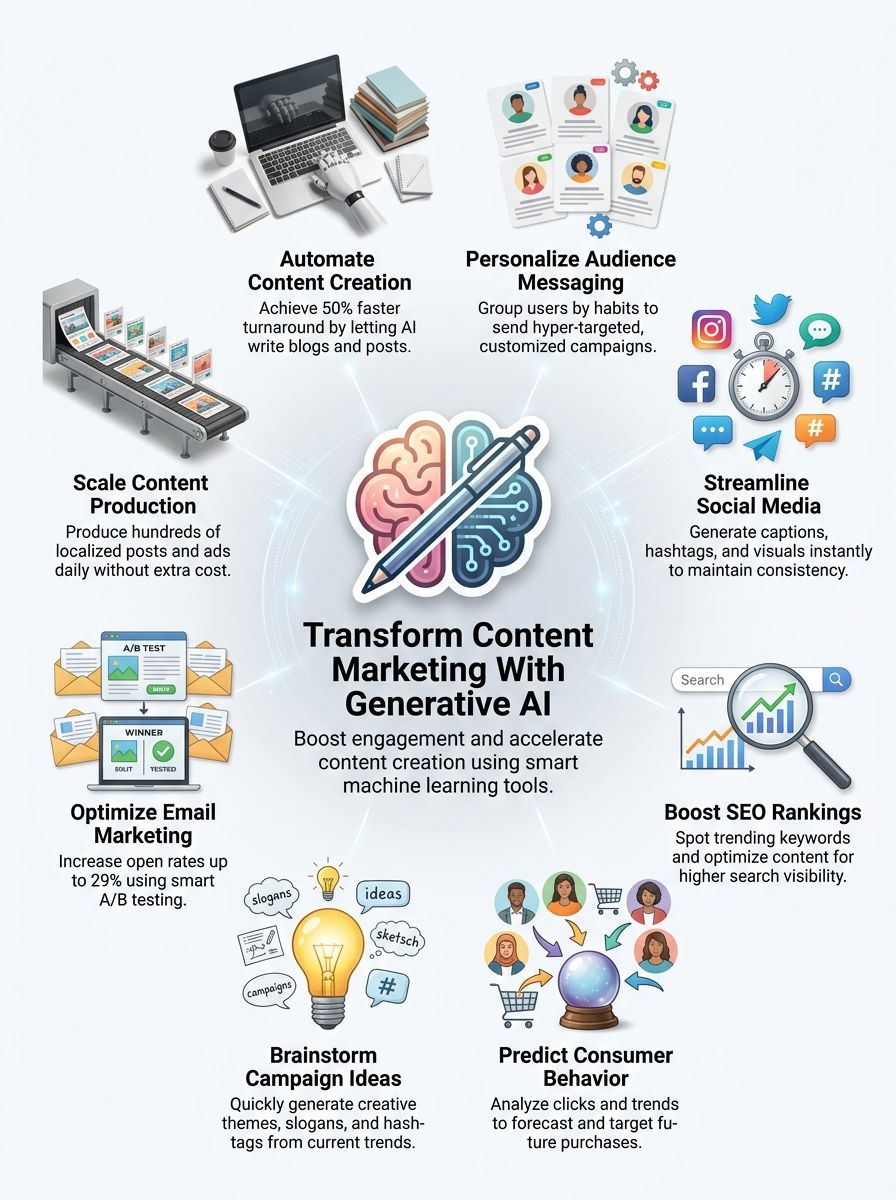
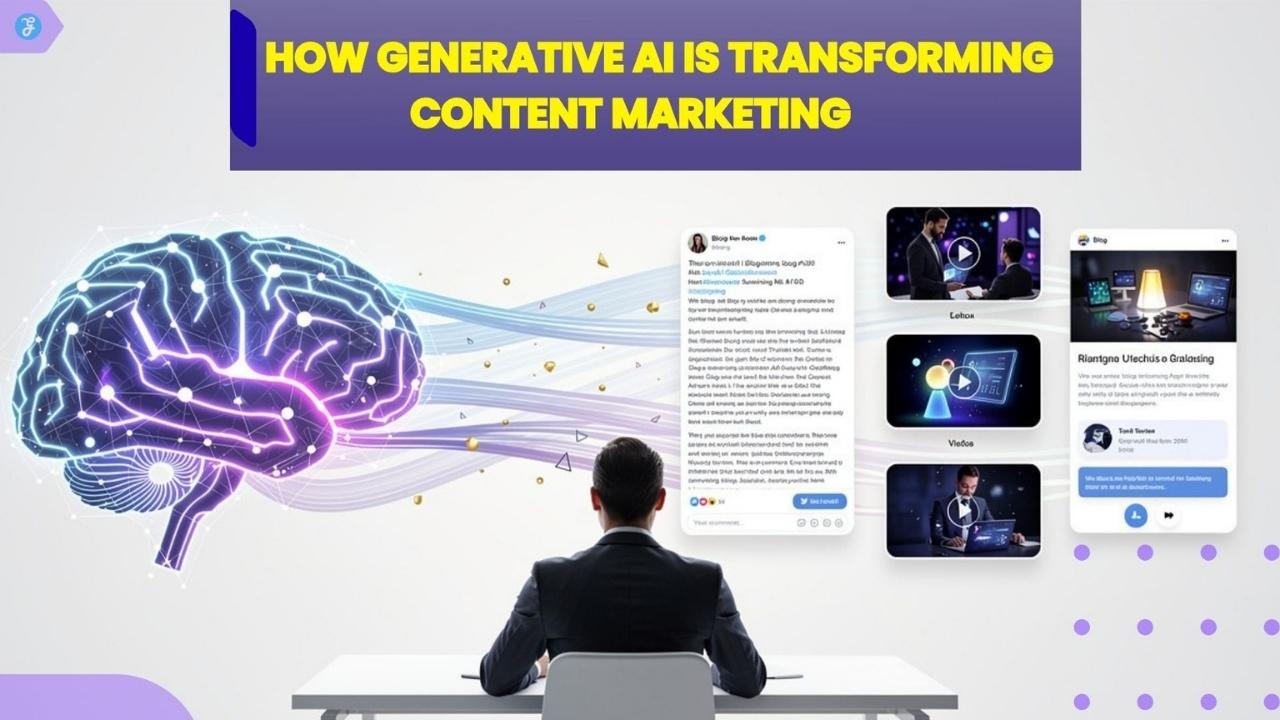
Generative AI uses machine learning to make new content for digital marketing. It takes user data, trends, and past campaigns to write articles, create videos, design images, or even suggest catchy headlines in seconds.
Brands like Coca-Cola use generative AI tools to speed up their content creation and test fresh ideas at scale. AI-driven systems can make personalized ads for different customer groups.
A 2026 Averi AI report found that 94% of marketers in the US plan to use AI for content creation this year. This makes it a direct budget priority.
These tools boost customer engagement because they shape text and visuals to fit each audience’s needs. Next up is a look at how these smart models work behind the scenes in content marketing.
How Generative AI Works in Content Marketing
Generative AI uses trained computer models to help brands make smarter choices faster. These smart systems swap old-fashioned guesswork for fast, data-powered actions that boost results.
Prebuilt Generative AI Models
Prebuilt generative AI models act like ready-made helpers for digital marketing teams. They come trained on huge sets of data, such as news stories, blogs, and ads from big brands.
With these tools, you can quickly create blog posts, social media updates, product descriptions, or even catchy ad slogans. Jasper AI and ChatGPT are two popular choices that many marketers use every day.
“AI can generate about 10 times more content in the same time it takes a person,” says marketing expert Lisa Smith. These prebuilt models offer fast results without needing to code anything yourself. For agencies in the US, the cost savings are huge compared to traditional hiring.
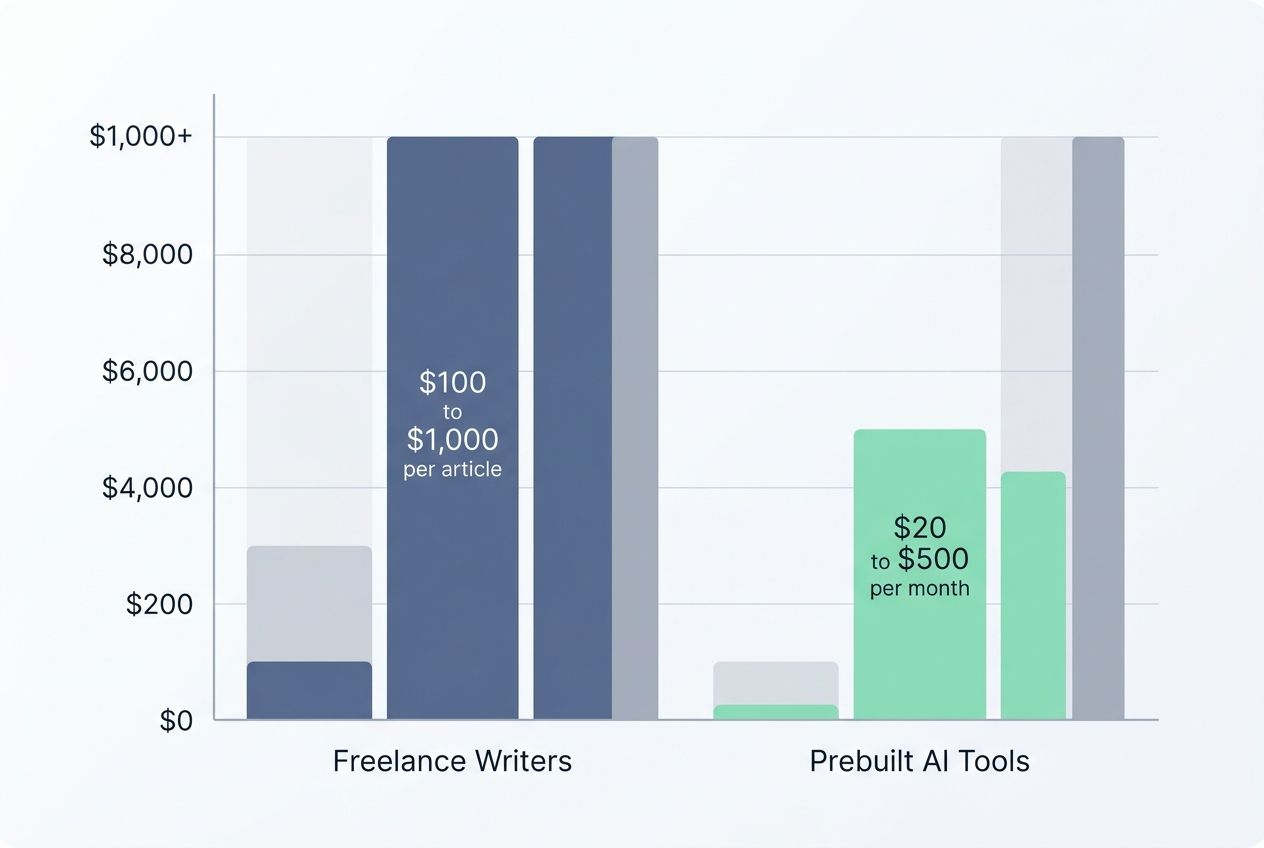
| Content Source | Average Cost (US) | Best For |
|---|---|---|
| Freelance Writers | $100 to $1,000 per article | Highly technical or deeply personal brand stories |
| Prebuilt AI Tools | $20 to $500 per month | Scaling blog posts, social media, and ad copy |
This way, everyone gets more time to focus on strategy while the computer helps handle much of the writing or design work.
Customized Generative AI Models
Brands use customized generative AI models to match their exact style and goals. These models learn from real customer data, so the content fits the exact needs of each audience.
Imagine Nike or Disney using their own AI to craft messages that feel perfectly aligned with their fans. This helps companies build better digital marketing strategies and reach people in new ways. One great example is Salesforce Einstein. It delivers over 80 billion AI-powered predictions every day to help brands customize their outreach.
Customized tools focus on several key areas:
- Language and Visuals: They adapt local slang or jokes for different regions.
- Product Recommendations: In a recent US case study, Nordstrom used customized AI recommendations to achieve a 24% increase in conversion rates.
- Automation Integration: These special models work with marketing automation systems for faster content creation and smarter audience targeting, too.
10 Ways Generative AI Is Transforming Content Marketing
Content marketers are buzzing about how AI changes the game. Curious what tricks it is pulling out of its hat?
1. Automating Content Creation
Machines can write blogs, product pages, and social media posts in seconds. In 2023, HubSpot reported that companies saw a 50% faster content turnaround by using AI tools compared to manual writing.
Marketers now use programs like Jasper and Copy.ai for digital marketing campaigns. Instead of spending hours brainstorming blog topics or keyword ideas, teams press a button and let machine learning do the heavy lifting.
“AI wrote our email newsletter in half the time,” said Maya from a small bakery in Chicago.
Writers still guide these tools with good prompts. An insider tip from the marketing community is to use tools like Anthropic’s Claude 3.5 Sonnet for longer articles, as its large context window rarely loses the brand voice.
Brands create more stories, reach wider audiences, and free up hours for other tasks like data analytics or customer engagement.
2. Enhancing Personalization and Segmentation
Generative AI sorts through mountains of consumer data to find patterns that humans easily miss. Say goodbye to generic marketing messages that fall flat.
With machine learning, companies now group their audience by interests, age groups, or even specific shopping habits. For example, an online shoe store might send running shoe ads only to users who clicked on fitness posts last week.
A 2026 report by ALM Corp shows that AI personalization drives a 41% average revenue increase compared to non-AI campaigns in the US. Marketers achieve this by:
- Grouping audiences by age and specific interests.
- Tracking recent clicks to predict future purchases.
- Write content in a style that each reader likes best.
This level of personalization makes readers feel seen and valued. Marketers use these smart systems for better targeting, boosting customer engagement every time they launch an ad.
3. Generating Engaging Text and Visuals
AI tools can whip up catchy blog posts, lively captions, and clever slogans in seconds. These systems use smart models to spot what grabs attention. Writers save hours that used to vanish while staring at a blank screen. Now they get quick help making each sentence pop.
Content creators tap into AI for bright images too. Top US agencies heavily rely on these specific visual tools:
- Midjourney v6: Perfect for creating hyper-realistic lifestyle images for social media.
- DALL-E 3: Great for generating quick, stylized graphics directly within ChatGPT.
- Canva Magic Studio: Helps beginners instantly resize and animate AI graphics for different platforms.
Brands keep up with fast-changing trends by updating marketing visuals on the fly. Every post looks fresh and sparks interest, helping teams stand out in crowded social feeds.
4. Streamlining Social Media Content Production
Generative AI speeds up social media content production by making drafts, captions, and hashtags in seconds. Brands use these tools to keep their feeds fresh without burning out the team.
Marketers create eye-catching visuals or short videos with a few clicks instead of hours behind the screen. AI helps you stay consistent and creative across Facebook, Instagram, and X. Many US marketing managers use Hootsuite’s OwlyWriter AI to instantly turn top-performing web pages into social posts.
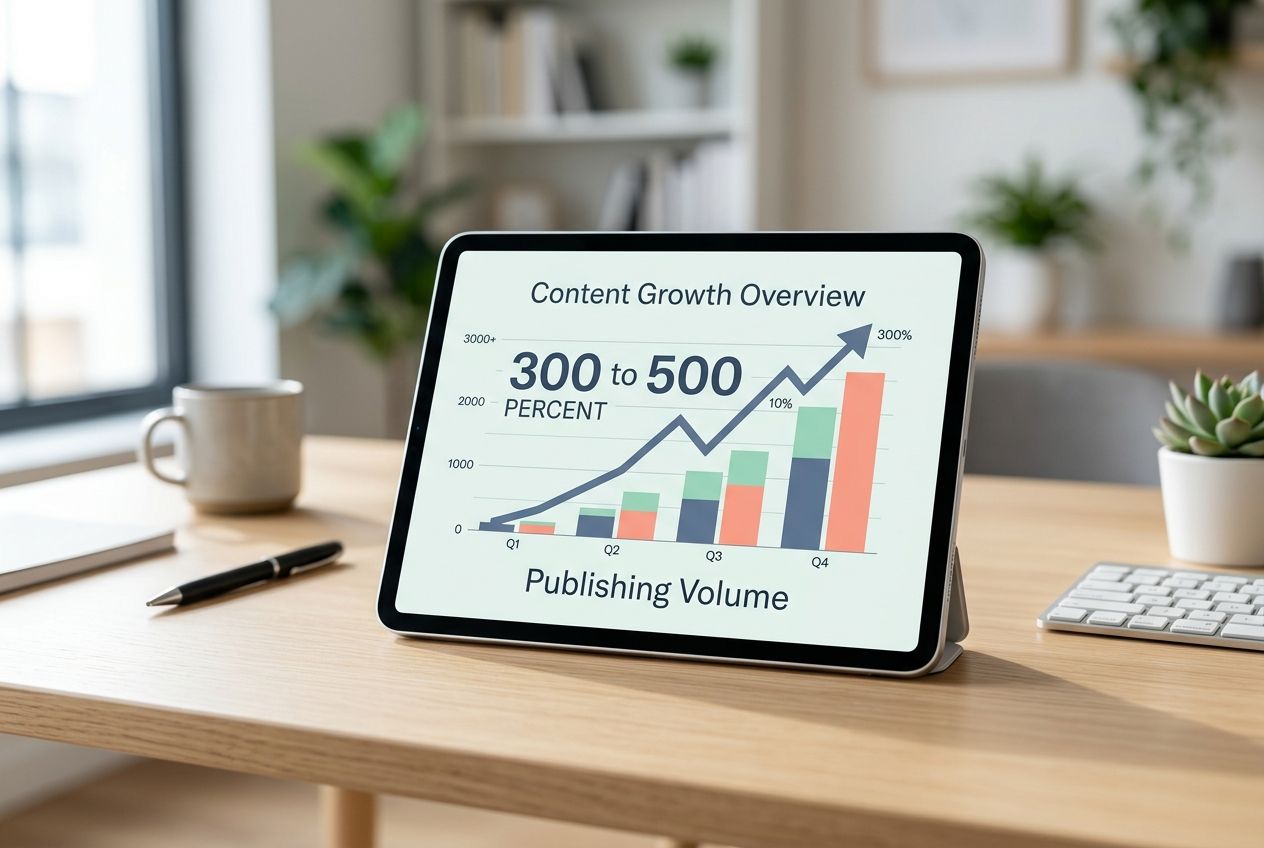
Recent industry data shows AI workflows can increase publishing volume by 300 to 500 percent without adding extra staff.
Using data analytics, AI studies which posts bring more likes or shares. It adapts future ideas so each update has a better shot at grabbing attention.
5. Improving SEO Strategies With AI-Driven Insights
AI tools can spot trending keywords fast. They scan millions of searches each day and help pick the best words for your site.
These smart systems uncover hidden patterns in search data, making it easier to rank higher on Google. For example, they might find that “marketing automation” is climbing up the list this month.
A massive 2026 Averi AI study found that B2B buyers arriving from AI-driven search overviews convert at four to five times the rate of traditional organic traffic. Optimizing for AI search is now mandatory.
Content creators use platforms like Surfer SEO or Clearscope to tweak old blog posts. AI-driven suggestions help write catchy titles and improve meta descriptions, too. With less guesswork, websites see more clicks and better search rankings without breaking a sweat.
6. Analyzing Consumer Data for Predictive Marketing
After boosting SEO optimization with smart AI-driven insights, marketers turn to consumer data for their next big win. Generative AI studies patterns, clicks, likes, and skipped ads to spot what sparks interest.
Brands use these sharp tools in digital marketing to predict shoppers’ next moves before they make them. For example, Sally clicks through new shoes on Monday, and by Tuesday, she sees the picks selected just for her.
Machine learning links past buys with future trends using thousands of data points each second. It checks:
- The customer’s age and general location.
- The specific time of day they browse the site.
- Their previous purchase history and cart abandonments.
Advanced platforms like Salesforce Einstein Analytics now offer predictive lead scoring. This tells US sales teams exactly which customers have the highest likelihood of making a purchase within the next 14 days.
Marketers can tell who might buy soon or which ad needs a tweak based on live numbers instead of guesswork. Sharper offers land right where customers want it most.
7. Automating Idea Generation for Campaigns
Insights from consumer data spark fresh ideas for new campaigns. Generative AI can whip up dozens of creative concepts in seconds.
Marketers use these tools to brainstorm slogans, headlines, hashtags, and full campaign themes. Instead of staring at a blank screen, you get a list of catchy options ready for action.
Brands like Coca-Cola used AI-driven marketing automation platforms to shape their 2023 ad strategies. These platforms analyze trends and audience interests using machine learning.
A great pro-tip from AI experts is to use “few-shot prompting” during brainstorming. Give the AI three examples of your past successful campaign themes before asking for new ideas, and the output quality will skyrocket. The result is a campaign that feels current and grabs attention faster than you can say viral.
8. Optimizing Email Marketing With AI Tools
Fresh ideas spark better campaigns, but sharp email marketing keeps those sparks alive. AI tools boost your strategy fast by sorting lists with a simple click.
These tools pull from customer data and habits to send the right message at the perfect time. A 2026 analysis of US email campaigns revealed that AI-optimized subject lines produce 50% higher open rates than manually written ones. They do this by:
- Analyzing past open rates to find the best words.
- Adjusting the tone to feel more conversational.
- Sending the email at the exact time the user is usually active.
Many small businesses use built-in features like Mailchimp’s Intuit Assist to automatically draft weekly newsletters. Marketers save hours while reaching bigger crowds through smarter targeting and automation.
9. Creating Interactive Chatbot Experiences
Chatbots now chat back, answer fast, and joke too, acting like a friendly robot sidekick on your website. They listen to questions day or night and offer help in seconds.
Many US e-commerce sites now use advanced agents like Intercom’s Fin AI. These tools safely ingest a company’s entire support center documentation to answer complex customer questions.
These modern chatbots successfully resolve up to 50% of routine customer queries instantly without human help. They make customers smile more often than not and free up your human support team for tougher issues.
10. Scaling Content Production Efficiently
AI content creation tools can write hundreds of posts, product descriptions, and ad copies in one day. Big brands use generative AI to push out campaigns fast and keep their audience engaged everywhere.
Machine learning boosts quality by spotting weak spots or repeated ideas before anything goes live. Marketing automation helps teams skip boring tasks, so they can test new strategies or tweak headlines with less fuss.
To scale responsibly, seasoned experts always recommend a human-in-the-loop approach.
You let the AI generate the bulk of the text, but a human editor must review it to ensure it perfectly matches your brand voice.
Tools like DeepL Pro also allow businesses to translate this vast amount of content into 30 different languages in minutes. This lets businesses target more markets while keeping costs steady as a drumbeat.
Benefits of Using Generative AI in Marketing
Marketers now spend less time on boring tasks and more time getting creative. Brands keep up with busy schedules, wow their audience, and stay ahead in the digital race.
Higher Quality Content
Generative AI tools spot grammar errors, pick stronger words, and fix awkward sentences in a snap. Nike uses AI to improve product descriptions so each one sounds clear and sharp.
Fresh content rolls out with fewer mistakes, saving time for writers who no longer sweat over every single line. Popular US editing tools like GrammarlyGO and Hemingway AI check your tone and readability in real time.
Machine learning helps ensure text matches what readers need, thanks to data-driven insights from past user actions. Social media posts catch more eyes because AI suggests catchy phrases or matches trending topics.
Faster Turnaround Times
AI content creation tools work all day, every day. Brands now produce social media posts, blog articles, and marketing emails in hours instead of days. Marketers no longer wait for drafts or edits from multiple teams. Automated writing cuts repetitive tasks incredibly fast.
With machine learning and data analytics, teams spot trends as they happen. Updates happen at lightning speed if campaigns need a tweak or a new idea.
Automated writing cuts repetitive tasks incredibly fast, allowing teams to produce marketing emails in hours instead of days.
Speed feeds better digital marketing results for everyone involved. It frees people to focus on creative strategy and customer engagement instead of chasing deadlines.
Cost-Effective Solutions
Small teams can create more content with less money using marketing automation tools. Generative AI models work around the clock, cutting the need for large writing or design teams.
A single tool writes posts, crafts emails, and gives data-driven insights in seconds. Businesses save thousands each year by swapping manual tasks for smart machines.
Marketing budgets stretch further as machine learning handles SEO optimization, email campaigns, and video production. Here is a quick look at why the ROI is so strong:
- Reduced Overhead: Software subscriptions cost a fraction of full-time agency retainers.
- Higher Volume: You can test 10 different ad variations for the cost of producing just one.
- Fewer Bottlenecks: Teams bypass the waiting period for external design resources.
That means brands of all sizes keep up with big-name competition without breaking the bank or burning staff out like candles at both ends.
Best Practices for Implementing Generative AI
Working with AI means playing smart and safe right from the start. Set up strong habits early to save yourself a massive headache later.
Focus on Data Quality and Consistency
Good data feeds smart AI tools. Garbage in means garbage out, as the old saying goes. Data should be accurate and up to date for strong results in content creation or digital marketing. If you feed your generative AI mixed-up facts or missing info, it spits out mistakes, dull text, or downright silly ideas.
A pro-tip for serious marketers is to use a method called Retrieval-Augmented Generation. This forces the AI to only pull answers from your approved company documents, stopping it from inventing false facts.
Even a simple fix like using standard formats across all records stops confusion down the road. Think about phone numbers that use dashes instead of dots or dates written the same way every time.
Prioritize Data Privacy and User Trust
People want to feel safe online. Marketers must protect every bit of user data with care, like locking up treasured baseball cards.
Always use clear privacy policies and give users control over their info. Big mistakes break trust fast, like Facebook’s 2018 incident that saw millions lose faith after a data leak.
New regulations are also forcing companies to adapt quickly. In the US, the FTC requires all automated marketing decisions to have clear guidelines by early 2026, including:
- Documented data sources used for training.
- Clear disclosure labeling on AI-generated ads.
- Transparent rules for audience segmentation.
Machine learning tools need strong walls to stop leaks and hacks. AI should only gather the required information needed for audience targeting, never snooping into private details.
Regularly Monitor AI Model Outputs
After focusing on data privacy and user trust, it is smart to keep a close watch on your AI model outputs. Mistakes easily slip through the cracks if you do not double-check what the AI creates.
Even top digital marketing teams run into funny mishaps now and then, like an email greeting that calls everyone “Dear [Customer Name].”
Spotting errors early saves both time and money. Industry experts report that some AI language models still have a hallucination rate of up to 5%, meaning they confidently state false facts as truth.
Use simple checklists for regular reviews of content across blogs, social media, emails, and chatbots. Stay active in reviewing so your marketing automation keeps delivering quality results every day.
Challenges and Ethical Considerations
Tackling AI’s challenges can feel like catching shadows. Stay curious, keep asking questions, and discover more in this section.

Addressing Bias in AI-Generated Content
AI tools learn from tons of online data. Sometimes, this data holds hidden bias and leads to unfair or one-sided content.
Content marketing teams use smart checks, diverse training sets, and regular audits to spot these errors early. They often rely on a few key steps:
- Updating AI models with more global sources, just like Google did recently.
- Asking humans to review what the machine wrote before posting it online.
- Using many types of voices and styles to help customers feel included.
This keeps text fair for everyone and builds trust with readers. Marketing automation works best when people check results often and make updates fast if something seems off track.
Ensuring Transparency in AI Usage
People want to know how AI content creation works behind the scenes. Brands should make it clear when they use generative AI for digital marketing, social media, or automated writing.
Trust grows if your audience knows which parts are machine-made and which ones humans wrote or reviewed. Share details about the data sources and models used in content production.
To combat deepfakes and fake news, the US content industry is rapidly adopting C2PA watermarking. This standard embeds hidden data in AI-generated images to tell users exactly how the file was made.
Clear communication helps keep customer engagement high and lets readers spot automated interactions quickly, like with chatbots or email campaigns. Being open about marketing automation builds trust and keeps you honest.
Closing Thoughts
AI content creation keeps changing how companies talk to their customers. Digital marketing teams now use machine learning for faster campaigns, smarter data analytics, and sharper audience targeting.
Brands build stronger engagement with tools like chatbots or video production software powered by AI. I hope exploring the 10 Ways Generative AI Is Transforming Content Marketing has shown you exactly what is possible for your own business.
Smart marketers test messages using AB testing and adjust fast using insights from automated writing systems. Chatbots answer questions at any time of day, making customer engagement simple and quick. Content gets localized for each market or audience group. This builds trust and grows sales without adding much cost or delay.