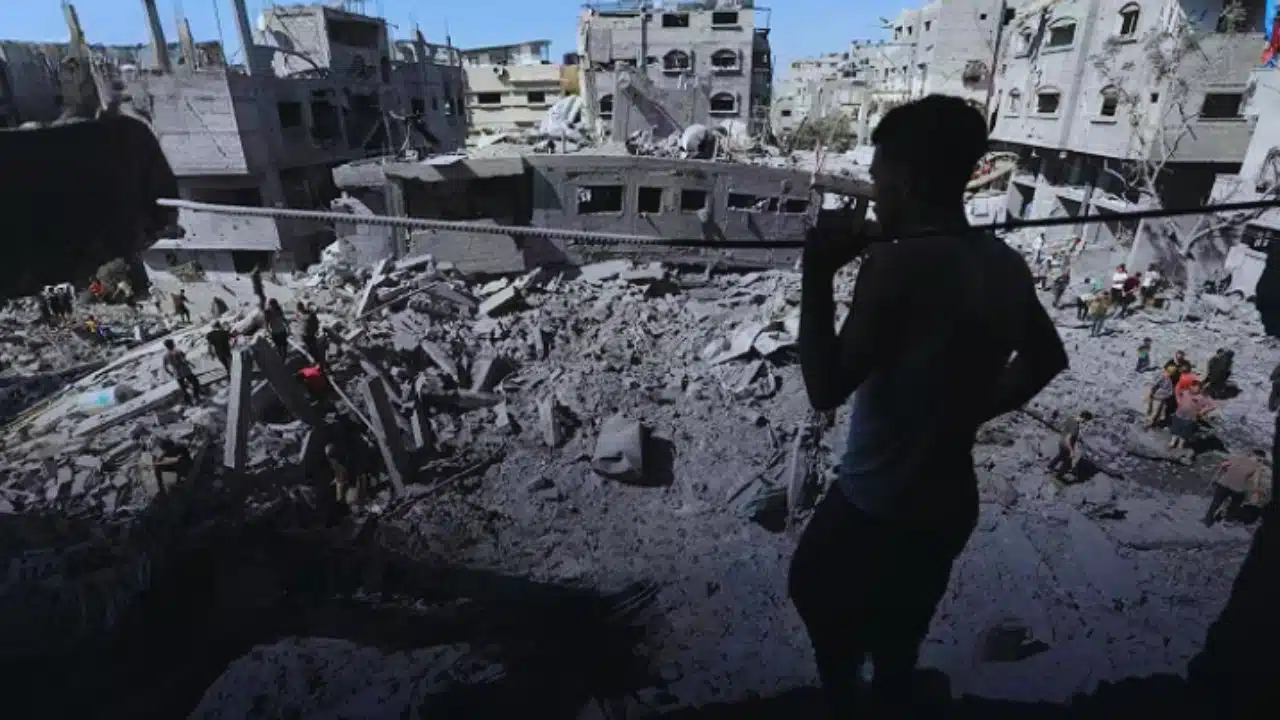
The Israeli military campaign in Gaza showed no signs of slowing as deadly airstrikes struck multiple areas of the enclave from Saturday night into Sunday morning.
Several neighborhoods in Gaza City and southern areas such as Khan Younis were targeted in overnight raids, leading to significant loss of life and injuries among Palestinian civilians.
Strikes on Residential Areas and Tent Camps
According to Gaza’s Civil Defense Agency, at least 14 Palestinians were killed in a single strike targeting the Sheikh Radwan neighborhood in Gaza City during the early hours of Sunday. The strike reportedly destroyed residential buildings, with multiple victims still trapped under the rubble.
In an emotional account, a resident told AFP, “The rest of my family is still buried. Every day, we’re losing more children, parents, and neighbors. This bloodshed must end.”
Other airstrikes struck a displacement camp in Al-Mawasi, a coastal area previously designated as a “safe zone,” and two family homes in Gaza City.
Children Among the Victims
Palestinian health authorities and eyewitnesses reported to DPA that four children aged between 6 and 12 years were among the dead. The children were sheltering with their family in a makeshift tent near Khan Younis when they were struck by an Israeli drone.
Hospital officials speaking to the Associated Press (AP) in both Gaza City and Khan Younis reported that at least 38 people were killed in total during the 24-hour period. Additionally, 25 people were wounded in other targeted areas, including women and elderly civilians.
IDF Claims 130 Targets Hit in 24 Hours
The Israel Defense Forces (IDF) confirmed in a Sunday morning statement that it had conducted a series of air and artillery strikes, hitting over 130 different locations across the Gaza Strip.
Among the listed targets were:
- Weapon storage sites
- Suspected Hamas command centers
- Tunnels used by militants
- A tent camp which, according to Israel, was harboring militants
However, these claims were not independently verified, and the IDF did not address specific civilian casualties from the operations. While the IDF insists its targets are linked to Hamas, humanitarian organizations and medical sources on the ground continue to report extensive civilian casualties.
Red Sea Maritime Attack Adds Regional Tension
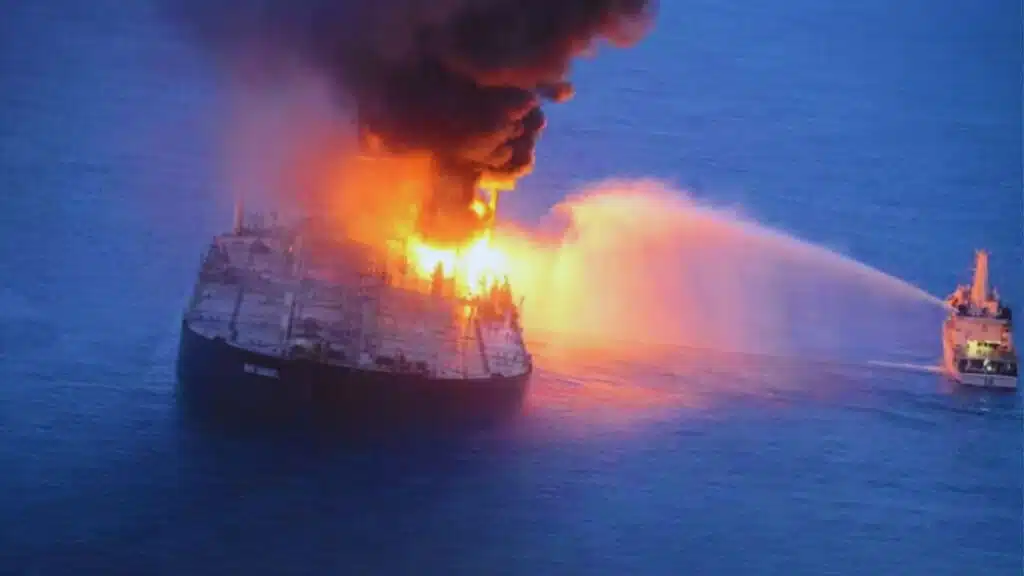
Amid the ongoing Gaza conflict, a commercial ship was reportedly attacked in the Red Sea, a development that signals the growing regional fallout from the war.
While the identity of the vessel and its cargo has not been officially confirmed, maritime security firms suspect the attack may have been carried out by Houthi rebels in Yemen, who are aligned with Iran and have openly declared support for Hamas.
The Red Sea, a major global trade route, has seen a spike in drone and missile activity in recent months. Several shipping companies have rerouted vessels to avoid potential attacks, increasing shipping costs and insurance premiums globally.
Far-Right Israeli Minister Opposes Gaza Aid Expansion
Back in Israel, political tensions are escalating over humanitarian access to Gaza. Finance Minister Bezalel Smotrich, a key figure in the Israeli far-right coalition, harshly criticized a Security Cabinet decision to allow international aid organizations to expand relief operations in northern Gaza.
Calling the move a “grave mistake,” Smotrich claimed it would directly aid Hamas and give them logistical cover. He accused Prime Minister Benjamin Netanyahu and IDF Chief of Staff Eyal Zamir of failing to safeguard Israeli interests.
Heated Cabinet Debate Reported
According to the Times of Israel, the cabinet meeting turned confrontational, with Smotrich allegedly saying the prime minister was not fulfilling his wartime mission. Though Smotrich stopped short of resigning, he said he was considering “his next steps”, hinting at a potential government shake-up.
Smotrich, who resides in an illegal settlement in the West Bank, has long opposed Palestinian statehood and supports expanding Jewish settlements. His ideological stance has contributed to a broader rightward shift in Israel’s policies and war strategy.
Ceasefire Talks Resume in Qatar as US Pushes for Deal
In parallel with the ongoing military actions, diplomatic efforts are continuing. An Israeli delegation arrived in Doha, Qatar on Sunday to resume indirect negotiations with Hamas, brokered by Qatari and Egyptian officials with support from the United States.
However, Prime Minister Netanyahu has already dismissed Hamas’ latest amendments to the proposed ceasefire deal, calling them “unacceptable and unrealistic.”
US President Optimistic on Peace Breakthrough
Despite Israel’s public objections, President Donald Trump expressed optimism in a White House briefing on Friday. “There could be a Gaza deal as early as next week,” he told reporters. Netanyahu is scheduled to meet with Trump in Washington, D.C., early this week to discuss US-Israel strategic coordination and the next steps in Gaza.
The ceasefire framework reportedly includes:
- A multi-week pause in fighting
- Exchange of hostages and prisoners
- Scaled humanitarian aid delivery across Gaza
- Post-war governance discussions involving Arab partners and international organizations
Humanitarian Crisis Worsens as Aid Access Remains Limited
The humanitarian situation in Gaza is rapidly reaching catastrophic levels. According to the United Nations Office for the Coordination of Humanitarian Affairs (OCHA):
- Over 1.8 million people (80% of Gaza’s population) are now displaced
- Access to clean water and sanitation is scarce
- Medical supplies and food are at emergency levels
- Electricity is virtually non-existent in many areas
The World Health Organization (WHO) has issued repeated warnings of a public health disaster unless aid routes are immediately opened and hostilities halted.
International NGOs, including the International Committee of the Red Cross (ICRC) and Médecins Sans Frontières (Doctors Without Borders), have called for safe humanitarian corridors to be established for aid workers and medical staff.
What Happens Next?
The next few days are pivotal. If ceasefire talks in Doha progress, it could bring a temporary halt to the fighting and enable scaled-up humanitarian relief. However, deep political divides within both Israeli leadership and Hamas factions may complicate the process.
At the same time, escalating regional incidents — such as attacks in the Red Sea — threaten to broaden the conflict beyond Gaza. The world is watching as civilian casualties grow, regional stability weakens, and pressure mounts on global leaders to act decisively.
This latest wave of violence has once again highlighted the immense human cost of the Israel-Gaza conflict. While military objectives dominate headlines, the real toll is borne by civilians — families, children, and entire communities caught in the crossfire.
With diplomatic efforts underway, there is still hope for a breakthrough. But it will require political courage, international pressure, and a genuine commitment to peace from all parties involved.
The Information is Collected from BBC and Yahoo.