Have you noticed how fast things are changing in your child’s classroom lately? It feels like artificial intelligence is everywhere. As a parent or educator, you might be wondering what that actually means for our kids. Some students spend hours staring at screens. Meanwhile, teachers are trying hard to keep up with new technology while still being, well, human. People keep asking the same big question: What is the future of AI in education? Is It Helping or Hurting Students?
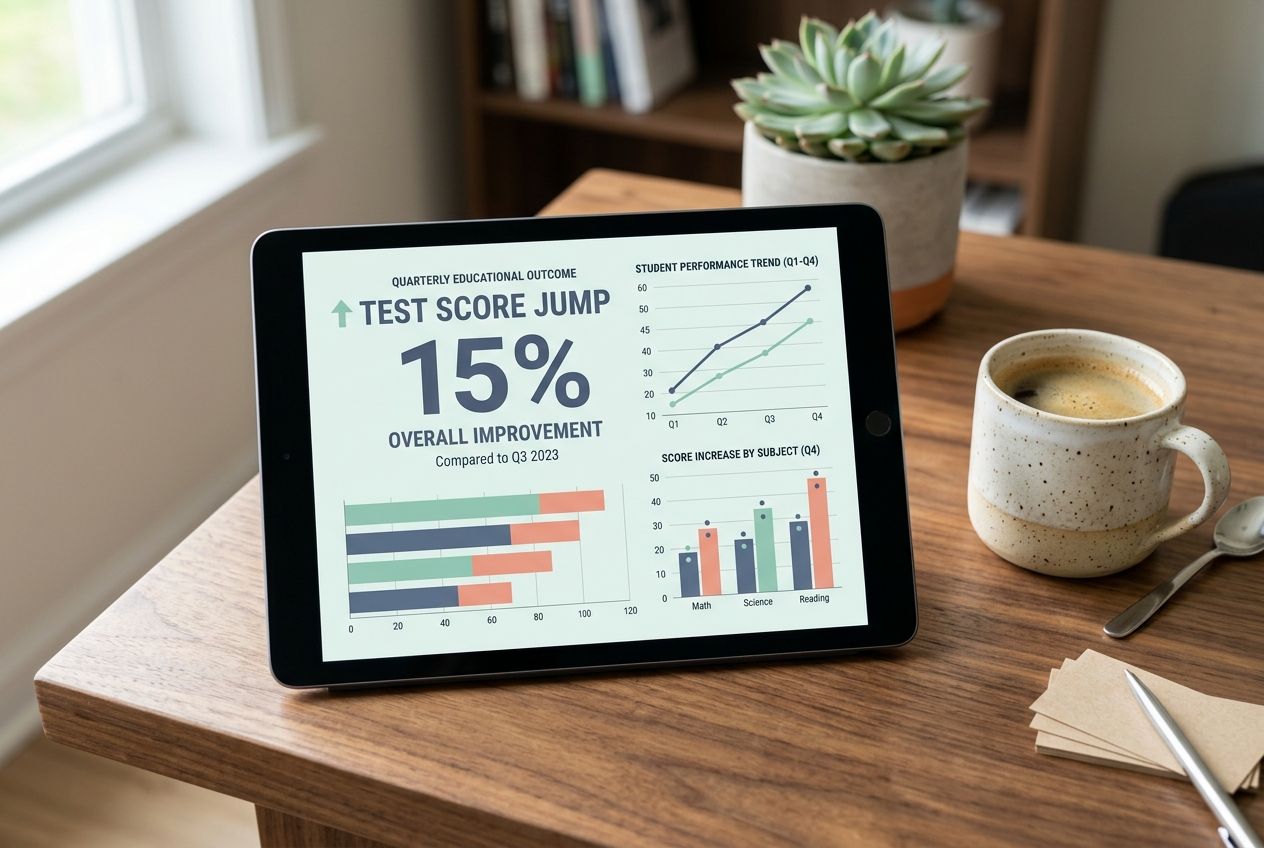
Here is a fascinating discovery. A recent 2026 study found that schools using AI tools saw student test scores jump by an average of 15 percent. But at the same time, we are seeing less time spent on group work and creative projects. It is a mixed bag. Grab a cup of coffee, and let’s go through this together. I will show you exactly what AI is doing in schools right now and how we can use it safely.
The Role of AI in Modern Education
Artificial intelligence now sits in classrooms, offices, and learning platforms across the globe. Schools and teachers use AI tools to grade papers, spot struggling students, and create lessons that fit each learner’s needs.
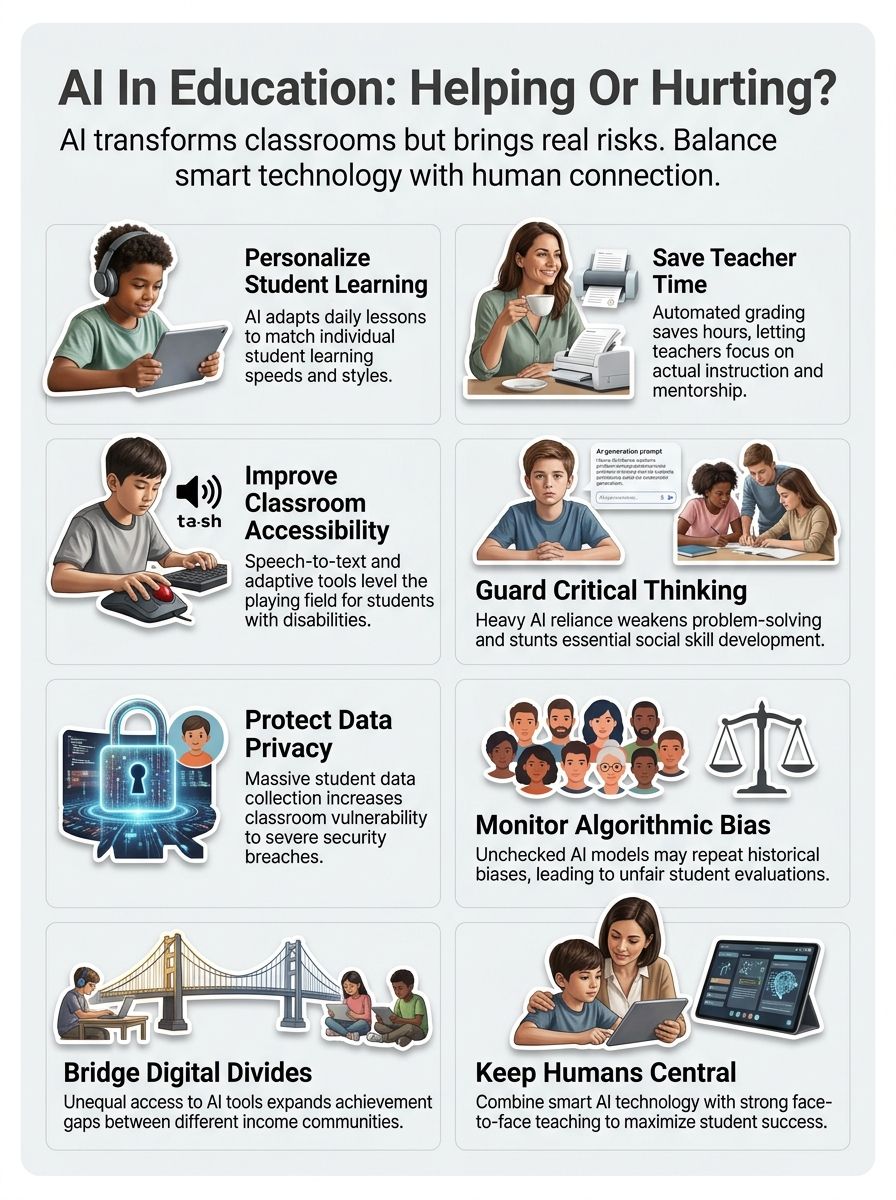
Overview of AI in educational settings
Schools and universities across America now use AI tools to transform how students learn. According to 2026 data from Engageli, a staggering 85 percent of K-12 teachers used AI during the 2024-2025 school year. These systems range from smart tutoring programs to software that grades papers in seconds.
Teachers use AI to track student progress and adjust lessons on the fly. For example, platforms like MagicSchool AI are now used by over three million educators. This tool can generate a fully structured lesson plan template in under 60 seconds.
The technology sits in the background, helping educators work smarter. This frees educators to focus on what matters most, like building real relationships with their students.
Key areas where AI is currently being used
AI tools now show up in classrooms across America, making learning look very different. Teachers and students interact with artificial intelligence in ways that shape education every single day.
- Personalized learning platforms: Systems watch how each student learns and adjust lessons to match their speed.
- Automated grading systems: Tools like Gradescope scan student work and score assignments, cutting grading time significantly.
- Intelligent tutoring: Chatbots act like personal coaches available around the clock.
- Language learning apps: Platforms help students practice speaking with instant corrections.
- Curriculum development tools: Software helps teachers create lesson plans faster by suggesting activities.
Benefits of AI in Education
AI tools give students learning paths that match their own pace and style, making school feel less like a one-size-fits-all factory. Teachers get back time spent on grading and paperwork.
Personalized learning experiences
Artificial intelligence reshapes how students learn by creating customized paths that fit each person’s style. Software systems track what students know and adjust lessons on the fly. A student who grasps math quickly moves to harder problems, while another learner gets extra practice.
Personalized learning outcomes improve because students engage with material that matches their actual level. A 2025 Codegnan report found that AI personalization boosts course completion by an impressive 70 percent. This cuts through the old classroom model that leaves some students bored and others lost.
Tools like Khanmigo provide safe, step-by-step tutoring without just giving away the answers. This approach means fewer students fall through the cracks, and more kids actually enjoy the learning process.

The beautiful thing about learning is that no one can take it away from you. – B.B. King
Enhanced student engagement
Beyond customized paths, AI tools spark genuine excitement in classrooms. Students interact with technology that responds to their actions in real time. This makes learning feel less like a chore and more like a conversation.
Gamification elements and instant feedback keep learners highly motivated. For instance, tools like Kahoot! AI turn review sessions into interactive, gamified experiences. A recent 2026 study found that AI-powered learning increases student engagement rates by up to 60 percent.
This responsiveness transforms passive note-taking into active participation. Engagement skyrockets when young people see their progress tracked visually and their efforts acknowledged quickly.
Streamlined administrative tasks for teachers
Teachers spend countless hours on paperwork, grading, and attendance tracking. AI tools cut through this burden instantly. Automated systems evaluate tests in seconds, freeing up time for better lesson planning.
A 2026 Gallup-Walton Family Foundation survey found that teachers using AI tools save an average of 5.9 hours per week. That is the equivalent of six full weeks recovered per school year. Platforms like Google Classroom’s Gemini AI can even help draft professional emails to parents.
This shift means educators can focus on connecting with students. They stop drowning in spreadsheets and start investing energy into actual instruction.
Improved accessibility for students with disabilities
AI tools open doors for students with disabilities that were previously locked shut. These digital learning solutions level the playing field for everyone. Real-time captioning tools, like Otter.ai, help deaf and hard-of-hearing students follow classroom discussions effortlessly.
Text-to-speech software reads content aloud for students with visual impairments. Multi-sensory reading tools, such as Speechify, highlight words visually as they are spoken. Research shows this multi-sensory approach can improve reading comprehension by up to 30 percent for struggling readers.
This customized feedback arrives instantly, without judgment or embarrassment. Accessibility features embedded in technology mean students do not have to ask for special treatment.
Challenges and Risks of AI in Education
While AI opens doors in classrooms, it also brings real problems that schools must address head-on.
Potential over-reliance on AI tools
Schools face a real danger when they lean too hard on artificial intelligence for learning. Students start expecting machines to solve every problem they face. This habit weakens their problem-solving skills and creativity.
A 2026 Pew Research Center study found that 54 percent of U.S. teens now use AI chatbots for schoolwork. Even more concerning, 10 percent report doing all or most of their homework with it. Kids need to struggle a bit to think through challenges on their own.
AI tools should help students learn, not replace the thinking process itself. Teachers must stay involved and guide their students carefully.
Privacy and security concerns
Artificial intelligence systems collect massive amounts of student data every single day. Schools gather information about how students learn and what they struggle with. Companies that build AI tools store this information on servers, which creates serious risks.
In the United States, schools must ensure these tools comply with strict privacy laws. Two major regulations are the Family Educational Rights and Privacy Act (FERPA) and the Children’s Online Privacy Protection Act (COPPA). If a tech company uses anonymized information to train new models without permission, it can easily violate these protections.
Digital learning tools promise to help students succeed, but the cost cannot be our privacy. We need stronger rules, and schools must demand better data protection.
Ethical implications of AI-driven decisions
AI systems make decisions about students every single day, and those choices carry real weight. Algorithms decide which students get extra help or move to advanced classes. The problem is that these systems can lock in human biases.
This issue is known as algorithmic bias. If the data used to train an AI system came from biased sources, the AI will repeat those same mistakes. A student from a low-income background might get sorted into a lower track based on flawed historical data rather than actual ability.
Transparency matters enormously when AI shapes a student’s educational path. Schools must demand to know exactly how algorithms work to ensure fair academic performance tracking.
Risk of widening the digital divide
Not all students have equal access to technology and reliable internet connections. This gap creates a serious problem in education. Students without these tools fall behind their peers who use AI-powered learning platforms every day.
The divide is no longer just about internet access, but also about capability and affordability. While basic AI tools are free, premium subscriptions cost money. A 2025 Digital Education Council survey noted that this creates an unfair advantage for students who can afford faster, more accurate AI research tools.
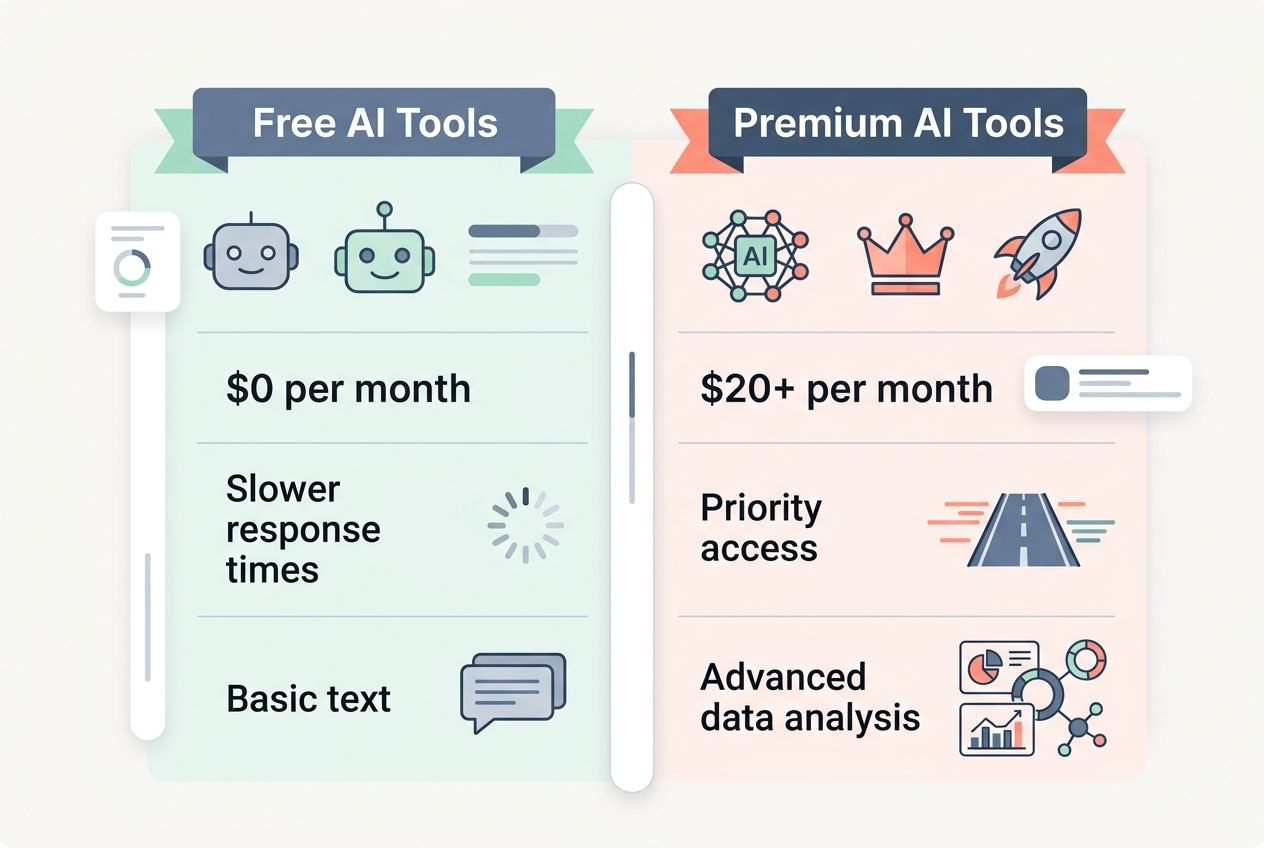
Here is a quick look at how the digital divide plays out with AI tools:
| Feature | Free AI Tools | Premium AI Tools (e.g., ChatGPT Plus) |
|---|---|---|
| Cost | $0 per month | $20+ per month |
| Performance | Slower response times during peak hours | Priority access and faster processing |
| Capabilities | Basic text generation and answering | Advanced data analysis and file uploads |
The Future of AI in Education
AI will reshape how students learn over the next few decades. Schools must decide how to blend smart machines with great teaching.
How AI could transform learning by 2050
By 2050, artificial intelligence will completely reshape how students learn in classrooms around the world. Teachers will use AI systems to create learning paths that fit each student’s exact pace and style. Machines will grade papers in seconds, freeing up teacher time for meaningful conversations.
We are already seeing the groundwork for this shift. According to 2026 data from Pursuit, U.S. bachelor’s AI degree programs grew by 114 percent in just one year. Students are not just using AI, they are preparing to build it.
With AI projected to contribute $15.7 trillion to the global economy by 2030, technology integration will reach every subject. Feedback will come instantly, helping learners understand mistakes right away.
Balancing AI innovation with human-centric teaching
Teachers must stay at the center of the learning process, even as tools grow more powerful. AI handles data analysis and administrative work perfectly. This frees educators to focus on building relationships and inspiring creativity.
A recent World Economic Forum report found that 71 percent of teachers now view AI assistants as essential for learning. However, schools that succeed combine this technology with strong teaching methods. They use AI to support instruction, not replace it.
Teachers can read a room and notice when a student struggles with anxiety. AI cannot replace that human awareness. The best approach puts human judgment first.
Striking a Balance: AI and Human Involvement
Teachers shape students’ futures through real connections and mentorship. AI tools work best when they support human instruction.
The importance of Teachers’ Adaptation to AI in the Classroom
Educators must learn new skills to work alongside artificial intelligence tools. AI systems can handle grading and attendance tracking easily. Instructors who adapt can focus on fostering interpersonal skills that machines cannot replicate.
However, there is a massive training gap we need to address. A 2025 National University report revealed that 87 percent of educators have not received any formal AI training. Schools must invest in professional development so staff members feel confident.
Adaptation also means knowing when to let human connection take the lead. The most effective classrooms use AI to improve teaching, not replace it.
Integrating AI with pedagogically sound practices
Schools must blend AI tools with proven teaching methods to create real learning gains. Here are the most effective ways teachers can integrate this technology:
- Target specific challenges: Identify exact learning hurdles that AI can solve, like using Grammarly for immediate writing feedback, rather than adopting tech for its own sake.
- Maintain pedagogical integrity: Select AI platforms that align with established educational theories, such as social learning.
- Focus on training: Provide ongoing professional development so instructors know how to interpret AI data and respond to student needs.
- Use AI for small-group focus: Leverage AI-powered analytics to spot struggling students, allowing for highly targeted small-group instruction.
- Blend assessment methods: Design grading rubrics that combine AI-generated insights with teacher observation to capture the full picture of academic performance.
Striking this balance requires schools to develop clear policies that protect student data while maximizing benefits.
Case Studies of AI in Education
Real schools and universities have already put AI tools to work, and the results show us what works. These early adopters teach us valuable lessons about smart implementation.
Successful implementations in schools and universities
Schools and universities across America have started using AI tools with impressive results. These institutions show us that technology truly helps students learn better.
- California State University (CSU): CSU recently launched one of the biggest AI rollouts in higher education, offering premium ChatGPT Plus access to help students tackle complex research.
- Denver Public Schools: This district carved out specific funding in 2025 to implement MagicSchool AI, giving teachers powerful tools to differentiate instruction.
- Georgia Institute of Technology: Georgia Tech launched an AI teaching assistant named Jill Watson to answer routine online course questions, freeing professors for deeper instruction.
- Los Angeles Unified School District: LAUSD implemented AI tutoring systems to provide after-school academic support to thousands of students, offering targeted practice exercises.
- Coursera Partnerships: Several universities partnered with Coursera to use AI for grading essays, reducing teacher workload while providing instant feedback.
Lessons learned from early adopters
Schools that jumped into AI early discovered valuable insights about technology integration. These pioneers taught us where the real pitfalls hide.
- Oversight is mandatory: Personalized learning engines work best when teachers review AI recommendations and add their own judgment calls.
- Academic integrity needs monitoring: A 2026 report from Turnitin showed that out of 200 million reviewed papers, 11 percent contained significant AI-generated text, highlighting the need for clear cheating policies.
- Training is non-negotiable: Institutions that invested heavily in professional development saw much better outcomes than those that just handed out software.
- Human interaction must remain: Student engagement actually dropped when AI replaced human interaction entirely.
- Privacy must be built-in: Organizations learned they must build strong data security systems from day one, rather than patching them later.
These hard-won lessons show us that AI in education requires thoughtful planning and genuine commitment.
How to Ensure AI Supports Students, Not Harms Them
Schools and families need to set clear rules about how AI tools work in classrooms. Teachers must stay in charge and ask hard questions about AI choices.
Developing balanced AI policies in education
Developing balanced AI policies requires schools to create clear rules that protect students. These guidelines must address data privacy and outline exactly how teachers should use AI tools.
Many states are taking this very seriously. For example, Ohio passed a mandate requiring all public school districts to adopt a formal AI policy by July 1, 2026. Leaders need to involve teachers, parents, and technology experts in this policy creation process.
Clear communication about how AI affects learning outcomes helps build trust. Feedback from educators and students should constantly shape policy updates.
Promoting equity and inclusivity in AI adoption
AI tools can help close gaps in education, but only if schools share them fairly. Students in under-resourced neighborhoods often lack access to technology. Schools must invest in infrastructure so all students get AI learning tools.
Inclusivity also means thinking about students with different learning needs. Schools must ensure their AI tools comply with the Americans with Disabilities Act (ADA) and the Individuals with Disabilities Education Act (IDEA). This guarantees that accommodations are built into the technology, not added as an afterthought.
Equity in digital learning requires honest conversations about access and affordability. True progress means every student benefits from these advancements.
Final Words
AI is shaping education right now, and schools must act with clear intention. Teachers, administrators, and parents all play vital roles in making smart choices about this technology.
Personalized learning works best when humans guide the process. Machines should never run the show entirely on their own. Schools that balance new tools with strong teaching practices see real gains in student growth. You can start small by testing one AI tool and measuring the results.
The future of education belongs to those who understand that technology serves people. It should never be the other way around.
Frequently Asked Questions
1. How does AI help students in school?
AI tools like Khan Academy’s Khanmigo act as patient, 24/7 tutors that guide kids through tough subjects at their own speed. In fact, a 2026 Engageli report found that students using these personalized AI platforms can achieve up to 54% higher test scores than those in traditional settings. By spotting exact learning gaps, AI lets kids master the material without ever having to wait for a teacher’s help.
2. Can AI hurt learning for students?
Yes, using tools like ChatGPT as a crutch can definitely trip up young minds. A 2026 RAND survey actually found that nearly 70% of middle and high school students are worried that relying on AI for homework is eroding their own critical thinking skills. It is just like using training wheels forever; if they never learn to ride solo, they miss out on building the real problem-solving abilities they need.
3. Does AI make teachers less important in class?
Not really, because teachers are still the absolute heart of any classroom. While computers crunch numbers fast, a 2026 DemandSage report notes that human teachers interpret student emotional states with 92% accuracy, compared to just 68% for the best AI systems. Only people know how to truly inspire a kid or notice when someone is having a rough time.
4. Is using AI fair for every student?
That depends heavily on access, because a 2026 Jobs for the Future survey found that 40% of learners cite the high cost of premium AI tools as a major barrier, meaning schools must step in to ensure everyone gets an equal shot at success.