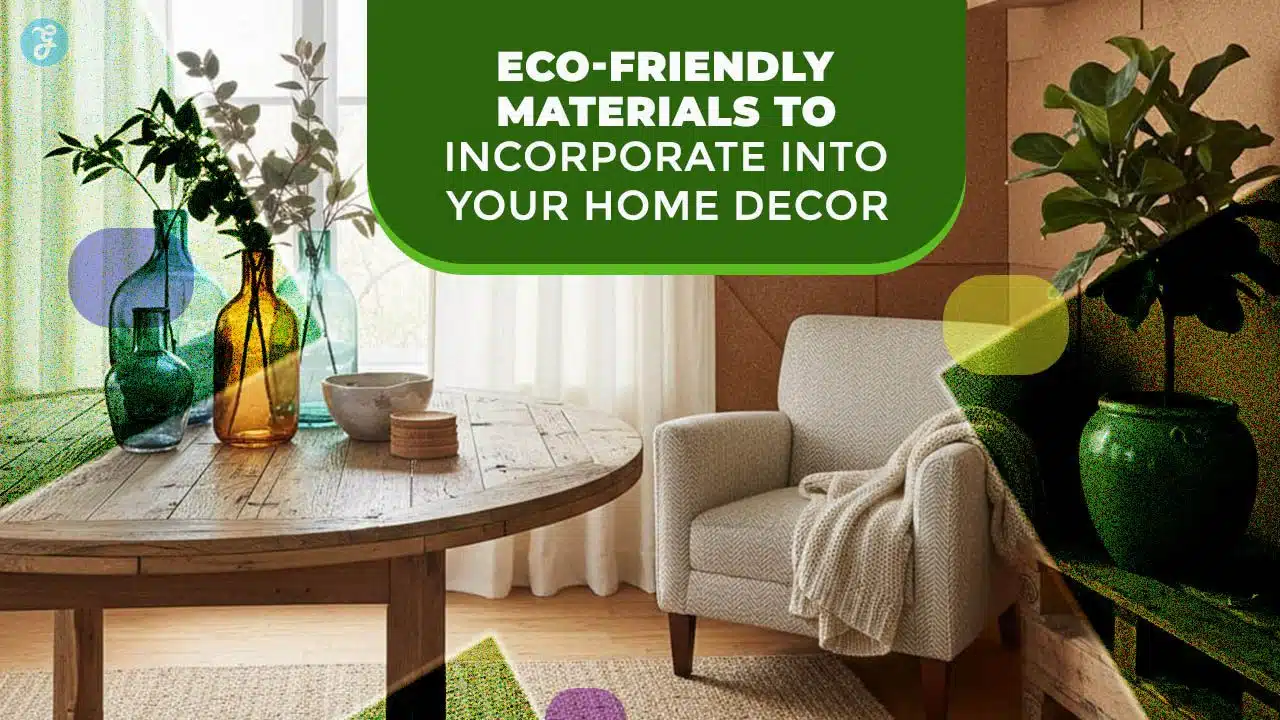
You want a home that looks good, and helps the planet. Many people feel stuck by high prices, greenwashing, and poor indoor air quality, and they worry about their carbon footprint and what ends up in the landfill.
One fact: reclaimed wood, bamboo, cork, recycled glass, organic cotton, natural stone, and recycled metal cut waste and add durable charm. These materials pair well with low-VOC paints, LED bulbs, Energy Star appliances, living walls, and indoor plants to boost air quality and energy efficiency.
This post will name seven sustainable materials, give sourcing tips from thrift stores and online marketplaces, and show budget-friendly swaps for a greener, stylish home. Read on.
Key Takeaways
- Reclaimed wood, bamboo, cork, recycled glass, organic cotton, natural stone, and recycled metal cut waste and add durable, sustainable style.
- LED bulbs use up to 75% less electricity, and Energy Star appliances reduce energy, water use, and long-term costs.
- Choose FSC, OEKO‑TEX, and GOTS certifications; buy local or from thrift shops (Antiques Market of Williamston, Kellie’s) to cut transport emissions.
- Bamboo grows fast with minimal pesticides, cork harvests spare trees and store CO2, and recycled glass and metal use less energy than new materials.
Reclaimed Wood for Rustic Appeal
Repurposed wood comes from old barns, factories, and houses, cutting waste and deforestation. It works well for furniture, flooring, shelves, and headboards, and its age adds durable, sustainable materials and rustic charm.
Aging tightens the grain, so reclaimed pieces warp less than new lumber, and each plank shows one-of-a-kind character.
FSC certification, from the Forest Stewardship Council, marks sustainably sourced wood. Older, vintage furniture that uses reclaimed wood often outlasts new mass-made pieces, and it makes a budget-friendly eco choice.
Sourcing locally, from secondhand shops, online marketplaces, or the multiple listing service, cuts transport impacts and emissions, and helps you find upcycled furniture that shrinks your carbon footprint.
Bamboo: A Versatile and Sustainable Option
Bamboo grows fast, it is a renewable resource that needs minimal pesticides and fertilizers. It resists scratches and dents, and it rivals hardwood in durability. Use it for flooring, furniture, wall panels, room dividers, rugs, and curtains.
Manufacturers sell bamboo in various finishes and colors. It adapts to humid and dry climates, so it works in many homes.
Designers recommend bamboo flooring for sustainable remodeling projects. Pick bamboo curtains or blinds for eco-friendly window treatments. Bamboo fits biophilic design, and it pairs well with indoor plants like snake plant and peace lily.
Homeowners add sustainable materials like bamboo to cut their carbon footprint. Choose low-voc paints and LED bulbs to lower energy use during a remodel.
Cork: A Lightweight and Durable Choice
Cork comes from cork oak trees, and harvest does not harm them. This renewable material, one of the sustainable materials you can choose, absorbs carbon dioxide and helps lower your carbon footprint.
It resists water, is anti-microbial, and is sound-absorbing and insulating, so it fits kitchens, bathrooms, flooring, and furniture.
Insulation from cork cuts heating and cooling demand, so HVAC systems run less and energy use drops. You can pair cork with energy-efficient lighting like LED bulbs, low-VOC paints, and good ventilation to boost indoor air quality.
Cork flooring can outlast many synthetic options, and designers recommend it for sustainable home remodeling. Installers like that cork is lightweight, making it easy to install and move, and homeowners enjoy cork furniture as a durable, eco-friendly choice.
Recycled Glass for Unique Designs

Discarded bottles and windows become colorful recycled glass countertops and tiles. They cut landfill waste, and they use less energy to produce than new glass. Designers install recycled glass tiles on backsplashes, flooring, and tabletops.
You get vibrant colors, varied textures, and durable surfaces that clean with a wipe. Green builders call it a top sustainable material for saving natural resources, and for supporting the circular economy.
Find pieces on online marketplaces, secondhand shops, or from local suppliers during a remodel.
Organic Cotton for Soft Textiles
Organic cotton suits upholstery, drapes, and throw pillows. Farmed without harmful pesticides or synthetic fertilizers, it supports soil health. Uses less water than conventional cotton, so it lowers water demand.
Reduces off-gassing of chemicals, and it improves indoor air quality. It feels softer and lasts longer than conventional cotton, so your armchair will thank you.
Look for OEKO-TEX and GOTS labels to verify organic fabrics and ethical sourcing. Choosing certified textiles supports ethical sourcing practices, and it helps sustainable living. Use organic cotton curtains and linens for sustainable window treatments in living rooms and bedrooms.
Pair organic textiles with reclaimed wood, recycled glass, upcycled furniture, low-voc paints, energy-efficient lighting, and indoor plants, to craft a calm interior rich in sustainable materials and biophilic design.
Natural Stone for Timeless Elegance
Granite, marble, and slate add timeless elegance to kitchens and baths. Homeowners use them for countertops, flooring, and accent walls. Each stone piece is unique in appearance. Stone needs little processing, which cuts energy consumption and carbon footprint.
Natural stone lasts for decades. It stays hypoallergenic and cleans easily with mild soap. Choosing local quarries cuts transport impacts, and picking vendors that practice ethical mining protects workers and ecosystems.
Designers recommend stone countertops and flooring for durable, eco-friendly remodeling. Pair stone with energy-efficient lighting and indoor plants to lower energy use and improve indoor air quality.
Recycled Metal for Modern Accents
Recycled metal cuts landfill waste, and it supports the circular economy. You can use it for furniture, fixtures, decorative accents, and structural elements in a room. It fits sustainable materials goals, since recycling metal uses far less energy than making new metal.
The choice conserves natural resources and it lowers greenhouse gas emissions. This metal stays durable, easy to maintain, and suits high-traffic areas in the home. Consider recycled aluminum countertops for green remodeling, or hunt upcycled furniture at thrift stores and vintage shops.
A welding torch and a rotary tool help pros refinish pieces. They turn scrap into sturdy, long lasting items for sustainable home decor.
How to Source Local Eco-Friendly Materials
Find sustainable materials near you. Use simple tools, people, and shops to cut carbon and cost.
- Check online directories and local home improvement stores, they list sustainable materials like low-voc paints, bamboo flooring, LED bulbs, recycled glass tiles, and certified suppliers to save time and delivery emissions.
- Scan community boards and social media groups to find secondhand shops, upcycled furniture sales, local artisans, and estate auctions, use posts to ask about materials and sourcing, and cut packaging waste and transport miles.
- Ask sustainable interior designers for supplier contacts, many keep lists of ethical sourcing, renewable resources, and durable materials, and they can guide on certified reclaimed wood, recycled metal, and organic fabrics for upholstery.
- Visit Antiques Market of Williamston or Kellie’s Estate Sales, Auctions & Resale, these Michigan sources offer vintage furniture, reclaimed wood pieces, and artisan finds that lower carbon footprint and add rustic charm.
- Support handmade artisan crafts at local markets and online marketplaces, ask makers about upcycled or certified materials, this preserves tradition, cuts carbon, and supplies durable furniture and organic fabrics.
- Check major retailers like West Elm, Crate & Barrel, and IKEA, their eco-friendly product lines include recycled glass countertops, organic cotton upholstery, and energy-efficient lighting options with sustainability labels.
- Buy locally sourced materials to minimize delivery emissions and packaging waste, choose short supply chains for reclaimed wood, bamboo flooring, and natural stone to lower your home’s carbon footprint and improve indoor air quality.
- Browse online marketplaces and thrift stores for vintage furniture and upcycled items, search tags like sustainable home decor and recycled materials, inspect listings for low-voc paints and durable materials before you commit.
- Ask artisans about upcycled or certified materials and chains of custody, request proof for reclaimed wood, organic cotton, and recycled metal, this helps ethical sourcing and strong sustainable design choices.
Tips for Incorporating Eco-Friendly Materials Creatively
Start small, think long term. Wait a month before big decor buys, that habit cuts impulse waste and helps pick durable furniture.
- Upcycle old furniture and buy secondhand from thrift stores or online marketplaces, cut landfill waste and lower your carbon footprint, vintage pieces and upcycled furniture breathe new life into a room.
- Refinish or reupholster older pieces, pick organic cotton upholstery and natural, undyed fabrics to avoid microplastic pollution and VOCs, extend the life of durable furniture for years.
- Pick reclaimed wood for floors, mantels, and furniture, lean into rustic charm with reclaimed wood furniture, solid wood tables and neutral rugs, these durable materials resist trends and cut disposal impact.
- Use low-VOC paints for DIY updates, choose VOC-free options in eco-friendly paints to protect air quality inside, pair with natural light and smart ventilation for better climate control.
- Mix recycled glass countertops or tiles into kitchens and baths, add recycled metal accents for modern flair, recycled materials reduce demand for raw resources and support sustainable interior design.
- Install energy-efficient lighting, swap in LED bulbs and smart lighting, choose Energy Star appliances like kitchen appliances and laundry appliances, and tune HVAC for efficiency to cut energy use and lower your home’s emissions.
- Consolidate shipments, pick minimal or returnable packaging and bundle online orders to cut waste, favor ethical sourcing and vendors who list durable goods with reduced packaging options.
- Try furniture rental or refurbished pieces for short-term needs, some services offer refurbished items, renting prevents waste and avoids fast fashion style churn in home décor.
- Bring potted plants, living walls, or peace lilies and snake plants for biophilic design, they boost indoor air quality, add natural elements, and fit sustainable living with low-maintenance care.
Benefits of Choosing Eco-Friendly Home Decor
Choosing eco-friendly decor cuts your carbon footprint and trims bills, it pays off over time. LED bulbs use up to 75% less electricity, and they last longer than incandescent bulbs.
Energy Star appliances save energy, water, and money; think refrigerators, washing machines, and dishwashers. Induction cooktops and high-efficiency HVAC systems add more savings. Solar panels convert sunlight into electricity, they lower energy bills and shrink emissions.
Indoor plants like snake plant, peace lily, rubber plant, spider plant, ZZ plant, and pothos improve indoor air quality, they act as natural filters. Living walls and vertical gardens pack green into small homes, they add biophilic design without clutter.
Reclaimed wood pieces and recycled metal accents pair nicely with recycled glass countertops and recycled glass tiles, they rely on durable, sustainable materials. Organic cotton upholstery feels soft, it comes from renewable resources.
Repurposed and upcycled decor uses salvaged materials, it cuts the need for new production. Buying secondhand from thrift stores or online marketplaces reduces landfill waste and manufacturing emissions.
Low-VOC paints and energy-efficient lighting help indoor air quality, and they support sustainable living.
Common Myths About Eco-Friendly Materials
Some people think sustainable materials lack durability and cost more than new items. Bamboo rivals hardwood, and cork often outlasts many synthetics. Recycled glass and recycled metal prove robust.
They also lower environmental harm. Products like reclaimed wood furniture, recycled glass countertops, and organic cotton upholstery fit trendy, green remodels, and pair well with low-VOC paints and natural fiber rugs.
Many eco options perform well in all climates, and they work with HVAC systems and Energy Star appliances. Living walls and vertical gardens need water and electricity, yet they boost indoor air quality and support biophilic design.
Vintage and thrift store finds often last longer than new mass-produced pieces. This choice shrinks your carbon footprint. You can save money by using reclaimed wood or sourcing locally.
Some brands even offer carbon offset programs and bulk shipping to cut impact. Switch to LED bulbs and energy-efficient lighting, and pair them with energy-efficient appliances to save power.
Takeaways
Choose reclaimed wood, bamboo, cork, recycled glass, organic cotton, natural stone, and recycled metal. These picks cut waste and add lasting style. They pair well with LED bulbs, low-VOC paints, and Energy Star fridges, to lower energy use and boost indoor air quality.
Mix up upcycled furniture, thrift store finds, and online marketplaces to save money and keep vintage furniture out of landfills. Bring in houseplants like a spider plant or peace lily, add a green wall, and enjoy a smaller carbon footprint, cleaner air, and a cozier home.
FAQs on Eco-Friendly Materials to Incorporate into Your Home Decor
1. What eco-friendly materials should I add first to my home?
Start with sustainable materials like reclaimed wood, bamboo flooring, and recycled metal. Add recycled glass for countertops or tiles, and organic cotton for upholstery and textiles. Choose durable materials, organic fabrics, and recycled materials to cut waste. Pick up upcycled furniture or vintage furniture from thrift stores, and browse online marketplaces for good deals, rustic charm, and sustainable home decor.
2. How do these choices affect indoor air quality?
Pick low-voc paints and eco-friendly paints to cut volatile organic compounds, and you will notice cleaner air fast. Add indoor plants, living walls, or air-purifying plants, they act like tiny air filters. Good HVAC care, heating, ventilation, and air conditioning checks, also help indoor air quality.
3. Can eco materials save energy and water?
Yes, energy-efficient lighting, LED bulbs, and energy-efficient appliances lower power use, they save money too. Look for the Energy Star label on refrigerators and other appliances. Install low-flow faucets to cut water use, practice conserving water, and consider renewable energy for big savings, energy-saving habits matter.
4. Are recycled and upcycled items strong enough for daily life?
Yes, recycled glass countertops, recycled glass tiles, and reclaimed wood pieces can be very durable. Recycled metal often lasts a long time, and durable furniture from reclaimed wood holds up well. Upcycling gives new life to old things, it can match modern, sustainable interior design.
5. Where can I buy sustainable decor without breaking the bank?
Check thrift stores for vintage furniture, and hit online marketplaces for upcycled furniture and recycled materials. Look for ethical sourcing labels, and shop stores that focus on sustainable living and sustainable home decor. You can mix new, recycled, and vintage pieces, to get style, savings, and low carbon footprint.
6. How do I plan a sustainable home renovation?
Start with natural materials, natural elements, and lots of natural light. Use low-voc paints, organic cotton upholstery, and bamboo flooring, to cut toxins and boost biophilic design. Pick renewable materials, recycled glass, and energy-efficient appliances, and update heating, cooling, and ventilation systems for long term savings. Aim for minimal environmental impact, and small changes add up, like saving the planet one room at a time.