Many campers want green sites. They find few clear guides. They hate spots with no bathroom or bins. They fear harming trails or wildlife.
New Zealand offers many Eco-Friendly Camping Spots Across New Zealand. You get freedom camping, department of conservation campsites, and holiday parks. We list 12 spots from French Pass to Purakaunui Bay.
We share tips on using the Campermate app. We also show how to save water by Lake Wakatipu and sort food waste. Read on.
Key Takeaways
- New Zealand has 12 eco camps from French Pass (Marlborough) to Purakaunui Bay (Dunedin). These sites span coastlines, forests, and mountains.
- All camps run under DOC or regional park rules. They include composting toilets, water taps, and non-powered tent sites.
- Campers use the CamperMate app to book spots, view trail maps, and check tides. White Horse Hill offers 60 non-powered sites via the app.
- Camp Waipu Cove uses 110 solar panels, runs an organic garden, and offers hot showers. Totaranui Campground uses composting toilets and filtered taps to cut waste.
- Freedom camping needs a permit at many sites. Visitors follow DOC’s Leave No Trace rules and pack out all trash.
French Pass, Marlborough Sounds
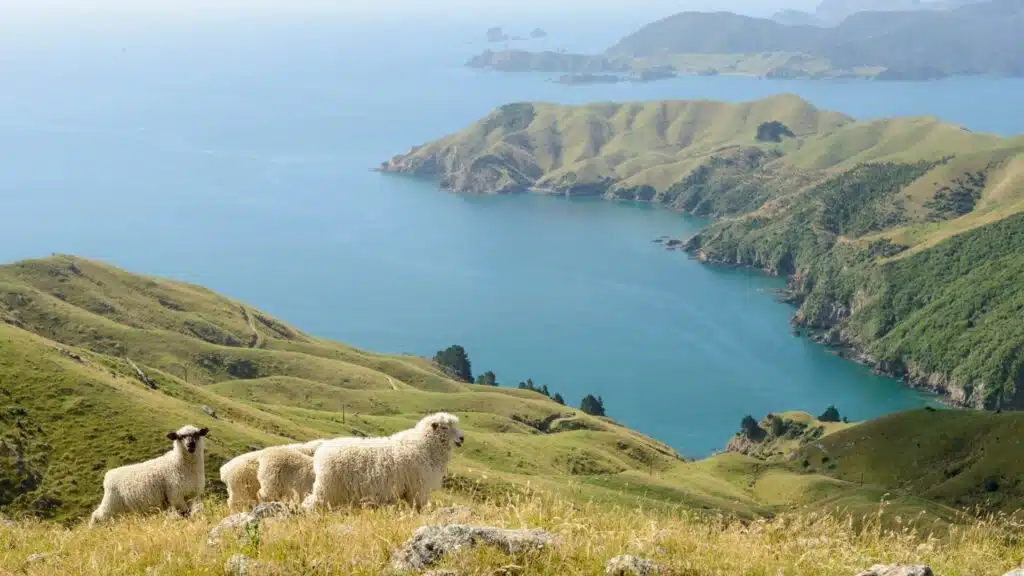
French Pass sits at the narrow gap connecting D’Urville Island to the mainland. Strong currents swirl through the channel and shape the shoreline. The site ranks among top camping spots in new zealand for folks who seek rugged views.
Department of Conservation campsites, also called doc campsites, provide basic camping facilities on the south island.
Campers use the campermate app to check site availability. Freedom camping is not allowed here, so small groups practice sustainable camping at DOC sites. Nearby walking tracks wind through coastal bush and tidal flats.
Birds and seals appear on shore logs, delighting nature lovers.
Totaranui Campground, Abel Tasman National Park
Totaranui Campground sits on golden sands in Abel Tasman National Park, a top South Island site. The Department of Conservation runs this doc campsite. It offers eco-friendly camping facilities that cut waste and save water.
Rangers teach Leave No Trace steps at info huts. Hikers hit the Coastal Track, swimmers plunge into calm bays, and paddlers launch small boats from shore. Visitors use the CamperMate app to find spots and plan trails.
Parking lines the road, while water taxis deliver beachside arrivals. Composting toilets and filtered taps show sustainable camping in New Zealand. Nights sparkle with native birdsong and crashing waves.
The sky turns amber at sunset, like a masterpiece on canvas. This site links nature and care, blending fun with green living.
Catchpool Valley Campsite, Wellington
Campers reach it in a 40-minute drive east of Wellington. The Department of Conservation runs 19 non-powered tent sites under a sustainable camping plan. This spot ranks high for camping in New Zealand’s lower North Island.
Visitors rinse off in cold showers after a swim in the stream. Camping facilities include cooking shelters and toilets beside the main clearing.
Local kids pedal along mountain biking trails near the site. Groups gather around BBQs for a picnic under tall trees. The Catchpool Loop Walk and Nga Taonga Nature Walk start at the car park.
You open the CamperMate app to spot track maps and site info.
Waikawau Bay Campsite, Coromandel Peninsula
Waikawau Bay sits on Coromandel Peninsula, it ranks high for camping in New Zealand with its broad sandy beach and lush hills. DOC runs this campsite, it provides camping facilities like composting toilets, water taps, and flat tent sites.
Hikers follow coastal tracks from camp to hidden coves and forest glades.
Beach lovers swim at low tide, they hunt for shells and watch oystercatchers. The Campermate app guides travellers to parking spots and trackheads. Guests practice sustainable camping, they carry out all waste to back their circular economy aims.
Moke Lake Campground, Queenstown
Moke Lake Campground lies on a high plain near Queenstown on the South Island. Department of Conservation staffs the site and marks it as one of the top doc campsites. It sits beside a clear alpine lake, just fifteen minutes from Queenstown and scenic Lake Wakatipu.
Hikers spot tussock and mountain peaks by day, and stars by night. The site includes basic toilets, picnic tables, and a small stream nearby.
Campers book through the Campermate app. Families use tents or small camper vans to practice sustainable camping. Guests launch kayaks or walk the short loop trail around the lake.
Some add a side trip to the Hooker Valley Track or a drive past Mount Cook Village. This spot ranks high on camping in New Zealand lists.
White Horse Hill Campground, Aoraki/Mount Cook
You find this campground four hours from Christchurch on the South Island. The Department of Conservation runs the site as a DOC campsites location. Campers book spots via the CamperMate app for its 60 non powered sites.
A cooking shelter, toilets, and water taps stand ready. Guests praise the camping facilities and the focus on sustainable camping.
Trekkers head out on nearby walking tracks and hiking routes. The Hooker Valley Track takes about three hours to finish. The route passes icebergs and lake views near Mueller Lake.
Early risers catch sunrise views over the Southern Alps. This site offers a tidy alternative to freedom camping and ranks high for camping in New Zealand.
Purakaunui Bay Campsite, Dunedin
Purakaunui Bay Campsite sits on the south island near Dunedin. The Department of Conservation manages this eco-friendly doc campsite. Tall pines shade the basic camping facilities.
Waves lap against the sandy shore. Birds sing at sunrise.
Campers practice sustainable camping here, they follow Leave No Trace rules. Freedom camping needs a permit, so travelers plan with the Campermate app. Camping spots fill fast in summer.
Eco-conscious visitors pack out trash, they respect the native bush. This site shows why camping in New Zealand can honor nature.
Camp Waipu Cove, Northland
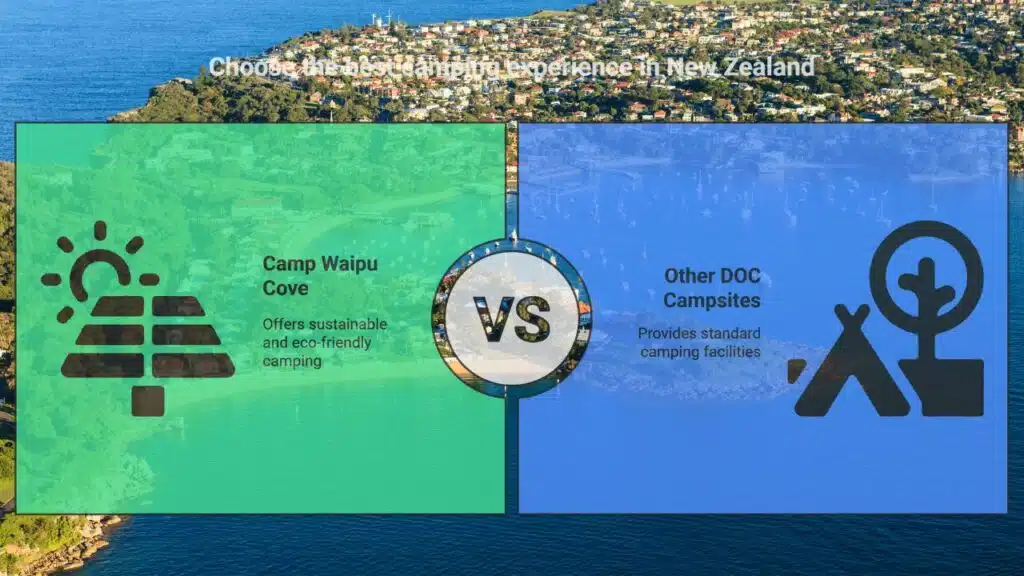
Camp Waipu Cove lies two hours north of Auckland. It runs on power from 110 solar panels. An organic vegetable garden feeds guests fresh greens. Staff aim for low waste and offer compost bins.
The site rates high among sustainable camping spots in New Zealand. Conservation Dept. guidelines guide its eco plan. The campground joins other doc campsites along the Northland coast.
Swimmers jump into the clear sea or surf the waves. Anglers cast lines off rocky ledges at dawn. Camp Waipu Cove stands out as a top spot for camping in New Zealand. Kids explore hidden rockpools for tiny crabs.
A 30-minute drive leads to Waipu Caves, where glowworms shine on cave walls. Campers rely on the Campermate app for site bookings and maps. Facilities include hot showers, compost toilets, and picnic shelters.
Marfells Beach Campsite, Marlborough
Waves lap gently at Marfells Beach Campsite on the South Island. Birdwatchers spot tui and weka among coastal shrubs. Sunsets turn the shore pink, and the horizon seems to stretch forever.
The beach and dunes host seals at low tide, adding charm to the wild view.
Rangers from the Department of Conservation maintain a small group of doc campsites, each with a picnic table and composting toilet. Easy walking tracks wind through sand dunes toward a bird hide and hilltop viewpoint.
Families consult the CamperMate app for camp booking, tide alerts, and tips on sustainable camping. Nearby freedom camping spots attract vans, yet the doc campsite offers shelter and toilets.
Signs remind visitors to carry out all litter and give wildlife plenty of space.
Tāwharanui Regional Park Campground, Auckland
Tāwharanui Regional Park Campsite sits in a coastal setting near Auckland. Department of Conservation staff run neat camping facilities at this doc campsite. Campers practice sustainable camping, using composting toilets, solar lights, and reusable gear.
Shoreline hikes on marked walking tracks lead through forest and offer access to beaches.
Visitors use the Campermate app to locate water taps, hot showers, and waste bins. Children splash in sheltered bays, while anglers cast lines from rocky points. This North Island reserve blends green camping habits with seaside fun, making it one of the top camping spots in New Zealand.
Takeaways
This list shows green campsites from coast to mountain. Adventurers find clean water sources at each spot. Department of Conservation sites blend comfort with nature. CamperMate app helps you plan trips in minutes.
These eco-friendly camps inspire care for wild places.
FAQs
1. What camping facilities do DOC campsites offer for sustainable camping in New Zealand?
DOC campsites run by the department of conservation offer camping facilities like toilets, water taps, and basic huts. They aim to cut waste, protect nature, and guide low-impact stays for sustainable camping across New Zealand.
2. How can I use the Campermate app to find freedom camping spots?
Open the Campermate app, tap freedom camping, and view live maps of camping spots near towns or forests. It flags rules and bans display ads so you see only site info. It makes camping in New Zealand simple.
3. Which trails and lakes shine for eco camping in the South Island of New Zealand?
Hike the Hooker Valley Track for a close glacier trek. Pitch a tent by lake Wakatipu near Wanaka for star views. Or sleep in your swag on Gillespies Beach along the rugged shore.
4. Will I see display ads or COP28 events at these eco camping spots?
No, these remote spots ban display ads. They host no COP28 events. You swap ads and debates for bird calls and clear skies.
5. Can I mix volcanic lakes and coastal peaks on a single trip?
Yes, you can. Start at Taupō by the big thermal lake. Then cross to the south island for Mt. Karioi, that forested peak by the sea. Each site blends hot springs with wild trails.