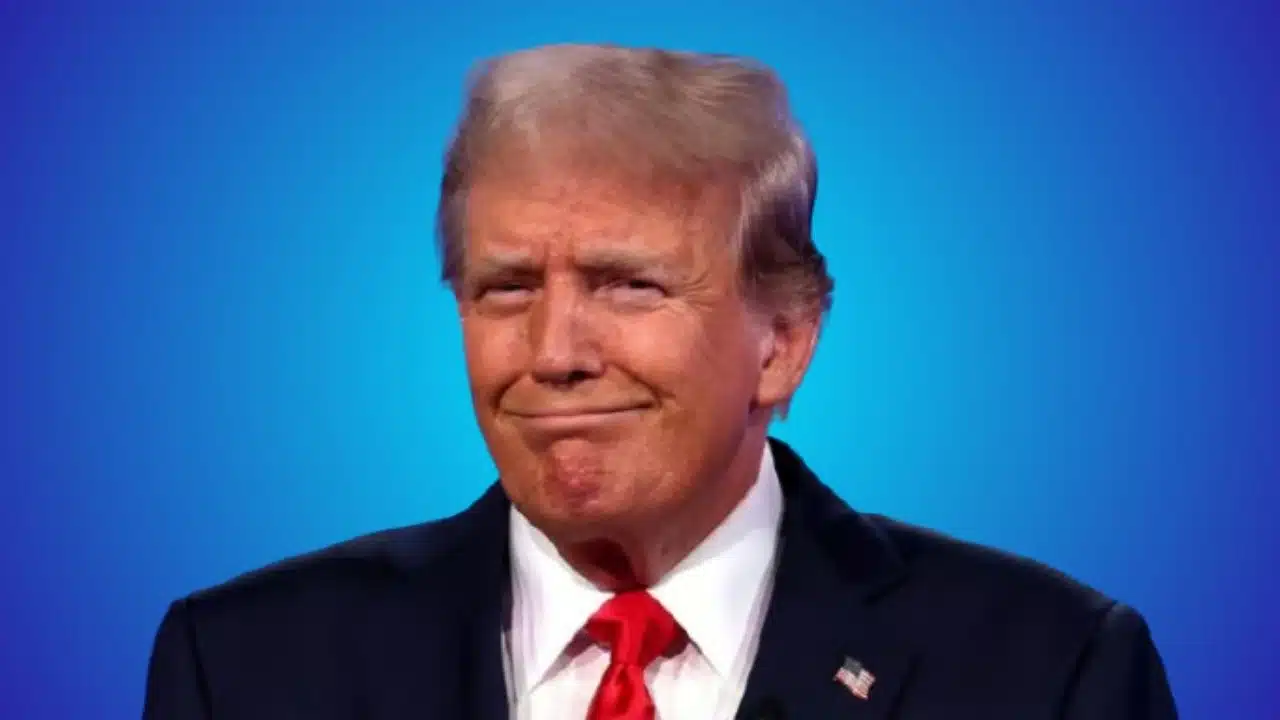
On his first day back in office, U.S. President Donald Trump signed an executive order to begin the formal process of withdrawing the United States from the World Health Organization (WHO). This marks the second time President Trump has taken such action against the global health body, following his initial attempt during the COVID-19 pandemic. That decision was later reversed by his successor, President Joe Biden.
Trump, while signing the executive order in the Oval Office, expressed his sentiments about the move, saying, “Oooh, that’s a big one.” His statement was a reference to the significance of the decision, which aligns with dozens of other executive actions he enacted on his first day in office. “They wanted us back so badly, so we’ll see what happens,” Trump added, hinting at the possibility of future re-engagement with the WHO. However, the current decision sets the U.S. on a course to formally exit the global health agency.
Reasons Cited for Withdrawal
The executive order outlined a range of reasons for the withdrawal, heavily criticizing the WHO for its handling of several critical issues, particularly during the COVID-19 pandemic. Key points highlighted in the order include:
- Mishandling of the COVID-19 Pandemic: The Trump administration accused the WHO of failing to appropriately respond to the outbreak of COVID-19, which originated in Wuhan, China. The WHO’s guidance during the pandemic was labeled as inadequate and overly influenced by certain member states.
- Political Influence: The order raised concerns about the WHO’s ability to operate independently, citing “inappropriate political influence” from its member states. This claim echoes President Trump’s earlier criticism of the organization for being “China-centric” in its decision-making processes.
- Lack of Urgent Reforms: According to the administration, the WHO has failed to implement urgently needed reforms to enhance transparency and accountability.
- Financial Inequities: The executive order also pointed to the “unfairly onerous payments” the U.S. has been making to the WHO. In recent years, the U.S. has been the largest contributor to the WHO, providing nearly one-fifth of its annual budget.
Financial Contributions of the United States
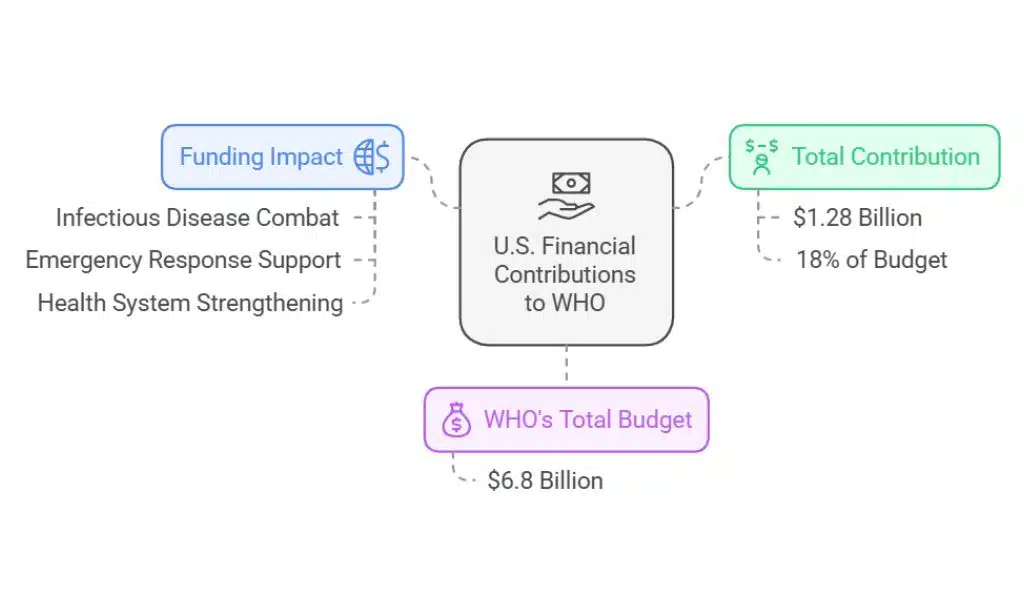
As the WHO’s largest financial supporter, the United States plays a critical role in funding the organization’s global health initiatives. In 2023, the U.S. contributed approximately $1.28 billion, accounting for about 18% of the WHO’s total budget of $6.8 billion. These funds are essential for:
- Combating infectious diseases such as malaria, tuberculosis, and HIV/AIDS.
- Supporting emergency responses to global health crises.
- Strengthening health systems in low-income countries.
The withdrawal process, which requires a one-year notice, will effectively halt U.S. contributions to the WHO during that period. This significant loss of funding is expected to have far-reaching consequences, potentially undermining key health programs and the organization’s capacity to respond to emergencies.
Global Health and Political Implications
Public health experts and policymakers have widely criticized the decision, warning of its potential to cause both immediate and long-term harm to global health initiatives. Key concerns include:
- Impact on Disease Control: The U.S. withdrawal could reverse decades of progress made in the fight against infectious diseases. Programs targeting malaria, tuberculosis, and HIV/AIDS may face severe funding shortages, jeopardizing millions of lives worldwide.
- Emergency Preparedness: The WHO plays a pivotal role in coordinating international responses to pandemics and health emergencies. With reduced funding, its ability to address future crises effectively may be severely compromised.
- Loss of U.S. Leadership: The decision to withdraw also risks diminishing the U.S.’s role as a global leader in public health. Ashish Jha, a former COVID-19 response coordinator under President Biden, warned that leaving the WHO would harm both global health and U.S. scientific leadership. “It’s a cataclysmic presidential decision,” he said.
- Geopolitical Consequences: Analysts suggest that the withdrawal could create a leadership vacuum, potentially allowing other nations, such as China, to increase their influence within the WHO and global health policy. This shift could further complicate international collaboration on health issues.
Historical Context and Reactions
President Trump’s criticism of the WHO dates back to the early days of the COVID-19 pandemic. In 2020, he accused the organization of being overly deferential to China and of failing to act swiftly enough to contain the virus. At that time, he initiated a similar withdrawal process, which was subsequently halted by President Biden upon taking office in 2021.
Public health figures and international organizations have voiced strong opposition to the decision. Lawrence Gostin, a global health law expert and professor at Georgetown University, described the move as “a grievous wound to world health, but a still deeper wound to the U.S.” He added that the withdrawal undermines the nation’s moral and scientific standing on the global stage.
Despite the criticism, Trump’s supporters argue that the decision reflects a commitment to prioritizing U.S. interests and ensuring accountability in international organizations. They contend that the WHO’s perceived failures during the pandemic justify the need for reform and a reevaluation of its relationship with the United States.
Future Prospects
While the executive order sets the stage for the U.S. to leave the WHO, it remains unclear whether this decision will be final. In his comments, President Trump hinted at the possibility of re-engagement, stating, “We’ll see what happens.” This ambiguity leaves the door open for potential negotiations or a future reversal of the decision.
As the withdrawal process unfolds, global health experts and policymakers will closely monitor its impact on international health initiatives and the broader geopolitical landscape. The stakes are high, with millions of lives and the future of global health cooperation hanging in the balance.