
The espresso machine hisses in a crowded corner of a downtown café. Every seat is taken. Tables are packed with friends, couples, and colleagues. Yet, the expected roar of midday chatter is missing. Instead, a heavy silence hangs over the room, broken only by the rhythmic tapping of glass screens and the occasional chirp of a notification. This is the digital communication shift in its most visible form. We are tethered to each other by an endless stream of data, but the air between us remains cold and quiet.
We have reached a peak in human connectivity while hitting a trough in actual conversation. In 2026, the irony is thick. We claim to be too busy for a five minute phone call. We label it as intrusive. We hide behind the safety of a text bubble where we can edit, delete, and curate our thoughts until they lose their pulse.
This retreat from the human voice is reshaping our social nervous systems. Take Trishita and Ashmita. Despite being sisters, they live in separate Indian cities and almost never speak. They exchange text fragments instead. The same is true for Rahul and Rishika, raised by Indian parents in the U.S. They share memes but skip the phone calls.
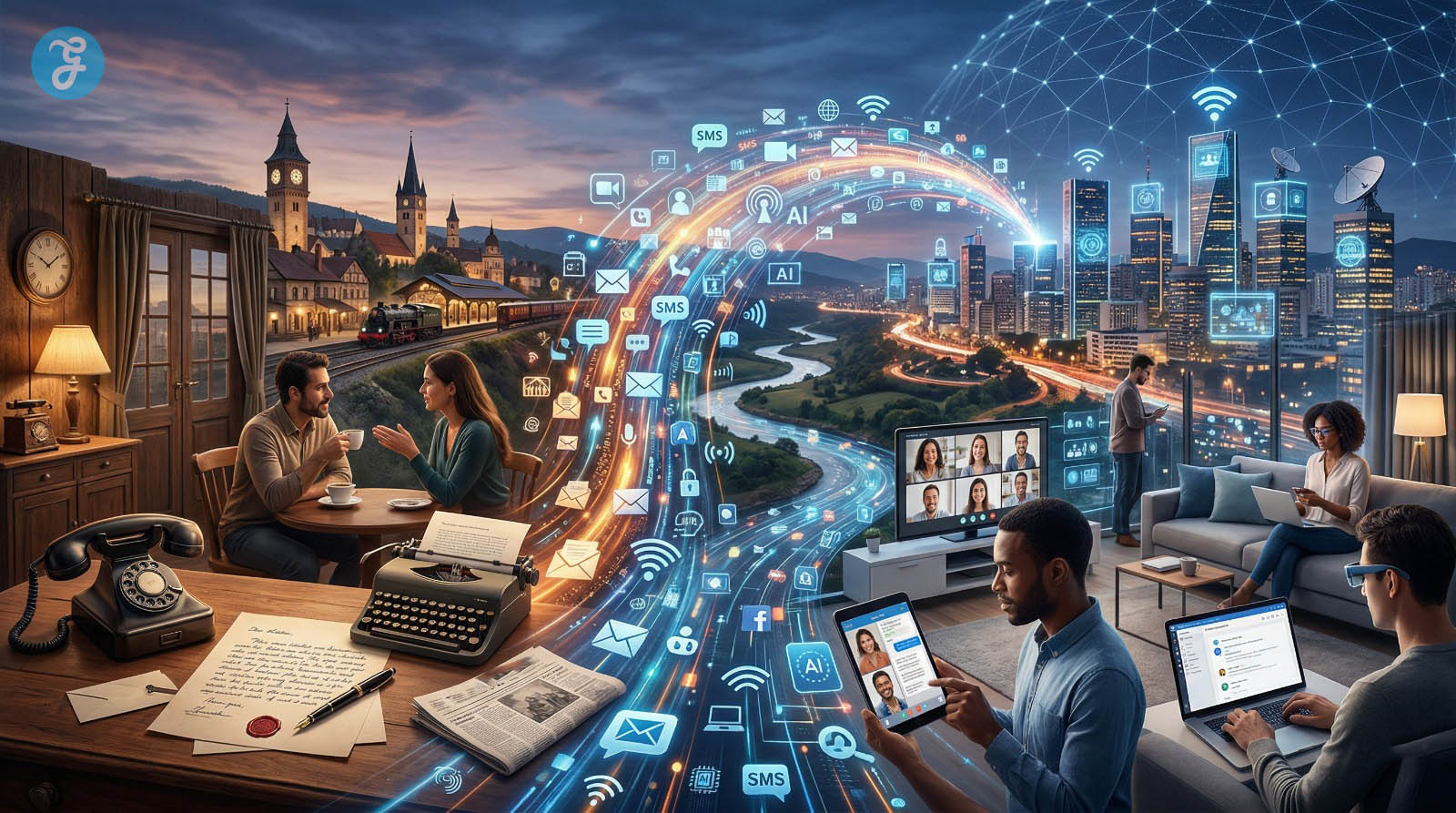
This shift is not just about convenience. It is a fundamental erosion of what makes us human. Tone, the weight of a pause, and the vulnerability of a shaky breath are being traded for emojis and acronyms. Research from the last decade suggests that as we lean into digital convenience, our ability to read nonverbal cues atrophies. We are becoming experts at broadcasting but amateurs at listening.
Curiously, as we flee from the unpredictability of real human speech, we invite synthesized voices into our homes. We find comfort in the programmed warmth of AI assistants while ghosting our own friends. We outsource the labor of connection to machines because the real thing feels too exhausting. The silent room is not a sign of peace. It is a symptom of a generation that is losing the courage to speak and the patience to hear.
The Voice Phobia Phenomenon
The sudden trill of a ringing phone in 2026 no longer feels like a greeting. It feels like a boundary being crossed. For many, an unexpected call triggers a quiet form of telephobia. We have grown so used to curating our responses that the raw unpredictability of a human voice now feels like a risk.
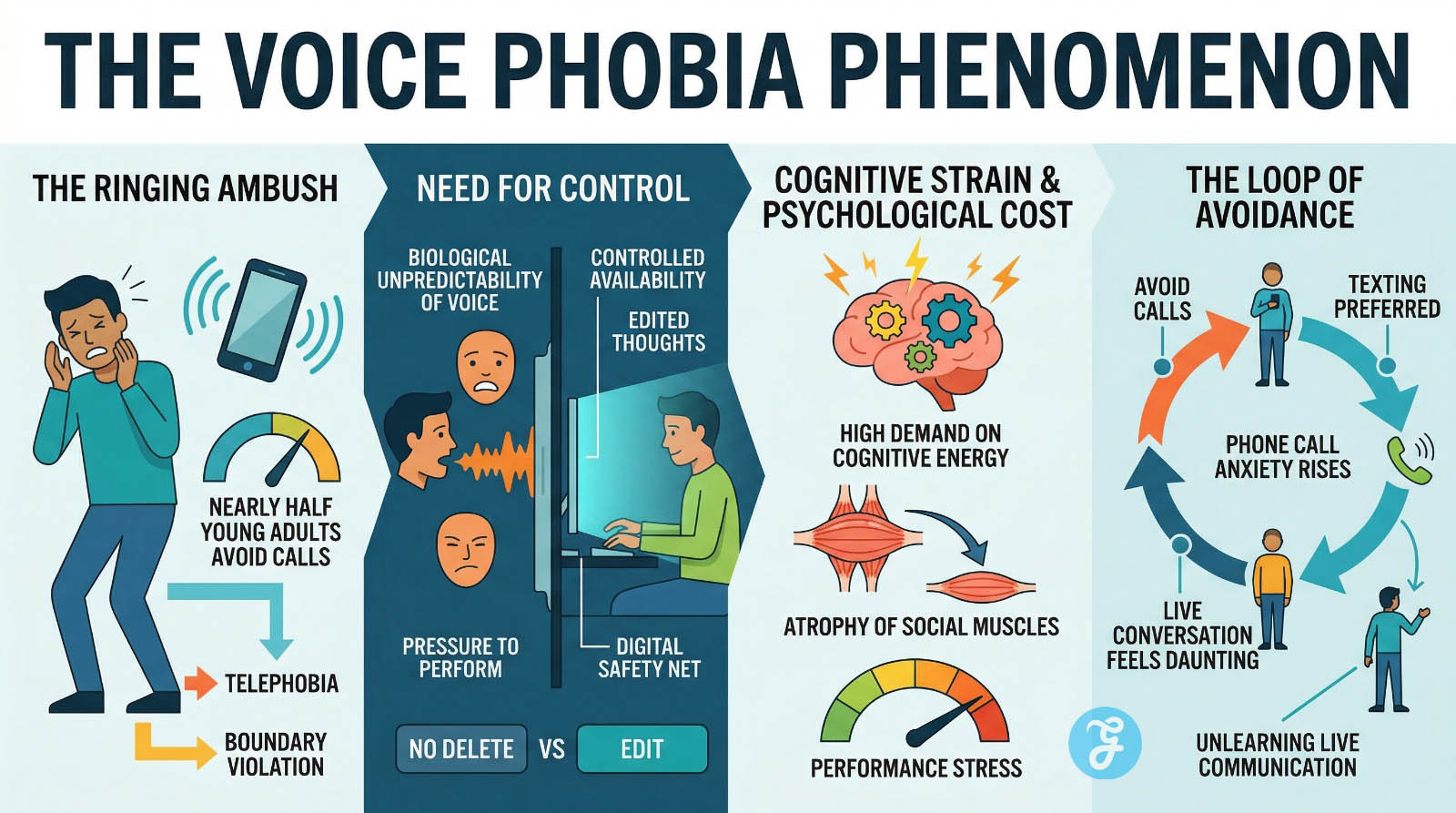
Recent surveys suggest a striking shift. Nearly half of young adults avoid answering calls altogether, choosing instead to let the phone ring out and follow up with a text. This is not simple rudeness. It reflects a deeper psychological change where live conversation is perceived as an immediate and unmanageable demand for attention.
Why Phone Calls Now Feel Like a Threat
The digital communication shift has rewired our expectations of interaction. Texting is asynchronous, forgiving, and editable. A phone call is none of these. It demands presence, speed, and emotional readiness.
The ringing tone interrupts and insists. It does not wait. Without the safety of a delete button, even a casual exchange can feel like a performance under pressure. What was once routine, a quick call to a friend, now feels like an ambush.
The Comfort and Cost of the Screen
The screen offers control. It allows us to pause, refine, and present only the version of ourselves we are comfortable sharing. We can soften our anger, rehearse our words, and conceal hesitation. In this space, communication becomes deliberate and contained.
But this control comes at a cost. Psychologists warn that when we consistently avoid live speech, our social reflexes begin to weaken. Real conversation is messy and fast. It requires us to read tone, navigate pauses, and respond in real time. Without practice, these skills begin to erode.
The result is a self reinforcing loop. The less we engage in spontaneous conversation, the more intimidating it becomes. We retreat further into the safety of text, trading depth for control. Over time, we are not just avoiding discomfort. We are quietly unlearning the instincts that make human connection feel natural.
The Rise of Emotional Islands: Expert Voice
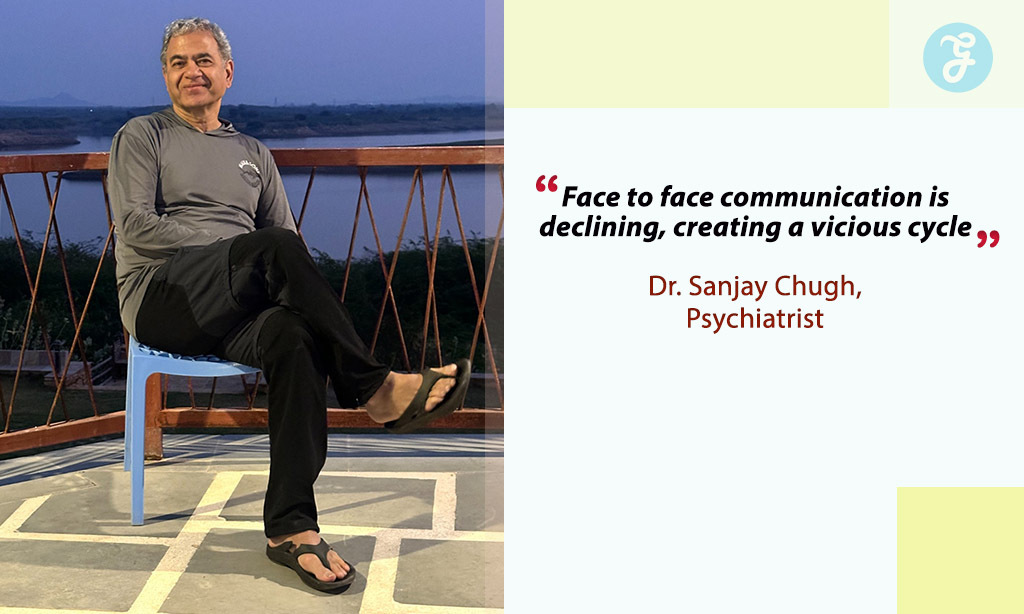
Psychiatrist Dr. Sanjay Chugh offers the following perspective on modern communication:
“Social, face to face, one on one communication in person has significantly declined, creating a vicious cycle. Because these personal interactions have decreased, people are resorting more to platforms like WhatsApp, Instagram, or Facebook. Consequently, as digital communication increases, the perceived need for face to face oral interaction continues to drop.
This is a deeply worrying trend. People are becoming social isolates; I would describe them as becoming emotional islands. The unique benefits that accrue from genuine human interaction and exchange will never reach an individual who only texts or communicates via social media.
While concerning, this shift also reflects our current times. People are so caught up in their own lives that when two individuals want to touch base, meet, or hang out, finding a mutually convenient time is incredibly difficult. Rather than having zero communication, they resort to digital media. Because this fulfills the need to a certain extent, it gradually becomes a habit, and that is precisely where we stand today.”
Digital Communication Shift: The Paradox of Voice Artificial Intelligence
A bizarre contradiction defines the digital communication shift in 2026. We actively dodge phone calls from lifelong friends yet spend hours speaking out loud to algorithms. Human-to-human phone traffic continues to drop steadily across global networks.
The New Counter Trend
Industry data reveals a fascinating pivot; people are talking more than ever before, they are just not talking to each other. Smart speakers and voice-activated chatbots now process billions of conversational queries daily.
Morning routines involve lengthy back and forth dialogue with smart devices. Commuters converse with their cars instead of calling a family member. We treat these programs like confidants. Users ask them for advice, chat with them to kill time, and even say good morning to them. The silent room is an illusion. Our homes are actually filled with chatter. We simply replaced human voices with synthetic ones.
Why We Speak to Code
The appeal of a machine listener is easy to understand. Algorithms never judge. A bot does not have a bad day. It never acts distracted, bored, or annoyed. When you speak to an AI, you owe it absolutely nothing. Real conversation requires intense emotional labor. You have to read the room, validate the other person, and manage your own reactions. Talking to a machine strips all of that away. We do not have to worry about awkward silences. We never have to apologize for saying the wrong thing. We control the narrative entirely. We get to practice the pure mechanics of speech without the vulnerability of human connection. It is safe, predictable, and completely one sided.
The Danger of Simulated Presence
Humans possess a deep biological need for sound and response. We evolved to crave the auditory feedback of our tribe. Today, we are attempting to satisfy that ancient hunger with a clever digital substitute. These generative programs mimic empathy perfectly. They use the right inflection and pause at the exact right moment to simulate active listening. Yet this simulated presence carries a hidden risk. A machine does not truly hear you. It merely processes audio data and outputs a statistical probability of the correct response. We are feeding our social appetite with acoustic junk food. It fills the silence but provides zero actual nourishment. Over time, relying on code for comfort leaves us profoundly isolated. We get the illusion of companionship while entirely missing the soul of a real relationship.
The Loss of Nuance
Texting acts as a filter that strips away the most vital parts of human interaction. We transmit data but lose the weight of the delivery. A digital communication shift creates a massive gap in how we perceive each other. We are reading more words than ever while understanding the person behind them less.
The Vocal Data Gap
Speech carries a hidden layer of information that a screen cannot replicate. Think of the slight tremor in a voice that signals true fear. Consider the hesitant pause before a friend says they are okay. These are the sounds of honesty. By trading a phone call for a text, we delete this vital frequency, leaving only cold, flat characters on a glass surface. We lose the warmth of a sigh or the rhythmic comfort of a shared breath. Without these cues, we are merely guessing at each other’s reality.
Misinterpretation in the Void
The profound impact of texting on communication is most evident in our growing inability to navigate the “live” moments of human connection without a digital safety net. When the human voice is absent, the brain rushes to fill the silence. Scientists call this a nuance vacuum. If a friend replies with a simple period or a lowercase “k,” we often assume the worst. We imagine they are angry, bored, or dismissive.
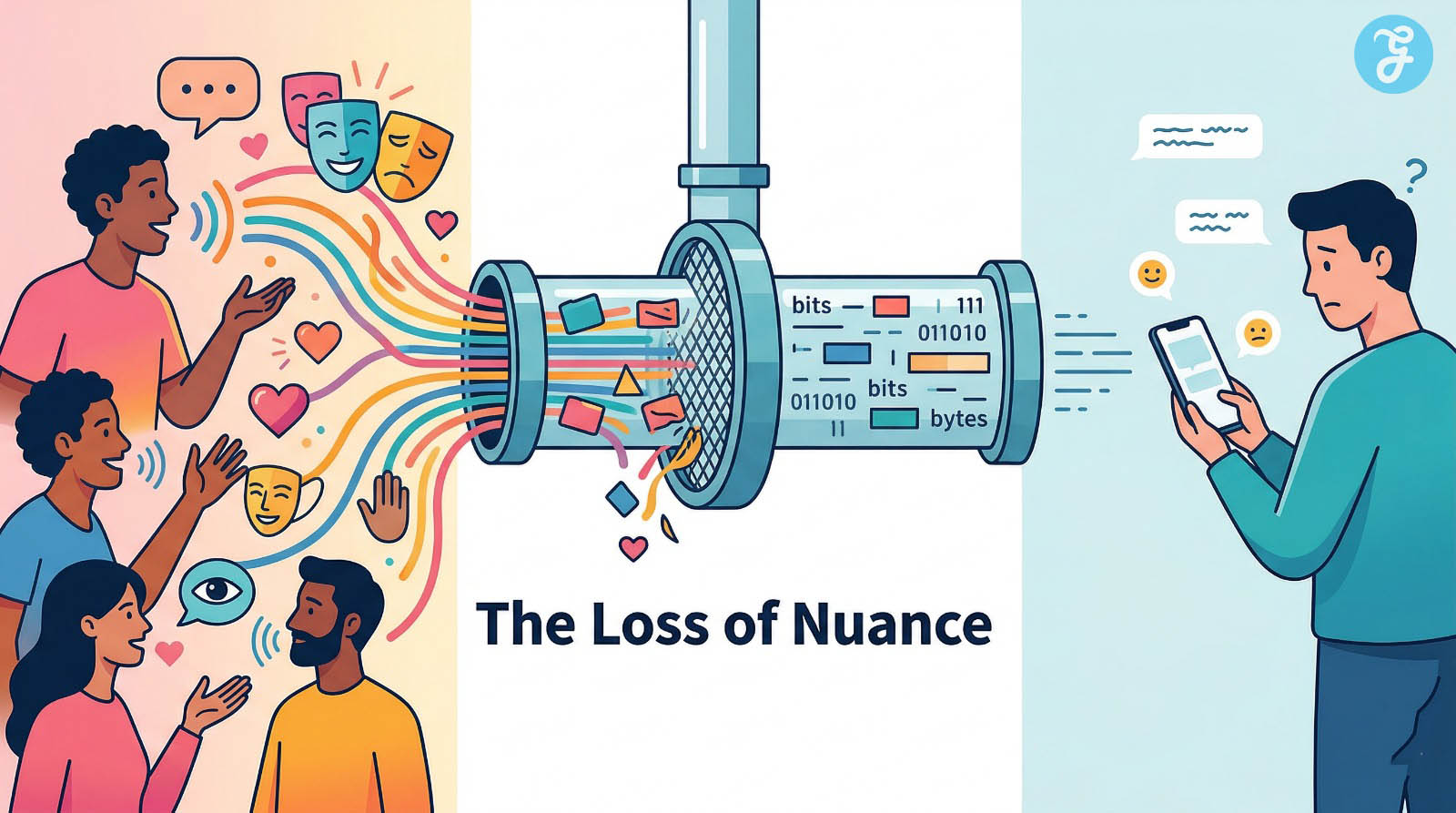
In a live conversation, their face or tone would instantly clear the air. In a text thread, we spiral into overthinking. A missing emoji becomes a source of genuine conflict. We are projecting our own anxieties onto a screen because the medium provides no emotional context. We are fighting ghosts of our own making.
In the physical world, sitting in silence is a sign of deep intimacy. You do not need to fill the air to feel connected. In the digital world, silence is a weapon. A pause in a text thread is labeled as being seen zoned or ignored. It creates a frantic pressure to respond immediately to prove we still care. We have lost the ability to just be with one another. Every second of digital quiet feels like a rejection. We are tethered to a cycle of constant pings just to avoid the perceived sting of being forgotten. This frantic pace leaves no room for the slow, quiet growth of real human presence.
Conflict and the Disconnect
Digital screens act as a thin veil that alters how we treat one another during a disagreement. When we stop hearing a voice, we start seeing the person as a data point. The digital communication shift has turned our most intimate debates into clinical exchanges, removing the biological brakes that usually prevent us from being unnecessarily harsh.
Recent studies from early 2026 highlight a growing split in how we process others. While we might still understand what someone thinks, our ability to feel what they feel is declining. The brain needs the sensory input of a voice or a face to trigger a deep emotional resonance. This emotional thinning makes our relationships feel fragile and temporary.
The Fivefold Erosion of Connection
- Vocal Data Erasure: It strips away tone, pitch, and the hesitation of a pause, leaving only flat text that lacks emotional context.
- The Nuance Vacuum: Without auditory cues, the brain fills silences with negative assumptions, leading to overthinking and conflict.
- Atrophy of Social Muscles: Relying on a delete and rewrite buffer makes real-time, unedited conversation feel increasingly exhausting.
- Simulated Presence: We trade the vulnerability of a live human connection for the predictable, non-judgmental interactions of voice AI and bots.
- Affective Empathy Decline: Since we cannot hear a flinch or a cracking voice, it becomes easier to remain dismissive or ghost others without feeling the impact.
The Generational Risk
A silent crisis is unfolding among the youngest members of our workforce and social circles. The digital communication shift has replaced the slow art of listening with the rapid-fire habit of scanning. We are raised on a diet of fragments. This makes the sustained attention required for a deep, real-time conversation feel like a chore rather than a connection.
The Deep Listening Deficit
Real conversation is not just about waiting for your turn to speak. It is about processing the layers of meaning behind another person’s words. Texting is inherently asynchronous. You can read a message now and respond three hours later after overthinking every syllable.
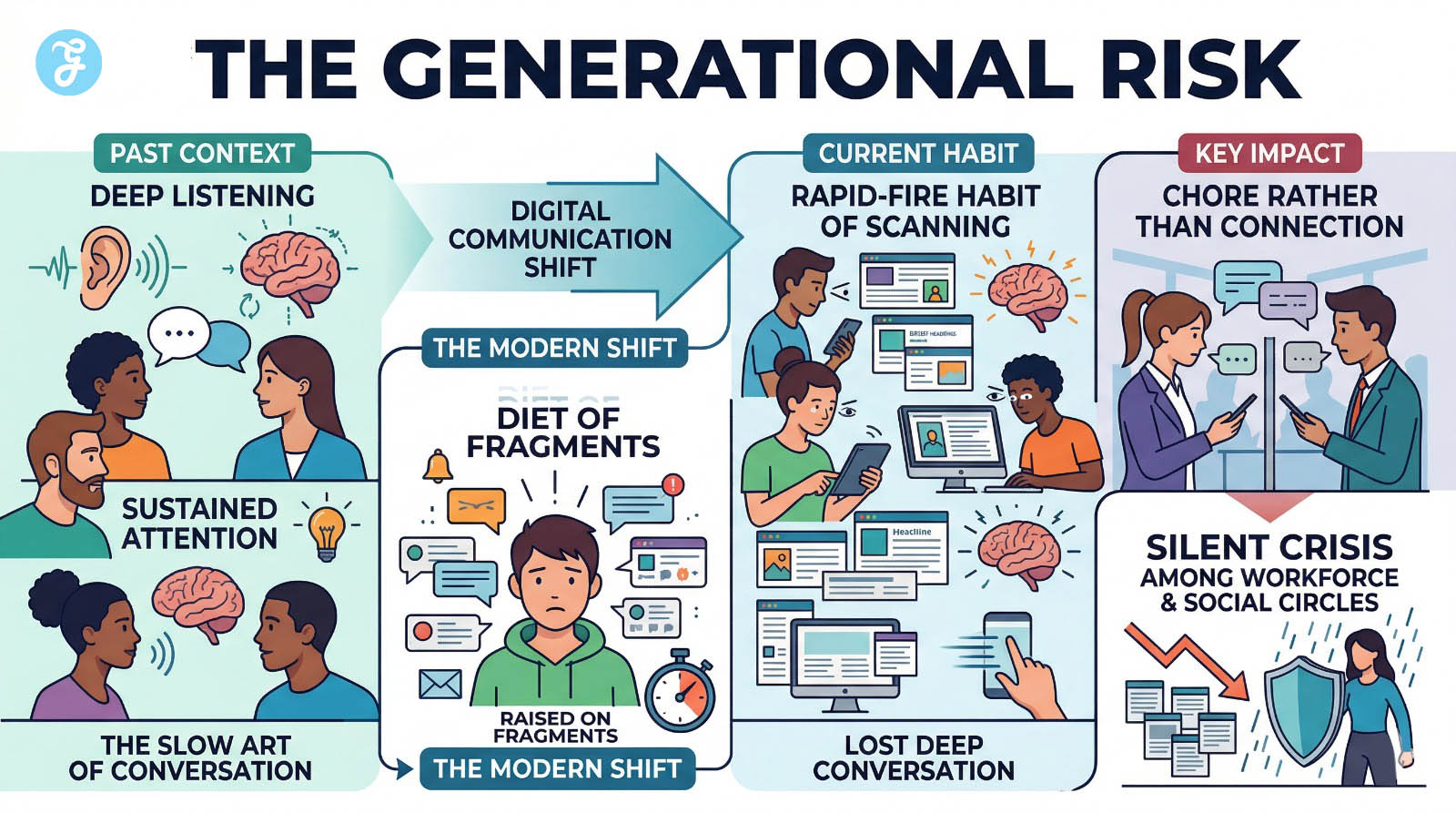
This fragmented style of relating destroys our ability to stay present. We are losing the stamina for long, winding dialogues that do not have a clear “send” button. When we cannot pause or rewind a live exchange, we feel a growing sense of panic. Our collective attention span for another human being is shrinking to the size of a notification.
The High-Stakes Struggle
Gen Alpha and Gen Z are entering a world where some of the most important moments cannot be curated or edited. Life happens in real time. High-stakes environments like job interviews or the first spark of romantic intimacy require an immediate and unpolished response. You cannot delete a clumsy sentence in a live meeting. You cannot backspace over a nervous laugh during a first date. Young professionals often find these raw interactions paralyzing. They are used to the safety of a draft folder. Without it, they risk appearing detached or overly anxious.
- Interview Anxiety: Recruiters report a rise in candidates who struggle to maintain eye contact or handle follow-up questions without a script.
- The Intimacy Gap: Romantic partners find it harder to navigate the “messy” middle of a relationship when they cannot hide behind a screen to process their feelings.
- Conflict Avoidance: A generation raised on “blocking” or “ghosting” struggles to stay in the room when a conversation becomes difficult or uncomfortable.
- Spontaneous Thinking: The ability to think on one’s feet is a vanishing skill in an age where every public thought is first polished by an algorithm.
Reclaiming the Human Frequency
We do not need to throw our smartphones into the river. Technology is not the enemy. The danger lies in our growing habit of treating the human voice as an inconvenience. To reverse the digital communication shift, we must choose to re-prioritize the sound of each other. A text is a postcard. A voice call is a visit. We are currently living on a diet of postcards and wondering why we feel so alone.
The Beauty of the Mess
The very things we find exhausting about real talk are exactly what we need. The unpredictability of a live chat is where the magic happens. The messiness of a stutter or the vulnerability of a long, thoughtful pause makes us real to one another.
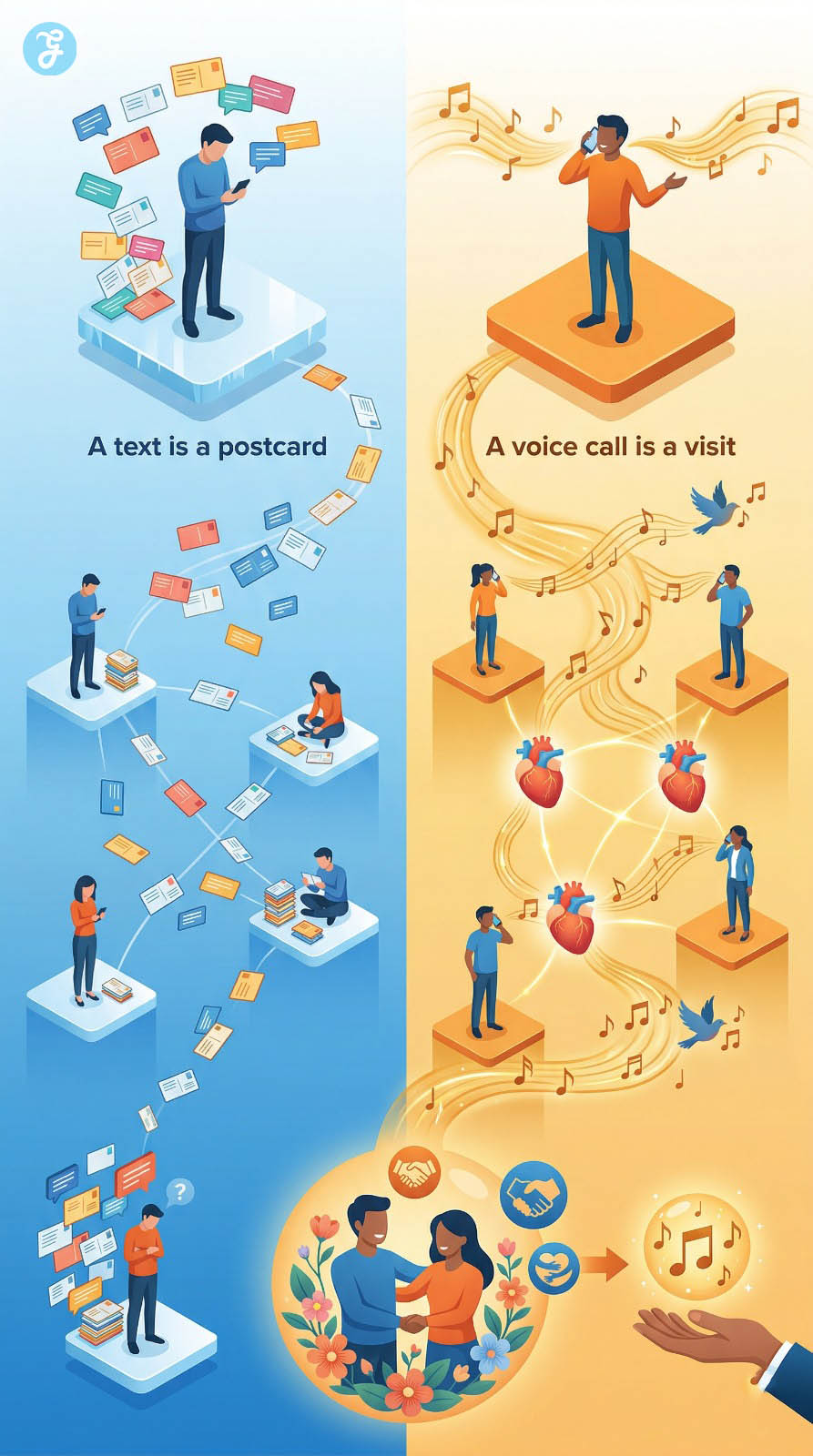
When we edit our lives into text bubbles, we flatten our souls. Real conversation is an invitation to be seen as we are. It is unpolished. It is raw. It is profoundly human. We should welcome the “intrusive” ringing of a phone as a chance to break the digital trance.
Finding Our Voice Again
Efficiency is a goal for machines, not for relationships. In our quest to stay connected every second, we have accidentally silenced the very frequency that binds us. We must ensure that our convenience does not come at the cost of our character. In the ongoing debate of texting vs talking, we must remember that only one of these mediums carries the weight of a heartbeat.
Pick up the phone. Sit in the silence of a shared room. Listen for the breath between the words. The world is waiting to hear from you, not just your screen. Let us find the courage to speak and the patience to truly hear one another again.