Cooking in a cluttered, poorly designed kitchen feels frustrating. You lose time searching for spoons, bumping into the dishwasher or microwave, and struggling with limited counter space.
It’s hard to enjoy cooking when your kitchen doesn’t work with you.
A high-functioning kitchen makes life easier. Thoughtful design boosts workflow efficiency and helps every home cook stay organized. Even small spaces can become practical with smart storage solutions and proper layouts.
In this post, we’ll show you how to design a high-functioning kitchen that suits your needs. From choosing the right cabinets to optimizing lighting and appliances, we’ve got it covered.
Keep reading—you’ll want these tips!
Key Takeaways
- Plan your kitchen layout for smooth workflow. Use the Work Triangle for small spaces or Workstations for larger kitchens.
- Add smart storage like pull-out shelves, Lazy Susans, and vertical racks to keep things tidy and easy to reach.
- Choose strong countertops like quartz or laminate that resist heat, scratches, and stains.
- Include layered lighting with overhead lights, under-cabinet lights, and natural light for better visibility.
- Use smart gadgets like energy-efficient fridges, automated ovens, or motion-sensor faucets to save time and effort.
Planning the Kitchen Layout
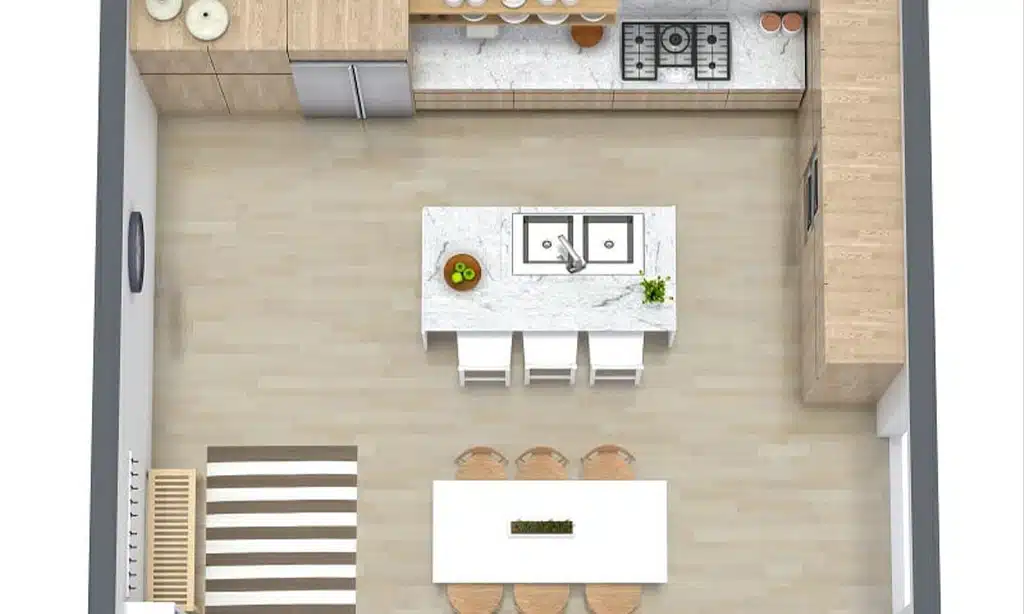
A well-planned kitchen layout saves time and energy. Think about how you move between the fridge, stove, and sink while cooking.
Work Triangle vs. Workstations
The way your kitchen functions depends on its layout. For home cooks, the debate often revolves around the Work Triangle versus Workstations. Both have merits, and choosing one depends on your cooking style, family size, and space. Here’s a breakdown in table form:
| Aspect | Work Triangle | Workstations |
|---|---|---|
| Definition | Links the sink, stove, and fridge in a triangular pattern for efficiency. | Centers around zones for specific tasks like prep, cooking, or cleaning. |
| Ideal For | Smaller kitchens with limited space and few cooks. | Larger kitchens, open layouts, and cooking with others. |
| Workflow | Saves steps by keeping movement short and focused. | Allows multiple tasks to happen simultaneously in different areas. |
| Flexibility | Less adaptable to modern appliances or additional tasks. | Highly adaptable for multi-tasking and dynamic needs. |
| Challenges | Can feel cramped with lots of traffic or in bigger spaces. | Requires more planning to avoid clutter between zones. |
| Example Layouts | U-shaped or L-shaped kitchens often fit this model. | Island kitchens or galley layouts thrive on this concept. |
Some food for thought: Traditional designs like the Work Triangle work wonders in compact spaces. Yet, modern cooking trends favor Workstations for their freedom and collaboration.
Maximizing Workflow Efficiency
Keep your kitchen flowing smoothly by following the work triangle or workstation strategy. Place your refrigerator, cooking area, and sink close but not cramped. Maintain at least 52 inches of clearance around a kitchen island to prevent bumping into others.
This space allows for multitasking and easy movement.
Arrange tools like cookware, cooking utensils, and silverware near their task zones. Store pots by the stove and dishware close to cabinets or dishwashers. Integrate appliances neatly to cut clutter and boost functionality.
Next up is picking storage solutions that make sense for every home cook!
Choosing the Right Storage Solutions
A clutter-free kitchen starts with smart storage ideas. Use space wisely to keep everything close at hand and easy to grab.
Installing Pull-Out Shelves and Drawers
Pull-out shelves and drawers make kitchens more functional. They save time, reduce clutter, and improve kitchen efficiency.
- Add pull-out shelves to lower cabinets for easy access to pots, pans, and dishes. No more bending or digging around!
- Use deep drawers for storing plates, flatware, or cooking tools. These are easier to use than standard cabinets.
- Install dividers inside drawers to organize cutlery and trays neatly. Everything stays in its place this way.
- Opt for slide-out racks under the sink to store cleaning supplies like sponges or sprays without a mess.
- Include Lazy Susans in corner spaces for an easy spin-and-grab option for spices or small jars.
- Try pull-out trash bins hidden inside cabinets to keep your space clean and sleek-looking.
- Use vertical dividers in pull-out trays for cutting boards or baking sheets so they stay upright and tidy.
These features add ease and organization to every home cook’s workspace!
Utilizing Vertical Space
Making the most of vertical space can transform your kitchen. It helps you store more, stay organized, and keep counters clear.
- Install wall-mounted shelves to store frequently used items like spices or coffee mugs. Open shelving also adds a modern touch to the design.
- Add hooks under cabinets to hang utensils, mugs, or small pots. This keeps them off counters but within reach while cooking.
- Use upper cabinet extensions that go all the way to the ceiling. These create extra room for less-used items like seasonal plates or baking trays.
- Set up a pegboard on an empty wall to hang pans, tools, or cutting boards. It’s functional and creates a stylish display.
- Place stackable storage bins in tall cupboards for food supplies or pantry essentials. Clear bins make organizing easier and more efficient.
- Fix magnetic strips on walls to hold knives, metal utensils, or spice jars with magnetic lids. It saves drawer space and keeps everything handy.
- Use corner shelf racks inside cabinets for plates and bowls to maximize awkward spaces effectively.
Following these steps makes a kitchen both beautiful and functional without wasting any space!
Selecting Surface Materials
Choose materials that stand up to daily cooking chaos. They should handle spills, heat, and scratches like a pro.
Durable and Easy-to-Clean Countertops
Quartz and laminate are great choices for hardworking countertops. Quartz resists stains, scratches, and heat while offering a sleek look. It’s non-porous, making it super easy to wipe clean after cooking or baking.
Laminate is budget-friendly and comes in many colors. It handles daily messes well and won’t absorb spills like wood might. For heavy-duty use, stainless steel also shines—literally! Its smooth surface keeps germs at bay and cleans up fast with just a cloth.
Heat-Resistant and Scratch-Resistant Surfaces
Durable countertops should also handle heat and resist scratches. Materials like quartz, stainless steel, and marble perform well. These surfaces can endure hot pans or sharp knives without damage.
Laminate is budget-friendly but less resistant to heat. Wood adds charm but needs extra care to avoid marks. Pick a material that fits your cooking style and kitchen layout for long-lasting use.
Optimizing Lighting and Ventilation
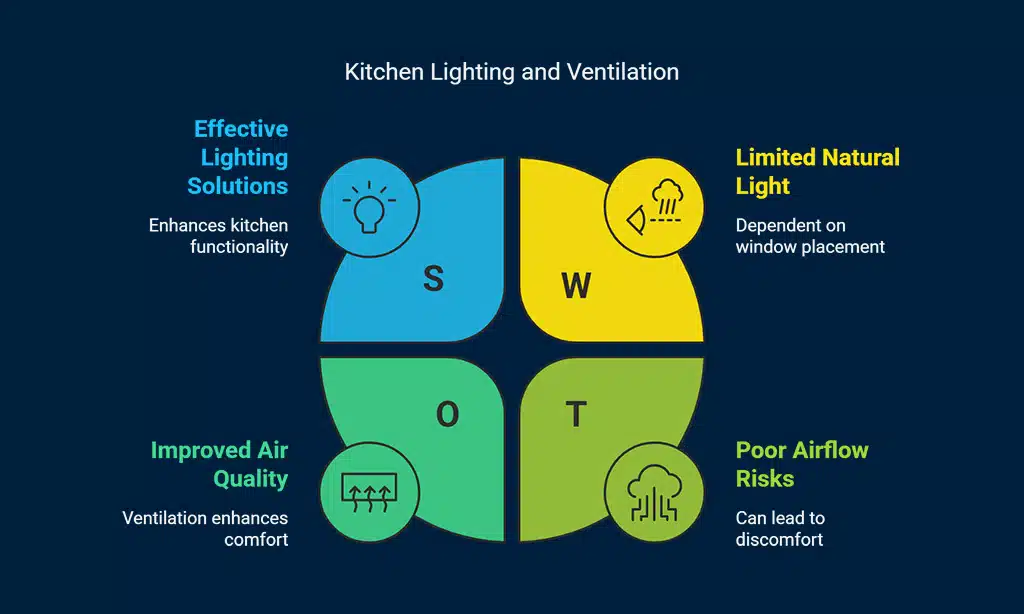
Good lighting and fresh air make cooking enjoyable. Bright task lights and steady airflow keep the kitchen safe and comfortable.
Layered Lighting for Functionality
Lighting makes a big difference in how a kitchen works. A layered approach combines different lights for the best results.
- Put bright overhead lights above key areas like the cooking area and dining space. These lights help with food prep and other tasks.
- Add under-cabinet lighting to brighten counter space for chopping or mixing. It also keeps shadows off your worktop.
- Include task lighting, such as pendants over a kitchen island or table, for focused light while eating or working on recipes.
- Use warm bulbs to create a cozy feel, especially during evening meals.
- Install dimmer switches to control brightness levels throughout the day. This is helpful during late-night cooking or relaxing moments.
- Maximize natural kitchen lighting with wide windows or skylights if possible. Sunlight saves energy and feels refreshing.
- Combine these layers of light to improve both style and function in any interior design layout, from an open kitchen to a galley kitchen setup!
Proper Ventilation for a Fresh Environment
Good ventilation keeps your kitchen smelling fresh. A range hood above the cooking area can pull out smoke, grease, and odors fast. Choose one with a strong fan to improve air quality.
Open windows allow natural airflow, especially when using heat-resistant surfaces like stovetops or ovens. Ceiling fans can help circulate air too. Proper vent placement near your refrigerator or microwave keeps warm spots from building up.
Incorporating Smart Kitchen Technology
Smart gadgets can save time and make cooking easier. They bring convenience to any modern kitchen setup, making life smoother for home cooks.
Smart Appliances for Convenience
Smart appliances make life easier in the kitchen. They save time and help you cook like a pro.
- Use an energy-efficient refrigerator. It keeps food fresh and cuts power bills. Look for models with clear shelves for better food storage.
- Pick a microwave oven with quick settings. It heats leftovers fast and is perfect for busy days.
- Choose a dishwasher that cleans well and uses less water. A quiet model is great for open kitchens.
- Install a range hood to remove heat, steam, and odors while cooking.
- Invest in a coffee maker with timers. Waking up to fresh coffee can brighten your morning.
- Get a toaster with multiple slots for fast breakfast prep. Some models have smart features for perfect browning.
- Try smart ovens or ranges to control cooking from your phone. Precision ensures tasty meals every time.
These gadgets offer ease without cutting corners on quality!
Automated Features for Efficiency
Technology can make a kitchen more efficient. Automated tools save time and reduce effort in daily tasks.
- Use a microwave/range hood combo to save space and add function. This appliance can cook food and vent smoke.
- Add motion-sensor faucets for easy water access. These help when hands are dirty or full.
- Install under-cabinet lighting with automatic sensors. Lights turn on only when needed, saving energy.
- Pick a smart dishwasher for better cleaning. Many models let you control them with your phone.
- Choose refrigerators with door alarms or auto-close features to keep food fresh. Some models even track groceries.
- Try automated coffee makers that start brewing at set times. Wake up to fresh coffee every morning.
- Use app-controlled ovens that adjust cooking time and temperature remotely. Great for busy schedules or multitasking.
- Opt for robot vacuums to clean floors without effort while you cook or relax nearby.
- Install automatic trash cans that open with motion sensors to avoid messes after chopping veggies or peeling fruits.
- Pick an air fryer with pre-programmed settings for meals like fries, chicken, and roasted vegetables without needing manual adjustments!
Takeaways
A well-designed kitchen makes cooking a joy. Focus on smart layouts, handy storage, and proper lighting. Pick strong, easy-to-clean materials that last. Add technology for ease and flow.
With thoughtful design, every home cook can feel like a pro!
FAQs
1. How can I create a functional kitchen layout?
Focus on the kitchen work triangle: the sink, stove, and refrigerator should form a clear path. This improves workflow and makes cooking easier.
2. What are some good storage solutions for small kitchens?
Use cabinet storage wisely with pull-out shelves or deep kitchen drawers. Open shelving can also add extra space while keeping things within reach.
3. Where should I place my appliances in the kitchen?
Refrigerator placement works best near counters for easy access when unloading groceries. Microwave placement above counters saves space, while dishwasher placement near the sink simplifies cleanup.
4. How important is lighting in kitchen design?
Kitchen lighting is key to both function and style! Task lighting like under-cabinet lights brightens your workspace, while general lighting creates an inviting feel.
5. Should I include a kitchen island in my remodel?
A kitchen island adds counter space and boosts efficiency if you have room for it. It’s great for meal prep, seating, or even as extra storage.
6. What are popular layouts for different kitchens?
Galley kitchens save space but focus on efficiency; L-shaped kitchens offer flexibility; one-wall kitchens suit smaller homes; island kitchens bring more versatility to larger spaces!