Do you dread the next supply chain surprise? You scan your systems but still miss warning signs. You waste buffer stock, pay for express freight, and run in circles. In 2024, 76% of European shippers saw disruptions; 25% saw over 20 in a year.
We pull signals from weather data, market trends, supplier performance, and live shipment trackers, plus AI tools like IBM Watson Supply Chain and Blue Yonder. This guide will help you build end-to-end visibility in your supply chain system and boost your operational efficiency.
It shows how to use data integration and predictive analytics for smarter demand forecasting and risk management. Ready to upgrade your supply chain resilience? Read on.
Key Takeaways
- In 2024, 76% of European shippers saw supply chain disruptions and 25% faced over 20 interruptions in one year.
- Weather data topped U.S. disruption causes in 2024; AI tools scan satellite feeds, IoT sensors, and social media to trigger reroutes and cut logistics costs up to 30%.
- Geopolitical risk cost U.S. firms an average of $228 million each year; predictive AI platforms score hotspots, run scenario simulations, and adapt routes on the fly.
- Real-time tracking boosts visibility: Blue Yonder spots 96% of glitches within one hour, Kinaxis RapidResponse cuts planning cycles 40–60%, and AI forecasts cut stock shortages by up to 20%.
- Predictive analytics raises forecast accuracy by 41%, halves errors, and trims carrying costs 15–30%; Adidas cut high-risk port notes from 47% to 23%, avoiding $135 million in disruption costs.
Weather Data
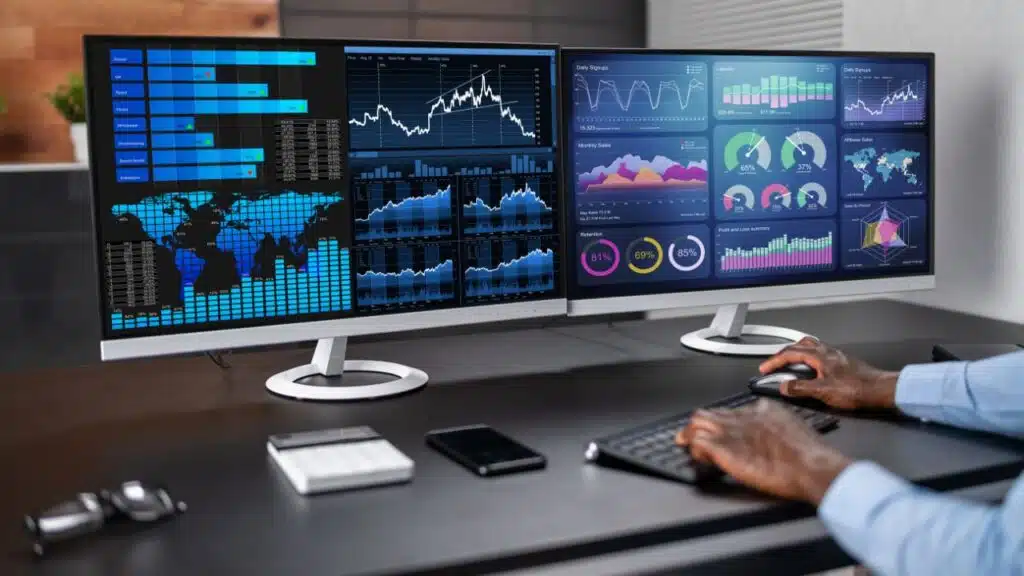
AI models scan storm paths and temperature shifts, spotting risks for supply chain flows. Predictive analytics taps into weather feeds, social media sentiment, and economic signals to forecast delays.
5X unites over 500 data streams, including satellite updates, then fires off real-time disruption alerts that trigger automatic rerouting. IBM Watson Supply Chain and Blue Yonder feed those warnings into clear dashboards.
IoT sensors on trucks and in warehouses beam wind, rain, and air pressure data in seconds. Teams cut stock levels when models spot calm outlooks, trimming costs and boosting order speed.
Weather topped supply chain disruption causes in 2024 for U.S. companies, so data merging beats gut calls.
Geopolitical Events Tracking
Geopolitical monitoring helps teams spot risk spikes. It scans hotspots in Eastern Europe or near Taiwan like a radar hunting storms. In 2024, U.S. firms lost an average of $228 million each year to supply chain disruptions from geopolitical risk.
Predictive AI platforms churn through that data and produce risk scores fast. 5X runs scenario simulation and searches past patterns to stop repeat failures.
Teams tap real-time feeds for supply chain visibility. They tie info into demand forecasting and supplier performance metrics. It feels like playing whack-a-mole without those alerts.
Machine learning models adapt routes and orders on the fly. AI adoption in supply chains may affect 40 percent of global jobs. Blue Yonder and IBM Watson Supply Chain flag risks for smarter lead times and lower logistics costs.
These alerts help staff tweak plans and dodge shipment slowdowns.
Social Media Sentiment Analysis
Many companies use AI tools, like IBM Watson Supply Chain or Blue Yonder, to scan posts on social networks. Teams assign opinion scores to tweets and messages. They mash those scores with weather data, predictive analytics, and market trends.
This data analytics setup gives real-time visibility into possible delivery bottlenecks.
Machine learning models turn those scores into risk ratings for supplier hiccups. They flag anomalies in customer chatter and economic spikes. These disruption alerts help teams boost supply chain management, demand forecasting, and operational efficiency while cutting logistics costs.
The process builds supply chain stability and lifts customer satisfaction.
Real-Time Shipment Tracking
Real-time shipment tracking feeds unified dashboards with live updates and boosts supply chain visibility. AI platforms apply predictive analytics and send disruption alerts days before delays hit.
Blue Yonder spots 96 percent of glitches within one hour. That sharp view cuts blind spots and powers supply chain resilience. It serves as a single source of truth for operations and scans data quality to avoid errors.
Kinaxis RapidResponse shrinks planning cycles by 40 to 60 percent, thanks to live tracking feeds. Platforms launch automated rerouting and safety stock adjustments when needed, cutting logistics costs.
AI-driven forecasting slashes stock shortages by up to 20 percent. The 5X platform then reacts to new issues on its own, letting teams rest easy and keep customer satisfaction high.
Supplier Performance Data
Supplier performance data shines a light on risk.
| Aspect | Data Point | Outcome | Tool or Concept |
|---|---|---|---|
| Timeliness | A drop in on-time delivery triggers early risk alerts | Faster issue spotting | Predictive AI models |
| Communication | AI chat links with 35+ ERP systems, boosting on-time rates by 30-35% | Better order planning | ERP integration |
| Engagement | 93% supplier response rate cuts follow-up work in half | Swift problem solving | Machine learning agents |
| Monitoring | Blue Yonder API with SAP delivers 65% faster feedback loops | Quicker adjustments | Supply chain dashboard |
| Trend Signals | Forecast accuracy checks flag abnormal supplier shifts | Improved resilience | Trend analytics |
| Case Study | Apple’s AI spotted power-chip risk seven months ahead | 98% parts ready, 12% lower stock | Dependency mapping |
| Risk View | AI merges supplier feeds with weather and geo data | Complete disruption map | Data fusion |
Market Demand Forecasts
Predictive analytics can boost forecast accuracy by 41 percent. Machine learning algorithms cut errors by half and slash carrying costs by 15 to 30 percent. Kinaxis RapidResponse improves forecasting accuracy by more than 100 percent and speeds planning cycles by 57 percent.
Blue Yonder uses time series analysis, causal models and moving averages to track market trends and spot shifts quickly. IBM Watson SCM integrates data integration and demand sensing for end-to-end visibility.
Supply chain teams predict shortages and fix transportation bottlenecks before disruptions occur. Companies gain supply chain resilience and cut logistics costs with smarter demand forecasting.
Natural Disaster Monitoring Systems
Natural disaster monitoring systems watch floods, storms and quakes. This view boosts supply chain visibility. AI-driven tools issue early warnings and risk scores. Forecast models shift in real time, they pull fresh data from monitors.
Scenario simulations include flood and quake events. Simulations stop old failures from happening again.
IBM Watson Supply Chain, Blue Yonder and 5X hook to these systems. They adjust safety stock and reroute loads in seconds. Real-time alerts cut emergency shipments, they slash logistics costs.
This mix of predictive analytics, data integration and predictive maintenance makes supply chains strong. It lifts supply chain management to a new level.
Port and Transportation Analytics
Port sensors and AIS trackers feed real-time data into predictive intelligence engines. Teams spot delays and congestion points with data analytics. Blue Yonder runs 25 billion predictions per day.
It flags 96 percent of disruptions within an hour. Adidas used ai driven forecasting to cut high-risk port notes from 47 percent to 23 percent. That move avoided one hundred thirty five million dollars in disruption costs.
Real-time visibility drives rerouting. It supports safety stock shifts. Users get live alerts on transportation bottlenecks. They gain supply chain resilience and better inventory management.
Predictive platforms like 5X merge port and trucking metrics for unified dashboards. IBM Watson Supply Chain taps machine learning to forecast delays. Demand sensing meshes historical data with live feeds.
Companies slash logistics costs up to 15 percent with ai tools. A freight audit model tags anomaly detection to catch route issues. Those alerts drive supply chain risk management and demand forecasting.
Teams enjoy end-to-end visibility across global supply chain systems. Faster shipments and less downtime boost customer satisfaction and ecommerce performance.
Economic Indicators and Trends
Markets show signs early. Companies watch GDP growth, consumer spending, and industrial output for supply chain forecasts. AI analytics platform taps macroeconomic signals, scanning data to spot rising shipping costs, labor strikes, or price swings.
This real-time visibility cuts logistics costs by up to 30 percent. Demand sensing tools feed market trends into machine learning models. That boosts supply chain resilience and operational efficiency.
Economic trend data can flag transportation bottlenecks weeks ahead. Predictive analytics links consumer price index shifts to inventory management. AI-driven forecasting spots risk indicators, cutting costs 15 to 30 percent.
Firms that add demand forecasting see 61 percent higher revenue growth. This mix of statistical methods and regression analysis closes gaps, trims stock deviations, and guards business continuity.
Inventory Levels and Stock Movements
Tracking inventory and stock moves cuts risk fast.
| Data Source | Summary Points | Tools and Concepts |
|---|---|---|
| Logility analytics | • Up to 75% less finished goods inventory
• 37% fewer working capital days |
• ABC classification
• ERP software |
| AI-driven models | • 15–30% lower carrying costs
• 35% better inventory control |
• Machine learning
• Demand forecasting |
| Apple AI insights (2023) | • 12% inventory cut by year end | • Inventory turnover ratio
• Predictive analytics |
| Kinaxis RapidResponse | • 33% less inventory on hand
• 20% shorter lead times |
• Safety stock
• Pull system |
| Predictive analytics | • Up to 25% fewer stockouts | • Forecast algorithms
• Reorder point |
| 5X platform alerts | • Auto safety stock moves
• Reacts to predicted disruptions |
• Radio frequency ID labels
• Warehouse control system |
IoT Sensor Data from Warehouses and Vehicles
Sensors in racks and trucks stream data every second. They spot spikes and lulls before they spark supply chain disruptions. IoT adoption speeds up data collection from warehouses and vehicles.
Teams use that feed to cut stock levels and speed order fulfillment. Real-time sensor readings trigger automated inventory management and logistics tasks. That instant feed gives full supply chain visibility and boosts operational efficiency.
Cloud apps like Blue Yonder and IBM Watson Supply Chain run predictive analytics on the sensor data. They flag signs of wear and help technicians prevent breakdowns, cutting downtime by 50%.
AI tools scan quality metrics and spot defects at a 99% rate. Algorithms tune routes and loads to save 15% in logistics costs. Real-time data streams feed demand forecasting and risk management models.
Data integration trims working capital days and boosts inventory turns. Supply chain resilience and customer satisfaction rise with AI-driven forecasting, predictive maintenance and quality control.
Labor Market Data and Strikes Reports
U.S. firms lost $228 million each year in 2024 due to labor strikes and other hiccups. Predictive analytics and demand forecasting platforms like IBM Watson Supply Chain and Blue Yonder scan labor market data and strike reports for early warnings.
This real-time visibility helps teams adjust routes and tweak stock levels fast. Teams cut risk by spotting trouble before it flows downstream.
AI-driven supply chains treat workforce trends as key signals for supply chain resilience planning. Machine learning models feed on job vacancy rates and union talks. They forecast delays and suggest buffer stock in high-risk hubs.
Scenario simulations mimic past walkouts so teams avoid repeat performance failures. This smart approach boosts customer satisfaction, cuts logistics costs, and raises operational efficiency.
Cybersecurity Threat Monitoring
Cyber threats drive up the cost and frequency of supply chain disruptions. AI-powered systems combine threat data with predictive analytics to send early alerts. Only six percent of firms have end-to-end visibility, leaving blind spots for attack.
Real-time cybersecurity monitoring triggers automated incident response if hackers hit a transport node.
Scenario simulations tap historical data, data integration, and machine learning to block repeat breakdowns. Market trends and logistics costs feed into these forecasting tools, like Blue Yonder and IBM Watson Supply Chain.
Firms get more supply chain resilience and boost customer satisfaction through smart risk management. AI adoption may reshape forty percent of jobs, adding new safety roles for cybersecurity guards.
Commodity Price Fluctuations
Price spikes on crude oil, wheat, copper can trigger raw material shortages. Predictive analytics in IBM Watson Supply Chain detects hikes in real-time data. AI-driven forecasting tools like Blue Yonder scan commodity markets for risk alerts.
These alerts signal possible margin loss and supply chain disruptions. Operations teams tweak safety stock with automated rules. Machine learning models support demand forecasting and inventory management.
Price trend analysis with predictive intelligence cuts logistics costs by up to 30%.
Team members use demand sensing to spot sudden cost jumps. They connect historical data with supplier performance metrics. They feed numbers into quantitative forecasting and exponential smoothing models.
These models fire disruption alerts within seconds. Companies use those alerts to boost supply chain resilience.
Takeaways
Data points gave you new visibility into weak spots. AI models spot odd trends before they become a pileup. Weather reports, trade alerts, and online chatter feed predictive analytics with real-time data.
Firms that use cloud AI platforms and demand sensing software boost their risk management game. You grab clear dashboards, instant alerts, and actionable intelligence. This toolkit trims blind spots, cuts crisis mode, and saves big bucks.
Keep these insights in your playbook to strengthen resilience and keep goods flowing.
FAQs
1. What data sources can predict supply chain disruptions?
Real-time data from sensors and GPS can spot delays as they happen, like a traffic report for your goods. Historical data shows past sales cycles and demand peaks. Market trends give clues on demand shifts. These sources help you predict supply chain disruptions.
2. How does historical data help predict supply chain risks?
Historical data feeds predictive analytics, teams use quantitative methods to build forecasting models. That helps you spot risk and avoid supply chain disruptions.
3. How does real-time visibility curb transportation bottlenecks?
Sensors in trucks and warehouses give real-time visibility. This data helps spot transportation bottlenecks and send disruption alerts fast. Then teams can act and avoid bigger issues.
4. Can ai-driven forecasting improve demand forecasting and cut logistics costs?
Ai-driven forecasting uses machine learning and data analytics. It taps real-time data and market trends to power demand forecasting. You can cut logistics costs and boost supply chain resilience.
5. Why is tracking supplier performance key to a strong supply chain?
Tracking supplier performance helps catch delays before they snowball. It ties into risk management and supply chain management. It drives operational efficiency and lifts customer satisfaction.
6. How can businesses use data integration for end-to-end visibility?
Data integration pulls in historical data, real-time data, and weather data on natural disasters. It also tracks busy seasons and inventory management metrics. This end-to-end visibility lets you forecast and dodge supply chain disruptions.