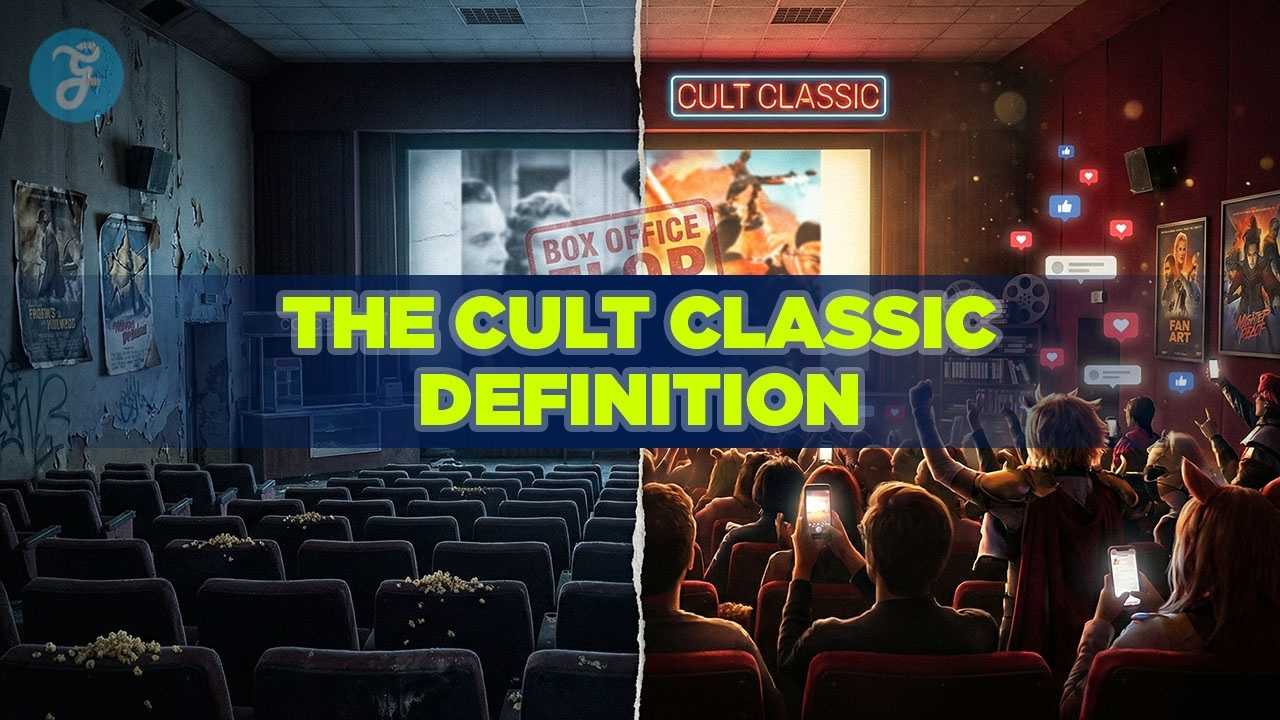
Ever watched a movie everyone calls awful, but you can’t stop thinking about it? You aren’t alone. Many people wonder why some box office flops become legends while others vanish without a trace. The question nags at fans who fall in love with these oddball films and keep watching them for years. Here is something cool: the term “Cult Classic” describes this strange twist of fate perfectly. Some movies fail when they first arrive but grow into cultural treasures over time.
I’m going to walk you through exactly what gives a flop its long-lasting power, from wild stories to loyal fan groups. Ready to see how the magic happens? Let’s go.
What Is a Cult Classic?
A cult classic is a film or show that failed at first but later built a loyal following. Some call it a legend born from being different or misunderstood.
Definition and Characteristics
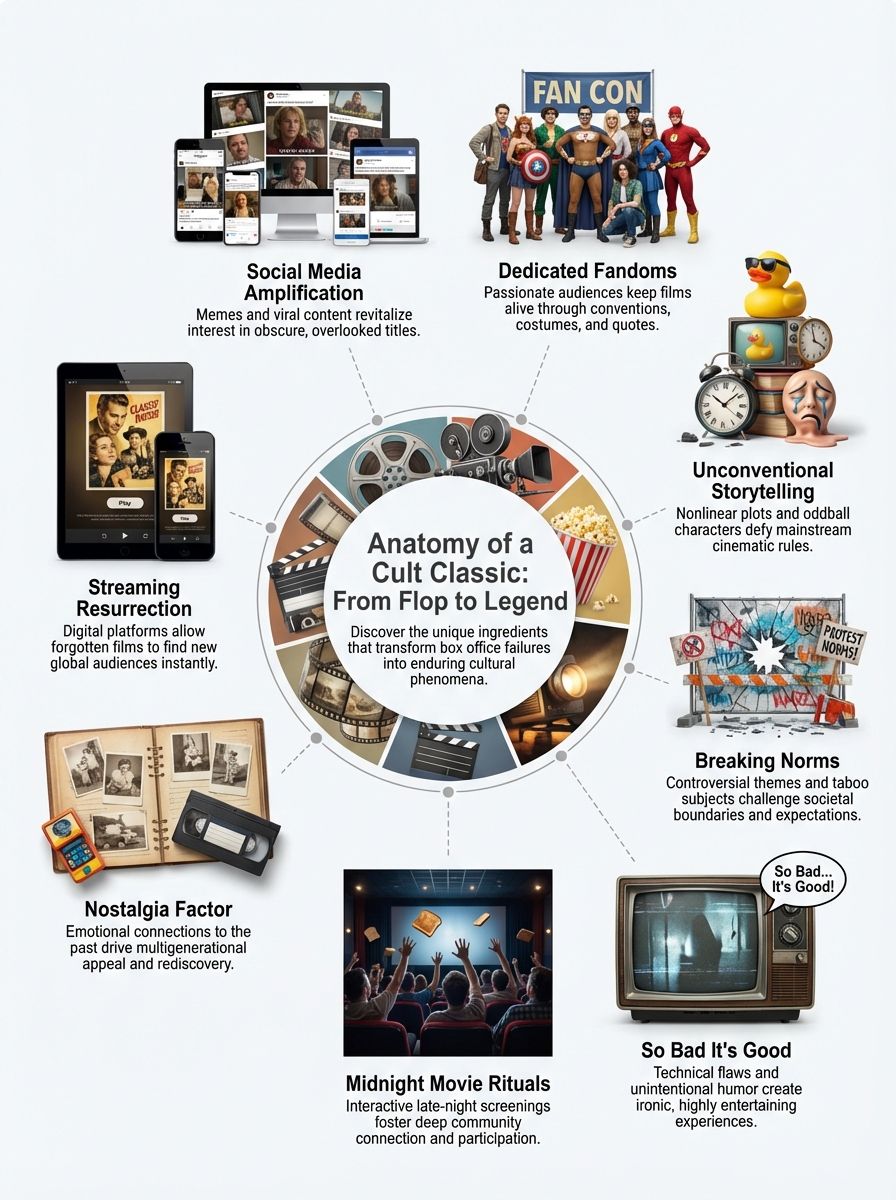
Cult classics are movies, shows, or books with a small but fiercely loyal fan base. These works often failed at the box office on release and did not earn much money. They can include different genres such as comedy, sci-fi, horror, or animation.
Quirky plots and odd characters set them apart from mainstream hits. Sometimes critics ignore these titles, but later, fans build their popularity through word of mouth.
Fans love cult films for their one-of-a-kind style and iconic performances. Quotes from lines like “Time is an illusion” grab people’s attention years after release. Many become cultural phenomena in subcultures because they break normal movie rules or shock audiences with bold ideas.
Over time, devoted viewers keep them alive by creating art, sharing clips online, or dressing up like the cast at midnight screenings. For instance, The Rocky Horror Picture Show holds the record for the longest-running theatrical release in history, playing continuously in theaters for over 50 years despite its initial failure.
Origins of the Term
Movie fans first started using “cult classic” in the 1970s. This label did not start with critics or studios, but with small groups of dedicated viewers. These people loved films that most called a box office failure or oddball.
Rocky Horror Picture Show lit up midnight theater screens and became a true cult film in 1975, showing the power of audience devotion.
The word “cult” comes from old ideas about worship, like fan followings around music stars or movie icons. Fans treated these movies as rare treasures, quoting lines and wearing costumes as acts of fun rebellion against popular culture.
“A cult classic is often an underdog,” said writer Ernest Mathijs, “but it keeps coming back.” Crowds kept these so-called flops alive by sharing copies on VHS tapes at home; no big ad campaigns needed! Some films grew into pop culture phenomena because fans would not let them fade away.
Key Elements That Define a Cult Classic
Some movies hit all the right chords with certain viewers, even if they miss the mark for most. What sets these films apart might surprise you and spark your curiosity to know more.
Dedicated Fandom
Fans stick with their favorite cult films, even if everyone else calls them box office failures. These fans quote lines at parties, dress up for movie nights, and fill online forums with inside jokes. One famous example is Lebowski Fest, which started in Louisville in 2002 with just 150 people and grew into a massive event where thousands gather to drink White Russians and bowl.
People often turn bad reviews into badges of honor. A small audience can make a flop feel like a legend. Rocky Horror Picture Show still packs theaters for midnight shows nearly fifty years after its release because the fanbase never gives up.
Devoted followers spread word-of-mouth faster than critics can keep up. Even movies forgotten by Hollywood find new life through passionate support. Social media helps these groups grow even bigger and louder every year.
This bond between film and audience helps turn a misunderstood movie into an iconic phenomenon with timeless appeal.
Unique or Unconventional Storytelling
Odd stories often make a cult film feel fresh. Think of “Pulp Fiction.” The story jumps around in time, mixing comedy and crime with wild twists. Viewers remember its bold style.
Strange plots, oddball heroes, or puzzling endings can draw people in for years. Directors like Quentin Tarantino or the team behind “Monty Python” toss out boring rules to keep things exciting.
Great stories break old habits; they shake up what you expect.
A movie might flop at first because it is so different, but over time, those same risks help turn it into an iconic performance that sparks a loyal fanbase. Next, how breaking social rules makes these films stand out even more.
Transgression of Cultural Norms
Cult classics often break the rules that most movies follow. They show ideas or scenes people may see as odd, shocking, or even rude. The Rocky Horror Picture Show is a good example.
In 1975, it surprised viewers with wild costumes and new takes on gender roles. Pulp Fiction mixed violence with funny talk in ways that confused critics but charmed fans. Other films push boundaries even further:
- Pink Flamingos (1972): John Waters shocked the world with a “filthiest person alive” contest that included scenes so graphic they are still banned in some places today.
- The Thing (1982): The practical effects by Rob Bottin were so gruesome and realistic that critics at the time called them repulsive, yet today they are hailed as masterpieces.
- Jennifer’s Body (2009): This film subverted the typical horror tropes by making the teenage girl the predator, a move that confused 2009 audiences but is celebrated today.
These films do not care if they fit in. At first, some folks turn away or call them flops. Over time, though, brave choices become bold statements about freedom and change in art. Fans love how these movies throw out the rulebook to make way for something fresh.
Some cult films win fans because they dare to cross lines others fear to touch; next comes nostalgia, and how memory gives these stories new life every year.
Nostalgia and Timelessness
Fans who love movies that break rules often feel a deep connection to the past, too. Nostalgia pulls them back to old scenes, classic lines, or iconic performances they watched as kids or teens.
Lines from movies like “Monty Python and the Holy Grail” live on in jokes today; viewers laugh at the same punchlines even after forty years. A great recent example is Hocus Pocus. It underperformed in theaters in 1993 but became a Halloween staple on cable TV, leading to a massive sequel on Disney+ nearly 30 years later.
Many box office flops grab new fans decades later because their stories still matter. The struggles of underdogs or oddballs never go out of style. These films become legends with timeless appeal, growing stronger with each generation’s rediscovery. People share them with friends, turning late-night screenings into new traditions year after year.
Types of Cult Classics
Strange films hide in every corner. Let’s look at which ones keep fans talking for generations.
“So Bad It’s Good” Films
Some movies flop at the box office yet grow into comedy gold. People watch these films for the unintentional laughter, odd choices, and wild mistakes. Lines get quoted at parties. Scenes go viral online, year after year.
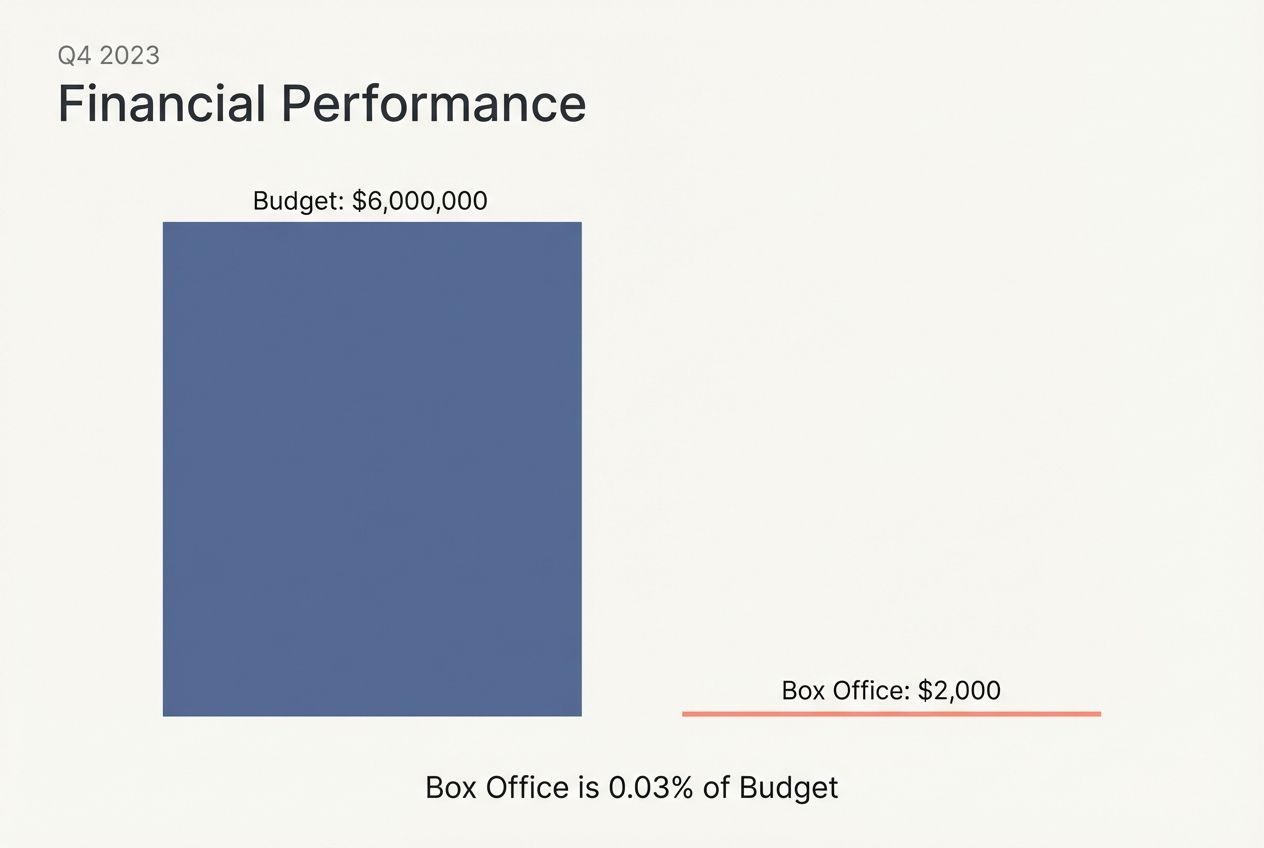
Think of Tommy Wiseau’s “The Room” or Ed Wood’s “Plan 9 from Outer Space.” Both started as big failures; both became icons through pure audience devotion. The Room is a perfect case study:
| Metric | The Statistic |
|---|---|
| Estimated Budget | $6,000,000 |
| Original Box Office | Less than $2,000 (approx.) |
| Current Status | Plays monthly in theaters worldwide, like the Prince Charles Cinema in London. |
Fans bond over their love of these cinematic misfires. Watching with friends turns every plot hole or bad effect into a shared joke. These cult classics break all rules but create legends in their own way.
Many flop on release but rise to legendary status thanks to late-night showings and a strong fanbase eager to laugh together again and again.
Midnight Movies
Fans used to fill theaters at midnight, waiting for odd and wild films. These late showings often played box office flops like “The Rocky Horror Picture Show” and “Eraserhead.” Midnight movies gained cult status thanks to the lively crowds who yelled lines, dressed up, or sang along.
People from all walks of life found a home in these shadowy hours, laughing together over campy stories and iconic performances. The Elgin Theater in New York City became ground zero for this movement in the 1970s, famously launching the career of director Alejandro Jodorowsky with his film El Topo.
These screenings gave misunderstood movies a second chance. Outcasts came with friends, popcorn in hand, ready for rebellion or laughter. A simple ticket turned into entry for a new family, one built on shared jokes and unintentional laughter long after others had gone to bed.
The spirit that kept these films alive at midnight still shapes how we view art and exploitation films today.
Art and Exploitation Films
Art films often confuse people at first. Some push the limits with odd stories, bold visuals, or strange acting. Many never win big awards or make money, yet they get a group of loyal viewers over time.
Exploitation movies grab attention by using shocking topics like violence, taboo themes, or wild jokes. These films break rules and ignore what is safe.
Directors such as John Waters made shock value famous with cult classics like “Pink Flamingos” in 1972. People gather for late-night screenings just to laugh or gasp together at what feels outrageous. Waters famously said, “To understand bad taste, one must have very good taste.”
Art and exploitation films become legends because they dare to be different and let fans feel part of something rare, a true cultural phenomenon that keeps its charm through the decades.
Animation and Genre Films
Right after art and exploitation films, animation and genre movies create their own cult following. These films often get ignored at the box office but find new life through loyal fans.
Titles like “Heavy Metal” (1981) brought comic book style to animated film. Japanese anime, such as “Akira” (1988), shocked audiences with bold ideas and wild visuals that influenced major blockbusters like The Matrix.
Science fiction, horror, or fantasy movies can end up as cult classics, too. A monster movie like “The Thing” (1982) failed in theaters but became a legend later on cable TV. Comedy blends with horror in films such as “Gremlins.” Fans love these odd stories, quoting lines and drawing fan art for years after release. Animation and genre flicks prove that even overlooked movies can spark a cultural phenomenon overnight.
Examples of Iconic Cult Classics
Some films seemed lost at first, yet fans later cheered them louder than a rock concert encore. These movies grew into legends, grabbing hearts with quirky stories and unforgettable moments.
The Rocky Horror Picture Show
“The Rocky Horror Picture Show” hit theaters in 1975. It did not do well at first and became a box office failure. Fans soon found the film’s campy style, catchy songs, and wild costumes too good to ignore.
People dressed up as characters, tossed toast at the screen, and sang along at midnight showings. Tim Curry starred as Dr. Frank-N-Furter and gave an iconic performance that still wows audiences today.
This cult film broke rules by mixing science fiction, comedy, horror, and musical genres into one big party on screen. Gender roles blurred; nothing felt off-limits or too bold for this story.
Over time, it grew into a true legend. It celebrated its 50th anniversary in 2025 and has generated over $140 million globally, proving that a flop can become a financial titan if given enough time.
Donnie Darko
If Rocky Horror is a wild party, Donnie Darko is the quiet guest who leaves people talking for years. Released in 2001, Donnie Darko barely made a splash at first. It was a box office flop, bringing in only about $517,000 domestically against its $4.5 million budget.
Jake Gyllenhaal gave an iconic performance as Donnie, a troubled teen haunted by strange visions and a giant, creepy rabbit named Frank. Fans clung to its mystery like glue, swapping theories online and quoting lines in internet chatrooms and midnight screenings.
“The Director’s Cut and the DVD market changed everything for us. We went from a failure to making over $10 million in home video sales almost overnight.”
The film’s mix of sci-fi, nostalgia for the ‘80s, dark comedy, teen angst, and haunting soundtrack turned it into a cultural phenomenon with long-term legacy. Today it stands tall as one of the most beloved cult films ever made, proof that even movies once lost can shine bright under new eyes.
Pulp Fiction
Donnie Darko’s cult status comes from its dark mystery. Pulp Fiction took a wild turn and shook up movies in 1994. Quentin Tarantino wrote and directed it, mixing crime, comedy, and bold storytelling.
John Travolta gained new fame as Vincent Vega; Samuel L. Jackson’s fierce dialogue left fans quoting him for years.
Many critics praised the film at first, yet some felt confused by its style or story order. Still, box office numbers grew fast—over $200 million worldwide on just an $8 million budget. That is a return on investment of over 25 times, making it one of the most profitable indie films ever.
Fans loved the sharp music choices, cartoonish violence, humor mixed with drama, and pop culture nods everywhere you looked. Even small details turned into legends among loyal viewers: a mysterious briefcase, odd dance scenes with Uma Thurman’s Mia Wallace, and even milkshakes became iconic! Today, it defines what a cult classic looks like: risky ideas that spark timeless appeal, influence trends far outside Hollywood’s rules.
Monty Python and the Holy Grail
British comedy group Monty Python made this film in 1975. It was a box office flop at first, but crowds soon filled midnight theaters with laughter. Fans still quote lines like, “It’s just a flesh wound,” and dress up as knights at themed screenings.
The humor pokes fun at Arthurian legends with silly jokes and sharp wit. The movie uses handmade props, odd animation, and low-budget tricks for laughs.
Here is a fun fact many fans don’t know: the film’s tiny budget of roughly £175,000 (about $400,000 at the time) was funded by rock stars. Bands like Pink Floyd, Led Zeppelin, and Jethro Tull contributed money to get the movie made because they were fans of the TV show.
Decades later, it is a legend among cult films and comedy fans worldwide. Its impact reaches across generations and inspires memes on social media every day. Next comes the story of why some flops become beloved legends over time.
Why Some Flops Become Legends
Sometimes, a movie fails at first but finds its place with loyal fans. Over time, these “flops” bloom into legends and surprise everyone.

Misunderstood on Release
Some cult classics flopped at first. Critics scratched their heads. The public did not get the jokes or the plot. For example, “The Rocky Horror Picture Show” bombed in 1975 but found its crowd later. People started seeing hidden gems and clever comedy that got missed on release day.
The Thing (1982) is a classic example of bad timing. It was released just two weeks after E.T. the Extra-Terrestrial. Audiences wanted a friendly alien, not a shape-shifting monster. The New York Times even called it “instant junk” at the time.
Donnie Darko also confused people in 2001. It looked odd and made little sense to many viewers right away, but sparked discussions years after. These box office failures grew into legends thanks to excited fans who saw beauty where others saw messes. Next up, see how devoted fanbases breathe new life into forgotten films.
Rediscovery Through Fandom
Fans breathe new life into box office flops. A small group may find a comedy, a horror film, or even an odd cartoon funny or touching in ways big studios missed. They share clips online. They quote lines at parties. Before long, others join the fun, and fan clubs start to grow.
The Rocky Horror Picture Show became a phenomenon after fans packed midnight screenings in costume. Donnie Darko saw its popularity jump years after release because of strong fan interest on internet forums and movie websites.
These stories turn forgotten films into legends with devoted audiences hungry for every joke and scene.
Cultural Shifts Over Time
Old taboos become punchlines. A movie called a box office failure in one decade may turn into a cultural phenomenon the next. Tastes shift fast; what seemed odd or edgy can later spark nostalgia and laughter.
The Rocky Horror Picture Show faced harsh criticism in 1975, yet its oddball comedy and music now fill theaters with dancing crowds every Halloween.
Style, fashion, even language, age like milk or wine. Things once mocked as flops sometimes grow iconic through new eyes and fresh trends. A perfect modern example is Jennifer’s Body (2009). When it came out, it was marketed to teenage boys and flopped. In the post-#MeToo era, it was reclaimed as a feminist horror masterpiece, with a massive resurgence on TikTok.
Today’s pop culture often grabs ideas from cult film gems of the past, giving them a long-term legacy far beyond their first release.
The Enduring Appeal of Cult Classics
Some fans watch these films every year, almost like a ritual. They feel something special—a spark that never fades, long after the credits roll.
Emotional Connection with Fans
Fans feel seen by a cult classic. They bond over inside jokes, wild storylines, and even the odd costumes. Watching Rocky Horror in a packed theater, fans throw toast and shout lines together. It feels like being part of an underdog club where a box office flop turns into a legend.
Real friendships have started at midnight showings or online message boards for Donnie Darko or Pulp Fiction. People love quoting iconic performances and sharing their favorite scenes for years after release. The loyalty creates a shared nostalgia that never fades, no matter how much time passes.
Influence on Pop Culture
Cult classics leave footprints everywhere. The Rocky Horror Picture Show turned its audience into midnight dancers and singers after 1975, making dress-up screenings a worldwide phenomenon.
Pulp Fiction changed how people saw movie dialogue; quoting lines from the film became cool in the 1990s. Monty Python and the Holy Grail made absurd humor part of TV shows, internet memes, and even classroom jokes.
Big flops often shape music, fashion trends, or comedy styles, too. Some movies give birth to new slang words or inspire comic books and video games. Kids who grew up on cult animation like Akira later brought its art style into popular cartoons.
Pop stars copy costumes from these old movies at concerts or in music videos, giving them fresh life every decade. For example, Heathers (1988) flopped in theaters but inspired a hit Broadway musical decades later, introducing the story to a whole new generation of theater kids.
The Evolution of Cult Classics in Modern Media
Times change fast, and so do cult films. New tools mean these “flops” can win fresh fans every day, even years after their release.
Mainstream recognition
Cult classics sometimes break out of their small fan circles. Take The Rocky Horror Picture Show, once a box office flop, now selling out theaters for sing-along nights across America.
Some cult films hit cable TV and streaming platforms, reaching new viewers who never saw them in theaters. Studios notice the growing buzz and start releasing special editions or even merchandise. Suddenly, what started as an underdog story becomes a pop culture phenomenon.
Critical reevaluation often plays a part, too. Critics go back to movies like Blade Runner or Donnie Darko years after poor ticket sales and call them masterpieces of genre innovation. Blade Runner, for instance, went from a disappointment to being inducted into the National Film Registry by the Library of Congress.
Fresh eyes see hidden meanings or bold ideas that went unnoticed before. This shift helps these films gain respect far beyond their first release date and cements their long-term legacy as legends rather than failures.
Streaming platforms and accessibility
Netflix, Hulu, and Amazon Prime make even the quirkiest cult films easy to find. No more hunting for rare DVDs or midnight screenings in dusty theaters. Anyone can stream classics like The Rocky Horror Picture Show or Donnie Darko with just a few clicks.

This has turned box office failures into late-blooming legends by making them available twenty-four-seven. Specific platforms have even built their brand on this:
- Shudder: This horror-focused service revived The Last Drive-In with Joe Bob Briggs, which actively creates new cult followings for obscure films every Friday night.
- Tubi: Known for its vast library of B-movies, it allows users to discover “so bad it’s good” films that would otherwise be lost.
Fanbases now grow overnight as old favorites meet new eyes worldwide. A single tweet or meme can push a forgotten film back into the spotlight before you finish your popcorn. Social media only fuels this fire, creating communities around these oddball gems that were once ignored by Hollywood.
Even streaming algorithms help fans stumble onto their next hidden treasure, leading right into how online fandoms keep a legend alive year after year.
Social media turns small fan groups into big, loud communities. Fans can create memes about a cult film flop like The Room or share inside jokes from classics like Monty Python and the Holy Grail.
Hashtags bring old movies back to life, sometimes years after their box office failure. A single funny tweet or TikTok clip can spark a new wave of fans who were not even born when the movie first aired.
Direct links let people talk with creators, actors, and each other in real time. Fandoms use polls, GIF battles, and watch parties to grow stronger bonds online. Social media helps everyone spot hidden gems faster than ever before. It keeps legends alive by turning every post and video into free promotion for these quirky icons.
Final Words
Some movies flop at first but become legends over time, thanks to loyal fans and bold stories. Anyone can spot these cult classics by their odd charm, laugh-out-loud moments, and lasting cultural punch. Watching them is easy today with streaming, making exploring this wild area of film both fun and simple.
Sharing your favorites or checking out fresh picks sparks new joy and keeps the legend alive. I once laughed so hard at Monty Python that milk shot out of my nose, proof that old flops still pack a punch!