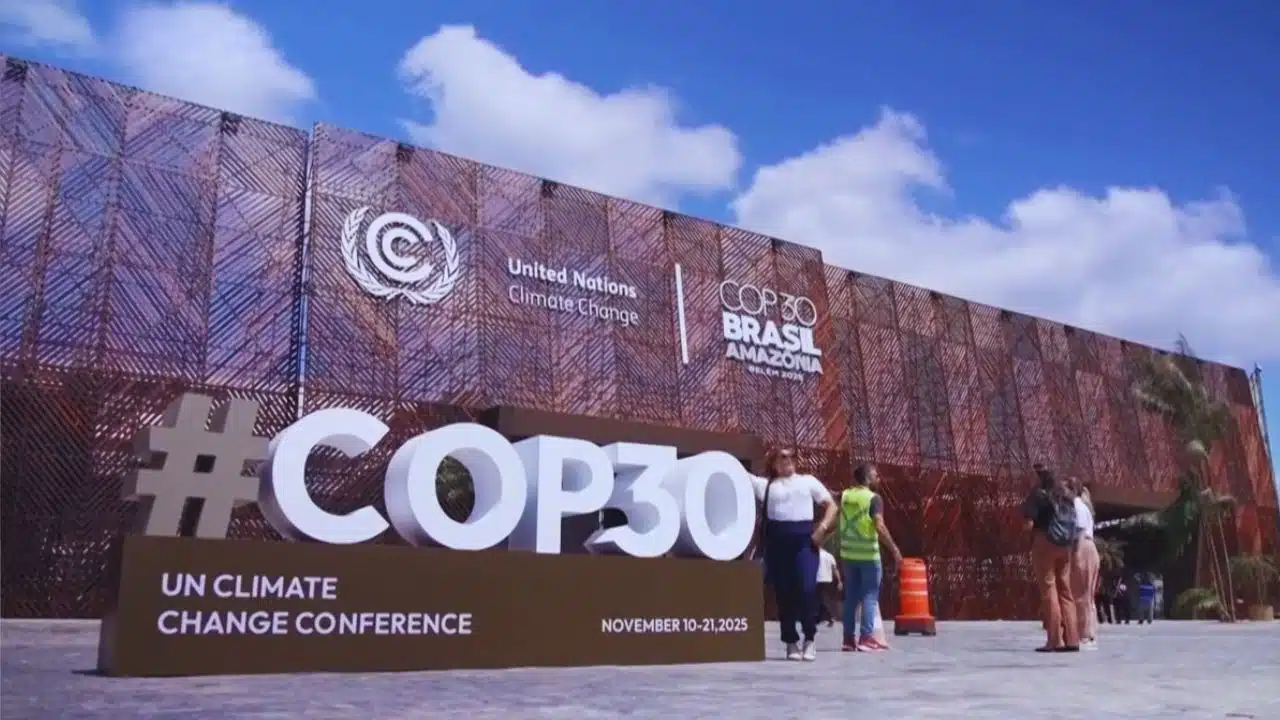
People from across the globe are preparing to converge on Belém, a vibrant city at the gateway to the Amazon rainforest in northern Brazil, for the 30th annual United Nations Climate Conference—better known as COP30. This major event, organized under the UN Framework Convention on Climate Change, will bring together nearly 200 countries, thousands of scientists, negotiators, activists, and business leaders to confront one of humanity’s greatest challenges: how to slow down and eventually stop the worsening effects of climate change.
The goal of COP30, while ambitious, is clear—to unite nations in taking tangible, collective action against the escalating climate crisis. Yet, as experts point out, that goal is becoming harder to achieve. The world is heating up faster than expected, and scientists warn that the target of keeping global warming below 1.5 degrees Celsius above pre-industrial levels is slipping away. The consequences are already visible—record heat waves, catastrophic floods, unprecedented wildfires, and collapsing ecosystems are affecting billions of people. For many regions, especially poorer and vulnerable communities, climate change has already become a matter of life and death.
Belém, sitting near the world’s largest rainforest, serves as a powerful symbol for this year’s summit. The Amazon plays a critical role in absorbing carbon dioxide and stabilizing the planet’s climate, yet it is also under constant threat from deforestation, illegal mining, and land degradation. Hosting COP30 here is no coincidence—it is an intentional reminder of what’s at stake. Many believe that the setting will bring sharper attention to the role of Indigenous communities, whose traditional land stewardship has protected vast tracts of forest for centuries. Their voices, often marginalized in global forums, are expected to take center stage this time.
However, organizing such a massive global event in Belém hasn’t been without challenges. Tens of thousands of delegates, journalists, and activists are expected to attend, leading to concerns about the city’s infrastructure and accommodation capacity. Some attendees have already resorted to booking rooms on cruise ships docked in the harbor, while others are staying in small guesthouses or even short-term rental spaces once known as “love motels.” There’s talk that a few groups may camp outdoors. Brazil’s government, aware of the Amazon’s steamy weather conditions, has even advised participants to embrace a more casual dress code, acknowledging that the tropical heat and humidity will be extreme.
Yet, some local environmentalists and officials argue that this discomfort is part of the message. The oppressive heat and humidity reflect the very climate challenges the conference seeks to address. For wealthier delegates coming from temperate nations, it may serve as a wake-up call—reminding them of the conditions millions already endure daily as global temperatures rise. Brazil’s government has emphasized that Belém was chosen not for convenience but for symbolism—to highlight how the poorest, most climate-vulnerable regions are often the first and worst hit by environmental crises.
A Decade After Paris: Progress, Pressure, and the Path Forward
Ten years ago, the world celebrated the Paris Agreement, a landmark global pact where nearly every nation pledged to limit global temperature rise to 1.5°C. But a decade later, data from climate monitoring agencies show a worrying picture: the planet has already warmed about 0.46°C in the past decade, one of the steepest jumps on record. Despite growing awareness, the world remains off track. Scientists now believe that exceeding the 1.5°C limit is almost inevitable without immediate, radical emission cuts.
Still, there are reasons for cautious optimism. Renewable energy technologies—solar, wind, and hydro—have become cheaper and more widely adopted than ever before. Many countries have reduced their reliance on coal, and electric vehicles are expanding rapidly across global markets. Experts estimate that if all nations fulfill their current pledges, they could prevent over one full degree Celsius of additional warming. It might not sound like much, but every fraction of a degree avoided can mean fewer droughts, fewer deadly heat waves, and fewer lives lost.
This year, COP30 carries an added layer of urgency. Each country is expected to arrive with updated national climate action plans, known as Nationally Determined Contributions (NDCs). These plans outline how each nation intends to cut emissions and adapt to climate impacts. But many of the world’s largest emitters are falling short. The United States, for instance, will not be submitting an updated plan this year after political setbacks and policy delays. Several other nations have been criticized for offering weak or vague commitments that fail to meet the Paris Agreement’s expectations.
Unlike previous years, COP30 is not expected to end with a grand new agreement or sweeping treaty. Instead, it is being described as the “implementation COP”—a conference focused on converting promises into tangible results. Former UN climate chief Christiana Figueres, who oversaw the Paris talks, remarked that people asking “what deal will come out of Belém” are asking the wrong question. The real challenge, she said, is ensuring that countries actually implement what they have already agreed upon.
Among the most anticipated discussions will be around Brazil’s newly proposed initiative, the Tropical Forests Forever Facility. This program aims to financially reward countries that protect and preserve tropical forests, offering a monetary incentive for conservation rather than deforestation. The idea has garnered international attention, but its success depends heavily on whether wealthier nations will commit enough funding to sustain it.
At the same time, the conference will explore how to reform food systems, which contribute significantly to global emissions. Experts argue that transitioning to cleaner energy is not enough—countries must also change how they produce, distribute, and consume food, and must stop destroying ecosystems that act as natural carbon sinks. Protecting forests, wetlands, and mangroves not only reduces carbon in the atmosphere but also prevents the spread of new diseases and safeguards biodiversity.
Despite the ambitious agenda, skepticism runs deep. Some officials and activists worry that the annual summits have become more about appearances than progress. Panama’s Environment Minister, Juan Carlos Navarro, voiced his frustration bluntly, saying these meetings have turned into “a jet-setting orgy of bureaucrats” whose carbon footprints contradict their climate mission. Many observers share this sentiment, demanding that COP30 focus less on speeches and photo opportunities and more on concrete funding, measurable results, and accountability.
Turning Promises Into Action: Can COP30 Deliver?
For COP30 to be remembered as a turning point rather than another missed opportunity, world leaders will need to demonstrate both ambition and honesty. The stakes are immense. Billions of people are already experiencing the effects of climate disruption—from flooded coastal cities to drought-stricken farmlands and heat-ravaged regions where outdoor work is becoming nearly impossible. Each year of delay increases the human and economic toll.
The defining test for COP30 will be whether nations take decisive steps to implement their pledges. That means translating policy documents into action—funding renewable energy, protecting forests, developing resilient infrastructure, and supporting communities most at risk. Brazil’s leadership in hosting the conference underscores this commitment; by bringing the world’s attention to the Amazon, it hopes to emphasize that global solutions cannot come at the expense of local people or ecosystems.
The world’s path forward depends on cooperation, but also on accountability. Without sufficient financing, poorer nations will continue to struggle with adaptation. Without enforcement, corporate pledges will remain mere marketing. And without urgency, the 1.5°C target will fade into history as a missed promise. Yet, there is still hope. If COP30 can ignite real momentum—funding for forest conservation, measurable adaptation programs, and fairer burden-sharing—it could mark a genuine step toward a sustainable future.
Belém’s setting, with its dense rainforest canopy and sweltering climate, is more than symbolic; it is a mirror of the planet’s future. Whether COP30 becomes a milestone of progress or another chapter in global inaction will depend on whether leaders choose comfort or confrontation, politics or purpose. As the world gathers under the canopy of the Amazon, the message is clear: the time for promises is over—the time for delivery has begun.
The Information is Collected from ABC News and Yahoo.