
Have you noticed your garden struggling with dry spells, heavy rainfall, or sudden frosts? Many gardeners feel stuck when climate change brings extreme weather and unexpected challenges to their backyards.
Lawns turn brown, plant roots struggle in poor soil structure, and weeds seem to pop up overnight.
Did you know that UK gardens cover more than 1,600 square miles, yet these spaces are under threat as the climate shifts? Even worse: flying insects have dropped by over half in just twenty years.
This means less pollination for flowers and crops—plus more pests for us to wrangle.
This blog will show you simple ways to create a climate-resilient garden. You’ll find tips on choosing native plants like red maple and eastern red cedar. We’ll explore water conservation methods from rain barrels to drip irrigation.
Learn how organic mulch helps fight runoff and keeps moisture locked in during droughts—and see how supporting biodiversity brings beneficial insects back where they belong! Curious about turning your patch of earth into a haven against global warming? Keep reading—good surprises lie ahead!
Key Takeaways
- Gardens in the UK cover more than 1,600 square miles and face climate risks. Flying insects have dropped by over 50% in twenty years (UK study), which affects pollination.
- Use native plants like red maple and eastern red cedar. They survive local weather swings, need less water, help with droughts or floods, and attract helpful bugs.
- Water smart: Install drip irrigation to save water at roots. Collect rainwater in barrels for reuse. Mulch keeps soil moist and cool during heat waves or dry spells.
- Build microclimates with shade trees, windbreaks (like elderberry hedges), and raised beds. These protect plants from strong sun, dry winds, heavy rain, or disease. Windbreaks can cut wind speed up to 50% (USDA 2023).
- Avoid chemicals; use organic compost and natural pest control methods instead—this helps bees, birds, butterflies thrive. The Royal Horticultural Society says non-chemical options boost biodiversity while lowering carbon emissions.
Assess Your Garden’s Conditions

Start with the ground beneath your feet, because soil health and moisture are your garden’s backbone. Notice sunlight shifts, shady corners, puddles after rain—or bone-dry patches—since these clues shape every planting choice you make.
Understand your soil type and moisture levels
Soil is the backbone of any garden. Dig a small hole, grab some dirt, and rub it between your fingers. Heavy clay feels sticky and holds water. Sandy soil slips through your hands and drains fast.
Loamy soil feels crumbly—this is what most plants want.
Water soaks in or runs off depending on soil type. Healthy soil full of organic matter like compost or worm castings can trap moisture even during dry spells and support beneficial insects too.
Too little water leaves roots thirsty; excess drowns them or causes harmful fungi to grow fast as weeds after spring rain. Use mulch for water conservation, slow evaporation, and keep roots cool in hot summers caused by climate change impacts.
Planting native species that thrive with less water helps you adapt to changing climatic conditions while keeping your garden climate-resilient without synthetic nitrogen fertilizers that hurt long-term fertility or crunch carbon sequestration efforts underfoot.
Identify sun and shade patterns
Walk through your garden in the morning, afternoon, and evening. Notice where sunlight falls and where shadows stay. Tall trees like Acer rubrum can block light for much of the day; fences or hedges might cast wide shade as well.
Some spots may catch strong noon sun, while others rest cool under a tree’s cover. Set up markers to track these patterns over time.
Plants need different amounts of sunshine. Drought-tolerant plants soak up heat near sunny spots by a wall or path, but hostas prefer moist soil and shady corners—nature loves variety! Use this info to group native species in beds that match their needs.
You will reduce water waste and help every root system thrive despite extreme weather changes due to climate change. If you ever spot patches with soggy soil after rainfall or snowmelt, those areas could suit shade-loving ground covers or even start a rain garden for better water conservation.
Choose Climate-Resilient Plants
Pick plants that can handle wild weather, whether it’s dry spells or sudden downpours. If you mix in prairie grass and tough locals like juniperus virginiana, your garden will stand tall against big changes.
Opt for native and drought-tolerant species
Native plants handle your local weather and soil. Drought-tolerant species save water and fight climate change.
- Native species have lived in your area for hundreds of years. They know the ups and downs, from long droughts to sudden floods.
- Prairie Winds Cheyenne Sky switch grass, a type of Panicum, survives both dry spells and heavy rain. You get beauty plus low stress.
- Most native plants grow deep root systems. This helps soils hold water, prevent erosion, and keep soil structure healthy.
- Drought-resistant plant choices also shrink your need for extra watering or chemical help. They help boost water conservation with little effort.
- Hardy plants can take on frost damage, heatwaves, strong winds, or even snowfall. That means less plant loss after extreme weather strikes.
- Many native flowers pull in more beneficial insects like bees or ladybugs. These helpers control pests without herbicides or chemical sprays.
- Using native perennials adds green year after year with less work for you. Their roots improve the soil ecosystem as they reach deep underground.
- Native grasses and shrubs improve air quality by sequestering carbon from the atmosphere into the soil as organic matter.
- Choosing diverse plant types supports a habitat creation plan for birds, butterflies, pollinators, and other wildlife linked to environmental sustainability.
- Growing a mix of drought-tolerant plants means you spend fewer hours weeding or dealing with weak spots during changing weather patterns.
Incorporate diverse and hardy plants
Plant variety matters, especially during extreme weather. Choose a mix of strong species, and watch your garden stand tall through every storm.
- Use many plant types like perennials, grasses, fruit bushes, and shrubs to attract beneficial insects and birds. This creates a balanced garden ecosystem.
- Grow hardy plants such as Decadence Deluxe Pink Truffles false indigo (Baptisia). These thrive in drought and poor soils and look pretty with pink blooms.
- Mix drought-resistant plants such as ornamental grasses with broadleaf natives, boosting water conservation and soil health.
- Include different textures and colors to create layers that offer shelter for pollinators. Bees love cone flowers while butterflies flock to milkweed.
- Add ground covers like clover or creeping thyme. These limit soil erosion, improve soil structure, and keep the ground cool on hot days.
- Rotate crops each year so pests cannot settle in one spot. Crop rotation also helps boost soil fertility by adding organic matter back into the earth.
- Plant rows close together using companion planting tricks. Tomatoes grow well next to basil; carrots enjoy company from onions.
- Swap out some turf for wildflowers or native grasses. These need less water and resist local diseases better than regular lawn grass.
- Sow hardy cover crops over bare spots in winter. They lock in nutrients, stop weeds, help sequester carbon, and support soil ecosystems filled with helpful microorganisms from Korean natural farming ideas.
- Try new mixes every season to find what survives best under changing impacts of climate change. Keep notes on which varieties survive heatwaves or cold snaps; adjust your plan each year for better climate resilience.
Conserve Water Efficiently
Drip irrigation works wonders for keeping roots happy without wasting a drop. Mulch acts like a cozy blanket, shielding your soil from drying out too fast while saving you time and water.
Install drip irrigation or rainwater harvesting systems
Water keeps life in your garden, but it is becoming more scarce. Two billion people worldwide lack safe water at home, and half the world may face water stress by 2025.
- Set up drip irrigation to give plants just enough water at their roots. This method cuts waste, keeps soil moisture steady, and works well with both raised beds and regular gardens.
- Collect rainwater using rain barrels during storms. Use this water later for your plants, which helps with sustainable gardening and saves money.
- Automatic systems can water only on dry days. This helps stop over-watering and stops run-off that harms soil health.
- Mulch pairs well with drip lines to keep soil cool and damp longer, limiting evaporation in heat waves or droughts.
- Water-smart technology supports climate-resilient gardening by protecting hardy plants even as weather changes.
- Every drop counts, especially given that so many people do not have access to clean drinking water. Your effort lights the way for better garden design during climate change.
- Using efficient systems like these means you reduce impact on aquifers and help adapt to climate change right at home.
- Saving rainwater also protects beneficial insects by keeping your green space natural—no chemical run-off needed.
- Good watering habits support soil structure, organic matter, and a community of microorganisms for fertile ground year after year.
Use mulch to retain soil moisture
Spread a 5 cm (2 inch) layer of organic mulch over your soil. This blanket slows water loss, keeps the ground cool, and stops weeds from moving in. Mulch helps conserve water—good for your wallet and great for water conservation during hot summers or droughts.
Try shredded leaves, straw, or even wood chips as mulch choices. These break down over time and feed the soil with organic matter. Spread mulch after heavy rain to trap moisture where plant roots need it most.
Sustainable gardening starts right here—with simple mulching that boosts both soil health and garden climate resilience.
Build Microclimates
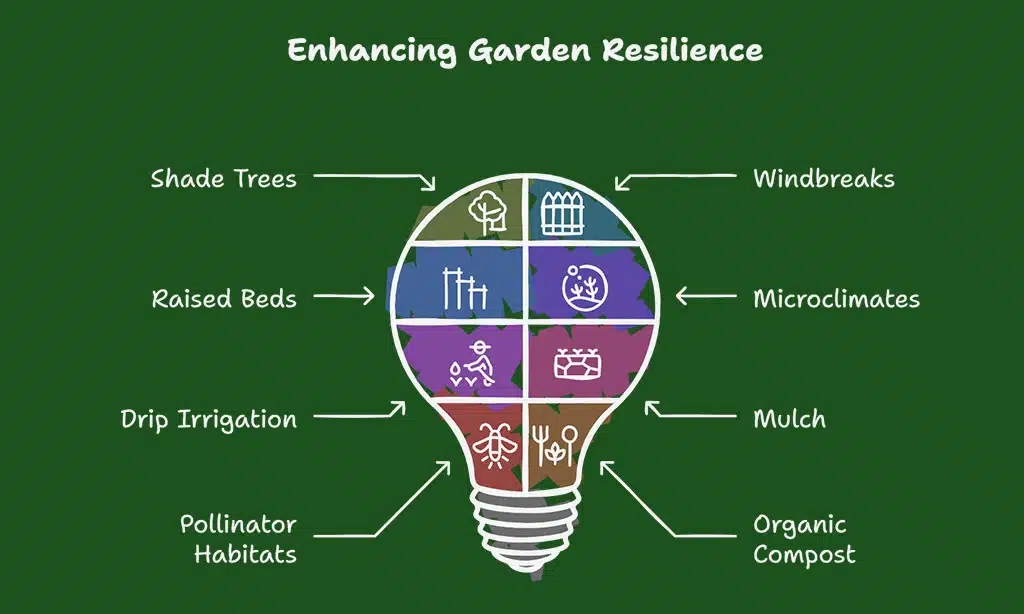
Think of your yard as a patchwork quilt—each spot offers something different, like extra warmth or cool shade. Windbreaks and raised beds help tricky plants find their sweet spot, giving them a fighting chance against wild weather swings.
Use shade trees, windbreaks, and raised beds
Plants need extra help dealing with extreme weather. You can create pockets of comfort for them using simple changes in your garden.
- Shade trees lower air temperatures on hot days. Large branches block strong sunlight and protect sensitive plants, like ferns and lettuce, from getting scorched. In the past ten years, people have planted more oaks and maples in yards to handle rising heat from climate change.
- Windbreaks stop dry winds from stealing water from leaves and soil. Hedges made of native species such as elderberry or sumac slow down wind speed by up to 50 percent, based on 2023 USDA research. This helps keep hardy plants healthy during droughts or storms.
- Raised beds improve soil health and drainage, especially after heavy rain or when soils are clay-heavy. These structures also help prevent soil compaction. Gardeners in northern states use raised beds to plant Mediterranean crops like avocados and lemons now that winters are milder.
- Combining shade trees with windbreaks forms microclimates perfect for diverse crops—think tomatoes nestled under birches or peppers protected by a row of tall shrubs.
- Use drip irrigation in raised beds to save water while keeping roots moist where they need it most, supporting true sustainable gardening practices across changing climates.
- Mulch under trees keeps soil cool, holds moisture after summer storms, and grows beneficial insects such as ladybugs that fight off pests naturally.
- Windbreaks support habitat creation for pollinators like bees and birds which increase crop yields—a win-win if you want biodiversity buzzing around your plot!
- Raised beds paired with organic compost boost soil structure fast, reduce runoff during intense rain events, and make crop rotation easy for every season.
Creating these features does not take much land or money but makes gardens more climate resilient against the impact of climate change today—and tomorrow too!
Avoid Chemicals and Promote Sustainability
Swap out harsh sprays for compost tea and green manures, because your tomatoes—and the bees—will thank you; curious how this changes your garden’s story? Keep reading.
Use organic compost and natural pest control
Good soil grows strong plants. Gardens need healthy earth and safe ways to keep bugs away.
- Mix organic compost into your dirt for rich, fertile soil. Compost feeds microbes and builds soil structure.
- Use green manures like clover or rye grass to add organic matter and help crop rotation work better.
- Plant native species that support beneficial insects and reduce pests without chemicals.
- Spread organic mulch, such as straw or bark, to stop weeds, hold water, boost soil health and lower heat stress from extreme weather.
- Try companion planting—grow basil next to tomatoes or marigolds near beans—to form a natural pest barrier.
- Set up cold frames or row covers made from recycled fabric for plant protection during wild swings in climate change.
- Bring in natural enemies like ladybugs or lacewings for biological control of garden pests—no need for sprays.
- Make your own compost tea from kitchen scraps; it waters crops while adding nutrients in a way that helps with soil health and water conservation.
- The Royal Horticultural Society says non-chemical pest control is the best choice for sustainable gardening practices because it helps biodiversity and cuts down carbon emissions linked to pesticides.
- Healthy gardens filled with hardy plants attract pollinators like bees, butterflies and birds, which means more fruit set and better habitat creation all year long.
Your garden can thrive through harsh seasons using these simple steps—and you might even spot more helpful bugs than ever before!
Support Biodiversity
Welcome bees, butterflies, and friendly bugs by planting flowers they love and making tiny homes for them with rocks or logs. Adding a small pond or birdbath can turn your garden into a buzzing, hopping gathering spot that keeps all sorts of helpful creatures happy.
Create habitats for pollinators and beneficial wildlife
Pollinators and good insects need garden homes, just like people do. You help food grow when you support bees, butterflies, and beetles.
- Choose native plants that flower at different times to give food all year. Native species are better for local bees and butterflies.
- Grow clumps of flowers, herbs, or wildflowers near each other. These garden “cafés” feed hummingbirds and helpful bugs in one stop.
- Leave a messy corner with old logs or dry leaves. Beetles and ladybugs use these hideouts to sleep or lay eggs.
- Add a small water dish with pebbles for bees to sip without drowning. These mini watering holes can save thirsty helpers on hot days.
- Stop using bug sprays that kill everything–even the good bugs! Organic pest control supports beneficial insects like lacewings and praying mantises.
- Build insect hotels from twigs, bamboo tubes, or terracotta pots filled with straw. Solitary bees love nesting in these handy shelters.
- Plant hedges of berry bushes or create thick patches with shrubs and tall grass. Birds will nest, eat bugs, and keep pests away from your crops.
- Grow lavender, sunflowers, and salvias—these magnet plants pull pollinators into your yard faster than kids run to ice cream trucks on Friday afternoons.
- Rotate crops every year so soil diseases don’t build up while feeding worms. Healthy dirt feeds more life above ground too.
- Avoid using artificial grass or concrete paths everywhere; use permeable pavers instead for habitat creation underfoot.
A 60% drop in flying insects in the UK warns us why this matters now more than ever for sustainable gardening practices that fight climate change while being kind to all living things in your backyard habitat.
Takeaways
Gardens can weather wild storms, blazing sun, or floods if we give them the right tools. Choose native plants and drought-tough species. Add mulch and drip lines for thirsty days. Use raised beds to lift your soil above trouble spots.
Each small step builds climate strength into your patch of green—one bug, one rain barrel, one hardy leaf at a time.
FAQs
1. How do I start a climate-resilient garden if my weather changes a lot?
Start with native plants and hardy plants. These handle extreme weather better than most imports. Use raised beds to help soil health, especially if you get heavy rain or drought.
2. What can I do to save water in my garden?
Try drip irrigation for slow watering at the roots. Rain barrels catch extra water from your roof, which helps during dry spells. Mulch keeps moisture in and stops weeds.
3. Why are native species good for sustainable gardening?
Native species know how to survive local climate swings, whether it’s hot or cold outside. They need less care, attract beneficial insects like bees, and make habitat creation easier.
4. How does soil structure affect climate resilience?
Healthy soil holds more water when things get dry and drains well after storms. Add organic matter like compost or mulch every season to keep the earth rich and loose.
5. Can companion planting really help fight pests without chemicals?
Yes! Companion planting uses symbiotic relationships between crops so bugs stay away naturally—think of marigolds next to tomatoes as little bodyguards against pests.
6. What tools protect gardens from sudden frost or heat waves?
Row covers work great on chilly nights while cold frames give young sprouts shelter early in spring or late into fall—both shield crops from wild temperature swings caused by climate change.