Have you ever felt like your business is completely at the mercy of your vendors? It is a frustrating spot to be in, and many businesses struggle with this exact issue. A 2026 report from Marsh found that US supply chain disruptions cost organizations an estimated $184 billion annually. That is a massive number, and it shows exactly why treating suppliers like simple vending machines is a risky game. That’s why building long-term supplier relationships is the key.
When you build real collaboration, you protect your business from delays and quality issues. In fact, companies with strong supplier partnerships report 46% fewer supply chain disruptions.
Grab a cup of coffee, and let’s go through this together. I will walk you through the practical steps to turn those transactional vendors into genuine, long-term partners.
What is Supplier Relationship Management (SRM)?

Supplier Relationship Management, or SRM, means treating your suppliers as true partners instead of just order-takers. It is a strategic approach that shifts your focus from simply cutting costs to building connections that benefit both sides.
Think of it like the difference between a brief encounter and a long-term marriage. One-time transactions fade away quickly, but genuine partnerships grow stronger and more profitable over time.
Today, modern SRM software makes this easier than ever. Tools like SAP Ariba use artificial intelligence to track ESG metrics and supply chain risks automatically, freeing you up to focus on the human side of the partnership.
Here are three core pillars of successful SRM:
- Transparency: Sharing your goals and challenges openly with your vendors.
- Mutual Respect: Valuing their expertise and treating their time as important as your own.
- Shared Success: Creating contracts and plans where both businesses profit from a win-win.
SRM transforms procurement from a back-office chore into a true competitive advantage. Instead of playing hardball during contract negotiations, you work with suppliers to understand their specific constraints.
According to the 2025 State of Procurement Data Report by Amazon Business, 80% of US decision-makers now have mandates to work with certified, high-quality suppliers. You simply cannot achieve that level of quality without real, ongoing conversation.
Shifting from Transactional to Strategic Partnerships
Most companies start with basic, transactional relationships. They buy products, pay invoices, and move on to the next task. This approach works fine for buying standard office supplies, but it misses huge opportunities for your critical materials.
Strategic partnerships go much deeper. You work together to solve problems, mitigate risks, and create real value.
This mindset change requires you to see your vendors as extensions of your own team. Trust building becomes central to everything you do.
Transparent communication replaces the old game of hiding your cards. You share your forecasts with your partners, and they share their market insights with you.
A recent McKinsey survey shows that companies closely collaborating with suppliers see 5% to 10% cost savings and 7% to 10% revenue gains.
Performance metrics shift as well. Rather than just tracking price and delivery dates, you start measuring innovation and responsiveness.
Your partners attend strategy meetings and contribute fresh ideas. They feel invested in your success because your growth directly fuels their own.
Moving to strategic alliances takes real work and upfront commitment. You must invest time to understand what your partners actually need to run their businesses smoothly.
High-value partners get access to your product development process early. They help shape solutions that work better for everyone involved.
Value creation becomes the shared mission. Both organizations grow stronger and better equipped to handle sudden market changes.
Building Long-term Supplier Relationships: Best Practices
You will transform your supply chain by adopting practical methods that turn everyday suppliers into genuine business partners.
Develop a supplier segmentation strategy
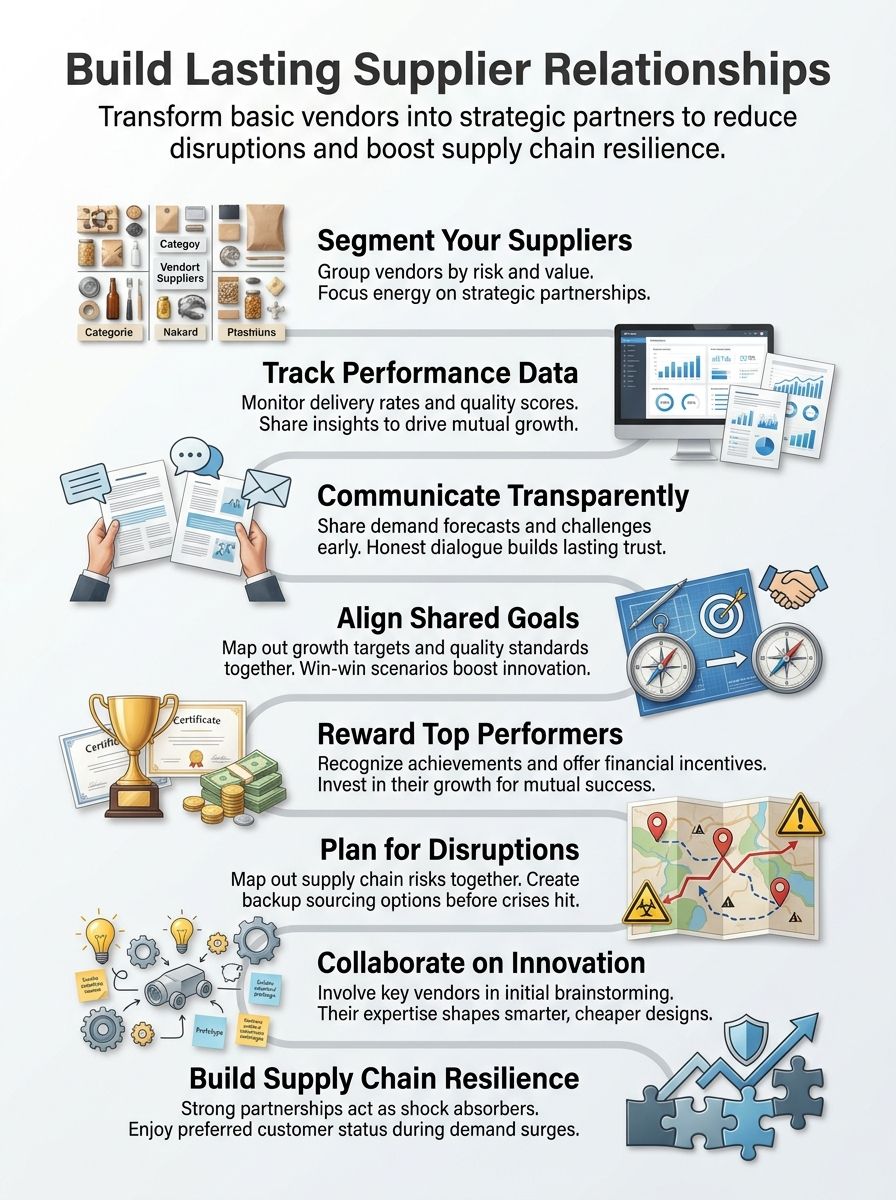
Not all suppliers matter equally to your daily operations. A segmentation strategy divides your vendor base into groups based on their specific importance and risk level. Strategic suppliers provide your most critical materials. They deserve your deepest attention and investment.
Transactional suppliers offer standard products with many available alternatives. You manage these relationships efficiently through basic, automated processes.
Here is how you handle different segments:
- Strategic Partners: Invite them to joint planning sessions and share long-term forecasts.
- Important Vendors: Schedule quarterly reviews to check on performance and resolve minor issues.
- Transactional Suppliers: Use standard contracts and monitor them through basic software metrics.
This segmentation approach changes how you spend your time. Your team can focus its energy where it actually moves the needle.
Use data to drive continuous improvement
Data becomes your compass once you segment your suppliers. Numbers tell objective stories that gut feelings simply cannot match. Track key metrics like on-time delivery rates, quality scores, and cost performance. This data reveals patterns and flags problems early.
You can use powerful platforms like Zip, which processed $355 billion in US spend in 2025, to automate this tracking and negotiation process seamlessly.
Peter Drucker famously noted that what gets measured gets managed.
Pull reports monthly to spot trends in supplier engagement. Maybe one partner consistently delivers early while another struggles with minor defects.
Use this hard information to have honest conversations about what needs fixing. Celebrate the wins publicly, and then dig into the losses together as a team.
Build trust through transparent communication
Data tells you what happened, but communication tells your suppliers why it actually matters. You can collect all the metrics in the world, but those numbers mean nothing if your vendors feel left in the dark. Open dialogue transforms suppliers from simple order-takers into true allies who grasp your bigger vision.
Transparency works like a bridge between the two sides. Share your production schedules and market shifts with your suppliers early and often.
Tell them about potential problems before they escalate into full-blown crises. Ask for their specific input on solutions, as they often see angles you might miss.
This kind of engagement builds credibility and shows deep respect for their industry expertise. Clear expectations and honest feedback create a solid foundation for vendor partnerships that last for years.
Align objectives for mutual benefit
Your suppliers succeed when you succeed. That simple fact is the absolute foundation of mutual benefit. You and your partners must share the same goals in real action. Sit down with your key vendors and map out what matters most to each side.
Talk openly about growth targets, quality standards, and delivery timelines. Your suppliers need to know exactly what you want to achieve.
You also need to understand what they need to thrive and stay profitable. This open, two-way conversation builds a true partnership.
When both parties work toward shared outcomes, collaboration feels completely natural. Costs drop because you solve problems together instead of fighting over tiny profit margins.
Reward supplier contributions and invest in development
Suppliers who feel valued become your most loyal advocates. Investing in their growth creates a cycle of mutual success.
Here are the best ways to reward and develop your partners:
- Recognize top performers through public awards or case studies that highlight their specific contributions.
- Offer financial incentives like volume discounts or bonuses when suppliers exceed key performance indicators.
- Provide training programs that help suppliers improve their own operational capabilities and quality standards.
- Create preferential payment terms, such as early payment discounts, to improve their daily cash flow.
- Invite your best suppliers to collaborative innovation sessions to develop new solutions together.
- Establish development funds that support technology upgrades at critical partner facilities.
Managing Risks Through Strong Supplier Partnerships
Strong supplier partnerships act as your safety net. They catch small problems before they spiral into massive supply chain disasters. According to Deloitte’s 2025 Global Chief Procurement Officer Survey, 61% of US respondents said enhancing supplier collaboration is their most effective risk mitigation strategy.
Collaborate on contingency plans
Your suppliers face the exact same disruptions you do. Planning your response together makes perfect sense and saves valuable time during a crisis.
Follow these steps to build a solid joint contingency plan:
- Map out potential shared risks, such as natural disasters, transportation delays, or sudden labor shortages.
- Create backup sourcing options together so you both know exactly which alternative materials to use.
- Establish clear communication protocols that define who contacts whom during an unexpected emergency.
- Document strict response timelines so both teams know how quickly they must activate backup procedures.
- Schedule plan reviews twice a year to keep your strategies current with new market threats.
- Test your contingency plans through routine dry runs to reveal hidden gaps before real problems occur.
Sharing demand forecasts builds incredible trust. Tell your partners what you expect to sell next quarter or next year. This transparency helps them plan their production and staff without wildly guessing. When you hide this information, suppliers stock too much or too little.
A 2026 report from Marsh shows that 65% of companies face at least one major bottleneck in their supply chain. Proactive communication prevents those bottlenecks from destroying your quarterly budget.
Disruptions happen in every single industry, and your suppliers need to know about them fast. Talk openly about seasonal swings or sudden changes in the market.
Suppliers who understand your daily challenges can adjust their strategies quickly. They will help you find clever alternatives to keep the production line moving.
Key Strategies for Deep Supplier Collaboration
You can turn suppliers into powerful allies by sharing risks, setting clear goals, and pushing for better daily practices.

Engage suppliers early in product development
Involving suppliers in your product development process from day one creates much better products. They bring real-world manufacturing expertise that shapes smarter, cheaper designs.
- Invite key suppliers to initial brainstorming sessions to gather practical insights about materials and costs.
- Share your product roadmap early so they can prepare resources and align their innovation efforts.
- Establish cross-functional teams that include supplier representatives, engineers, and your own procurement staff.
- Request vendor feedback on early prototypes, as their knowledge often reveals simpler manufacturing solutions.
- Create joint development agreements that outline intellectual property rights and shared financial benefits.
- Hold regular touchpoints throughout the design phase to discuss technical challenges and timeline adjustments.
Establish joint risk mitigation plans
Your partnerships thrive when you face tough challenges as a unified team. Joint risk mitigation plans transform potential disasters into totally manageable situations.
- Identify shared vulnerabilities by conducting supply chain audits with your vendors to spot production risks.
- Map out specific disruptions like geopolitical events, quality issues, and sudden demand fluctuations.
- Develop contingency strategies that establish backup plans for critical materials and secondary sourcing options.
- Set communication protocols that define how quickly your suppliers must alert you to emerging risks.
- Establish performance metrics that specifically track your supplier’s ability to execute these emergency procedures.
- Create financial safeguards through clear contracts that address liability and cost-sharing for unexpected events.
Define clear expectations with KPIs
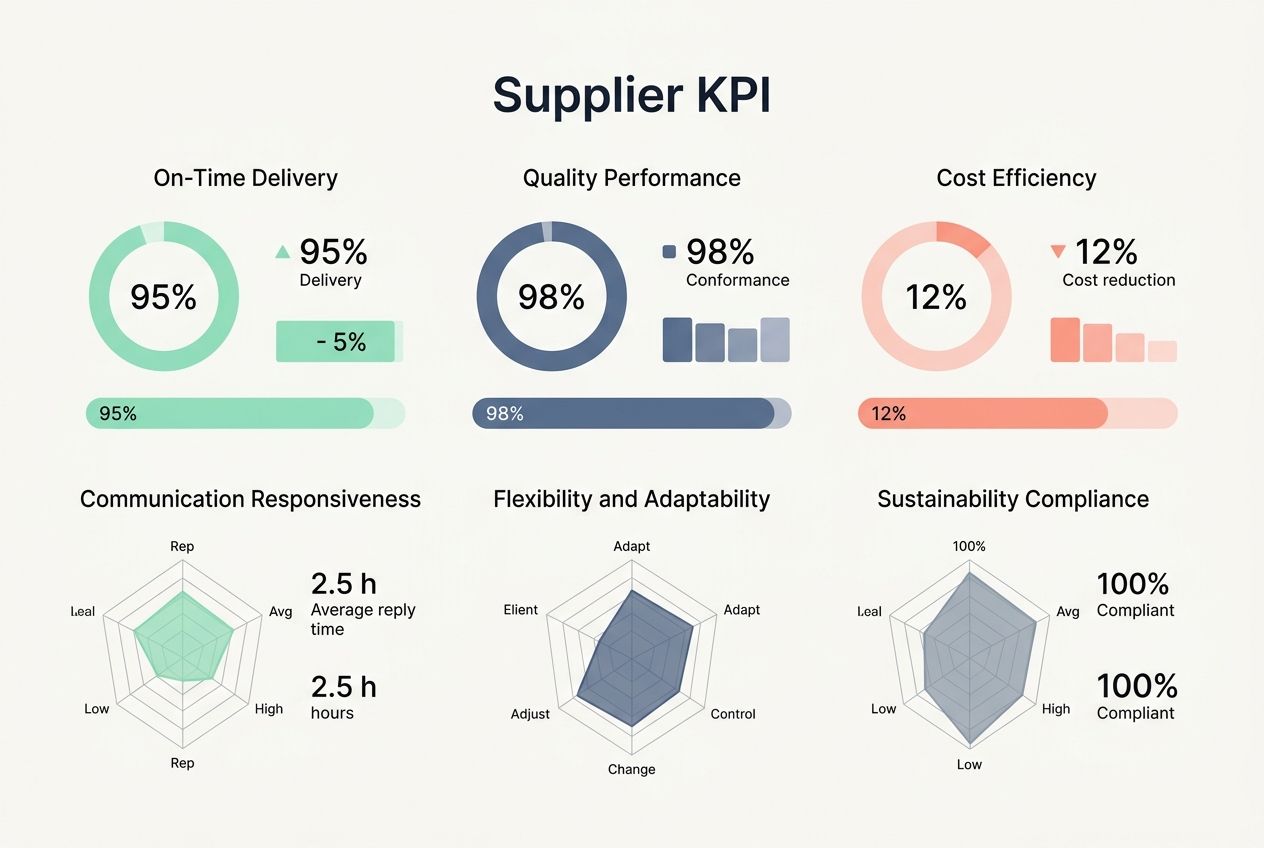
Well-defined KPIs serve as the backbone of supplier accountability. They turn vague promises into measurable, trackable commitments.
| KPI Category | What to Measure | Why It Matters |
|---|---|---|
| On-Time Delivery | Percentage of orders arriving by agreed dates | Keeps your production line moving without hiccups; prevents costly delays |
| Quality Performance | Defect rates and acceptable quality levels | Reduces rework costs and protects your brand reputation |
| Cost Efficiency | Price per unit and cost reduction year-over-year | Improves your margins while rewarding supplier performance |
| Communication Responsiveness | Time to respond to inquiries and issue resolution speed | Builds trust and prevents small problems from becoming big ones |
| Flexibility and Adaptability | Ability to handle urgent orders or demand changes | Gives you the agility to respond to market shifts |
| Sustainability Compliance | Environmental certifications and ethical sourcing standards met | Aligns operations with corporate values and customer expectations |
Setting these KPIs together creates shared ownership in the relationship. Both sides understand exactly what success looks like, which eliminates useless finger-pointing when things get tight.
Meet quarterly to review performance against these specific metrics. Celebrate wins openly, discuss gaps honestly, and adjust your targets when market conditions change.
Data-driven conversations beat blame games every single time. When you point to actual numbers, suppliers take feedback seriously because it is factual and fair.
Promote innovation and sustainability initiatives
Your suppliers hold the keys to major innovation. Work with them to develop new products and solve difficult engineering problems together.
This partnership approach gives you full access to their technology and creative thinking. You gain an incredible advantage that your internal team might miss on its own.
Sustainability matters more each day, and your suppliers can help you reach your green goals. According to a 2025 report by the Chartered Institute of Procurement & Supply, 47% of procurement professionals view supply chain risk and sustainability compliance as major, heavily intertwined challenges.
Talk openly about waste reduction and ethical practices. Suppliers who embrace these green initiatives actively strengthen your brand reputation.
Benefits of Strong Supplier Relationships
Strong relationships transform your supply chain into a massive competitive advantage. You gain access to better pricing and much faster delivery.
Improved supply chain resilience
Your supplier partnerships act like shock absorbers for your entire business. When you build strong relationships, you create backup plans that save you during tough times.
Here is what improved resilience looks like in practice:
- Early Warnings: Partners share market shifts before they hit the evening news.
- Agile Adjustments: You can quickly shift production to alternative facilities.
- Guaranteed Capacity: Suppliers reserve space for your most critical materials.
This transparency means you are never caught off guard when disruptions strike. You have already talked through exactly what happens next. Your supply chain becomes flexible, reliable, and totally ready for whatever comes your way.
Increased innovation and efficiency
Strong partnerships spark innovation in ways that solo operations simply cannot match. Suppliers bring fresh ideas and brand new technologies directly to your table.
True collaboration pushes both parties to think differently and challenge outdated methods.
Your efficiency gains multiply when suppliers truly understand your long-term goals. They optimize their processes to cut waste and speed up delivery times.
The result is that better products reach your customers much quicker, and costs drop across the board. Suppliers who feel valued invest significantly more effort into continuous improvement.
Preferred customer status during demand surges
Your engagement strategy pays real dividends when sudden demand spikes hit the market. Suppliers prioritize your orders when inventory runs dangerously thin.
This preferred status means you get faster delivery times and access to limited stock before your competitors even know it is gone. Your partnerships thrive on mutual understanding, so vendors naturally protect their best clients.
You build this deep loyalty through fair pricing and consistent recognition of their hard work. When demand surges arrive, you move straight to the front of the line.
Enhanced brand reputation through collaboration
Your suppliers talk about you to other companies and potential partners. Strong vendor partnerships turn your suppliers into passionate brand ambassadors.
When suppliers feel respected, they promote your business through powerful word-of-mouth marketing. Customers also notice when companies treat their supply chain partners exceptionally well.
This collaborative approach shows your deep commitment to ethical business practices. Your reputation grows stronger when stakeholders see you building real value with your vendors.
The Closing Thoughts
Building long-term supplier relationships completely transforms how your company operates. This strategy shifts your daily focus from quick deals to lasting partnerships that grow steadily over time. Engagement becomes a shared street where both sides tackle challenges together.
Trust builds quickly through consistent communication, transparent actions, and real recognition of your vendors. Companies that invest in this collaboration see better supply chain resilience and preferred access during tight markets. This dedicated approach pays off in highly concrete, measurable ways.
Your brand gains serious strength through partnerships built on mutual understanding and shared value creation. Suppliers become invested in your success, rather than just filling orders. Strategic alliances with key suppliers open doors to new ideas and serious problem-solving power. Start building these vital connections today.
Watch your supply chain become a massive competitive advantage for years to come.
FAQs on Building Long-Term Supplier Relationships
1. How do I start building strong supplier relationships?
Start with honest talk right from the beginning by sharing your needs and listening to theirs. Treating them like true teammates pays off, as a 2025 McKinsey study found that US companies prioritizing supplier collaboration saw higher revenue growth and up to a 404 percent return on investment.
2. What helps keep supplier partnerships healthy over time?
Check in often and give feedback early so you can avoid any unwanted surprises down the road. It also helps to pay your bills promptly, especially since recent US data from Atradius shows that 44 percent of B2B invoices are currently overdue. Consistently settling your accounts within the standard 45-day window shows deep respect and keeps your vendors happy.
3. Why is trust important between buyers and suppliers?
Trust keeps things running smoothly because both sides know they will deliver, which helps prevent massive headaches like the severe supply chain disruptions that affected over 75 percent of shippers last year.
4. Can small businesses build lasting supplier connections, too?
Absolutely, and 2025 data from Supplier.io shows that 71 percent of enterprise executives are actually increasing their spending with US-based small suppliers to improve supply chain resilience. Even if you are not buying truckloads every week, being clear about what you offer and sticking to your word proves you are a reliable partner. People appreciate honesty and consistency far more than occasional big orders.