Brazil’s Supreme Federal Court (STF) delivered a historic ruling by sentencing former President Jair Bolsonaro to 27 years and 3 months in prison for orchestrating a conspiracy to overturn the results of the 2022 presidential election. The five-judge panel reached its decision after months of investigation into Bolsonaro’s alleged involvement in a planned coup that aimed to keep him in power despite his defeat to left-wing rival Luiz Inácio Lula da Silva.
The sentencing marks one of the most dramatic moments in Brazil’s modern democratic history. It is the first time a former Brazilian president has been handed such a long prison sentence for attempting to subvert democracy.
Charges and Convictions
Bolsonaro faced five separate charges, all linked to attempts to undermine Brazil’s democratic process and election outcome. The convictions included:
- Attempting to violently abolish democracy and replace it with authoritarian rule.
- Leading a criminal organization with the aim of retaining power.
- Plotting and participating in a coup d’état.
- Inciting attacks on democratic institutions, including Brazil’s electoral system and Supreme Court.
- Contributing to violence and destruction of public property, particularly during the January 8, 2023, riots in Brasília.
The STF concluded that Bolsonaro deliberately spread false claims about voting machines, sowed mistrust in the election, and pressured military leaders to back an unconstitutional intervention.
Split Among Judges
Out of the five justices on the panel, four voted to convict Bolsonaro while one dissented, arguing the evidence did not directly link him to an organized coup attempt.
Justice Alexandre de Moraes, who oversaw the trial, delivered a strong statement: Brazil was “on the verge of returning to dictatorship” under Bolsonaro’s leadership. He emphasized that democracy could not survive if criminal organizations disguised as political parties were allowed to reject election results.
Justice Cármen Lúcia, the only woman on the panel, described the coup plot as a “virus” threatening to infiltrate and destroy Brazil’s democratic system. She stressed that “no country is immune to dictatorship,” highlighting how fragile democracy can be when leaders undermine the rule of law.
The lone dissent came from Justice Luiz Fux, who spoke for nearly 11 hours. He argued that while Bolsonaro’s rhetoric was reckless, the prosecution did not fully establish a direct operational chain of command that proved Bolsonaro personally ordered a coup.
Background: The 2022 Election and Aftermath
Bolsonaro’s troubles stem from the October 2022 election, where he was defeated by Lula da Silva in a tightly contested race. Instead of conceding, Bolsonaro and his allies launched a campaign questioning the legitimacy of Brazil’s electronic voting system.
Investigations revealed that Bolsonaro discussed plans with military leaders to issue a decree that would:
- Nullify Lula’s victory.
- Give the armed forces extraordinary emergency powers.
- Potentially detain political opponents and Supreme Court justices.
Though the coup plan never materialized due to insufficient support from the military, Bolsonaro’s refusal to accept defeat fueled tensions that culminated in the January 8, 2023 riots. On that day, thousands of Bolsonaro supporters stormed Brazil’s Congress, Supreme Court, and presidential palace in Brasília, echoing the January 6 Capitol attack in the U.S. More than 1,500 people were arrested in connection with the violence.
Bolsonaro’s Defense and Response
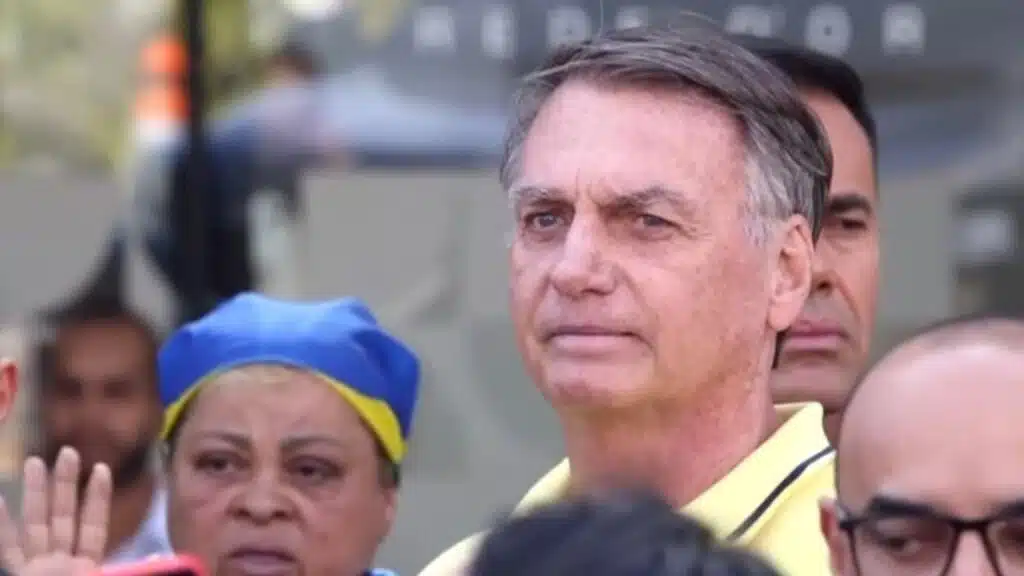
Bolsonaro, now 70 years old, has consistently rejected the charges, claiming he is the victim of a political “witch hunt.” His defense team described the sentence as “excessive and unreasonable” and confirmed plans to file an appeal.
His lawyers also indicated they would seek a reduction in punishment or a change from prison time to house arrest, given his age and security concerns. Legal experts, however, note that overturning the conviction will be extremely difficult, especially since four of five justices ruled against him.
Bolsonaro himself has repeatedly argued that the investigations are designed to block his participation in the 2026 elections. He was already declared ineligible to run for office until 2030 in an earlier case over abuse of political power. With this ruling, he is now barred from any political role until at least 2033.
International Fallout: Trump and U.S. Reactions
The conviction triggered strong reactions abroad, particularly from political allies.
- Donald Trump, the U.S. president and a long-time Bolsonaro supporter, described the ruling as “very surprising” and compared it to his own legal battles in the U.S. He even admitted, “I tried to do the same,” in reference to efforts to challenge his 2020 election loss. Trump also escalated matters by announcing a 50% tariff on Brazilian goods, citing retaliation for what he called a politically motivated prosecution.
- U.S. Secretary of State Marco Rubio went further, claiming the Brazilian court had “unjustly sentenced” Bolsonaro. He labeled the case a “witch hunt” and warned that the U.S. might respond if Brazil continued on this path.
Brazil’s foreign ministry swiftly condemned Rubio’s comments, calling them “aggressive threats” that ignored clear evidence presented in court. The ministry emphasized that Brazil’s democratic institutions are strong and will not be intimidated by outside pressure.
Impact on Bolsonaro’s Inner Circle
The ruling also affected several of Bolsonaro’s closest allies. Seven associates were convicted alongside him, including:
- Senior army generals.
- Two former defense ministers.
- A former intelligence chief.
- A former security minister.
The court found that these individuals worked closely with Bolsonaro to craft strategies to overturn the election results and pressure the armed forces into supporting an authoritarian transition.
The Bigger Picture: Brazil’s Democratic Test
This case highlights Brazil’s struggle to protect its democratic institutions from authoritarian threats. The failed coup and the January 2023 riots drew comparisons to the U.S. Capitol attack, reinforcing how fragile democracies can be when leaders refuse to accept electoral defeat.
Justice Alexandre de Moraes summarized it bluntly: “Brazil was almost dragged back to the days of dictatorship.”
By convicting Bolsonaro, the Supreme Court has sent a powerful message that no leader is above the constitution. The decision is being hailed as a milestone for accountability, though critics warn it may also deepen political polarization in Brazil.
What Comes Next
Bolsonaro is currently under house arrest while awaiting the next stage of legal proceedings. His appeal will likely take months, if not years, to resolve. Meanwhile, Lula’s government has pledged to strengthen democratic safeguards to ensure no such threats resurface.
For Bolsonaro, once hailed as Brazil’s “Trump of the Tropics,” this sentence likely means he will spend the rest of his life under legal battles, if not behind bars.
The Information is Collected from CBC News and Sky News.