

In today’s digital landscape, scalability is a crucial factor for web applications. As businesses expand, their data grows exponentially, making traditional relational databases less efficient for handling large-scale applications.
This is where NoSQL databases come into play. The best NoSQL databases for scalable web applications offer high performance, flexibility, and distributed architecture to meet modern development needs.
Unlike traditional relational databases that rely on structured schemas and SQL queries, NoSQL databases provide diverse data storage solutions that accommodate unstructured, semi-structured, and structured data.
These databases are designed to handle rapid growth, making them ideal for businesses dealing with massive datasets, real-time analytics, and cloud-based applications.
In this comprehensive guide, we will explore the 5 best NoSQL databases for scalable web applications, highlighting their features, use cases, and benefits. By the end of this article, you’ll have a clear understanding of which NoSQL database suits your specific needs.
What Makes a NoSQL Database Ideal for Scalable Web Applications?
Before diving into the best NoSQL databases for scalable web applications, it’s essential to understand what makes them suitable for scalability. NoSQL databases differ from traditional relational databases in several key ways:
High Performance & Speed
- NoSQL databases handle large volumes of data with low latency.
- They use optimized indexing and in-memory storage to enhance query speed.
Flexible Data Modeling
- Unlike relational databases, NoSQL allows dynamic schema changes.
- Supports a variety of data models: document, key-value, column-family, and graph.
Scalability & Horizontal Expansion
- NoSQL databases support horizontal scaling by distributing data across multiple nodes.
- This ensures the system remains highly available even under heavy workloads.
Fault Tolerance & Reliability
- Built-in replication and auto-failover mechanisms ensure high availability.
- Data is distributed across multiple servers to prevent single points of failure.
Now, let’s explore the 5 best NoSQL databases for scalable web applications and how they cater to different business needs.
The 5 Best NoSQL Databases for Scalable Web Applications
Selecting the right NoSQL database is essential for web applications that require high availability, low latency, and seamless scalability. As different NoSQL databases cater to different business needs, understanding their unique strengths is crucial. Below, we explore the best NoSQL databases for scalable web applications, each excelling in specific use cases.
1. MongoDB – Best for General Purpose & High Scalability
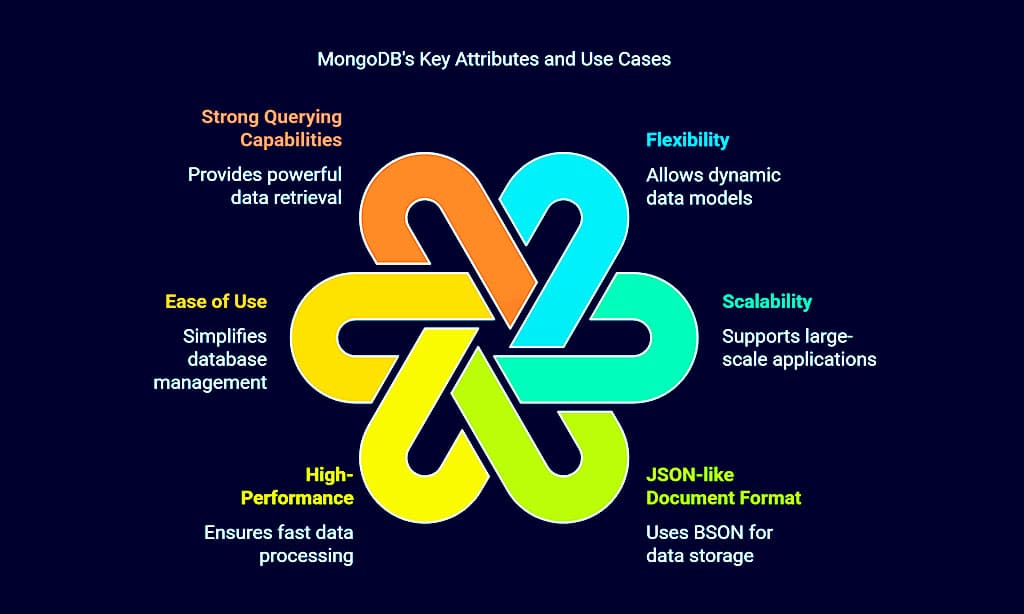
MongoDB is one of the most popular NoSQL databases, designed for flexibility and high-performance scalability. It stores data in a JSON-like document format, making it an excellent choice for developers who require fast and efficient data retrieval. Organizations such as eBay, Forbes, and Adobe use MongoDB for its ease of scalability and strong querying capabilities.
Key Features:
- Document-oriented NoSQL database.
- Supports automatic sharding and replication.
- Schema-less design for flexible data modeling.
- Indexing and aggregation framework for fast queries.
Use Cases:
- Content management systems.
- E-commerce platforms.
- Real-time analytics.
| Feature | MongoDB |
| Data Model | Document |
| Scalability | High |
| Performance | High |
| Best Use Case | General-Purpose Apps |
2. Cassandra – Best for High Availability & Distributed Applications
Apache Cassandra is a decentralized, highly available NoSQL database used by companies such as Netflix, Facebook, and Twitter. It is designed to handle massive amounts of data across multiple data centers, ensuring no single point of failure.
Key Features:
- Decentralized peer-to-peer architecture.
- Supports automatic replication across multiple data centers.
- Handles massive read and write operations efficiently.
- No single point of failure.
Use Cases:
- IoT and time-series data storage.
- High-traffic websites.
- Decentralized applications.
| Feature | Cassandra |
| Data Model | Column-Family |
| Scalability | Very High |
| Performance | High |
| Best Use Case | Distributed Systems |
3. Redis – Best for Caching & Real-Time Processing
Redis is an in-memory key-value store that provides ultra-low latency and high-speed performance. Used by companies like GitHub, Stack Overflow, and Twitter, Redis is particularly effective for caching, session storage, and real-time analytics.
Key Features:
- In-memory key-value store.
- Ultra-low latency for high-speed applications.
- Supports transactions and pub/sub messaging.
- High-performance caching for API responses.
Use Cases:
- Session management.
- Leaderboards in gaming applications.
- Caching for dynamic web applications.
| Feature | Redis |
| Data Model | Key-Value |
| Scalability | Moderate |
| Performance | Ultra-Low Latency |
| Best Use Case | Caching & Real-Time Processing |
4. CouchDB – Best for Offline-First & Synchronization Features
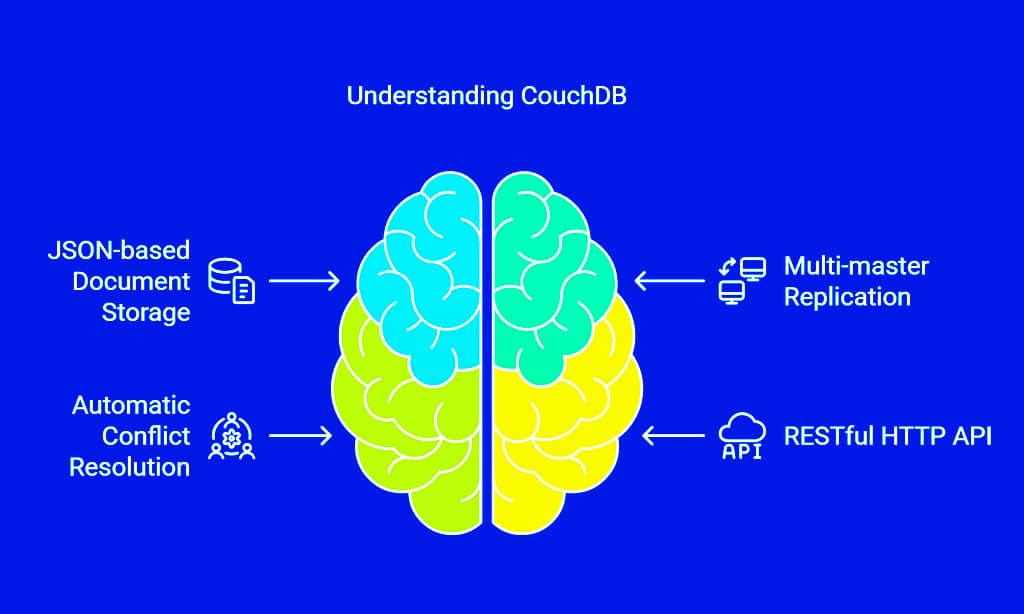
CouchDB is an open-source NoSQL database optimized for offline-first applications, synchronization, and mobile solutions. Used by BBC, Credit Suisse, and NHS, CouchDB offers reliable multi-master replication.
Key Features:
- JSON-based document storage.
- Multi-master replication support.
- Provides automatic conflict resolution.
- RESTful HTTP API for seamless integration.
Use Cases:
- Mobile and offline-first applications.
- Distributed collaboration tools.
- Healthcare and financial services.
| Feature | CouchDB |
| Data Model | Document |
| Scalability | Moderate |
| Performance | Moderate |
| Best Use Case | Offline Apps |
5. DynamoDB – Best for Fully Managed & Serverless Architectures
Amazon DynamoDB is a cloud-based NoSQL database offering seamless scalability and high availability. Used by Lyft, Airbnb, and Samsung, DynamoDB is fully managed and supports on-demand scaling.
Key Features:
- Fully managed NoSQL database by AWS.
- Auto-scaling and on-demand capacity provisioning.
- Built-in security, backup, and restore features.
- Integration with AWS ecosystem for enhanced performance.
Use Cases:
- Serverless web applications.
- High-traffic e-commerce.
- AI and machine learning workloads.
| Feature | DynamoDB |
| Data Model | Key-Value |
| Scalability | High |
| Performance | High |
| Best Use Case | Cloud-Based Apps |
Takeaways
The best NoSQL databases for scalable web applications provide the flexibility, speed, and fault tolerance necessary to handle modern workloads. Whether you need high availability, low-latency caching, or distributed architecture, there’s a NoSQL database suited for your application.
Understanding your business needs and application requirements will help you choose the best NoSQL database for scalable web applications, ensuring optimal performance and reliability.
Ready to implement the right NoSQL solution? Start experimenting with these databases today and scale your web applications effectively!































