
Madrid is one of Europe’s best bases for quick train getaways. High-speed AVE services turn far-flung cities into easy weekend escapes. In just a couple of hours, you can swap the capital’s bustle for beaches, medieval lanes, wine regions, or gothic cathedrals. With the 10 Best AVE Weekend Trips from Madrid: Timetables & Hidden Gems, you can turn almost any Friday to Sunday into a full mini-holiday.
These trips suit weekend city breakers, digital nomads, expats, Erasmus students, couples, and families. The promise is simple: fast trains, clear timetables, comfortable seats, and destinations that feel worth the journey.
This detailed guide walks through the ten most practical AVE-based weekend routes from Madrid. For each one you’ll find travel times, ideal traveler types, suggested 2-day structures, and a few hidden corners that many day-trippers miss. Short sections, clear tables, and simple language keep everything easy to scan while planning your next escape.
What Makes AVE Weekend Trips from Madrid Special?
AVE weekend trips stand out because they turn long-distance travel into something quick, calm, and enjoyable. You can leave Madrid after work on a Friday and still enjoy a full evening in another city. There’s no need to worry about traffic, parking, or airport stress—just board, sit back, and relax. The trains run frequently, making it easy to plan spontaneous getaways without complicated logistics. Most destinations are walkable from the station, so your weekend starts the moment you step off the train.
Speed, Comfort, and Convenience
AVE trains are Spain’s flagship high-speed services. They are designed for one thing: moving people quickly and comfortably between major cities.
Key advantages for weekenders:
- Fast journeys – Many routes take 30 minutes to 3 hours.
- City-center to city-center – Most stations sit close to historic or business districts.
- Minimal hassle – Light security checks, simple boarding, no long airport queues.
- Comfortable ride – Reclining seats, decent legroom, and a smooth journey even at high speed.
AVE Advantages for Weekend Travelers
| Advantage | What It Means for You |
| High speed | More time at your destination, less in transit |
| Direct routes | No complicated transfers or extra tickets |
| Central stations | Walk, bus, or short taxi into the historic center |
| Frequent services | Easier to fit trains around work and family schedules |
| Predictable timing | Easier to plan restaurant, museum, and tour slots |
Who These AVE Trips Are Perfect For
These 10 Best AVE Weekend Trips from Madrid: Timetables & Hidden Gems are especially useful if you:
- Live or stay in Madrid and want to explore more of Spain without flying.
- Work full-time and only have Friday evening to Sunday night.
- Prefer trains to buses and like the idea of walking off the train into the city.
- Travel with kids and want a smoother journey than airports or long road trips.
- Enjoy flexibility and might decide on a trip only a week or two in advance.
How to Use This Guide
Each destination below includes:
- Typical fastest travel times (one way)
- What the city is best for
- Hidden gems that reward a longer stay
- A quick 2-day structure for your weekend
- A summary table for quick comparison
Use the summaries if you are in a hurry, and dive into the detailed notes when you are actually booking.
Best AVE Weekend Trips from Madrid: Timetables & Hidden Gems
Spain’s high-speed AVE network makes weekend travel from Madrid fast, simple, and surprisingly affordable when booked early. Each route offers its own mix of culture, food, scenery, and local surprises—perfect for quick escapes without the stress of airports. With reliable timetables and frequent departures, you can plan a full 48-hour itinerary around almost any destination on the network. Hidden gems in these cities—quiet viewpoints, small neighborhoods, family-run eateries—add depth beyond the usual tourist highlights. Whether you prefer beaches, medieval streets, art museums, or wine country, these AVE trips open the door to memorable, time-efficient weekends.
1. Barcelona – Big-City Energy with Beach and Culture
Barcelona combines landmark architecture, urban beaches, a strong food scene, and nightlife. It feels like a full holiday squeezed into one weekend.
Typical fastest travel time: Around 2.5–3 hours from Madrid to Barcelona by high-speed train.
Ideal for: First-time visitors to Spain, couples, groups of friends, and anyone who loves busy, photogenic streets.
Suggested 2-Day Structure
- Day 1 (Arrival + Old Town)
- Arrive around midday or early afternoon.
- Drop bags and walk the Gothic Quarter and El Born.
- Evening tapas crawl and a relaxed stroll along the waterfront.
- Arrive around midday or early afternoon.
- Day 2 (Gaudí + Hidden Viewpoints)
- Morning visit to Sagrada Família.
- Afternoon at Park Güell or Casa Batlló.
- Sunset at Bunkers del Carmel for sweeping city views.
- Morning visit to Sagrada Família.
Hidden Gems in Barcelona
- Bunkers del Carmel – Former anti-aircraft bunkers turned panoramic viewpoint.
- Gràcia neighborhood – Small squares, local bars, fewer big tour groups.
- Small, family-run bodegas where locals still drink vermut on tap.
Barcelona at a Glance
| Factor | Detail |
| Fastest travel time | ~2.5–3 hours |
| Arrival station | Barcelona Sants |
| Feel of the city | Lively, creative, crowded in high season |
| Best for | Architecture, food, nightlife |
| Key hidden gem | Bunkers del Carmel |
2. Valencia – City + Beach + Futuristic Landmarks
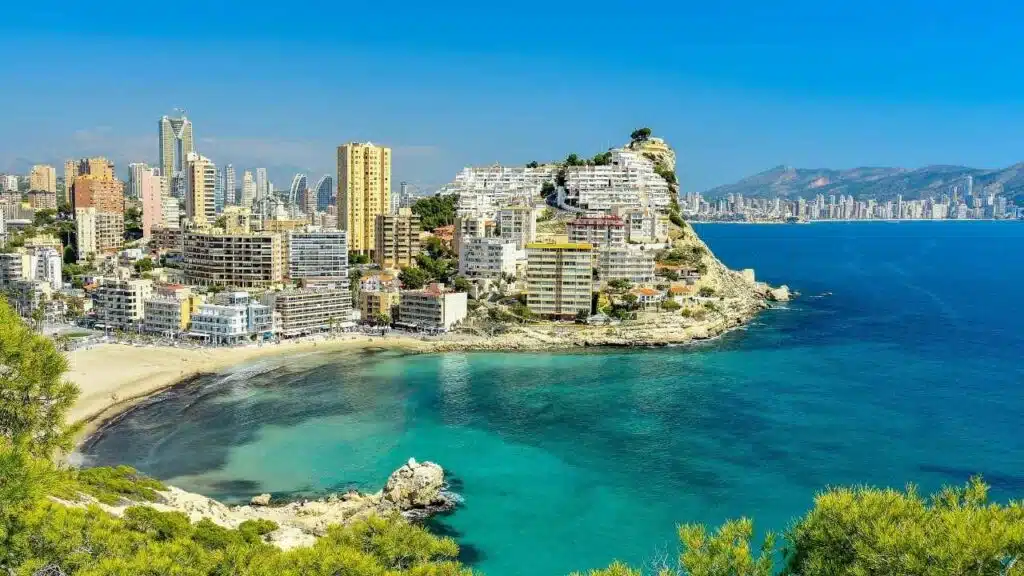
Valencia offers golden beaches, a traditional old town, and the ultra-modern City of Arts and Sciences. It feels more relaxed than Barcelona but still has a big city’s variety.
Typical fastest travel time: Around 1.5–2 hours from Madrid to Valencia on high-speed services.
Ideal for: Food lovers (paella), families, and anyone who wants an easy mix of city and sea.
Suggested 2-Day Structure
- Day 1 (Old Town + Food)
- Morning train; arrive late morning.
- Explore the Central Market and nearby streets.
- Visit the cathedral and climb the Miguelete tower for a view.
- Evening paella or rice dishes in a traditional restaurant.
- Morning train; arrive late morning.
- Day 2 (City of Arts + Beach)
- Walk or bike through the Turia riverbed park.
- Visit the City of Arts and Sciences (even from outside it’s impressive).
- Afternoon at Malvarrosa Beach or Cabanyal.
- Walk or bike through the Turia riverbed park.
Hidden Gems in Valencia
- El Cabanyal – Old fishing district with tiled houses and local bars.
- Albufera Natural Park – Short trip out of the city for a lake sunset and traditional paella.
Valencia at a Glance
| Factor | Detail |
| Fastest travel time | ~1.5–2 hours |
| Arrival station | Joaquín Sorolla (short transfer into center) |
| Feel of the city | Relaxed, seaside, easy to walk |
| Best for | Families, beach + city combo |
| Key hidden gems | El Cabanyal, Albufera |
3. Seville – Orange Trees, Flamenco, and Moorish Palaces
Seville delivers classic Spain in one compact package: tiled courtyards, palm-framed plazas, flamenco, and Moorish-influenced palaces.
Typical fastest travel time: Around 2.5 hours from Madrid to Seville by high-speed train.
Ideal for: Romantic trips, photography fans, and culture lovers.
Suggested 2-Day Structure
- Day 1 (Cathedral + Santa Cruz)
- Arrive by late morning.
- Visit the cathedral and climb the Giralda tower.
- Wander the narrow lanes of Barrio Santa Cruz.
- Evening drinks on a rooftop bar with cathedral views.
- Arrive by late morning.
- Day 2 (Alcázar + Hidden Patios)
- Morning visit to the Real Alcázar.
- Explore lesser-known patios and small plazas.
- Finish with a flamenco show in a small venue rather than a big theater.
- Morning visit to the Real Alcázar.
Hidden Gems in Seville
- Quiet residential streets at the edge of Santa Cruz around sunrise.
- Small, family-run taverns in Triana for local tapas away from tourist menus.
Seville at a Glance
| Factor | Detail |
| Fastest travel time | ~2.5 hours |
| Arrival station | Seville Santa Justa |
| Feel of the city | Warm, colorful, very atmospheric |
| Best for | Couples, culture, photography |
| Key hidden gems | Quiet patios, small Triana taverns |
4. Málaga – More Than a Beach Gateway
Málaga has reinvented itself as an art and culture city with a relaxed seaside vibe. Many travelers only see the airport; staying a weekend reveals an interesting historic core.
Typical fastest travel time: Around 2.5–3 hours from Madrid to Málaga by high-speed train.
Ideal for: Winter or shoulder-season sun, art fans, and easy beach strolls.
Suggested 2-Day Structure
- Day 1 (Old Town + Alcazaba)
- Arrive midday.
- Explore the cathedral and the old town lanes.
- Late afternoon visit to the Alcazaba fortress and Gibralfaro viewpoint.
- Dinner near Muelle Uno by the harbor.
- Arrive midday.
- Day 2 (Museums + Beach Walk)
- Start at the Picasso Museum or other art spaces.
- Wander the Soho neighborhood with its murals and cafés.
- Afternoon walk along La Malagueta beach and the promenade.
- Start at the Picasso Museum or other art spaces.
Hidden Gems in Málaga
- Soho district – Street art, independent cafés, and less tourist traffic.
- Small bars in narrow streets behind the main shopping area.
Málaga at a Glance
| Factor | Detail |
| Fastest travel time | ~2.5–3 hours |
| Arrival station | Málaga María Zambrano |
| Feel of the city | Coastal, artistic, relaxed |
| Best for | Art, winter sun, mild beach time |
| Key hidden gems | Soho murals, back-street tapas bars |
5. Córdoba – Patios, Arches, and a Slower Pace
Córdoba is smaller and calmer than Seville but packs in remarkable architecture, including the famous Mezquita-Cathedral with its forest of arches.
Typical fastest travel time: Around 1.5 hours from Madrid to Córdoba.
Ideal for: Travelers who like compact, walkable cities with strong history.
Suggested 2-Day Structure
- Day 1 (Historic Core)
- Visit the Mezquita-Cathedral.
- Explore the Jewish Quarter and Roman bridge.
- Evening stroll through the historic center after day-trippers leave.
- Visit the Mezquita-Cathedral.
- Day 2 (Patios and Hidden Alleys)
- Seek out flower-filled patios and streets such as Calleja de las Flores.
- Relax in small cafés and courtyards.
- Optional: visit Medina Azahara archaeological site just outside the city.
- Seek out flower-filled patios and streets such as Calleja de las Flores.
Hidden Gems in Córdoba
- Small patios open outside the main patio festival.
- Tiny squares where locals gather in late afternoon, away from main tourist flows.
Córdoba at a Glance
| Factor | Detail |
| Fastest travel time | ~1.5 hours |
| Arrival station | Córdoba Central |
| Feel of the city | Intimate, historic, slow-paced |
| Best for | History, photography, quiet walks |
| Key hidden gems | Flower-filled patios and alleys |
6. Zaragoza – Under-Rated City with Strong Local Flavor
Zaragoza sits between Madrid and Barcelona and is often skipped, which is a shame. It offers monumental churches, a walkable center, and a proper local food scene with fewer crowds.
Typical fastest travel time: Around 1.25 hours from Madrid to Zaragoza.
Ideal for: Travelers who want an authentic Spanish city without big-city stress.
Suggested 2-Day Structure
- Day 1 (Riverside and Basilicas)
- Walk to the Basílica del Pilar and admire the riverside views.
- Cross the bridge for skyline photos.
- Evening in the old town squares.
- Walk to the Basílica del Pilar and admire the riverside views.
- Day 2 (Tapas and Local Life)
- Explore the El Tubo district for tapas.
- Visit smaller churches and museums at a relaxed pace.
- Explore the El Tubo district for tapas.
Hidden Gems in Zaragoza
- Back streets around El Tubo with tiny tapas counters.
- Less-visited riverfront paths for quiet walks.
Zaragoza at a Glance
| Factor | Detail |
| Fastest travel time | ~1–1.25 hours |
| Arrival station | Zaragoza-Delicias |
| Feel of the city | Local, friendly, less touristy |
| Best for | Food, casual sightseeing, short stay |
| Key hidden gems | El Tubo alleys, quiet river walks |
7. Valladolid – City Break with Wine Country Access

Valladolid has an attractive historic core and acts as a gateway to Ribera del Duero wine country. It feels more like a local city than a tourist magnet.
Typical fastest travel time: Around 1 hour from Madrid on high-speed trains.
Ideal for: Wine lovers, relaxed city fans, and repeat travelers to Spain.
Suggested 2-Day Structure
- Day 1 (City Walk + Tapas)
- Explore Plaza Mayor and nearby streets.
- Visit a museum or church of interest.
- Evening tapas hopping around the center.
- Explore Plaza Mayor and nearby streets.
- Day 2 (Wine Excursion)
- Day trip to a nearby winery or wine village such as Peñafiel, if you arrange transport.
- Slow afternoon coffee back in Valladolid before returning to Madrid.
- Day trip to a nearby winery or wine village such as Peñafiel, if you arrange transport.
Hidden Gems in Valladolid
- Small wine bars specializing in local Ribera and Rueda wines.
- Less crowded squares tucked behind the main plaza.
Valladolid at a Glance
| Factor | Detail |
| Fastest travel time | ~1 hour |
| Arrival station | Valladolid-Campo Grande |
| Feel of the city | Local, traditional, compact |
| Best for | Wine, food, calm weekends |
| Key hidden gems | Wine bars, quiet side squares |
8. Toledo – Medieval Scenery Close to Madrid
Toledo looks like a storybook city on a hill. Many people visit on a day trip, but staying overnight lets you enjoy quieter streets after dark.
Typical fastest travel time: About 30–35 minutes from Madrid to Toledo on high-speed services.
Ideal for: Short weekends, first-time visitors, travelers who enjoy dramatic views and old stone streets.
Suggested 2-Day Structure
- Day 1 (Arrival + Core Sights)
- Train in the morning.
- Walk up from the station or take a bus/taxi into the old town.
- Visit the cathedral and main plazas.
- Evening stroll when most day-trippers have gone.
- Train in the morning.
- Day 2 (Views + Workshops)
- Head to Mirador del Valle for panoramic photos of the city on the hill.
- Visit artisan workshops for swords, ceramics, or damascene metalwork.
- Head to Mirador del Valle for panoramic photos of the city on the hill.
Hidden Gems in Toledo
- Back streets uphill from the main commercial roads.
- Small viewpoints on the road around the hill, with fewer people than the main mirador.
Toledo at a Glance
| Factor | Detail |
| Fastest travel time | ~30–35 minutes |
| Arrival station | Toledo (short transfer into old town) |
| Feel of the city | Medieval, dramatic, stone-built |
| Best for | Short breaks, first-timers, photos |
| Key hidden gems | Secondary viewpoints, artisan shops |
9. Segovia – Aqueducts, Castles, and Roast Dinners
Segovia is compact but full of visual impact. You’ll find a huge Roman aqueduct, a fairy-tale castle, and hearty Castilian food.
Typical fastest travel time: Around 25–30 minutes from Madrid to Segovia-Guiomar.
Ideal for: Day-trip style weekends, history and food lovers.
Suggested 2-Day Structure
- Day 1 (Aqueduct + Old Town)
- Arrive by mid-morning.
- Head straight to the aqueduct and walk into the old town.
- Explore the cathedral and main streets.
- Lunch or dinner featuring cochinillo (roast suckling pig) if you eat meat.
- Arrive by mid-morning.
- Day 2 (Castle + Hidden Lanes)
- Visit the Alcázar in the morning.
- Walk out to viewpoints on the edge of town.
- Explore the old Jewish Quarter’s narrow streets.
- Visit the Alcázar in the morning.
Hidden Gems in Segovia
- Small viewpoints below the Alcázar across the valley.
- Quiet residential streets away from main restaurant clusters.
Segovia at a Glance
| Factor | Detail |
| Fastest travel time | ~25–30 minutes |
| Arrival station | Segovia-Guiomar (bus/taxi into old town) |
| Feel of the city | Historic, compact, dramatic surroundings |
| Best for | History, food, short visits |
| Key hidden gems | Valley viewpoints, Jewish Quarter alleys |
10. León – Gothic Spires and Tapas Streets
León feels like a northern Spanish city rather than a Mediterranean one. It offers a superb cathedral, strong gastronomy, and a friendly tapas culture.
Typical fastest travel time: Around 2 hours from Madrid to León on high-speed trains.
Ideal for: Foodies, repeat Spain visitors, and travelers who enjoy cities with a slightly cooler climate and fewer tourists.
Suggested 2-Day Structure
- Day 1 (Cathedral + Old Town)
- Early afternoon arrival.
- Visit the cathedral and admire its stained glass.
- Wander the streets of the old town.
- Early afternoon arrival.
- Day 2 (Tapas + Local Life)
- Explore the Barrio Húmedo, known for its tapas bars.
- Visit another church or museum of interest.
- Slow afternoon café stop before the train back.
- Explore the Barrio Húmedo, known for its tapas bars.
Hidden Gems in León
- Small taverns in Barrio Húmedo where tapas arrive automatically with drinks.
- Contemporary art spaces that contrast with the gothic architecture.
León at a Glance
| Factor | Detail |
| Fastest travel time | ~2 hours |
| Arrival station | León |
| Feel of the city | Northern, food-focused, relaxed |
| Best for | Tapas, architecture, repeat visitors |
| Key hidden gems | Local taverns, small art spaces |
Performance and Real-World Experience
Onboard Comfort and Design
AVE trains are built with comfort in mind. Even in standard class you usually get:
- Reclining seats with armrests
- Decent legroom for most travelers
- Overhead racks for smaller bags and luggage racks near doors
- Large windows for scenery
In higher classes, you may also find:
- Wider seats
- Extra legroom
- Included meals or snacks on some services
Typical AVE Onboard Layout
| Area | What to Expect |
| Seating | 2+2 in standard, 2+1 in higher classes |
| Luggage | Overhead shelves + end-of-car racks |
| Lighting | Individual reading lights |
| Power | Sockets at many seats on newer trains |
| Noise | Generally quiet, especially on weekdays |
Punctuality and Reliability
Weekend trips rely on trains leaving and arriving roughly on time. AVE and other high-speed services on major routes usually perform well here. Delays are possible, but it is rare for a whole weekend plan to be ruined by them.
Practical tips:
- Choose trains with some buffer before check-in times or tours.
- For Sunday nights, avoid the very last possible train when you have work on Monday.
Real-World Scenarios
For most travelers, a typical pattern looks like this:
- Friday evening: After work, take a train leaving between 17:00 and 21:00.
- Saturday: Full exploration day.
- Sunday afternoon or evening: Return to Madrid between 16:00 and 21:00.
Because trains are fast, you still get a meaningful stay even with just two nights or one long night and two full days.
Ease of Use and User Experience
Booking Tickets
Most people buy AVE tickets either:
- Through the national rail operator’s site or app.
- Via well-known international ticket platforms.
When booking, pay attention to:
- Ticket type: basic (less flexible) vs. more flexible fares.
- Seat selection: window or aisle, groups seated together if available.
- Departure station: Atocha for many southern/eastern routes, Chamartín for many northern ones.
Booking Experience Overview
| Step | Good Practice |
| Search | Compare a couple of time slots and operators |
| Fare choice | Balance price with flexibility needs |
| Seats | Choose seats together for families or groups |
| Confirmation | Keep digital and/or printed copy of your ticket |
Madrid has two main high-speed hubs:
- Puerta de Atocha – Almudena Grandes
- Gateway to cities like Seville, Málaga, Valencia, Barcelona (depending on service).
- Busy but well signposted, with shops and cafés.
- Gateway to cities like Seville, Málaga, Valencia, Barcelona (depending on service).
- Chamartín
- Main origin for many northern routes (for example, León and Valladolid).
- Also linked to city metro and local trains.
- Main origin for many northern routes (for example, León and Valladolid).
General station tips:
- Arrive 30–40 minutes before departure, especially on Fridays and Sundays.
- Follow signs to “Salidas” (departures) and “AVE / Larga Distancia”.
- Have your ticket and ID ready if there are checks.
Onboard Experience
Once seated, the experience is straightforward:
- Store luggage above or in dedicated racks.
- Listen for announcements in Spanish and often English.
- Use quiet time to rest, read, or plan your first few hours in the city.
Many trains have a café car or trolley service for snacks and drinks. On some newer or refurbished trains, Wi-Fi is available, though speeds and stability can vary.
Pricing, Value, and Alternatives
Typical Price Patterns
Prices change based on route, time, demand, and how early you book. As a rough pattern:
- Booking early = lower fares, especially on popular routes like Madrid–Barcelona or Madrid–Seville.
- Friday evenings and Sunday afternoons can be more expensive.
- Mid-day or very early trains are often cheaper.
You also have low-cost high-speed brands on some lines, which can reduce costs but may have fewer flexible options.
Value for Money
Even when a ticket looks expensive, the total value can be strong because you save:
- Airport transfer costs
- Time at security and boarding
- Extra hotel nights if trains allow late returns
For a weekend, the extra three or four hours you gain by using high-speed rail instead of slower options can be the difference between a rushed trip and a relaxing one.
Value Comparison for a Typical Weekend Route
| Mode | Travel Time (One Way) | Typical Cost Level | Comfort & Stress Level |
| AVE / HS | 1–3 hours | Medium–High | High comfort, low stress |
| Low-cost HS | Similar | Low–Medium | Good comfort, fewer extras |
| Bus | 4–8 hours | Low | Lower comfort, higher fatigue |
| Car | Varies | Medium | Flexible but tiring, parking |
Alternatives to AVE
You can also use:
- Long-distance buses – Cheapest, slowest, better for very tight budgets.
- Flights – Can be fast, but time savings often disappear with airport transfers and queues.
- Driving – Flexible, useful for rural areas, but tiring and parking can be expensive in big cities.
For the ten routes in the 10 Best AVE Weekend Trips from Madrid: Timetables & Hidden Gems, trains usually offer the best balance for a short 2-day or 3-day break.
Pros and Cons of AVE Weekend Trips from Madrid
Pros
- Fast travel times
- Most routes are under three hours.
- You arrive with enough energy to explore.
- Most routes are under three hours.
- Central arrival points
- Stations are close to old towns or well linked by local transport.
- Less time and money spent on transfers.
- Stations are close to old towns or well linked by local transport.
- Comfortable journey
- Seats, space, and smooth rides make it easy to read, work, or rest.
- Seats, space, and smooth rides make it easy to read, work, or rest.
- Simple planning
- Fixed timetables and frequent services on main routes.
- Easy to build a weekend around a couple of trains.
- Fixed timetables and frequent services on main routes.
- Environmentally kinder than flying
- Trains generally have a lower carbon footprint per passenger.
- Trains generally have a lower carbon footprint per passenger.
- Good national coverage
- You can explore different regions of Spain without changing your base city.
- You can explore different regions of Spain without changing your base city.
- Safe and family-friendly
- Clear boarding process, no strict liquid rules, easy to move with kids.
- Clear boarding process, no strict liquid rules, easy to move with kids.
Cons
- Price spikes close to departure
- Last-minute AVE tickets can be expensive on busy weekends.
- Last-minute AVE tickets can be expensive on busy weekends.
- Busy peak times
- Friday evenings and Sunday afternoons can be crowded.
- Popular destinations may sell out at your preferred time.
- Friday evenings and Sunday afternoons can be crowded.
- Wi-Fi inconsistency
- Not all trains have strong Wi-Fi, so remote work can be tricky.
- Not all trains have strong Wi-Fi, so remote work can be tricky.
- Out-of-town stations on some routes
- Segovia-Guiomar, for example, requires a short bus or taxi into the historic center.
- Segovia-Guiomar, for example, requires a short bus or taxi into the historic center.
- Multiple brands and operators
- Different names (AVE, Avlo, other operators) can confuse new users.
- Different names (AVE, Avlo, other operators) can confuse new users.
- Limited very late night trains
- If you like to travel after midnight, buses often have more options.
Final Verdict
High-speed rail turns Madrid into a launchpad for almost every kind of weekend you might want. You can spend one weekend tasting paella by the sea in Valencia, the next wandering Seville’s orange-scented courtyards, and another admiring stained glass in León or panoramic hilltop views in Toledo and Segovia.
The 10 Best AVE Weekend Trips from Madrid: Timetables & Hidden Gems stand out because they balance three things:
- Practicality – Clear timetables, frequent trains, and routes that make sense for Friday-to-Sunday.
- Experience – Cities that reward at least one night, not just rushed day visits.
- Surprises – Hidden neighborhoods, viewpoints, and local venues beyond the obvious “top 3” sights.
If your priority is to maximize your limited weekend time, high-speed train trips from Madrid offer one of the most efficient ways to explore Spain. You get the comfort of modern trains, the convenience of central stations, and the variety of ten very different destinations, all within a few hours of the capital.
FAQs
1. How early should I book AVE tickets for a weekend trip?
Booking 1–2 weeks in advance is often enough for many routes, but popular lines like Madrid–Barcelona or Madrid–Seville can benefit from earlier booking, especially if you want specific times on Fridays and Sundays. The earlier you book, the better your chances of finding lower promo fares.
2. Are AVE trains reliable enough for tight weekend schedules?
Yes, AVE and other high-speed services are generally reliable. They are designed for business and leisure travelers who need to arrive on time. Of course, no system is perfect, but serious delays are not common on the main weekend corridors. For peace of mind, avoid stacking tight connections and leave a bit of buffer before flights or major events.
3. What’s the cheapest way to use AVE for these trips?
A few simple habits help:
- Book as early as you reasonably can.
- Check different times on the same day; mid-morning or late-evening trains can be cheaper.
- Compare standard AVE fares with low-cost high-speed brands on the same route.
- Be flexible with destination: if Barcelona is expensive on your chosen dates, maybe Valencia or Seville has better deals.
4. Which destination is best for a first AVE weekend from Madrid?
Good first choices:
- Barcelona if you want a big, famous city with beaches and major landmarks.
- Valencia if you prefer a more relaxed vibe with great food and beach access.
- Seville if you want strong “classic Spain” atmosphere and photogenic streets.
For a shorter or cheaper starter trip, Toledo or Segovia are easier, closer, and still very impressive.
5. Do AVE trains have strict luggage limits?
Trains are much more relaxed than planes. You can typically bring a cabin-size suitcase and a smaller bag without any problem. There are rules on very large or heavy items, but most regular tourist luggage is fine. As long as you can carry your bags yourself and they fit into the racks or overhead shelves, you are unlikely to have issues.
6. Is there Wi-Fi and power on AVE trains?
Many modern high-speed trains now have power sockets at seats, especially in newer or refurbished rolling stock. Wi-Fi is increasingly common but not guaranteed on every train or route, and speeds can vary. If you must work online during the journey, download key files in advance and treat Wi-Fi as a bonus rather than a promise.
7. Is it better to visit Toledo and Segovia as day trips or weekend trips?
Both work as day trips, but staying at least one night changes the feel completely. After day-trippers leave, the old towns become quieter and more atmospheric. If you enjoy walking empty lanes at night, taking photos in softer light, and eating dinner without rushing for the last train, a short weekend stay is worth it.