
Tarot cards have intrigued people for centuries. They’re often associated with fortune telling, but they can also be used as a powerful tool for self-reflection, personal growth, and spiritual insight.
Whether you’re simply curious or you’ve been wanting to learn how to read tarot cards for yourself, this guide will take you through everything you need to know as a beginner. By the end of this article, you’ll have a solid understanding of the cards, how to use them, and how to deepen your practice.
Reading tarot can seem overwhelming at first because there are so many details to consider: the symbolism of the cards, the different spreads, and how to interpret them. But don’t worry—this guide will break everything down step by step, so you can start reading with confidence.
What Is Tarot? — Foundations and Framework

The Structure of a Tarot Deck
A tarot deck is made up of 78 cards, which are divided into two major sections:
Major Arcana
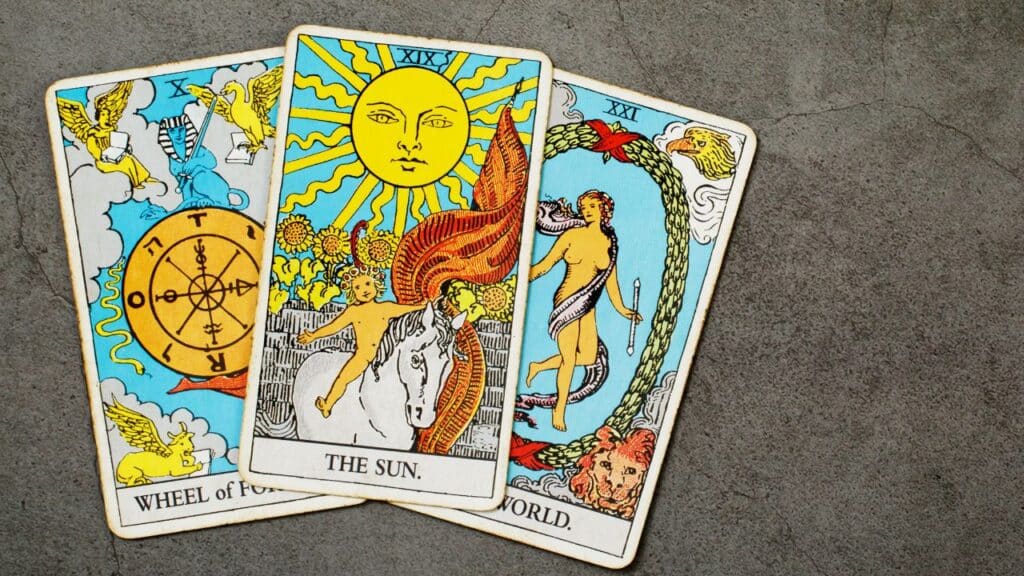
There are 22 Major Arcana cards in a tarot deck. These cards represent significant life events, transitions, and archetypes. They are often associated with big-picture themes and moments of growth in your life. Each Major Arcana card tells a story of the human experience, from The Fool (a symbol of beginnings and potential) to The World (completion and accomplishment).
These 22 cards are numbered from 0 to 21. Key cards in the Major Arcana include:
- The Fool (0): New beginnings, innocence, a blank slate.
- The Magician (1): Manifestation, using your skills and resources.
- The High Priestess (2): Intuition, inner wisdom, the subconscious.
- The Lovers (6): Relationships, choices, alignment.
- The Tower (16): Sudden change, disruption, revelation.
- The World (21): Completion, harmony, integration.
Minor Arcana
The Minor Arcana consists of 56 cards, which are further divided into four suits. These suits reflect different aspects of daily life. Each suit has 14 cards, including Ace to 10 and the Page, Knight, Queen, and King (these are known as court cards).
- Wands (Fire element) – Creativity, action, passion, and motivation.
- Cups (Water element) – Emotions, relationships, and intuition.
- Swords (Air element) – Thoughts, communication, conflict, and decision-making.
- Pentacles (Earth element) – Material matters, work, health, and finances.
Tarot’s Purpose: What It Is and What It Isn’t
It’s essential to understand what tarot is and what it isn’t.
- Tarot is a tool for self-discovery and reflection. It doesn’t predict the future with certainty but instead provides insight into what is going on in your subconscious and how you can navigate challenges.
- Tarot is not fortune telling. It does not lock you into a fixed destiny. Your future is shaped by your decisions and actions, and tarot helps you gain perspective and clarity on those choices.
Tarot can also help you make better decisions by looking at situations from different angles. The cards can guide you toward a deeper understanding of yourself and your relationships.
Choosing and Preparing Your Deck
How to Pick a Tarot Deck
Choosing the right deck is a personal decision. Here are a few things to consider when selecting your first tarot deck:
Look at the Artwork
The artwork on the cards is a huge part of tarot’s appeal. Each deck has its own style, from traditional imagery (like the Rider-Waite deck) to modern, abstract, or even themed designs. When choosing your deck, spend time looking at images online or in person to see which ones resonate with you.
Pick a Deck That Feels Right
As you explore different decks, choose one that feels intuitive. If a deck feels right, you’ll be more likely to connect with the images and meanings. Popular beginner decks include the Rider-Waite Tarot, the Thoth Tarot, and the Morgan-Greer Tarot.
Deck Size
Tarot decks can vary in size. A standard deck is around 2.75 x 4.75 inches, but there are also smaller and larger versions. If you have small hands or prefer a compact deck, look for something that feels comfortable to shuffle.
Guidebook or Manual
Many tarot decks come with a guidebook that explains the meanings of the cards. While some experienced readers prefer to rely on intuition, a guidebook can be incredibly helpful when you’re just starting out.
Preparing Your Tarot Deck
Once you’ve chosen your deck, it’s important to clear it and prepare it for use. You can do this through several methods:
- Unpack with Intention: Some readers like to “clear” the deck energetically by holding it and focusing on your purpose or intention for the deck.
- Shuffle the Cards: Begin by shuffling the cards thoroughly. While shuffling, think about the reading you want to do and what you want to learn.
- Cut the Deck: If you wish, you can cut the deck into three piles before selecting cards from the top.
The act of handling your deck will help form a deeper connection to it. As you continue using it, you’ll build an energetic relationship with the cards, making readings more intuitive.
Learning the Card Meanings
Begin with the Major Arcana
Start by learning the Major Arcana first. These cards represent life’s big moments, so they are easier to memorize and give you a good foundation for understanding the other cards. Each card in the Major Arcana has a key meaning and also represents different aspects of the human experience. For example:
- The Fool (0): This card represents new beginnings, unlimited potential, and spontaneity. It’s about taking a leap of faith.
- The Empress (3): The Empress signifies nurturing, abundance, and creativity. She is a symbol of fertility, both literally and metaphorically.
Understanding the Suits of the Minor Arcana
Next, turn your focus to the Minor Arcana. These 56 cards are divided into four suits, each representing different areas of life.
Wands (Fire)
Wands deal with action, ambition, and energy. They represent our goals and our ability to move forward. They deal with creativity, work, and our motivations.
Cups (Water)
Cups deal with emotions, relationships, and connections. These cards reveal the state of our hearts and how we navigate love, relationships, and emotional challenges.
Swords (Air)
Swords deal with the intellect, thoughts, and conflict. They help you understand how your mind works and deal with mental challenges or communication issues.
Pentacles (Earth)
Pentacles represent the material world. They deal with money, work, health, and other tangible aspects of life. Pentacles remind us of the need to maintain balance in our physical world.
Asking Questions and Setting Intention
The Power of a Clear Question
When you read tarot, it’s important to approach it with clarity. Here’s why:
- Open-ended Questions: The best tarot questions are those that are open-ended, allowing for deeper exploration and insight. For example: “What can I do to improve my career path?” or “How can I strengthen my relationships?”
- Focus on the Present: While tarot can provide glimpses into the future, it is more effective when you focus on the present and ask for insight into the actions you can take now.
Setting Your Intention
Before beginning your reading, take a moment to set a clear intention. Are you asking about a specific situation, or are you seeking guidance for general life direction?
Shuffling, Drawing, and Spreads
Shuffling the Cards
Shuffling is an essential step in preparing your deck for a reading. As you shuffle, focus on your question or intention. If you feel drawn to stop, that’s perfectly fine; your intuition will guide you.
Drawing the Cards
Once you’ve shuffled the deck, draw your cards. You can either pull cards one at a time, or you can spread them out and choose several cards at random. Trust your intuition to guide you.
Tarot Spreads
A tarot spread is a layout of cards in a specific pattern. Each position in the spread represents a different aspect of your life or situation. Popular spreads include:
- Three-card Spread: One of the simplest and most versatile spreads, representing the past, present, and future.
- Celtic Cross Spread: A more detailed spread that shows the current situation, challenges, past influences, and future influences. This spread can be used for more in-depth readings.
The key to reading a tarot spread is to interpret each card’s meaning in the context of its position and relationship to other cards.
Reading for Yourself vs Reading for Others
Reading tarot cards for yourself and others can be an entirely different experience. Here are the main differences:
Reading for Yourself
Reading for yourself requires being emotionally detached. It can be challenging to interpret the cards objectively when you’re too emotionally involved in the situation.
Reading for Others
Reading for others is about creating a safe space for them to explore their questions. It’s important to remain neutral, offering insight without imposing your own biases. If you’re new to reading for others, start with friends or family members to gain experience.
Avoiding Common Pitfalls
- Don’t rely too heavily on guidebooks: While guidebooks are helpful, don’t use them as crutches. Your intuition and experience will help you interpret the cards more effectively.
- Don’t force a reading: If the cards don’t seem to make sense, or if you’re not getting clear answers, don’t be afraid to stop and reflect. Sometimes, tarot requires patience.
Deepening Your Practice
Keep a Tarot Journal
Recording your readings in a tarot journal is one of the best ways to track your progress. Over time, you’ll notice patterns and become more confident in your interpretations.
Takeaways
Reading tarot is a journey of self-exploration. The more you work with your deck, the more intuitive your readings will become. Trust in your process, and remember: tarot is about insight, not prediction. It’s a tool for gaining clarity, understanding, and deeper connection with your intuition.