If you’ve ever walked into your kitchen or bathroom and been hit by a strong, bad smell from drains, you’re not alone. Smelly drains are one of the most common household problems. Sometimes the odor is mild and occasional. Other times, it smells like raw sewage or rotten eggs and seems to spread through the whole house.
The good news: in many cases, you can identify the cause and fix it yourself with simple steps. But sometimes a bad smell from drains is a sign of a deeper plumbing or sewer problem that needs professional help.
Why Your Drains Smell Bad – And Why You Shouldn’t Ignore It
That “sewer” smell from a drain usually comes from a mix of sewer gases and bacteria. These gases can include hydrogen sulfide, methane, and ammonia. Hydrogen sulfide is what creates the classic rotten egg smell. Even in small amounts, it is unpleasant. In higher concentrations in a closed space, it may become irritating or even dangerous.
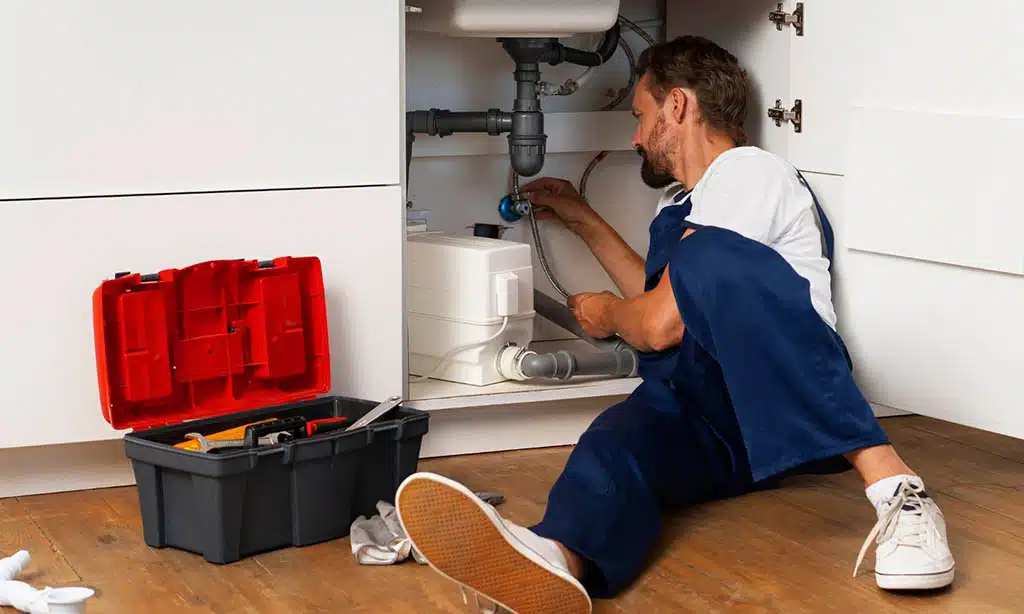
A bad smell from drains is not always an emergency. A single bathroom sink drain smell after a long vacation might simply mean the water in the trap has evaporated. But if you notice a strong sewer smell in the house, especially from multiple drains, you need to take it seriously.
Ignoring smelly drains can lead to:
- Worsening blockages
- Hidden leaks and damage
- Mold growth in walls and under floors
- Potential exposure to higher levels of sewer gas
So it’s worth investigating early, even if the odor seems mild at the beginning.
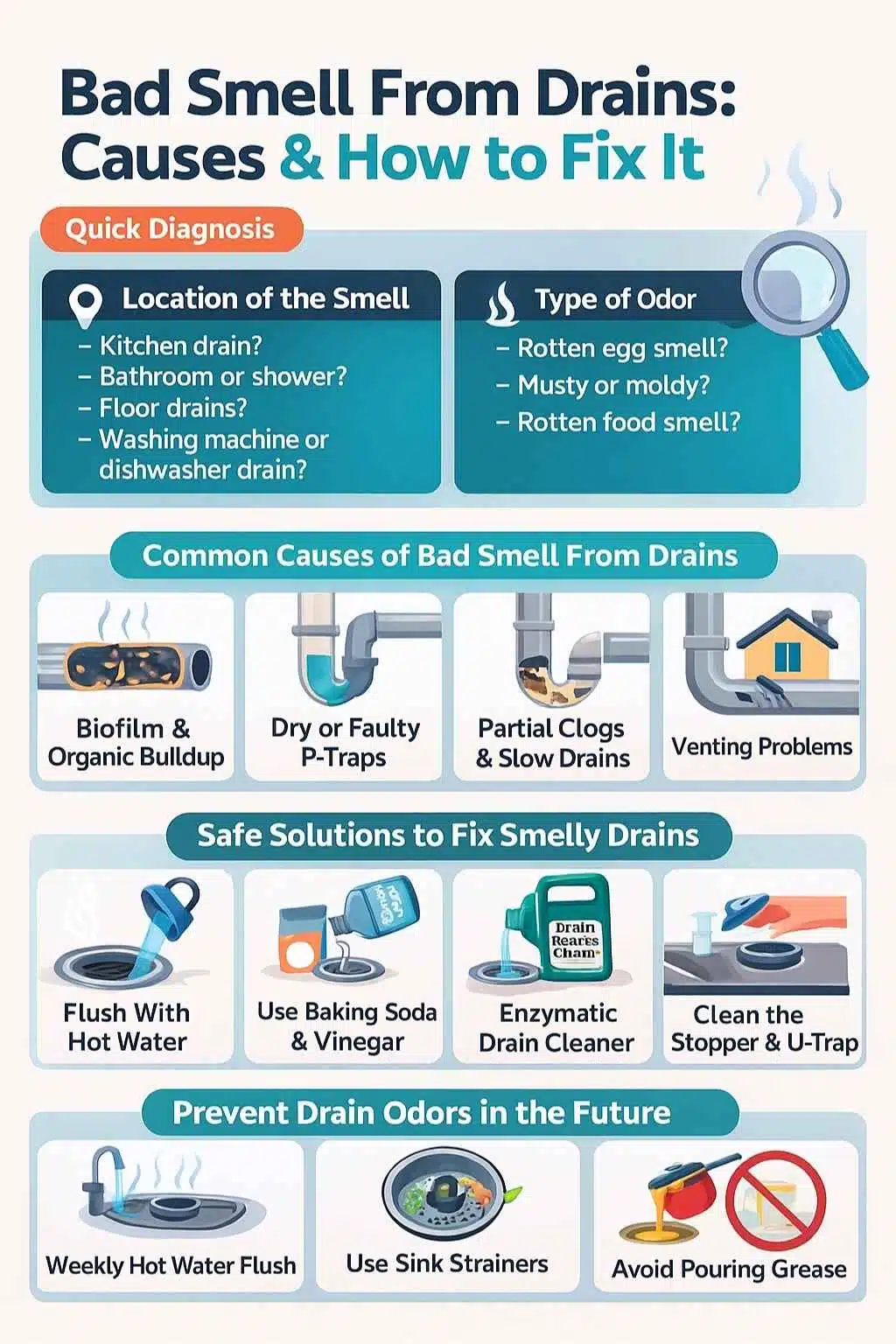
Quick Diagnosis: What Kind of Drain Smell Are You Dealing With?
Before you start pouring anything down the sink, take a moment to diagnose the problem. A quick check can save you time and effort.
1. Start With the Location
Ask yourself:
- Does the kitchen sink smell bad, especially after washing dishes?
- Is the bathroom sink or shower drain the main source of odor?
- Do you notice a smell from floor drains in the laundry, garage, or basement?
- Is the smell linked to the washing machine or dishwasher drains?
Knowing where the smell is strongest narrows down the cause. For example, a kitchen sink smell often points to food residue or grease. A shower drain smell usually suggests hair, soap, and biofilm buildup.
2. Notice What the Smell Is Like
Different odors can hint at different problems:
- Rotten egg smell from the sink or shower
Often linked to hydrogen sulfide gas from bacteria or sewer gas. - Musty or moldy smell
Suggests dampness, mold, or biofilm inside the drain or near it. - Rotten food smell from the kitchen sink
Points to decomposing food scraps, especially around a garbage disposal.
3. Look for Simple Clues
Some quick questions:
- Is the bad smell from the drains worse after running water?
- Did it start after a long holiday or when a bathroom wasn’t used for weeks?
- Do multiple drains smell at the same time?
- Do you hear gurgling sounds or notice slow drainage?
If several drains smell like sewer and you have slow drains or gurgling, you may be dealing with a larger venting or sewer line issue, not just a dirty sink.
The Main Causes of Bad Smell From Drains
Most smelly drains come down to a few common causes. Understanding them helps you choose the right fix.
Biofilm and Organic Buildup Inside the Pipes
Every time you use a sink or shower, tiny bits of material go down the drain.
- Food particles
- Grease and oils
- Soap scum
- Hair
- Toothpaste and skin cells
Over time, all this forms a sticky layer on the inside of the pipes called biofilm. Bacteria live and feed on this organic matter. As they break it down, they release gases that cause a bad smell from drains.
This is one of the most common reasons for a smelly drain that is not fully clogged. Water may still drain, but the odor is strong, especially when you run hot water.
Dry or Faulty P-Traps Letting Sewer Gas In
Under every sink and many floor drains, there is a curved pipe called a P-trap. Its job is simple but crucial: it holds a small amount of water that acts as a seal. This water barrier stops sewer gas from flowing back into your home.
A bad smell from drains often appears when:
- The trap dries out because the drain isn’t used for a long time
- Water in the trap is siphoned out because of poor venting
- The P-trap is cracked, leaking, or poorly installed
Unused guest bathrooms, spare showers, and basement floor drains often develop a sewer smell because the water in the trap slowly evaporates.
Partial Clogs and Slow Drains
Clogs don’t appear overnight. They usually start as small buildups of:
- Hair and soap in bathroom drains
- Fat, oil, and grease in the kitchen
- Scale or mineral deposits in older pipes
As the buildup grows, water moves more slowly and sometimes sits in the pipe. This standing water, plus trapped debris, becomes a breeding ground for bacteria and odor.
You might notice:
- A sour or rotten smell
- Water that drains slowly
- Gurgling sounds as air forces its way past the blockage
Venting Problems and Negative Air Pressure
Plumbing systems are designed with vents, usually vertical pipes that extend through the roof. These vents let air into the system, equalizing pressure so water can flow smoothly, and traps can hold their water seals.
If a vent pipe is blocked by leaves, debris, nests, or ice, you may get:
- Gurgling sounds in sinks and toilets
- Traps are being sucked dry
- Recurring sewer smell in the house
In this case, even if you clean the drain, the bad smell from the drains may come back until the vent issue is fixed.
Damaged or Misaligned Drain Pipes and Seals
Sometimes the cause is more serious:
- Cracked pipes behind walls or under floors
- Loose joints or fittings
- Worn-out rubber gaskets around fixtures
These issues can allow sewage and sewer gas to escape into hidden spaces, leading to a persistent sewer smell in the house. You might also notice damp patches, peeling paint, or mold in affected areas.
Water Quality and Hydrogen Sulfide in the Water Supply
Occasionally, the problem is not the drain at all. In some regions, especially where people use wells, hydrogen sulfide in the water supply itself can cause a rotten egg smell at the tap.
To check this, try:
- Running water into a clean glass
- Smelling the water away from the drain
If the smell is strong in the water itself, you may need to look at water treatment options, not just drain cleaning.
Garbage Disposals and Kitchen-Specific Issues
Kitchen sinks, especially those with garbage disposals, are notorious for smells.
Food scraps can get stuck:
- On the blades and inner surfaces
- Under the rubber splash guard
- In the first section of the pipe, where fat and oil cling
Over time, bacteria break down these trapped bits of food, creating strong odors whenever you run water or the disposal.
Appliance Drains: Washing Machines and Dishwashers
Washing machines and dishwashers can also contribute to bad smells from drains:
- Soap residue and lint can build up in the drain hose
- Food particles can collect in dishwasher filters and pipes
- Kinked hoses can trap standing water
These conditions promote bacteria, mold, and biofilm growth, leading to musty or stale odors near the appliance.
How to Fix a Bad Smell From Drains: Step-by-Step Solutions
Once you have an idea of what’s causing the odor, you can choose the right method to get rid of the drain smell safely.
Before You Start: Safety First
A few basic precautions:
- Open windows or turn on exhaust fans for ventilation
- Avoid inhaling strong fumes directly
- Wear gloves to protect your skin
- Never mix different drain cleaners, and never combine bleach with acidic or ammonia-based products
- If you see raw sewage backing up, skip DIY and contact a professional immediately
Solution 1: Flush the Drain and Trap With Hot Water
For mild smells and light buildup, a hot water flush can work surprisingly well.
How to do it:
- Heat a pot or kettle of water until very hot (just below a rolling boil).
- Slowly pour the hot water down the smelly drain in stages.
- Wait a few seconds between each pour to let the heat work on the residue.
This can dissolve grease and soap film, especially in kitchen drains, and may reduce biofilm enough to remove a light odor.
Solution 2: Clean Biofilm With Baking Soda and Vinegar
Baking soda and vinegar are popular home remedies for smelly drains. They can help loosen and deodorize light organic buildup, though they are not strong enough for major clogs.
How to use them safely:
- Start with a relatively dry drain.
- Pour about ½ to 1 cup of baking soda directly into the drain.
- Add 1 cup of white vinegar slowly. The mixture will fizz.
- Cover the drain with a plug or cloth to keep the reaction inside the pipe.
- Wait 10–30 minutes.
- Rinse thoroughly with hot water.
This method can freshen bathroom sink drains and shower drains where the main issue is odor from biofilm rather than a solid blockage.
Solution 3: Use Enzymatic or Biological Drain Cleaners
If you want a gentler but effective approach to organic buildup, enzymatic drain cleaners are a good option. These products contain bacteria or enzymes that break down organic material like hair, grease, and food residue.
They are especially useful when:
- You have a septic system
- You want to avoid harsh chemical drain cleaners
- You deal with recurring light odors and slow drains
Follow the manufacturer’s instructions carefully. Enzymatic cleaners usually work best when left in the drain for several hours or overnight, ideally when no additional water will be used.
Solution 4: Physically Clean the Stopper, Strainer, and Overflow
Many smells come from the upper part of the drain, not deep in the pipe. Cleaning the visible hardware can make a big difference.
Steps:
- Remove the sink stopper or strainer. In many bathroom sinks, you can lift it out or detach it from the pivot rod under the sink.
- Scrub the stopper thoroughly with hot water and dish soap. Remove any hair, slime, or residue.
- Use a small brush (like a bottle brush or old toothbrush) to scrub the inside of the drain opening.
- Don’t forget the overflow opening in bathroom sinks. Flush and brush it if you can.
- For showers, remove the drain cover and use a plastic drain snake to pull out hair and debris.
This can quickly reduce bad smells in bathroom drains and improve drainage.
Solution 5: Refill or Repair a Dry P-Trap
If the bad smell from the drains started after you didn’t use a bathroom or floor drain for a while, the P-trap may simply be dry.
To refill the trap:
- Run water into the unused sink, shower, or floor drain for 15–30 seconds.
- If the drain is rarely used, you can add a tablespoon of mineral oil after filling it with water. The oil slows evaporation, so the water seal lasts longer.
If the trap keeps drying out quickly, or you hear gurgling sounds, there may be a venting issue or a hidden leak. In that case, a plumber should inspect the system.
Solution 6: Deep Clean a Smelly Garbage Disposal
For a kitchen sink that smells bad, the garbage disposal is often the main culprit.
How to clean it safely:
- Turn off the power to the disposal. Switch it off and unplug it if possible.
- Carefully clean the rubber splash guard. Lift the flaps and scrub underneath with a brush and dish soap. Food scraps often hide here.
- Use a long-handled brush to clean inside the disposal chamber.
- Add a handful of ice cubes and a tablespoon of coarse salt. Restore the power, run cold water, and briefly switch on the disposal. This helps scrub the surfaces.
- Finish with a flush of hot water.
- For a fresh scent, you can grind a few small citrus peels. This improves the smell but doesn’t replace regular cleaning.
Solution 7: Check Appliance Hoses and Floor Drains
If the odor is strongest near the washing machine, dishwasher, or basement:
- Inspect washing machine and dishwasher hoses for kinks or low spots where water can stagnate.
- Clean filters and traps as recommended by the manufacturer.
- For floor drains, remove the grate and clear visible debris. Then pour water into the drain to refill the trap, just as you would in a sink.
Room-by-Room Guide to Fixing Smelly Drains
Different rooms tend to have different versions of the same problem.
Kitchen Sink Smells Bad
Common causes:
- Food scraps and grease in the disposal
- Fat and oil coat the first part of the pipe
- Biofilm from soap, oil, and food residue
What to do:
- Deep-clean the garbage disposal
- Avoid pouring fats, oils, and large food scraps down the sink
- Use an enzymatic cleaner periodically to keep the line clear
- Rinse the drain with hot water after washing greasy dishes
Bathroom Sink and Shower Drain Smells Like Sewer
Likely causes:
- Hair and soap scum form a clog
- Biofilm in the trap and upper pipe
- Occasionally, a dry P-trap or venting issue
What to do:
- Remove and clean the stopper or strainer
- Use a plastic drain snake to clear hair
- Deodorize with baking soda and vinegar or a mild cleaner
- Make sure the P-trap is not leaking and stays filled with water
Laundry Room and Basement Drains
Likely causes:
- Dry floor drain traps
- The washing machine discharge is causing a buildup
- Mold or mildew around standing water
What to do:
- Refill floor drains with water, plus a little mineral oil for rarely used ones
- Keep the area ventilated and dry
- Clean or replace washing machine hoses as recommended
When a Bad Smell From Drains Is a Red Flag
Not every smell is a simple cleaning job. Sometimes smelly drains signal a serious problem.
Warning Signs of a Deeper Issue
You should be concerned if:
- A strong sewer smell in the house comes from multiple drains at once
- Drains across the home are slow or gurgling
- You notice sewage backup in toilets, tubs, or floor drains
- There are wet spots in the yard near the sewer line or sudden sinkholes
These signs suggest possible:
- Sewer line blockages or breaks
- Major venting failures
- Septic system problems (if you have a septic tank)
Health and Safety Considerations
Sewer gas contains methane, hydrogen sulfide, and other gases. At low levels, these cause unpleasant smells and mild irritation.
At higher levels or in enclosed spaces, they may cause:
- Headaches
- Nausea or dizziness
- Irritation of the eyes and airways
If anyone in the home feels unwell when the smell is strongest, take it seriously. Ventilate the area, leave if necessary, and call a professional.
When to Call a Professional Plumber
You should contact a qualified plumber when:
- The bad smell from the drains persists after basic cleaning
- You see visible leaks, cracks, or damaged pipes
- Multiple drains smell like sewer and back up frequently
- You suspect an issue with the main sewer line or vent stack
Professional plumbers can use cameras, pressure tests, and specialized tools to pinpoint hidden problems that DIY methods cannot solve.
How to Prevent Drain Odors in the First Place
Prevention is easier than dealing with a persistent sewer smell later.
Weekly and Monthly Maintenance
Simple habits can reduce the risk of smelly drains.
- Run hot water for a short period after washing greasy dishes
- Wipe food scraps into the trash or compost before rinsing plates
- Use sink strainers and hair catchers in the kitchen and bathroom drains
- Avoid pouring fats and oils down the sink; let them cool and dispose of them in a container
Natural Drain Deodorizing Routine
You don’t need harsh chemicals every week. A gentle routine works well:
- Every few weeks, flush drains with hot water
- For odor control, use a light baking soda and vinegar treatment or a mild, non-corrosive cleaner
- Use enzyme-based cleaners periodically for drains that tend to smell, especially in kitchens and showers
Seasonal Checks
Each season, take a few minutes to:
- Run water in rarely used fixtures, such as guest bathrooms and basement floor drains
- Listen for unusual gurgling in sinks and toilets
- Check outside for any obvious issues with vent stacks or signs of sewer line problems
If you have a septic system, follow local recommendations for inspection and pumping intervals.
FAQs About Smelly Drains and Sewer Odors
Why does my drain smell but isn’t clogged?
A drain can smell bad even when water still flows because of biofilm buildup, light organic residue, or a dry P-trap. The pipes may not be fully blocked, but bacteria are actively producing gases that cause the odor.
Is it safe to pour bleach down a smelly drain?
Small amounts of diluted bleach can disinfect a drain and help with odor, but it should be used cautiously. Never mix bleach with other cleaners, especially products containing vinegar or ammonia. Bleach is not a cure for thick clogs and may not be suitable for some septic systems.
Can I always use baking soda and vinegar for drain problems?
Baking soda and vinegar are useful for light cleaning and deodorizing, especially for bathroom sinks and showers. However, they are not strong enough for heavy clogs or serious blockages. Think of them as part of regular maintenance, not a universal solution.
How often should I clean my drains to prevent bad smells?
Light maintenance every few weeks and deeper cleaning a few times a year is enough for most households. If you notice slow drainage or a recurring smell, step up your routine or use an enzymatic cleaner.
When should I be worried about sewer gas making me sick?
If the bad smell from drains is strong, persistent, and especially if it comes with headaches, nausea, dizziness, or breathing irritation, treat it as a warning sign. Strong sewer smells from multiple drains or visible sewage backups mean it’s time to call a professional plumber and ventilate the area.
The Bottom Line
A bad smell from drains is more than just an annoyance. It’s often a sign that your plumbing needs attention, whether it’s simple cleaning or a deeper inspection. By understanding what causes smelly drains and how to fix them, you can protect your home, keep your air fresh, and avoid more serious problems in the future.