Scientists in South Korea have developed a new way to make and color fabric using living bacteria, offering a potential alternative to the highly polluting conventional textile industry. The technique allows fabric to be “grown” in the lab and dyed at the same time, without the need for toxic chemicals or large amounts of water.
The research, led by a team of materials scientists and bioengineers at a Korean university, shows how microbes can be turned into tiny factories that produce both the structure of the material and its color. Experts say this kind of “biofabrication” could radically transform how clothes and other textiles are made in the future.
A New Approach to Making Fabric
Instead of weaving threads from cotton, polyester or other traditional fibers, the Korean team uses bacteria to build the material from the ground up. The process starts by cultivating specific strains of bacteria in a nutrient-rich liquid. Under carefully controlled conditions, these bacteria secrete substances that assemble into a thin, flexible film.
Over time, this film grows thicker and more robust, forming a sheet of textile-like material. The result looks somewhat similar to leather or a dense, non-woven fabric, depending on the exact strains and growth conditions used.
Lead researchers describe the process as “growing fabric like a crop,” but inside a bioreactor instead of a field. Because it happens in a closed system, it is easier to control quality and reduce waste.
Dyeing With Microbes, Not Chemicals
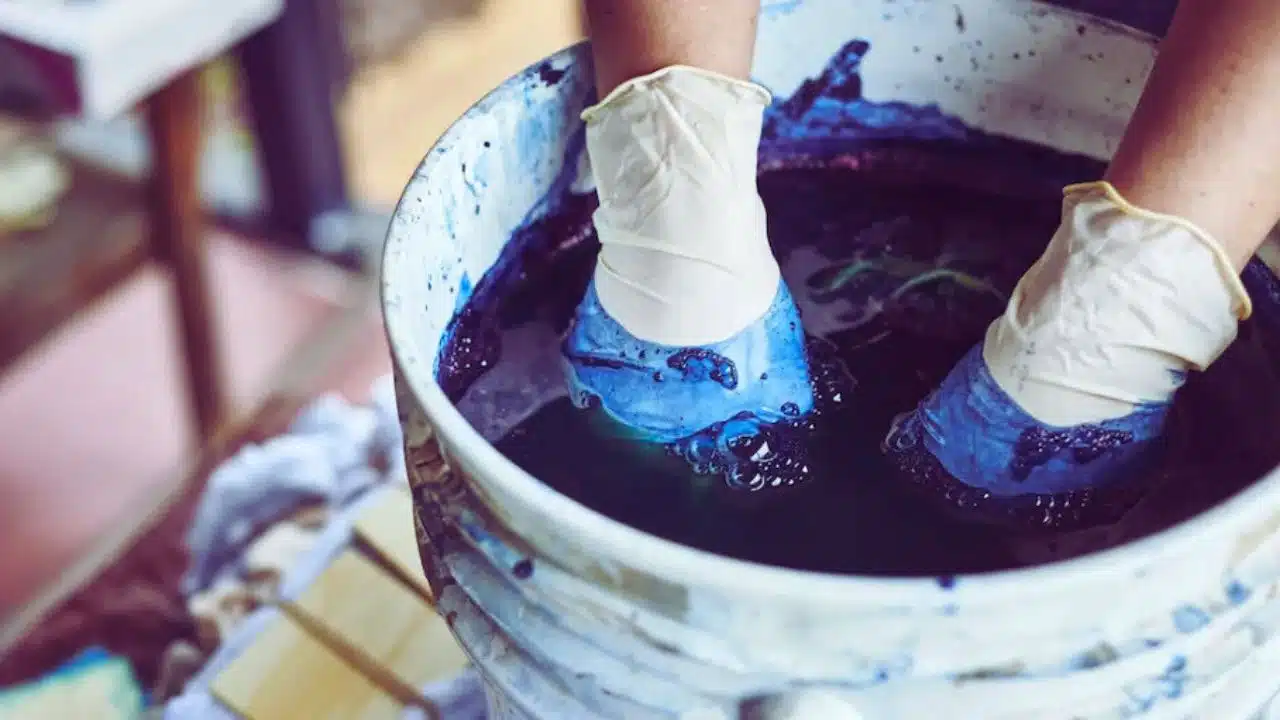
The second key part of the innovation is dyeing. Traditional fabric dyeing is one of the dirtiest steps in the fashion supply chain. It relies on synthetic dyes, heavy metals and huge volumes of water, often discharged as polluted wastewater. In many textile-producing regions, dyeing plants are major sources of river contamination.
The Korean scientists get around this by using pigment-producing bacteria. These microbes naturally generate vivid colors—such as blues, reds, yellows or purples—as part of their metabolism. By combining the structural bacteria with pigment-producing strains, the team can grow material that is already colored from within.
In some tests, the researchers grew multiple layers with different bacteria to create subtle gradients, patterns and mixed hues, all without adding separate dye baths. Because the color is embedded in the material rather than applied only on the surface, it may also be more resistant to fading over time.
Lower Environmental Footprint
The environmental advantages of this method are significant on paper.
- No synthetic dyes: The process eliminates the need for many petroleum-based dyes and toxic mordants.
- Less water: Because the fabric is colored as it grows, there is no separate washing and dyeing step that uses tons of water.
- Reduced energy: Growth happens at moderate temperatures, often close to room temperature, meaning lower energy use compared to high-heat industrial processes.
- Potential for circularity: In some configurations, the resulting material could be biodegradable or easier to recycle than conventional blends of cotton and polyester.
Researchers argue that, if scaled, bacterial fabric could help the fashion industry shrink its carbon footprint and water use—two of the biggest environmental problems associated with clothing production.
How Strong Is the Bacterial Fabric?
One of the main questions for any novel material is performance: Can it actually compete with cotton, denim or synthetic sports fabrics?
In lab tests, the Korean team reports that their bacterial textiles show promising mechanical strength and flexibility. Depending on the recipe and growth time, the material can be tuned to be softer and more fabric-like or thicker and more leather-like. It can bend without cracking and can withstand repeated handling.
However, scientists acknowledge that this technology is still in its early stages. The material is not yet ready to replace all types of conventional fabrics. Further work is needed to improve durability, breathability, water resistance and comfort for everyday wear.
Fashion, Sportswear and Beyond
Despite the early stage, potential applications are already attracting attention. Designers in experimental fashion are particularly interested in biofabricated materials, which fit with the growing push toward sustainable and circular design.
Possible use cases include:
- Fashion accessories: Bags, wallets, belts and footwear components where leather alternatives are in demand.
- Apparel prototypes: Concept garments that showcase sustainable materials in runway collections.
- Interior design: Wall coverings, lampshades or decorative panels with unique textures and natural color patterns.
- Tech and wearables: Flexible substrates for sensors or smart textiles that need biocompatible layers.
Brands looking to differentiate themselves on sustainability could be early adopters, collaborating with labs to develop limited-edition collections or showcase pieces.
Challenges to Scaling Up
Despite the excitement, several major challenges stand between this lab innovation and mass-market clothing racks.
- Scaling bioreactors: To make fabric at industrial scale, manufacturers would need large, efficient bioreactors that can produce consistent sheets of material.
- Cost: At the moment, growing textiles with bacteria is more expensive than weaving traditional fibers. Costs would need to fall significantly to compete with cotton or polyester.
- Regulation and safety: While the bacteria used are typically safe and often inactivated in the final product, regulators and consumers will want assurances about safety and stability.
- Consumer perception: Many shoppers are not yet familiar with the idea of “bacteria-grown” clothing. Education and branding will be crucial to overcome initial hesitation.
Researchers in South Korea stress that these obstacles are normal for any emerging technology, and say that progress in synthetic biology, fermentation and materials science could help reduce costs over time.
Part of a Global Biofabrication Trend
The Korean project is part of a wider global movement to use biology to create more sustainable materials. Startups and labs in Europe, North America and Asia are experimenting with everything from mushroom-based leather to spider-silk-like fibers produced by engineered yeast.
What makes the Korean work stand out is the combination of growth and coloration in a single step. By uniting fabric formation and dyeing, the process simplifies the production chain and cuts out some of the dirtiest steps.
Industry analysts believe that, as climate pressure and regulation increase, such bio-based materials will shift from niche experiments to important components of mainstream supply chains.
What Comes Next
The research team in Korea plans to refine the material’s properties, experiment with new bacterial strains and work with industrial partners to test pilot-scale production. They are also exploring ways to print or pattern bacteria during growth, which could one day allow precise logos, designs or even QR codes to be grown directly into the fabric.
If these efforts succeed, bacteria-grown textiles could offer fashion brands a new story: clothes that are not only styled for the future, but literally grown by living organisms in low-impact factories.
For now, the discovery underscores a growing reality in materials science: the factory of the future may look less like a steel and smoke complex, and more like a clean, quiet lab where microbes do much of the heavy lifting.