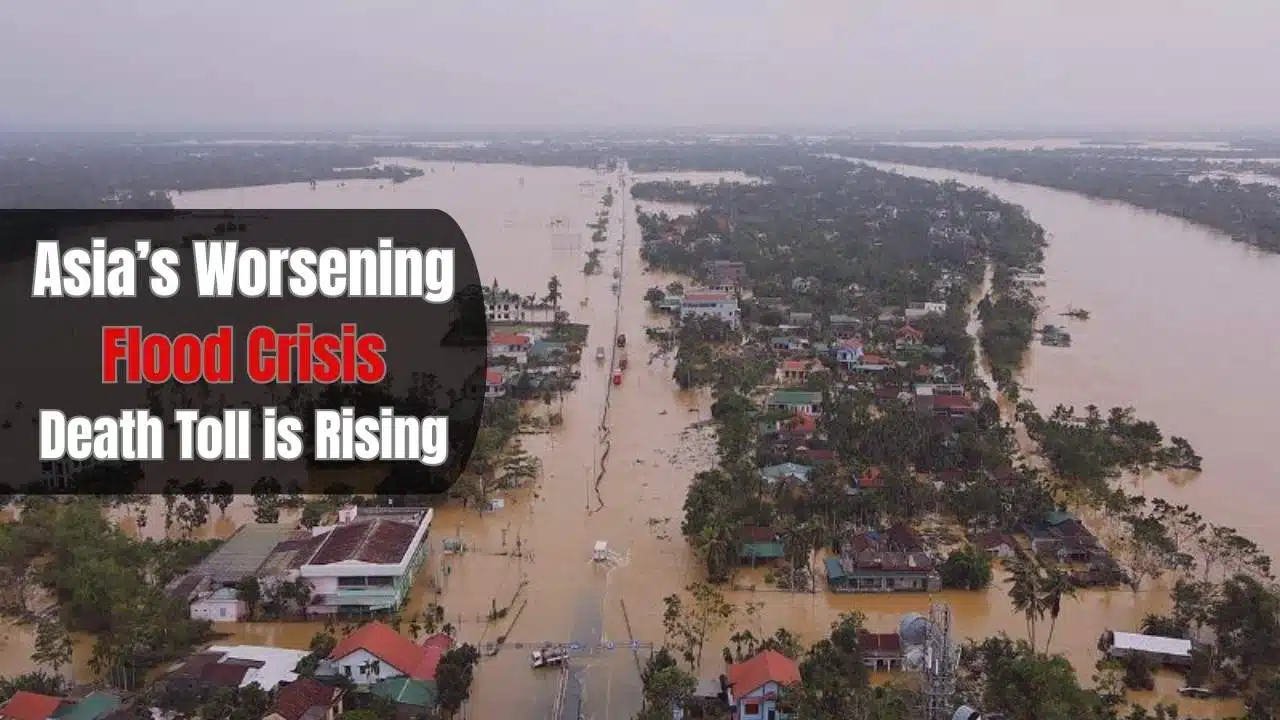
More than 1,200 people are confirmed dead, and hundreds remain missing across Asia as a wave of floods, landslides, and storm-driven disasters tears through Indonesia, Sri Lanka, Thailand, and the wider South Asian region.
What began as localized flash floods and cyclone landfalls has now become one of the deadliest combined flood emergencies in recent years. Rescue teams are still searching for survivors in remote areas, and officials warn that both the death toll and the number of missing persons are likely to rise.
Asia’s Deadliest Flood Season in Years: The Latest Toll at a Glance
Across South and Southeast Asia, several disasters are unfolding at once. Based on the latest official updates and government statements, this is the approximate snapshot of the crisis.
- Indonesia (Sumatra floods and landslides)
- Around 604 people have been confirmed dead
- About 464 are still missing
- More than 1.5 million people were affected, and hundreds of thousands were displaced
- Sri Lanka (Cyclone Ditwah and associated flooding)
- Around 366 confirmed deaths
- Hundreds are still missing, with some villages only recently reached by rescuers
- Large-scale evacuations and widespread damage to homes and infrastructure
- Around 366 confirmed deaths
- Thailand (monsoon-driven floods)
- At least 176 people confirmed dead
- Millions are experiencing some level of disruption or displacement
- At least 176 people confirmed dead
- Nepal (landslides and rain-triggered floods)
- More than 50 people were killed, mainly in the eastern hill regions
- Dozens missing as search operations continue
- India (Darjeeling, Uttarakhand, and other high-risk zones)
- At least 18 deaths in recent flooding and landslides around Darjeeling
- In Uttarkashi, Uttarakhand, at least 5 deaths and 50–100 or more people are missing after a powerful flash flood
Taken together, these events push the toll to well over 1,200 deaths across the region, with more than 800 people still listed as missing in the worst-hit countries alone. The real human cost is almost certainly higher.
Indonesia: Epicentre of the Worst Flooding, A Deadly Combination of Cyclone and Topography
Indonesia currently carries the heaviest burden in this unfolding flood disaster. The island of Sumatra, with its steep terrain, river valleys, and landslide-prone slopes, has been hit by catastrophic rainfall linked to Cyclone Senyar and associated weather systems.
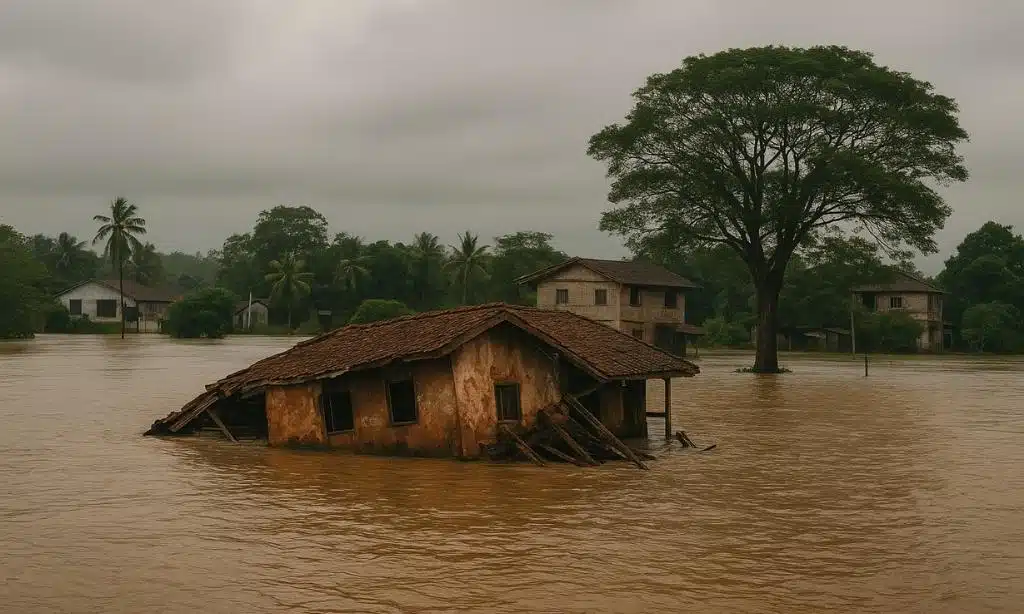
Rivers burst their banks with little warning. Sudden landslides swept entire homes into churning waters. In many villages, residents were caught in the night as walls of mud and water surged through.
Death Toll and Missing Persons
Authorities in Indonesia report around 604 confirmed deaths from the Sumatra floods and landslides. An estimated 464 people remain missing, many of them believed to be buried under debris or swept away in landslides and flash floods.
For families in remote areas, the distinction between “missing” and “presumed dead” remains agonizingly unclear. Survivors describe searching in mud, rubble, and collapsed houses with little heavy equipment and limited communication.
Displacement and Humanitarian Needs
More than 1.5 million people are estimated to be affected in Indonesia, with hundreds of thousands displaced into temporary shelters.
Key challenges include:
- Shortages of clean water and food in crowded evacuation centres
- Damage to roads and bridges, which slows relief convoys and medical teams
- Risk of waterborne diseases as stagnant floodwaters linger
Local authorities and national agencies are working with the military and international partners to restore access, airlift supplies, and relocate vulnerable communities. But the scale and geography of Sumatra make a quick recovery unlikely.
Sri Lanka: Cyclone Ditwah Leaves Districts Devastated
In Sri Lanka, the flooding crisis is tied closely to Cyclone Ditwah, which brought heavy rain, storm surges, and river flooding. Whole districts have experienced severe inundation, with homes submerged and infrastructure heavily damaged.
Rescuers report that in some places, residents climbed onto rooftops and trees to escape rapidly rising water. Landslides have buried houses in hilly regions, while low-lying coastal and riverine communities suffer from prolonged standing water.
Rising Death Toll and Large Numbers Missing
Authorities have confirmed roughly 366 deaths so far. The number of missing persons is harder to pin down. Many families are still trying to reconnect with relatives in areas that remained cut off for days by floodwaters and damaged roads.
Emergency teams continue to recover bodies as waters recede and as they gain access to previously isolated villages. Officials caution that the final toll may be significantly higher than current figures suggest.
Military Deployment and Economic Impact
Sri Lanka has deployed its military to support:
- Large-scale evacuations and boat rescues
- Airlifts of food, medicine, and essential supplies
- Rapid repair of damaged bridges and key road links
The economic impact is already visible:
- Agricultural losses in flooded fields and destroyed crops
- Damage to public infrastructure, from schools to clinics
- Power outages that complicate both rescue and daily life
For a country already grappling with economic strain, the rebuilding bill from Cyclone Ditwah will be heavy.
Thailand: Monsoon Floods Turn Deadly: Widespread Inundation Across Provinces
Thailand is experiencing one of its most disruptive monsoon seasons in recent years. Persistent heavy rain has overwhelmed drainage systems, swelled rivers, and inundated rural provinces as well as peri-urban areas.
Floodwater has damaged homes, roads, and farmland. In some areas, residents wade through waist-deep water for days, using boats as the main mode of transport.
Casualties and Displacement
Officials report at least 176 confirmed deaths, with several provinces reporting clusters of fatalities from drowning, building collapses, and landslide incidents.
Millions of people have experienced some degree of impact, whether through displacement, damage to homes, loss of livelihoods, or interrupted schooling.
Relief, Compensation, and Fears of Disease
The Thai government has announced compensation packages for affected families and ramped up distribution of emergency supplies. Yet many communities complain of slow assistance and inadequate long-term planning.
Public health officials warn of increased risk of:
- Dengue fever
- Diarrhoeal diseases
- Other waterborne infections
as long as stagnant water, high temperatures, and dense populations coexist in flooded zones.
South Asia’s Fragmented Flood Picture
While much of the media focus is on Indonesia, Sri Lanka, and Thailand, South Asia itself is far from spared. However, the pattern of flooding here is more fragmented, made up of multiple localized disasters rather than a single continent-scale event.
Nepal: Landslides in the Eastern Hills
In Nepal, sustained heavy rainfall triggered fatal landslides and flash floods, especially in eastern hill districts. More than 50 people have been killed, and many communities continue to search for missing relatives.
The district of Ilam has recorded some of the worst impacts, with homes and terraced fields destroyed under sudden soil collapses. Steep terrain, unstable slopes, and deforestation intensify the landslide risk.
India: Darjeeling and Uttarakhand on the Frontline
In India, the picture varies by region but remains troubling:
- In and around Darjeeling in West Bengal, at least 18 people have died in floods and landslides triggered by heavy rains. Roads and rail lines have been damaged, complicating both tourism and trade in this strategic hill corridor.
- In the Uttarkashi district of Uttarakhand, a powerful flash flood swept through river valleys, leaving at least 5 people confirmed dead. Authorities estimate 50–100 or more are missing, with search operations hampered by treacherous conditions and debris-choked waterways.
These incidents add to a familiar pattern in the Indian Himalayas and foothills, where cloudbursts, sudden downpours, and rapid snowmelt often combine to create deadly flash floods.
Why the Numbers Keep Changing
Death tolls and missing-person lists are constantly revised as new information emerges. Several factors drive this volatility:
- Access barriers: In many regions, roads and bridges are destroyed, leaving villages isolated for days. Rescuers often reach them only after the waters recede.
- Communication breakdowns: Floods and landslides frequently damage telecom networks and power lines, delaying both local reporting and central data collection.
- Double counting and corrections: In the chaos of early reporting, the same missing person may be counted more than once, while some recovered bodies remain unidentified for days.
- Overlapping events: Multiple floods, landslides, and storm surges can affect the same province in waves, complicating efforts to attribute casualties to specific incidents.
Officials stress that current figures are conservative estimates. As recovery operations continue, both confirmed deaths and missing counts may rise, especially in Indonesia, Sri Lanka, and remote Himalayan regions.
Climate Context: Why Asia’s Floods Keep Getting Worse
Behind the immediate tragedy lies a broader climate story. Scientists and policymakers have long warned that climate change is intensifying both monsoon variability and storm behaviour in Asia.
The present crisis illustrates several key trends:
- Warmer oceans are fuelling stronger cyclones: Sea surface temperatures in the Indian Ocean and nearby basins are rising. Warmer water feeds more energy into tropical cyclones, such as Cyclone Senyar and Cyclone Ditwah, making them wetter and sometimes slower-moving—ideal conditions for extreme rainfall and flooding.
- Unpredictable monsoon patterns: The traditional monsoon is becoming more erratic. Instead of evenly distributed rainfall, many regions now experience:
- Longer dry spells
- Sudden cloudbursts
- Short periods of very heavy rain
- This increases the likelihood of flash floods, especially in river valleys and urban areas.
- Himalayan vulnerability: The Himalayas and their foothills, including parts of India and Nepal, are especially exposed. Steep slopes, fragile geology, and extensive deforestation mean that even moderate rainfall can trigger landslides. Cloudbursts and glacial meltwater add an extra layer of risk.
- Urbanization and poor planning: Rapid, often unplanned urban growth in cities across South and Southeast Asia has narrowed natural drainage channels and built over wetlands and floodplains. When floods come, there is simply nowhere for the water to go.
The current Asia flood crisis is therefore not just a natural disaster; it is also a climate and planning disaster, amplified by human decisions over decades.
Regional Preparedness: A Cross-Border Weak Spot
The scattered pattern of these disasters exposes a persistent weakness: South Asia and Southeast Asia still lack an integrated regional approach to flood and disaster management.
Gaps in Early Warning and Coordination
- Early warning systems exist in many countries, but data sharing across borders is inconsistent.
- Upstream rainfall or dam releases in one country can have devastating downstream effects in another, yet communication protocols often remain ad hoc.
- Regional bodies and international forums have discussed cross-border river management and climate resilience, but implementation on the ground is slow.
Unequal Capacity to Respond
Countries differ widely in their capacity to absorb climate shocks:
- Some have relatively strong disaster-response agencies and military support.
- Others struggle with fiscal constraints, weak infrastructure, and political instability.
The result is an uneven patchwork of resilience. Communities in similar levels of danger may face very different outcomes depending on where they live.
Human Stories Behind the Statistics
Behind every number in this South Asia Flood crisis is a personal tragedy and a community under strain.
In Sumatra, families recount how landslides swept away entire clusters of houses in minutes. Survivors dig with bare hands, hoping to find relatives in the mud.
In Sri Lanka, parents who moved their children to makeshift shelters now confront a future with no homes to return to and no clear path to rebuilding.
In Nepal and India’s hilly districts, residents tell of hearing a roar in the middle of the night as slopes gave way, sending boulders and debris crashing down onto villages that had stood for generations.
These stories underscore a grim reality: for millions across Asia, flooding and landslides are no longer rare shocks but recurring episodes in an increasingly unstable climate.
What Comes Next: Outlook for the Coming Days
Meteorological agencies across the region continue to monitor:
- Residual rainfall linked to lingering monsoon systems
- New storm formations in the Indian Ocean and the Bay of Bengal
- River levels in major basins and Himalayan catchments
In the short term, several risks remain high:
- Secondary landslides in saturated hill and mountain slopes
- Disease outbreaks in flood-hit Thailand and Sri Lanka
- Further disruption to food supply chains and local markets
Relief agencies are calling for sustained support, not just immediate aid. They emphasize the need for:
- Investment in climate-resilient infrastructure
- Stronger early-warning systems
- Better urban planning and river management
Asia Flood Crisis: A Threat for a Warming Region
This captures only a snapshot of a moving crisis. With more than 1,200 lives already lost and hundreds still missing in Indonesia, Sri Lanka, Thailand, and the wider region, Asia is facing a stark warning about the future of climate-driven disasters.
As waters slowly recede in some areas and continue to rise in others, one message is clear: without coordinated regional action, stronger early-warning systems and serious investment in climate adaptation, tragedies like this will become more frequent, more deadly and more expensive.
For now, families across Asia wait for news of the missing, rebuild what they can, and hope that the next storm will not arrive before the last flood has gone.