America throws away millions of tons of construction waste each year. This waste clogs our landfills and hurts the environment. Most builders still use old methods that create more trash and pollution.
The construction industry needs better solutions that work for both business and nature.
Ashcrete Technologies turns waste-to-energy ash into strong building materials right after it leaves the plant. This process stops toxic materials from leaking into soil and water.
The new material works as well as regular concrete but comes from waste that would otherwise fill landfills. Municipal solid waste becomes a valuable resource instead of a problem.
This guide shows you 12 practical ways ashcrete cuts construction waste across America. You’ll learn how this green concrete replaces traditional cement in roads, buildings, and marine structures.
Each use case proves that sustainable construction materials can save money while protecting the environment. Ready to see construction waste become construction gold?
Key Takeaways
- Ashcrete contains 93% recycled material from waste-to-energy ash and cures in just 24 hours compared to traditional concrete.
- This green concrete meets all U.S. EPA safety limits and shows 89-120% recovery values in quality control tests.
- Ashcrete cuts embodied carbon in half while permanently trapping heavy metals and toxic elements inside the material structure.
- Mobile processing systems bring ashcrete production directly to construction sites, reducing transport costs and eliminating long-distance material hauling.
- The technology transforms municipal solid waste into durable roads, retaining walls, and marine structures that resist corrosion better than standard concrete.
How can ashcrete replace traditional cement in concrete?
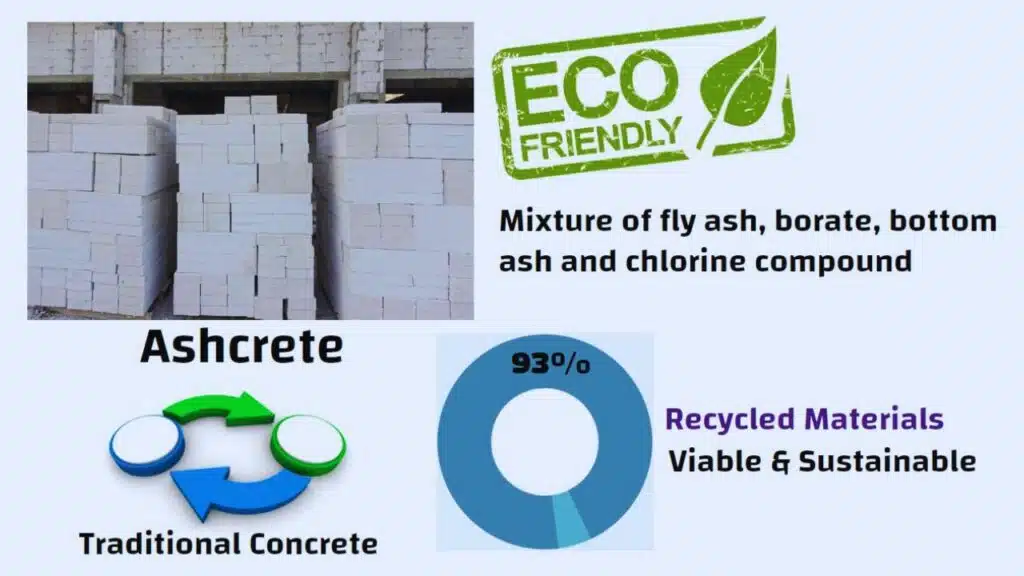
Ashcrete transforms waste-to-energy (WTE) ash into a powerful alternative to Portland cement through a groundbreaking chemical process. This green concrete contains 93% recycled material, primarily fly ash from municipal solid waste incineration.
The proprietary process takes freshly generated ash in wet slurry form and converts it into high-performance construction material within 24 hours. Chemical activation and acid treatment release hazardous components like heavy metals and dioxins.
Nanocomposites and specialty binders then rebuild stable mineral phases at the atomic level.
X-ray fluorescence testing proves this transformation works. The final product shows greatly reduced chlorides, sulfates, and toxic metals compared to original incineration ash. Silicon and calcium dominate the new atomic structure, creating silicate-based networks similar to traditional cement.
This circular economy approach diverts industrial waste from ash landfills while producing construction materials that match or exceed Portland cement performance. Steel manufacturing and coal ash can also feed this process, turning multiple waste streams into valuable building components for sustainable infrastructure projects.
What makes ashcrete suitable for durable roadways and pavements?
Ashcrete transforms waste into strong road foundations through its chemical bonding properties. This green concrete technology binds moisture and fine particles instantly upon contact.
The process creates a stable material that eliminates dust emissions and leachate problems. Civil infrastructure projects benefit from ashcrete’s high strength characteristics. Road base applications show excellent performance in real-world conditions.
The material meets all U.S. EPA regulatory limits under the Toxicity Characteristic Leaching Procedure (TCLP). Quality control tests reveal recovery values between 89% and 120%, which fall within accepted analytical limits.
These results classify ashcrete as non-hazardous for construction use.
Mobile systems bring ashcrete production directly to job sites, cutting transport costs significantly. Large-scale roadway projects find this approach cost-effective for their operations.
The technology eliminates long-distance hauling of materials to construction sites. Sidewalks and foundations gain durability from ashcrete’s pozzolanic properties. Chemical transformation occurs during the mixing process, creating a new material rather than just treated waste ash.
This transformation makes pavements safer and more durable than traditional concrete options. Blast furnace slag and fly ash combine to form stronger road surfaces. The circular economy benefits as construction debris gets upcycled into valuable building materials.
Coarse aggregates mixed with ashcrete create pavements that resist corrosion and weathering better than standard concrete.
How does ashcrete help build eco-friendly retaining walls?
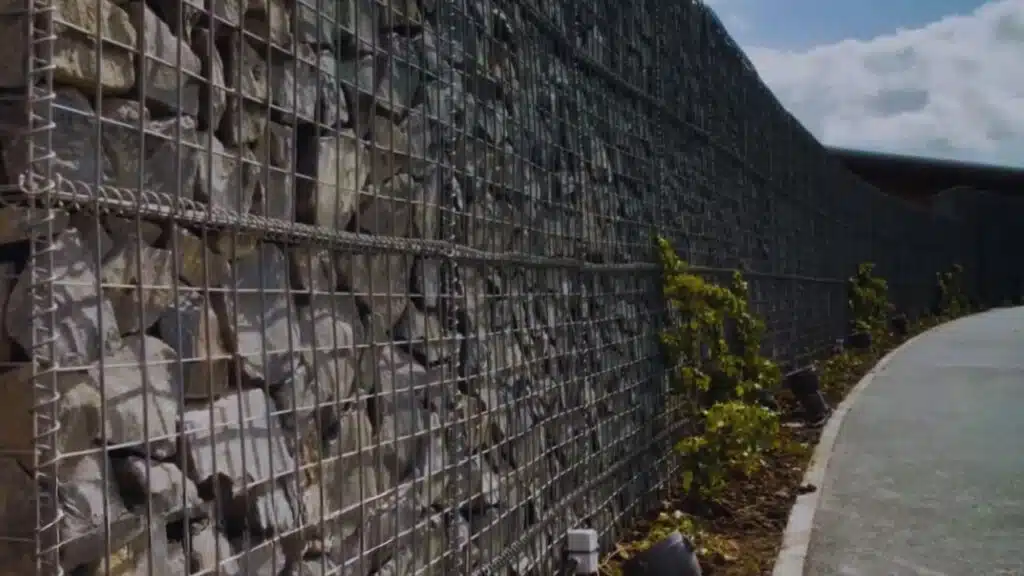
Retaining walls built with ashcrete solve two big problems at once. This green concrete captures CO2 and locks it away forever, turning waste-to-energy ash into climate-friendly building blocks.
The process transforms incineration ash from municipal solid waste into strong barriers that meet sustainable development goals. Heavy metals get permanently trapped inside the material, so toxic elements stay put and never leak out.
This matters a lot for riverbank stabilization projects where water quality protection is critical.
Ashcrete retaining walls help construction companies reach net zero targets by cutting embodied carbon in half. The material completely eliminates ash in any form, which removes environmental risks that come with landfilling waste.
Land reclamation projects use these walls to create new usable space while keeping hazardous materials safely contained. Ground granulated blast furnace slag and fly ash get recycled into durable structures instead of filling up landfill capacity.
Each wall built supports the circular economy by giving new life to materials that would otherwise create pollution problems.
What are the benefits of using ashcrete in precast concrete products?
Ashcrete transforms precast concrete manufacturing with its rapid 24-hour curing time. This speed boost cuts production cycles in half, letting factories make more products faster.
The material’s high calcium and iron content creates stronger precast elements than traditional concrete. Scientific validation proves ashcrete works safely in modular blocks, sound barriers, and other precast items.
X-ray fluorescence testing shows the new oxide profile improves material properties across the board.
Precast manufacturers love ashcrete’s mobile processing systems that work right on site. The proprietary process extracts valuable metals during production, supporting circular economy goals while cutting waste.
Green concrete made with fly ash and bottom ash eliminates environmental liabilities that come with standard precast products. This sustainable construction material meets all safety standards for public works like bike paths and stormwater systems.
The fully encapsulated form means zero hazardous waste concerns, making ashcrete perfect for widespread use in construction projects.
Why is ashcrete effective for strengthening marine structures?
Marine environments throw some serious challenges at construction materials. Salt water eats away at concrete like acid on metal. Traditional materials crack under pressure from waves and weather.
Ashcrete fights back with its chemical resistance and reduced permeability. The encapsulation process creates a barrier that stops water from getting inside. This means no leachate or dust generation that could harm fish and other sea life.
Coastal engineers love ashcrete for sea barriers and bridges because it sets faster than regular concrete. The geopolymer-like networks form strong bonds that laugh in the face of corrosive substances.
Projects using ashcrete for land reclamation show how tough this green concrete really is. Marine structures need materials that won’t give up when storms hit. Fly ash gets a second life instead of filling up landfill capacity, and the ocean gets stronger defenses against erosion.
Takeaways
Ashcrete transforms waste-to-energy ash into powerful construction materials, tackling two big problems at once. This green technology cuts landfill capacity needs while creating strong building products that last.
Construction companies can now turn municipal solid waste into roads, walls, and marine structures that fight corrosion. The circular economy gets a major boost when fly ash becomes tomorrow’s infrastructure instead of yesterday’s trash.
FAQs
1. What is ashcrete and how does it help reduce construction waste?
Ashcrete is green concrete made from fly ash, bottom ash, and other waste materials from incinerators. This sustainable construction material turns municipal solid waste into useful building blocks, supporting the circular economy. It cuts down on landfill capacity problems while creating strong concrete.
2. How does fly ash from waste-to-energy plants improve concrete quality?
Fly ash acts like cement when mixed with regular concrete. It makes the concrete stronger and gives it better corrosion resistance. The tiny particles fill gaps between cement grains, creating denser, tougher material.
3. Can ashcrete help meet sustainable development goals?
Yes, ashcrete supports multiple SDGs by reducing waste, cutting carbon emissions, and promoting green technology. It turns trash into treasure, literally.
4. What types of ash can be recycled into construction materials?
Bottom ash, fly ash, and incineration ash from waste-to-energy facilities work well in concrete. Silica fume and micro silica from other processes also make excellent additions. Even ground-granulated blast-furnace slag gets a second life in green construction.
5. Does using ash in concrete create environmental problems?
Modern scrubbers and filters remove most harmful substances like mercury and volatile organic compounds during incineration. The ash gets tested using x-ray fluorescence to check safety levels. Proper waste management makes ash recycling safe for construction use.
6. How much construction waste can ashcrete actually reduce?
Ashcrete can replace up to 30% of regular cement in many projects. With millions of tons of municipal solid waste getting incinerated yearly, that creates huge amounts of ash for construction. This process keeps tons of waste out of landfills while making quality building materials.