Do you fret when your fake grass looks dull in a day? You want Tips To Keep Your Artificial Lawn Looking Brand New. You don’t want spots, mats, or leaves to steal your curb appeal.
A quick rinse with a garden hose or a spin from a leaf blower can cut dust and grit in half. We show you ten simple steps to rinse, brush with a stiff brush, spot clean with dish soap or enzyme cleaner, and stop weeds fast.
Keep reading.
Key Takeaways
- Remove debris every three months (or more if kids or pets run on the lawn). Lift leaves and sticks with a blower, rake fibers upright, and rinse with a hose to stop matting.
- Rinse turf weekly in dry weather using a fan-spray nozzle. Scrub tough dirt with dish soap, rinse until the water runs clear, and let turf air‐dry to avoid slips.
- Brush fibers two ways with a stiff plastic brush and target high-traffic spots. Top up 10–15 kg of quartz sand per m² and rake it in to keep blades standing upright.
- Spot clean spills at once with warm water, detergent, or an enzyme cleaner. Apply yearly weed control at seams and edges, and call EasyTurf pros at 1300 475 499 or visit www.easyturf.com.au for deep checks.
Regularly Remove Debris

Leaves, twigs, and dirt can pile up fast on fake grass. Regular debris removal stops the artificial lawn from matting or wearing down.
- Run a blower over synthetic grass at least every three months, or more often if pets or children use the lawn, to lift leaves, small sticks, and debris from the turf pile.
- Sweep with a garden rake against the pile to stand artificial grass fibres upright and clear deeper litter.
- Scan high traffic areas near play zones or patio edges, pick out clumps of soil, grit, or stray leaves before they compact.
- Spray a garden hose across the turf to wash away dust and light soil, keeping the fibres bright and fresh.
- Scrape debris from the border near paving stones, then rinse to flush hidden grit from the edge.
- Skip using a lawn mower or trimming tools, since no cutting, edging, or trimming is required on this low-maintenance lawn.
Rinse the Lawn to Remove Dust and Dirt
A simple rinse revives dusty turf. A steady stream washes away loose debris.
- Connect a spray nozzle to your garden hose for better flow control.
- Adjust the nozzle to a fan spray to cover wide sections of synthetic grass.
- Aim the water at a low angle along artificial turf fibers to kick up dust.
- Scrub tough patches with dishwashing liquid and an outdoor broom to lift grime.
- Rinse until runoff looks clear and no suds cling to the surface.
- Schedule rinses weekly during dry seasons to mimic rain’s cleaning power.
- Let turf dry fully before use to avoid slips and help blades stand upright.
Brush the Turf to Maintain its Appearance
Turf needs a good sweep to look fresh. A lively brush session brings back its bounce.
- Choose a firm brush with plastic bristles: sweep over synthetic grass fibres to lift them, this method fights long-term flattening and supports regular artificial grass maintenance.
- Stroke turf in two directions: move the brush along then across the lawn, this cross-brushing fluffs blades for a plush look.
- Target high-traffic areas: sweep these spots more often to keep them springy, like a morning stretch for your backyard.
- Use a blower or grass rake to clear loose debris first: remove leaves or sticks to avoid scratching fibres.
- Brush after moving furniture: always rake around chair marks to restore pile height on your synthetic lawn.
- Top up sand infill as needed: sprinkle new sand then brush it in to support blades and keep turf upright.
Address Spills and Stains Immediately
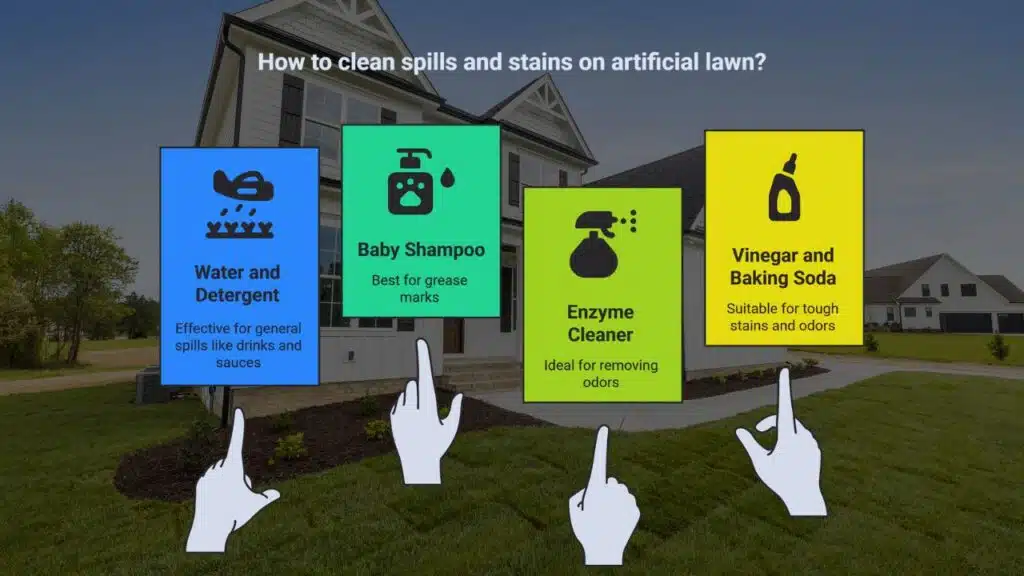
Spills on your artificial lawn need a quick fix to stay spotless. Use a garden hose, warm water, and a bit of detergent to flush away drinks or sauces. Grease marks respond well to a dab of baby shampoo mixed in warm water.
Spray an enzyme cleaner on any scent and let it work for a few minutes. Rinse thoroughly with a hose to remove residue.
Stuff like vinegar in water also tackles odd odors. You can shake on baking soda before the rinse for extra stain removal. Touch up spots in high traffic areas fast. A little care today keeps your synthetic turf looking new tomorrow.
Prevent Weed Growth with Annual Treatments
Annual weed control keeps your low-maintenance lawn neat and tidy. This step blocks sprouts at edges and in seams.
- Hand pull tiny weeds at turf edges to stop new sprouts early.
- Use a water-based weed killer on larger clusters, safe for your synthetic lawn.
- Rinse treated spots with your garden hose to wash away dead roots.
- Spray white vinegar on stubborn shoots near seams for a natural burn.
- Add pet-safe herbicide around high traffic areas to block airborn seeds.
- Dissolve a small dose of urea in water and mist around the turf as an added barrier.
Avoid Heat Damage from BBQs and Reflective Surfaces
Place barbecue grills at a safe distance from your artificial grass blades. High heat can warp synthetic lawn fibres and cause visible damage. Shiny panels or glass windows can reflect sunlight and raise ambient temperature on the turf.
Use an infrared thermometer to spot hot spots that you might miss with bare eyes. Spraying those areas with a garden hose can lower heat quickly.
Check and Replenish Infill as Needed
Low infill can flatten artificial grass fibres fast. Good infill keeps synthetic lawn upright.
- Inspect silica sand levels in synthetic lawn, study high traffic zones and edges.
- Measure sand per square meter, confirm quantity sits at 10 to 15 kg to boost resilience.
- Scatter quartz sand over low spots, smooth layer across blades.
- Operate leaf rake along turf, push sand into grass fibres, lift strands upright.
- Spray turf with garden hose, help silica sand settle between fibres.
- Check how water flows off turf, watch for puddles that block drainage.
- Add more sand if blades lean or infill sinks, keep drainage and support strong.
- Store extra quartz sand and garden hose near shed, handle quick touch ups.
Use Specialized Cleaners for Pet Odors
Enzyme cleaner acts as one of the best artificial grass cleaners for synthetic grass. Mix a 5% solution of household detergent with hot water, then scrub fresh pet waste. Rinse the area with a garden hose.
For stubborn odors, mist a mix of water and vinegar through a sprayer.
Scatter baking soda across the turf using a spreader for even coverage. Let it sit, then sweep or use a leaf blower to clear excess powder. You can swap in Zeolite as an extra natural deodorizer.
It keeps cleaning your fake grass simple.
Inspect the Lawn for Damage and Make Repairs
Check your artificial lawn for signs of damage. Small tears can turn into big gaps.
- Walk the synthetic lawn at dawn or dusk, spot frayed patches and worn places.
- Blow debris off fake grass with a leaf blower before checking seams.
- Tug along edges to spot loose seams or gaps that invite more damage.
- Spread industrial-strength glue under lifted seams, press artificial turf strips firmly.
- Drive nails or pegs into the backing at 6-inch intervals to lock edges.
- Line up grass pile direction when joining strips to blend fibres seamlessly.
- Add sand infill to any low zone, brush blades with a stiff broom to raise pile.
- Rinse repaired spots gently with a garden hose, let turf air dry for at least 24 hours.
Schedule Professional Maintenance When Necessary
Easy Turf pros swoop in to fix rips, refresh infill, and zap pet odors with enzyme cleaner. A brush machine and leaf blower help fluff synthetic grass fibers, hose off dust, and banish stains.
You can call 1300 475 499 or 1300 475 498 to book a visit, or go to www.easyturf.com.au for details. Australian Outdoor Living crews tackle harsh sun, hot barbecue sparks, and heavy foot traffic.
Their skills will extend your artificial lawn’s life span and keep it looking brand new.
They don’t roll in with a lawnmower, they come armed with laser-focused tools.
Takeaways
Brush it, rinse with a hose and rake away debris. Keep spills at bay with enzyme spray after a pet mess or BBQ. Blow off dust and leaves with a blower on low. Top up infill now and then to keep the blades upright.
Call a pro once a year for a deep check and repair. A neat lawn feels fresh when you treat it right.
FAQs
1. What is the best way to remove debris from my fake turf bed?
Grab a leaf blower or stiff broom to remove debris fast. Rinse with a garden hose to wash away grit. This quick step is vital for artificial grass maintenance and keeps a low-maintenance lawn looking top notch.
2. How do I handle spills on my synthetic grass?
Act fast; blot spills on man-made blades with a cloth. Add dish washing soap or a dab of enzyme cleaner for stain removal, scrub gently, then rinse well. Let it dry under the sun for a fresh finish.
3. How do I care for high traffic areas in my man-made meadow?
After a barbecue, guests tramp through and flatten the turf; brush artificial grass fibres to lift those spots, add sand infill if it feels flat. This trick makes one of the best backyard upgrades, and your lawn will bounce back in no time.
4. When cleaning my artificial lawn, can I use regular cleaners?
Yes, mix dish washing liquid with water or grab an artificial grass cleaner. Spray on, brush lightly, then rinse with your garden hose. It is a simple outdoor living solutions hack that works every time.
5. Is it okay to use mineral spirits on my artificial turf?
For grease or oil stains, apply a small amount of mineral spirits to the spot; let it sit one minute, then blot with a clean cloth. Rinse thoroughly with a hose. It handles tough stains even in australian outdoor living setups.