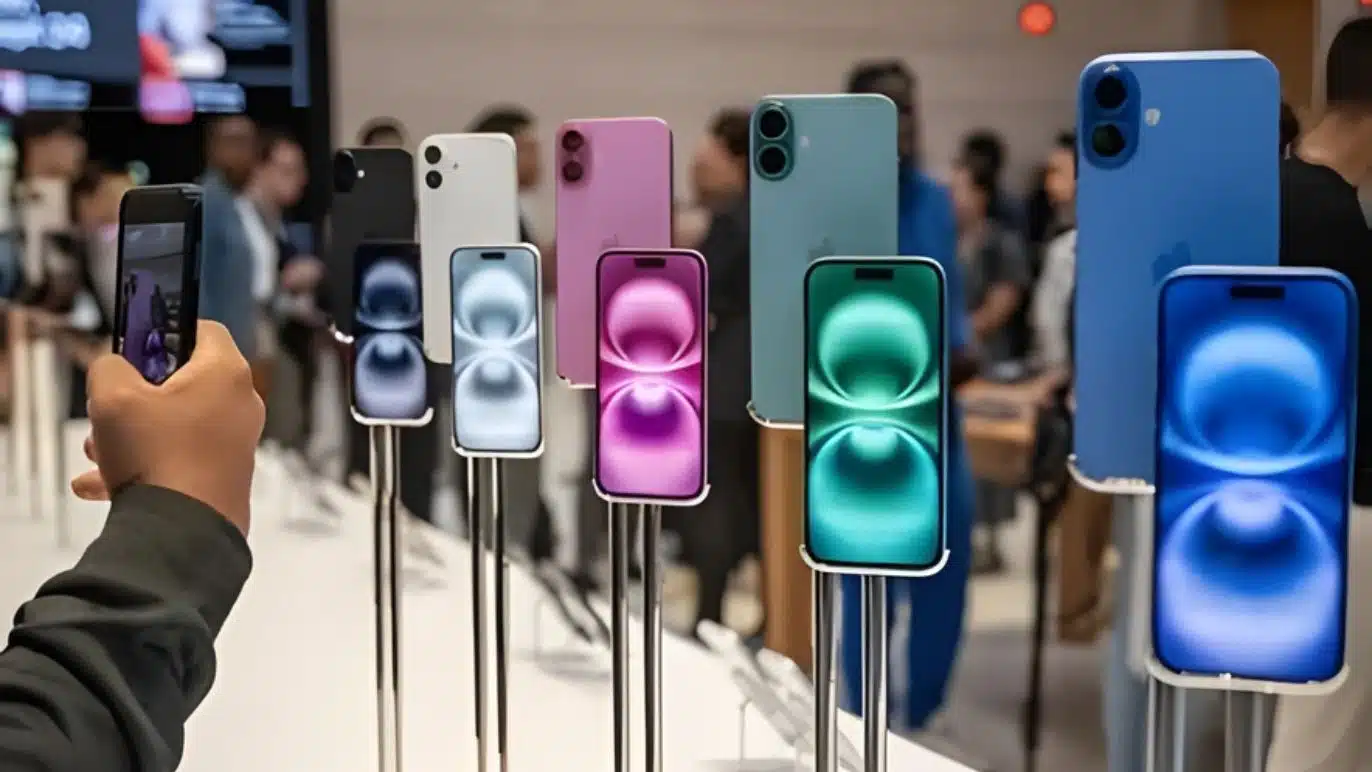
Apple is reportedly preparing the biggest revamp of its iPhone lineup in years, with plans to sell at least seven different iPhone models annually by 2027, including its first-ever foldable iPhone, expected to debut in 2026. The expanded roadmap aims to stabilize revenue across the year, introduce bold new form factors, and culminate in a 20th‑anniversary, almost all‑screen iPhone with advanced under‑display camera technology around 2027.
A Major iPhone Expansion by 2027
According to a detailed roadmap shared with suppliers and reported by multiple outlets, Apple plans to grow its iPhone portfolio from the current five models to at least seven by fall 2027. The shift is described as one of the most dramatic expansions of the iPhone range since its launch in 2007, pairing new designs with a reworked launch calendar.
The move is designed not just to add more devices, but to give Apple finer control over pricing tiers, niche audiences, and upgrade cycles. By offering more models—with distinct designs and feature sets—the company can target mainstream buyers, early adopters, and ultra‑premium customers without relying on just one or two flagship launches each year.
Why Apple Is Reshaping the Lineup
Reports suggest Apple’s leadership wants to smooth out what has become a feast‑or‑famine sales pattern anchored around a single major launch window each fall. By staggering different iPhone variants over the calendar, Apple hopes to reduce end‑of‑year manufacturing stress and avoid bottlenecks that have plagued recent launches.
The expansion is also a strategic response to a maturing smartphone market, where growth now comes from premium niches like foldables, camera‑centric devices, and cutting‑edge design rather than simple annual spec bumps. As competition from Samsung, Google, and Chinese manufacturers intensifies, having a broader iPhone family is seen as crucial to defending Apple’s dominant share of the high‑end segment.
Seven Models: How the Future iPhone Family Could Look
While model names can still change, supplier leaks and roadmap summaries point to a seven‑device structure built around three pillars: standard iPhones, ultra‑thin “Air” models, and foldables or anniversary editions. The standard range is expected to include a baseline iPhone, an “e” variant focused on value, and Pro/Pro Max versions targeting power users.
On top of that, Apple is planning to keep a slimmer iPhone Air concept and add at least one foldable model, alongside a radical 20th‑anniversary device featuring a nearly uninterrupted screen. Together, these products would occupy price points from the upper mid‑range to well above today’s most expensive iPhones.
First Foldable iPhone Set for 2026
The centerpiece of this roadmap is Apple’s first foldable iPhone, which multiple insiders now say is scheduled for fall 2026, likely alongside the iPhone 18 family. Internally referenced with a dedicated project code, the foldable has been described by sources as the “star” of that year’s lineup.
Unlike Samsung’s tall, book‑style Galaxy Z Fold models, Apple’s device is reportedly designed to be wider than it is tall when unfolded, evoking a compact iPad‑like canvas for multitasking, reading, and media viewing. This orientation could help distinguish the product in a market where many foldables still resemble elongated phones more than tablets.
Design: “Two iPhone Airs Side‑by‑Side”
One vivid description from people involved in testing likens the foldable iPhone to “two titanium iPhone Airs side‑by‑side.” Apple is expected to reuse materials and design language from the ultra‑thin iPhone Air—such as a lighter frame and refined edges—to keep the foldable from feeling bulky.
To address a common criticism of early foldables, Apple is said to be working on a crease‑minimizing hinge and flexible OLED panel that render the central fold “nearly invisible” in daily use. Suppliers Samsung Display and LG Display are reportedly involved in delivering the specialized panels, which must withstand years of folding while maintaining color and brightness uniformity.
Price: Apple’s Costliest iPhone Yet
Analysts expect the foldable iPhone to become Apple’s most expensive handset, with current projections centering around a starting price near 1,999 dollars in the United States. That would place it in direct competition with Samsung’s Galaxy Z Fold series, which also starts around the same price point, and potentially above many high‑end laptops.
Earlier estimates had suggested a wider band between about 1,800 and 2,500 dollars, but more recent reporting has converged on the 1,999‑dollar mark as Apple weighs component costs, yields, and competitive positioning. Even at that level, the foldable would mainly target early adopters and professionals rather than mainstream buyers, at least in its first generation.
Under‑Display Camera: Foldable as a Testbed
The foldable iPhone will not only introduce a new form factor; it is also expected to debut Apple’s next‑generation under‑screen camera system, hiding the selfie camera beneath the display without a notch or Dynamic Island. A Chinese leaker known as Digital Chat Station has claimed the company plans to trial this technology in the foldable first, before porting it to its non‑foldable flagship in 2027.
This staged approach allows Apple to gather feedback on image quality, transparency layers, and long‑term durability of the under‑display section before rolling it out at wider scale. If successful, it would clear the last major visual obstruction from the iPhone’s front, realizing a design goal often described internally as a “single slab of glass.”
The 2027 All‑Screen, 20th‑Anniversary iPhone
By 2027, the iPhone will mark its 20th anniversary, and several reports suggest Apple is preparing a special flagship to coincide with that milestone. This device is rumored to integrate the refined under‑display camera and potentially house sensors and Face ID components entirely beneath the panel, creating an uninterrupted, edge‑to‑edge screen.
Some sources describe parallel efforts inside Apple: one focused on the foldable line and another on a curved‑glass “anniversary” model that wraps the display more dramatically around the body. While specifics can still shift, both initiatives underline Apple’s push to use 2026–27 as a turning point in how the iPhone looks and feels.
A New Launch Calendar: Not Just September
The seven‑model strategy is paired with a rethinking of when iPhones arrive. Instead of dropping the entire family in September, Apple is reportedly planning to split launches into at least two major windows each year. One phase would continue to center around the traditional fall keynote, while a second wave could come roughly six months later.
For example, reports indicate the iPhone 18 Pro and 18 Pro Max will likely retain the classic September slot, with the standard iPhone 18, an “e” model, and a refreshed iPhone Air arriving about half a year afterward. This pattern could ultimately carry into the foldable and anniversary devices, spreading marquee releases across seasons instead of clustering them into a single event.
How the Seven‑Model Strategy Could Be Structured
Industry reporting suggests the future iPhone range may be organized along these broad lines, though names and exact positioning are still subject to change.
| Tier / Role | Likely Models by 2027 (indicative) | Key Focus Areas |
|---|---|---|
| Entry / Value | iPhone “e”, prior‑year standard | Lower price, mainstream specs, broad markets |
| Core Flagship | iPhone 18 / 19 standard | Balanced features, large volume segment |
| Performance / Pro | iPhone Pro, Pro Max | Top chips, cameras, premium displays |
| Design‑Led Thin Model | iPhone Air | Ultra‑thin chassis, new materials |
| New Form Factor | Foldable iPhone | Large internal canvas, under‑display camera |
| Anniversary / Concept | 20th‑anniversary all‑screen model | Under‑panel camera, radical glass design |
These categories reflect Apple’s attempt to meet different user priorities—from value and battery life to design, portability, and experimental form factors—without diluting the core iPhone brand.
Competitive Pressure from Samsung and Others
Apple’s foldable arrives against the backdrop of Samsung’s long head start with the Galaxy Z Fold and Flip series, as well as newer entrants from Google and Chinese brands. Market research firms estimate that global shipments of foldables reached the mid‑teen millions in units in recent years, with projections of double‑digit annual growth through the second half of the decade.
By entering later, Apple risks ceding part of the innovation narrative—but it also gains the chance to leapfrog early hardware compromises, such as fragile hinges and prominent creases, that dogged first‑generation devices. With a premium price and tight ecosystem integration, Apple is expected to pitch its foldable less as an experiment and more as a polished extension of the iPhone line.
What It Means for Consumers
For everyday buyers, the biggest immediate impact of this roadmap is likely to be more choice and a wider spread of price points, especially in the 2026–27 window. Shoppers may be able to pick between a traditional bar‑style iPhone, a lighter Air variant, or a foldable designed for split‑screen productivity and tablet‑like media use, all within the same ecosystem.
However, the introduction of ultra‑premium devices—particularly the foldable and anniversary editions—could push the top of the iPhone price ladder well beyond today’s Pro Max range. That dynamic is likely to deepen the gap between mainstream iPhones and halo products aimed at enthusiasts, similar to what has happened in the laptop and smartwatch markets.
Risks and Unknowns in the Roadmap
As with any long‑term product plan, there are caveats. Reports emphasize that Apple’s timeline and technical decisions are still contingent on solving engineering challenges around under‑display cameras, foldable hinges, and mass‑production yields. Suppliers also face pressure to deliver new materials at scale, which could affect both cost and launch timing.
Moreover, not all experiments turn into permanent fixtures. The iPhone Air itself is described by some sources as more of a technology showcase and testbed than a guaranteed, annually updated product line, which may also be true of first‑generation foldables. Apple is known for killing or reshaping projects internally if they fail to meet performance, profitability, or user‑experience targets.
A Once‑in‑a‑Generation Overhaul
Even with those uncertainties, there is broad agreement among analysts and leakers that Apple is entering a rare period of unusually aggressive iPhone experimentation. Between 2026 and 2027, the company is expected to introduce its first foldable, expand the lineup to seven models, and move closer than ever to a truly all‑screen, 20th‑anniversary iPhone.
For Apple, the strategy is about keeping the iPhone at the center of its hardware business in a world where growth is harder to find and expectations are higher than ever. For consumers, the next two years could offer the most diverse range of iPhone choices—by size, shape, and technology—that the company has ever put on the market.