Anthropic AI efficiency strategy is sharpening focus on “doing more with less” even as the AI industry pours historic sums into chips and data centers, betting that smarter training and cheaper serving can compete with brute-force scale.
What Anthropic is doing
Anthropic’s leadership says the company has often operated with less compute and capital than top rivals, yet still produced high-performing models—an approach it frames as disciplined spending plus algorithmic efficiency. The company’s stance does not reject scaling; it argues that the next phase of competition will also reward teams that improve capability per unit of compute and lower the ongoing cost of running models for customers.
Anthropic also signals it is not “small-budget” in absolute terms, describing itself as having roughly $100 billion in compute commitments while expecting needs to keep rising as competition intensifies. In parallel, the company is publishing research meant to quantify real-world value, estimating that the work Claude handles in a typical conversation would cost a median of $54 in professional labor to hire an expert to do.
The spending arms race
Across Big Tech and leading AI labs, capital spending has increasingly centered on AI infrastructure—especially GPU-equipped data centers that can train and serve large models. Microsoft said it is on track to invest about $80 billion in fiscal 2025 to build AI-enabled data centers for training and deployment, and noted that more than half of that spending is expected to be in the United States.
Meta has also guided to sharply higher 2025 capital expenditures, saying it expects capex (including principal payments on finance leases) in the range of $64–$72 billion, citing additional data center investment to support AI efforts and higher infrastructure hardware costs. OpenAI, meanwhile, announced a $40 billion funding round at a $300 billion post-money valuation to support continued frontier research and related needs.
Key disclosed commitments and capex signals
| Company / Organization | What was disclosed | Amount | Time frame | What it’s for (as described) |
| Anthropic | Compute commitments | ~$100B | Ongoing / referenced as current posture | Compute capacity to stay competitive at the frontier |
| Microsoft | Investment to build AI-enabled datacenters | ~$80B | Fiscal 2025 | Data centers to train and deploy AI models |
| Meta | Capital expenditures outlook (incl. finance leases) | $64–$72B | 2025 | Data centers and hardware supporting AI efforts |
| Alphabet | Planned capital spending reaffirmed | ~$75B | 2025 | Expanding data center capacity amid AI demand |
| OpenAI | New funding round | $40B | Announced March 2025 | Funding to push AI research forward |
Why efficiency matters now
The cost curve for leading AI is being shaped not only by training ever-larger systems, but also by “inference” costs—what it takes to run models at scale for millions of queries inside products. Anthropic’s messaging highlights post-training methods, better data, and product choices that reduce operating costs, aiming to make large-scale adoption more practical for enterprises that care about predictable unit economics.
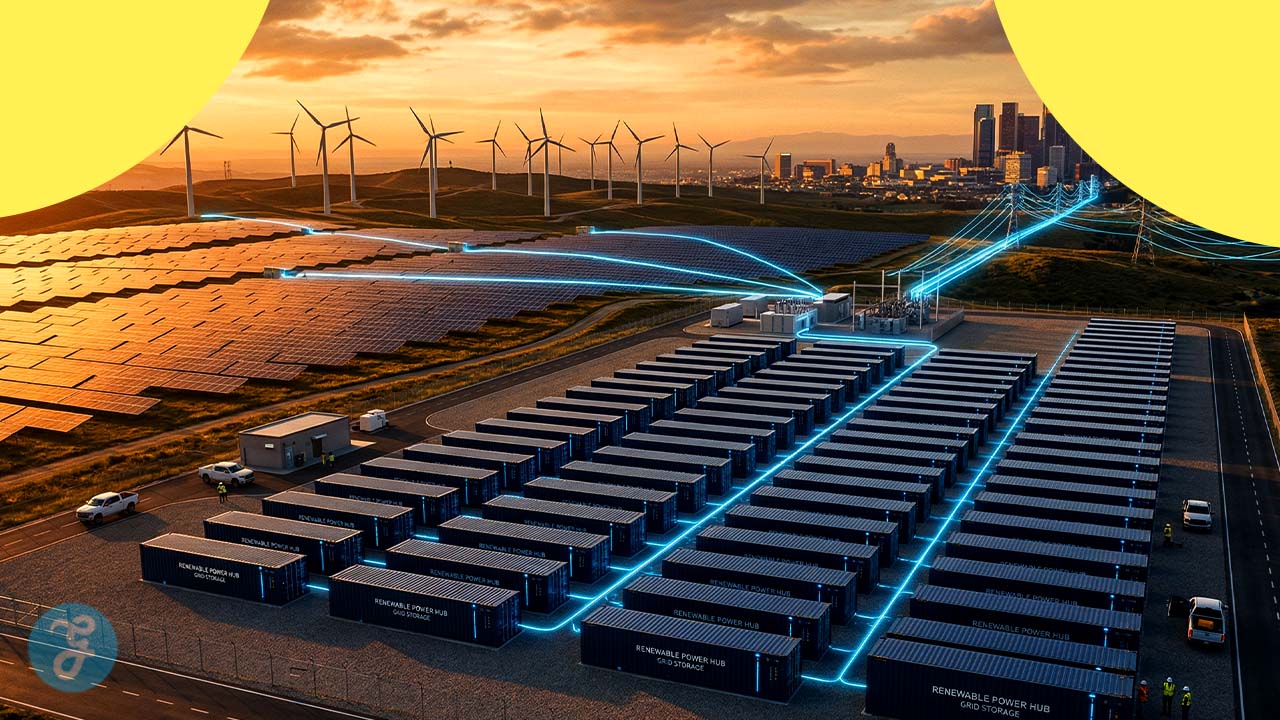
Physical constraints are also rising in importance, especially electricity and grid capacity for data centers. The International Energy Agency (IEA) estimates data centers consumed about 415 TWh of electricity in 2024 (around 1.5% of global electricity use) and projects demand could more than double to roughly 945 TWh by 2030. If power, sites, and hardware delivery schedules become bottlenecks, improving “compute efficiency” can translate into faster deployment and lower costs without waiting for the next mega-campus to come online.
What changes for customers and investors
For enterprise buyers, the market is increasingly offering a choice between providers optimizing for maximum capability through scale and providers emphasizing cost-performance, flexibility, and multi-cloud optionality. Anthropic’s approach stresses flexibility—keeping room to shift infrastructure choices based on cost and customer demand—rather than locking into a single, fixed buildout path.
For investors, the split is also about risk management: large, long-lived infrastructure bets can pay off if demand accelerates as expected, but they can create heavy fixed costs if adoption lags behind technical progress. Anthropic’s “efficiency-first” narrative is positioned as a hedge against that uncertainty, while still acknowledging that compute requirements remain “very large” and likely to grow.
Final thoughts
Anthropic AI efficiency strategy is emerging as a direct counterpoint to the industry’s biggest spending plans, arguing that better capability-per-dollar and lower serving costs can be as decisive as raw scale. At the same time, disclosed capex plans from Microsoft and Meta—and large funding rounds in the AI sector—show the infrastructure race is still accelerating rather than cooling. The next 12–24 months are likely to test which approach converts fastest into reliable enterprise adoption: ever-bigger training runs, or measurable cost-performance improvements that make AI cheaper to use every day.