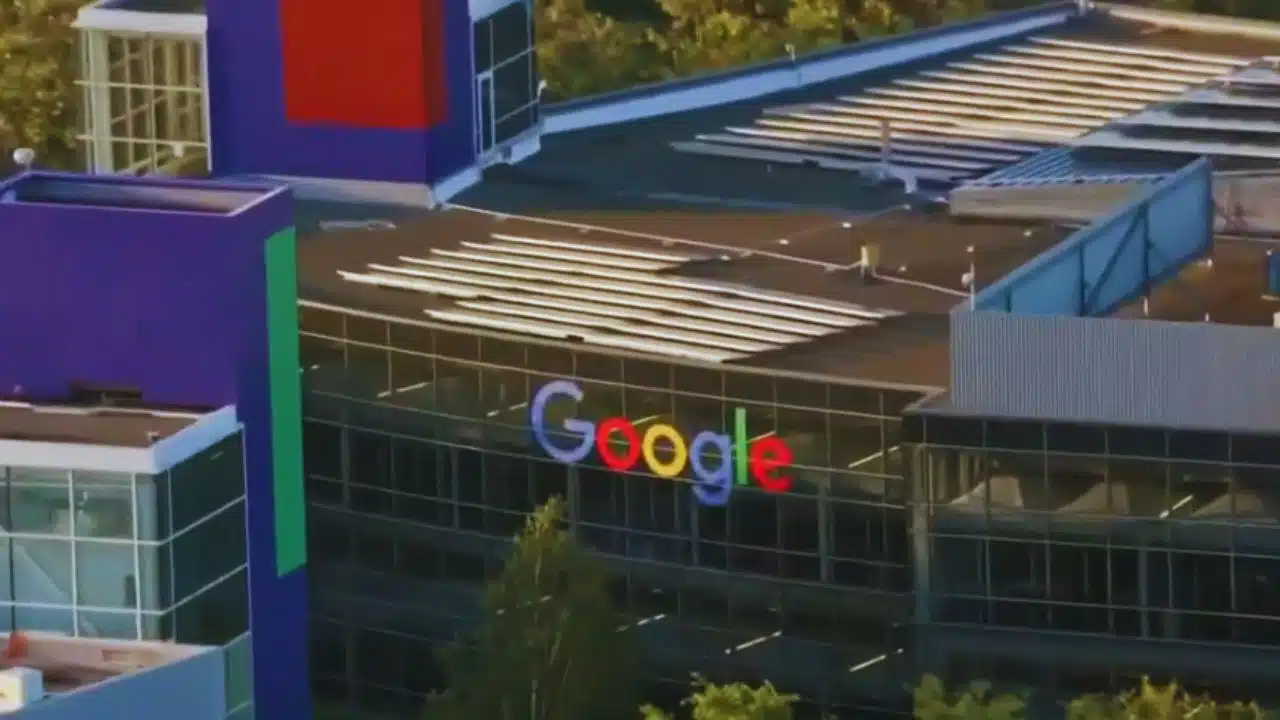
Alphabet Inc., the parent company of Google, has officially entered the $3 trillion market capitalization club, joining Apple and Microsoft in one of the most elite categories of global business. This is the first time Alphabet has crossed this valuation threshold, cementing its position as one of the world’s most influential technology companies. The achievement reflects a combination of booming investor confidence, AI breakthroughs, cloud growth, and a recent favorable antitrust ruling that helped remove major regulatory uncertainty.
On September 15, 2025, Alphabet’s Class A shares surged by 3.8% to $250, while its Class C shares rose by 3.7% to $250.40. Both share classes reached record-high prices, driving Alphabet’s total market value past the historic $3 trillion mark.
Stock Performance and the “Magnificent Seven”
Alphabet’s surge is especially remarkable when compared with other major U.S. technology companies often referred to as the “Magnificent Seven” — Alphabet, Apple, Microsoft, Nvidia, Amazon, Meta, and Tesla.
- Alphabet’s stock has gained over 32% in 2025 alone, making it the best performer among the group.
- In comparison, the S&P 500 index has climbed just 12.5% this year, underscoring how tech giants have disproportionately powered Wall Street’s rally.
- Alphabet now sits alongside Apple and Microsoft, which previously crossed the $3 trillion threshold, while Nvidia remains ahead with a staggering $4.25 trillion market cap, boosted by its dominance in AI chip manufacturing.
This growth positions Alphabet not only as a central figure in global technology but also as a pillar of U.S. stock market strength.
The AI Wave Driving Big Tech
One of the strongest forces behind Alphabet’s valuation surge has been the explosive growth of artificial intelligence (AI). Since late 2022, when generative AI tools reshaped global technology markets, investors have flocked to companies best positioned to lead this new era.
Alphabet has doubled down on:
- Gemini AI, its next-generation large language model suite designed to compete with OpenAI’s GPT-4 and beyond.
- Custom in-house AI chips, developed to improve efficiency and reduce reliance on external suppliers.
- AI integration across Google products, including Search, YouTube recommendations, Google Workspace (Docs, Sheets, Gmail), and its cloud division.
These moves have begun paying off financially. In the second quarter of 2025, Alphabet’s Google Cloud division reported nearly 32% revenue growth year-over-year, a clear signal that AI-driven services are gaining traction among enterprises.
Antitrust Ruling Brings Relief to Investors
Another key driver of Alphabet’s rally was a recent U.S. court ruling that eased regulatory fears. The decision, issued earlier in September 2025, allowed Alphabet to retain full control of its Chrome browser and Android operating system — two pillars of its dominance in global technology.
- Regulators had considered breaking up Alphabet’s control over Chrome and Android, which would have fundamentally reshaped the company’s business.
- Instead, while the ruling requires Alphabet to share some search and advertising data with rivals and to end certain exclusive contracts, it stopped short of ordering a divestiture.
- For investors, this was critical. Not having to spin off Chrome or Android removed the possibility of a structural breakup, which had long been viewed as one of the biggest risks facing the company.
This ruling boosted confidence in Alphabet’s ability to defend its ecosystem while still complying with new competitive rules.
More Than Just a Search Company

Historically, Alphabet’s business model has been deeply tied to Google Search and its advertising revenues. While Search remains the company’s primary engine, the narrative around Alphabet is shifting.
Investors are increasingly seeing Alphabet as a multi-layered tech conglomerate:
- YouTube continues to dominate the online video ecosystem and generate billions in ad revenue.
- Waymo, Alphabet’s autonomous vehicle unit, is expanding commercial trials of self-driving taxis.
- Google Cloud has become the third-largest cloud computing provider globally, behind Amazon Web Services and Microsoft Azure.
- Other Bets, including healthcare and quantum computing, show Alphabet’s ambition to diversify far beyond Search.
As Dennis Dick, chief strategist at Stock Trader Network, noted, “This isn’t just a search company anymore, this is a company moving into a lot of other things.”
Sector and Market Dynamics
Alphabet’s success reflects broader market momentum. The communications services sector, where Alphabet is classified within the S&P 500, has surged more than 26% this year, making it the best-performing sector among all 11 S&P sub-indexes.
The information technology sector, which includes Microsoft, Apple, and Nvidia, follows closely in second place. Both sectors have been driven almost entirely by investor optimism in AI-related technologies and expectations that the U.S. Federal Reserve may cut interest rates soon — a move that could make growth stocks even more attractive.
Valuation: Still Attractive Compared to Peers
Despite its historic rally, Alphabet is not considered excessively expensive relative to other mega-cap tech firms.
- Alphabet trades at about 23 times its forward earnings.
- This is slightly above its five-year average of 22×, but lower than Apple, Microsoft, and Nvidia, which trade at higher multiples.
- Analysts point out that Alphabet’s relatively lower valuation gives it more room to grow compared with peers, especially as it proves it can monetize AI across multiple verticals.
Risks and Challenges Ahead
While Alphabet’s rise is historic, challenges remain:
- Regulatory scrutiny – U.S. and European regulators continue to probe Google’s advertising business and market dominance. Future rulings could impact how it operates its ad tech stack.
- Competition in AI – Microsoft (with OpenAI), Meta, Amazon, and Nvidia are all racing to dominate AI infrastructure and applications. Alphabet will need to sustain innovation to maintain its edge.
- Dependence on advertising – Despite diversification, Search and YouTube ads still provide the majority of Alphabet’s revenue. Economic slowdowns could impact ad spending.
- Global risks – Geopolitical tensions, data privacy laws, and cybersecurity threats pose ongoing challenges for a company with global reach.
A Company at a Crossroads
Alphabet’s entry into the $3 trillion club is not just a financial milestone but a signal of investor faith in the company’s long-term strategy. The combination of strong AI positioning, robust cloud growth, and relief from a potential breakup has created the perfect storm for its market surge.
Still, the company’s future will depend on how well it adapts to new legal obligations, balances its advertising reliance, and competes in the fierce AI arms race. For now, Alphabet’s achievement confirms that it is no longer seen as simply a search giant but as a diversified technology leader shaping the future of global innovation.
The Information is Collected from The Hindu and Live Mint.