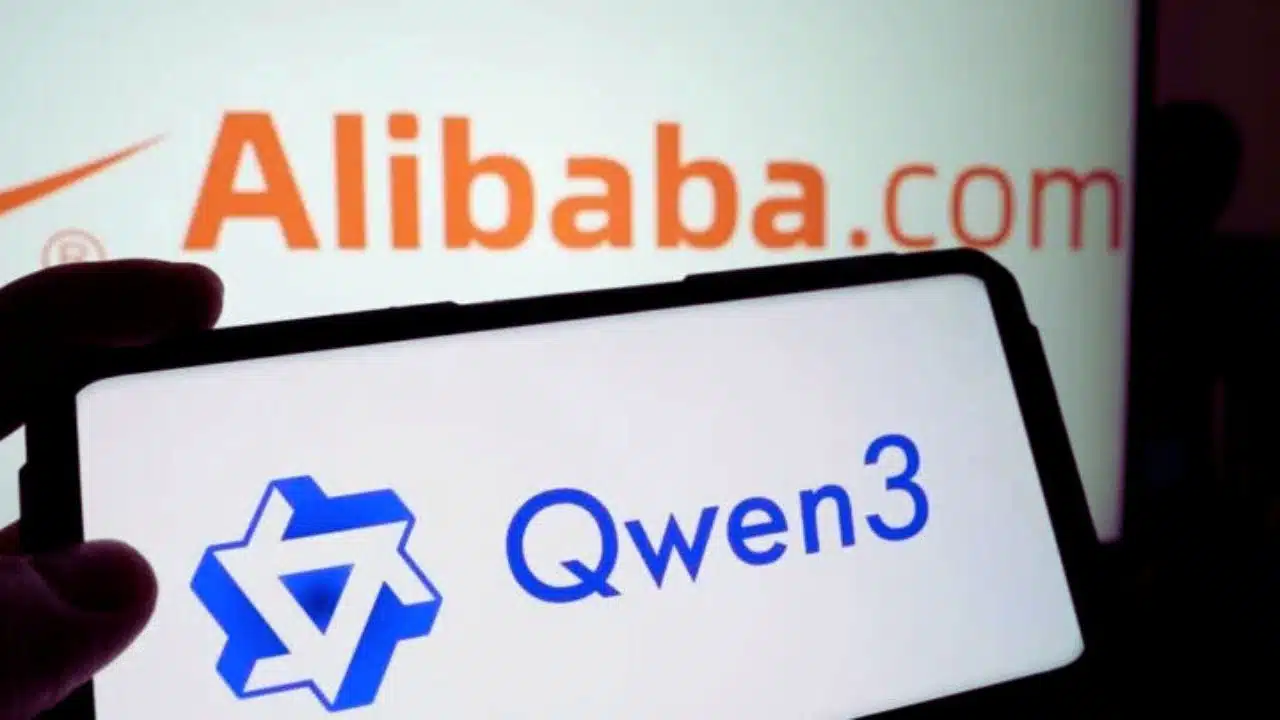
WIRED is betting that Alibaba’s Qwen will be the AI name to watch in 2026, as the Chinese tech giant accelerates releases across text, vision, audio, and developer tools while pushing an unusually open ecosystem strategy.
Why WIRED is betting on Qwen
WIRED’s core argument is simple: AI leadership may shift fast, and 2026 could be “all about Qwen,” not the usual US-built chatbot brands.
That prediction lands as Alibaba keeps broadening Qwen beyond a single chatbot into a product family that can be embedded in cloud services, enterprise software, and consumer apps.
Several forces explain why Qwen is even in this conversation:
- Release velocity and breadth: Qwen now spans general language models, coding-focused models, vision-language models, long-context variants, and multimodal “omni” designs.
- Ecosystem strategy: Alibaba has framed Qwen as a wide open-model portfolio, stating Qwen2.5 alone covers “over 100 models” across base/instruct/quantized variants and multiple modalities.
- Distribution at scale: Alibaba said Qwen models (since April 2023) were downloaded over 40 million times and used to create more than 50,000 derivative models on open platforms.
What Alibaba released (and when)
Alibaba’s Qwen story is easier to understand as a timeline: a steady cadence of model families, plus specialized releases aimed at developers and multimodal use cases.
Qwen timeline (key milestones)
| Date | Release | What changed / why it mattered |
| Apr 2023 | Qwen models introduced | Alibaba dates Qwen’s introduction to April 2023, before the later “2.x/3.x” branding matured. |
| Sep 2024 | Qwen2.5 (Apsara Conference) | Alibaba Cloud said Qwen2.5 includes 100+ models across language, audio, vision, and domain models like code and math, and cited 40M+ downloads and 50K+ derivatives since launch. |
| Nov 2024 | Qwen2.5-Coder series open-sourced | The Qwen team said the Qwen2.5-Coder line targets code LLMs, with the 32B instruct model positioned as top-tier among open code models on common coding benchmarks, and noted licensing details including Apache 2.0 for several sizes. |
| Jan 2025 | Qwen2.5-VL (vision-language) | The Qwen team said Qwen2.5-VL is the new flagship vision-language model and that base + instruct models were opened in 3B, 7B, and 72B sizes. |
| Late Jan 2025 | Qwen2.5-Max | Alibaba described Qwen2.5-Max as a large-scale MoE model in its Qwen blog, and reporting around the launch tied it to fast-moving competition in China’s model market. |
| Apr 2025 | Qwen3 family (hybrid reasoning) | Alibaba launched Qwen3 as “hybrid” reasoning models that can switch between quick answers and deeper “thinking,” and said some versions use MoE for efficiency. |
| May 2025 | Qwen2.5-Omni-7B | Alibaba Cloud positioned Qwen2.5-Omni-7B as an end-to-end multimodal model and also noted Qwen2.5-Max reached a top-10 style placement (ranked 7th) on Chatbot Arena at the time referenced. |
| Dec 2025 | Qwen3-TTS updates | Qwen’s official site listed new Qwen3-TTS family models released on Dec 22, 2025. |
What makes Qwen different in 2025–2026
Alibaba has pushed Qwen as a practical “builder” platform: models for developers, models for vision tasks, and models that can be deployed with different cost/performance tradeoffs.
Hybrid reasoning and MoE cost logic
Alibaba described Qwen3 as “hybrid” reasoning models that can spend more time reasoning on complex tasks or respond quickly for simple prompts.
The same Qwen3 announcement emphasized that some models use mixture-of-experts (MoE), a common approach designed to improve efficiency by activating only parts of a larger network per query.
Scale signals: tokens, languages, and “thinking budget”
Alibaba said Qwen3 supports 119 languages and was trained on a dataset of over 36 trillion tokens, combining sources such as textbooks, Q&A, code, and AI-generated data.
For API users, third-party reporting on Qwen3’s developer controls described the ability to tune “thinking duration” (a thinking budget) to balance speed and compute cost for different tasks.
Open ecosystem as a growth engine
Alibaba has repeatedly tied Qwen’s momentum to open distribution, stating that Qwen’s open releases helped drive tens of millions of downloads and tens of thousands of derivatives.
Separate coverage of the Qwen3 wave also highlighted Alibaba’s claim that Qwen’s derivative ecosystem has reached very large scale (including figures above 100,000 derivatives in some write-ups), signaling how much downstream building is happening around the models.
Big spending meets product rollout
By late 2025, Alibaba’s AI push was also being discussed as an infrastructure story, with coverage citing a roughly $53 billion, multi-year commitment tied to AI infrastructure and expansion.
That kind of investment matters because model leadership is not only about research quality; it also depends on data centers, inference cost, and the ability to ship updates continuously.
Key capabilities at a glance
| Capability theme | What’s publicly described | Why it matters for 2026 competition |
| “Hybrid” reasoning | Qwen3 can switch between thinking and non-thinking modes. | Competes with the industry shift toward models that reason more on demand without forcing maximum latency every time. |
| Multilingual reach | Alibaba said Qwen3 supports 119 languages. | Supports expansion outside China and reduces friction for global enterprise use. |
| Training scale | Alibaba said Qwen3 was trained on 36T+ tokens. | Signals aggressive scaling to keep up with frontier training regimes. |
| Vision-language | Qwen2.5-VL was positioned as a flagship VLM with open model sizes including 3B/7B/72B. | Affects use cases like document reading, retail search, and visual QA in apps. |
| Developer tooling | Qwen2.5-Coder was presented as a dedicated open-source code model line. | Coding remains one of the clearest “ROI” use cases for enterprise AI adoption. |
What it means for the AI market in 2026
If Qwen’s trajectory continues, the competitive picture in 2026 may be less about one “best chatbot” and more about which vendor offers the best full stack: open-weight options, strong coding performance, multimodal understanding, and predictable deployment economics.
Qwen’s strategy also reinforces a broader pattern: open model ecosystems can become distribution channels, where third parties fine-tune, localize, and package capabilities faster than a single company can do alone.
For businesses and developers, the practical watchpoints going into 2026 are:
- Whether Qwen’s open ecosystem keeps expanding and remains easy to deploy across regions and compliance environments.
- Whether Alibaba’s “hybrid reasoning” approach becomes a stable developer standard that reduces inference cost without sacrificing quality.
- Whether Qwen maintains rapid, credible upgrades across multimodal and agent-like workflows (coding + vision + long context), which many teams now treat as table stakes rather than “nice-to-have.”
Final thoughts
WIRED’s “2026 will be all about Qwen” framing captures a real shift: Qwen is no longer just a China-market alternative, but a fast-shipping model family tied to a broad open ecosystem and a major cloud vendor’s infrastructure.
The next year will likely test whether that mix—open distribution, hybrid reasoning, and heavy infrastructure investment—translates into durable global usage, not just impressive releases.