Have you ever noticed how extreme weather feels like it is happening closer to home every year? Climate change affects all of us, and the problem grows bigger each season. Rising temperatures, unpredictable storms, and melting ice sheets threaten our neighborhoods, our food supply, and our future. We need solutions that work fast. Artificial intelligence offers real hope. Machines can process massive amounts of data and spot hidden patterns that humans easily miss. AI in climate change represents one of our best tools to turn things around.
Here is a striking fact. AI can analyze satellite images to track deforestation across entire rainforests in real time. This same task would take human researchers months or even years to accomplish. Scientists, engineers, and tech companies now use machine learning to predict weather disasters, optimize renewable energy, and cut carbon emissions across industries.
I am going to walk you through exactly how AI in climate change works, from monitoring greenhouse gases to cleaning up our oceans.
The Role of AI in Fighting Climate Change
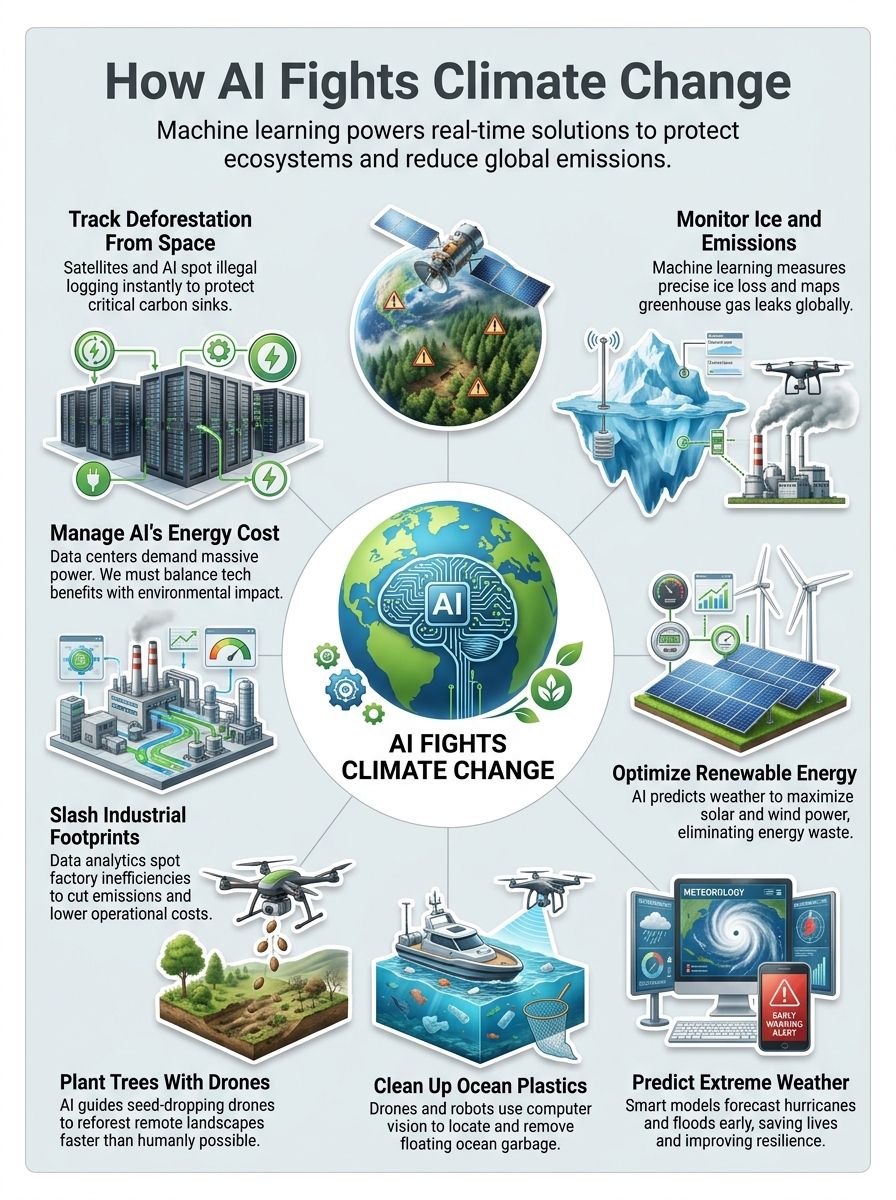
Artificial intelligence acts as a powerful tool that helps scientists and organizations track environmental changes. It predicts future climate patterns with incredible speed.
AI systems process massive amounts of data from satellites, sensors, and weather stations. This gives us real-time insights into what is happening to our planet.
Overview of AI’s potential in climate action
Machine learning algorithms analyze massive amounts of environmental data. They track carbon emissions across industries, predict weather patterns with greater accuracy, and optimize renewable energy systems. These technologies help scientists understand climate trends faster. That means we can act sooner.
Data analytics powered by AI reveal where emissions come from and how to cut them down. Companies and governments now use predictive modeling to plan better climate strategies.
Addressing the dual impact of AI on the environment
AI tools show tremendous promise for climate action. Yet they carry a hidden environmental cost that we cannot ignore. A 2026 Belfer Center report projects that data centers could consume up to 12% of total US electricity by 2028. These facilities generate significant carbon emissions.
Training large models requires enormous energy inputs. AI-optimized servers demand two to four times more power than traditional equipment.
“The greatest threat to our planet is the belief that someone else will save it.” – Robert Swan
Organizations that use AI for environmental monitoring need to measure their own carbon footprint carefully.
Some companies now choose renewable energy sources to power their data centers. For example, Google signed contracts for more than 8 gigawatts of clean energy to offset its massive 15.2 million metric ton carbon footprint in 2025. Green technology only serves sustainability goals when developers prioritize both innovation and responsibility.
AI in Monitoring and Modeling Climate Change
AI systems track our planet’s vital signs in real-time. They spot changes in forests, ice sheets, and gas levels.
Tracking deforestation using satellite imagery
Satellites equipped with advanced sensors now catch deforestation in real time. Machine learning algorithms analyze these images to compare forest coverage from month to month.
Organizations like Global Forest Watch now use an AI system called DIST-ALERT. This tool distinguishes between human-caused land clearing and natural disturbances like wildfires.
Here is how this technology changes the game:
- Pinpoint Accuracy: It catches illegal logging operations across the globe instantly.
- Resource Allocation: Authorities can dispatch teams exactly where the tree loss occurs.
- Pattern Recognition: AI predicts which areas face the greatest risk next.
- Ecosystem Defense: Governments rely on this data to hold companies accountable.
Scientists use this data analysis to stop destruction before it spreads further. Trees store massive amounts of carbon, so protecting them directly fights climate change.
Mapping melting ice and rising sea levels
AI tools track melting ice sheets across the planet with remarkable precision. Scientists use this environmental monitoring data to measure how fast ice disappears each year.
Data analytics reveal that Greenland loses roughly 280 billion tons of ice annually. Antarctica sheds about 150 billion tons. These numbers paint a clear picture of our changing climate. AI makes tracking these massive shifts possible. To forecast the impacts, agencies like NOAA rely on advanced AI. In 2025, they integrated Google DeepMind’s GraphCast model.
This system can finish a 16-day forecast in just 40 minutes using only 0.3% of the computing resources of traditional models. Coastal cities use these fast, accurate insights to plan adaptation strategies.
Monitoring greenhouse gas emissions
Satellites and sensors track greenhouse gas emissions across the planet with remarkable precision. Machine learning algorithms process massive amounts of data to spot pollution sources.
The MethaneSAT satellite project recently provided a shocking look at these hidden leaks. Before going offline in mid-2025, its data revealed that methane emissions in the Texas Permian Basin were up to four times higher than official EPA reports.
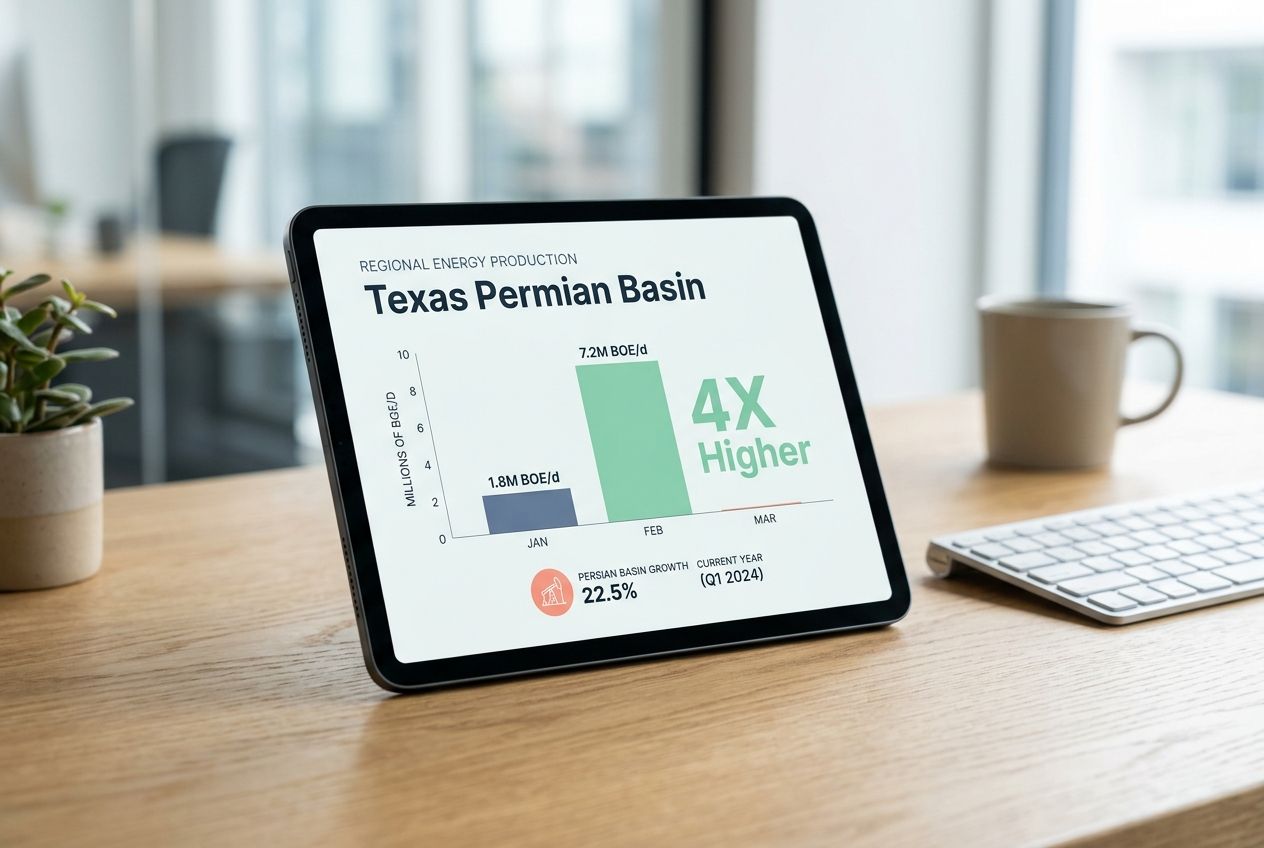
“Transparent, AI-driven satellite data ensures that massive methane leaks can no longer be swept under the rug by major polluters.”
This technology catches problems before they spiral out of control. It gives businesses and governments the real information they need to act fast.
Companies use data analytics to measure their carbon footprint and identify major leaks. These predictive models help policymakers design better mitigation strategies and hold polluters accountable.
AI for Renewable Energy Optimization
AI systems analyze weather patterns to predict solar and wind power generation. Smart grids cut energy waste and route clean power exactly where people need it most.
Enhancing solar and wind energy forecasting
Solar and wind energy forecasting relies on machine learning to predict power generation. AI analyzes vast amounts of weather data to forecast cloud cover, wind speed, and sunshine intensity.
Better predictions help power grids balance energy supply and demand. Utilities like Xcel Energy use predictive modeling to anticipate wind gusts in places like Colorado, saving customers millions of dollars.
This data analytics approach improves the grid in three main ways:
- Supply Balancing: Utilities can store excess power during peak generation times and distribute it when the sun sets.
- Cost Reduction: Grid operators make smarter decisions about which secondary power sources to activate.
- Reliability: Communities experience fewer outages because the system predicts shortfalls hours in advance.
This reduces waste and makes renewable energy more reliable. It cuts carbon emissions and lowers energy costs at the same time.
Improving energy efficiency in smart grids and buildings
Smart grids use artificial intelligence to cut energy waste in real time. AI algorithms learn your building’s patterns and adjust heating, cooling, and lighting automatically.
BrainBox AI, a Trane Technologies company, now controls HVAC systems in over 4,000 buildings globally. During a recent pilot program across 600 Dollar Tree stores in the US, their system saved nearly 8 million kilowatt-hours of electricity in a single year.
A pro-tip for facility managers is that you rarely need to rip out old equipment. These AI systems usually integrate directly into your existing building management software. Buildings consume about 30% of global energy. Smarter management matters hugely.
AI in Disaster Prediction and Resilience
AI systems scan weather patterns and geological data to predict storms, floods, and earthquakes before they strike. Communities get precious hours or days to prepare.
Predicting extreme weather events
Extreme weather events cause billions of dollars in damage every year. Machine learning models now predict these storms with stunning accuracy.
In 2024, DeepMind’s GraphCast AI correctly predicted that Hurricane Beryl would take a sharp turn toward Texas. It made this call almost a week earlier than conventional physics-based models.
These algorithms analyze temperature shifts, atmospheric pressure changes, and ocean conditions. The data analytics process happens fast. Meteorologists combine satellite imagery with machine learning to track storm development. Climate resilience improves dramatically when people know danger is coming early.
Strengthening early warning systems for natural disasters
AI tools give us faster alerts for wildfires, floods, and earthquakes. Machine learning models analyze camera feeds and seismic data in real time.
In California, the ALERTCalifornia project uses AI startups like Pano AI to monitor over 30 million acres of high-risk land. These 360-degree cameras spot smoke and triangulate its exact position instantly.
In many cases, the AI alerts emergency responders minutes before any bystander calls 911. During the Wellington Fire in Colorado, this system gave fire crews a 21-minute head start.
They contained the blaze to just a quarter-acre. Early warning systems powered by data analytics absolutely save lives.
AI for Waste Management and Ocean Cleanup
AI systems sort trash faster than humans ever could. Machines also scan ocean surfaces to guide cleanup crews.
Using AI to improve recycling efficiency
Sorting trash into the right bins sounds simple, but it is a massive challenge for recycling centers. Machine learning systems now scan through mountains of waste with incredible speed.
US facilities are quickly adopting systems like AMP Robotics’ AI-powered arms. These data analytics tools spot plastic bottles, aluminum cans, and cardboard far better than human workers.
Here is a clear comparison of the efficiency upgrade:
| Sorting Method | Items Picked Per Minute | Accuracy Rate |
|---|---|---|
| Human Worker | 30 to 40 items | Variable, prone to fatigue |
| AI-Powered Robot (AMP Robotics) | 80 items | Over 95% |
This green technology cuts costs and boosts the amount of material that actually gets recycled. Better sorting leads to cleaner recycled materials. The carbon footprint shrinks because less energy goes into fixing contaminated batches.
Detecting and removing plastic waste from oceans
Robots and AI systems now hunt down plastic garbage floating in our oceans. These smart machines use computer vision to spot trash in the water.
Drones equipped with sensors fly over water surfaces and map pollution hotspots. Ships then travel to these locations and collect the plastic before it breaks into harmful microplastics.
Groups like The Ocean Cleanup deploy these AI-powered systems to remove tons of waste. Machine learning algorithms analyze satellite images and water patterns to forecast trash movement.
The technology cuts down on wasted trips and fuel costs. These green technology solutions turn ocean cleanup from a guessing game into a science.
AI in Reforestation and Decarbonization
Drones equipped with AI technology plant trees faster and smarter than humans ever could. AI also helps factories and cities cut their carbon emissions.
Reforesting with drone-assisted AI
Artificial intelligence and drones work together to plant trees faster than ever before. This technology tackles deforestation and carbon emissions reduction on a massive scale.
- AI algorithms analyze satellite images to identify the best locations for planting new forests. They map out areas where trees once grew or where reforestation efforts would have the most impact on climate resilience.
- Drones equipped with seed pods fly over large landscapes and disperse seeds across difficult terrain that humans cannot easily reach. This plant has thousands of trees in a single day.
- Machine learning models predict which tree species will thrive in specific regions based on soil conditions, rainfall patterns, and temperature data. This ensures successful growth rates.
- Environmental monitoring systems track seedling survival rates after planting. They use aerial photography to measure how many seeds germinate and develop into healthy saplings.
- AI processes vast amounts of climate data to determine optimal planting seasons for each geographic area. This maximizes the chances that newly planted trees will flourish.
- Drone technology reduces labor costs significantly compared to traditional manual planting methods. Startups like Mast Reforestation successfully use this method to replant the US West Coast forests after devastating wildfires.
- Real-time sensors on drones collect information about soil moisture, nutrient levels, and pest activity. AI uses this to adjust future planting strategies accordingly.
- Predictive modeling helps identify which reforested areas will absorb the most carbon dioxide. This prioritizes locations where trees can deliver maximum emissions reduction benefits.
- Data analytics platforms consolidate information from multiple drone flights and satellite sources. This creates comprehensive maps that show forest recovery progress over months and years.
- Green technology innovations continue improving drone battery life and seed dispersal accuracy. This expands the scale at which reforestation campaigns can operate globally.
Industries seeking to reduce their carbon footprint increasingly partner with drone-assisted AI programs.
Supporting industries in reducing carbon emissions
Industries produce massive amounts of carbon emissions every single day. Machine learning tools help factories and cities track their pollution in real time.
Google’s Project Green Light is a perfect example of this in action. This initiative uses AI and Google Maps driving trends to optimize existing traffic lights in dozens of cities.
By smoothing out the flow of vehicles, it has the potential to reduce stop-and-go traffic by up to 30%. That simple change cuts greenhouse gas emissions at intersections by 10%.
Smart systems cut emissions by spotting inefficiencies that humans might miss. Companies use predictive modeling to forecast their carbon footprint before problems happen.
Emissions reduction becomes measurable and achievable when businesses have the right data tools. Ecoinnovation spreads across industries as competitors race to adopt better practices.
Challenges and Risks of AI in Climate Action
AI systems demand massive amounts of energy to run. We face real questions about fairness and rights when we roll out AI tools globally.
Environmental impact of AI data centers
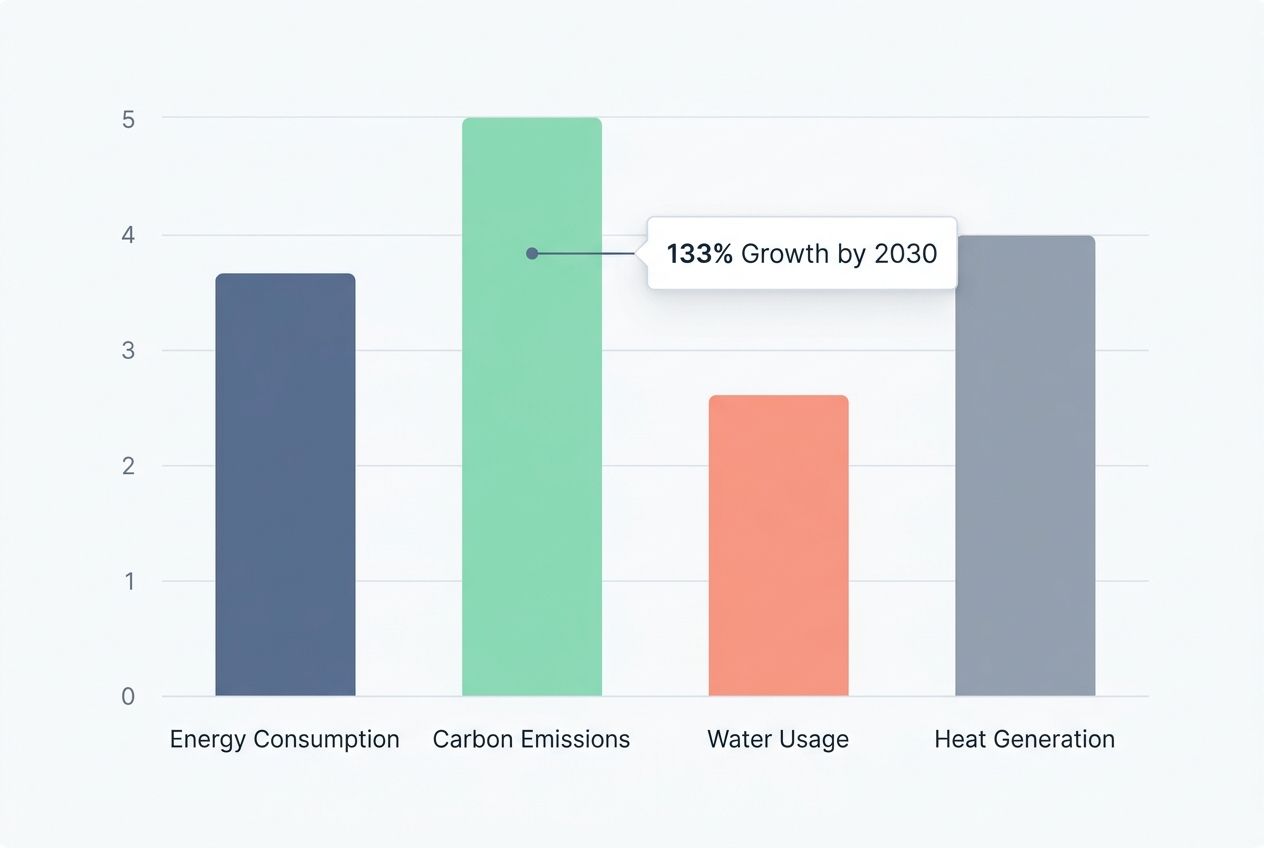
Here is the critical truth. Training and running AI systems demand massive amounts of electricity, and that power consumption carries serious environmental consequences.
| Impact Category | Key Details |
|---|---|
| Energy Consumption | The International Energy Agency projects that US data center electricity consumption will grow by 133% by 2030. AI-optimized servers use up to four times more power than traditional ones. |
| Carbon Emissions | Most data centers still rely on fossil fuels for power generation. The carbon footprint of AI training rivals that of transatlantic flights for individual models. |
| Water Usage | Cooling systems in data centers consume vast quantities of water. Communities near data centers sometimes experience water shortages as a direct result. |
| Heat Generation | Data centers produce enormous amounts of waste heat. Releasing this heat into the environment raises local temperatures. |
| Infrastructure Demands | Building new data centers requires raw materials and construction resources. Expanding infrastructure accelerates environmental degradation in host regions. |
| Supply Chain Impact | Manufacturing hardware for data centers involves hazardous processes. Electronic waste from obsolete equipment pollutes soil and water. |
| Geographic Concentration | Major tech companies cluster data centers in specific areas seeking cheap power. Local ecosystems bear disproportionate burdens from this concentration strategy. |
| Renewable Energy Transition | Some companies now commit to renewable energy sources for their facilities. Progress remains slow, and greenwashing sometimes masks continued reliance on dirty power. |
The irony cuts deep. We deploy technology to save the planet, while that technology itself damages ecosystems.
Data centers operate twenty-four hours a day. Servers process requests from billions of users simultaneously, which multiplies energy needs exponentially. Fighting climate change through AI does not eliminate the environmental footprint of AI itself.
Ethical concerns in large-scale AI implementation
Large-scale AI implementation raises serious ethical questions about data privacy and consent. Companies collect massive amounts of personal information to train climate models.
Bias in AI systems poses another major problem. If training data reflects historical inequalities, the AI will replicate those same mistakes.
“A major concern is that algorithmic bias could direct critical climate adaptation funding away from the vulnerable communities that need it most.”
This means climate solutions powered by biased algorithms could harm vulnerable neighborhoods. Transparency becomes critical.
Accountability gaps create additional headaches for climate action teams. When AI systems make wrong predictions about extreme weather events, who takes responsibility? Collaboration between AI developers and climate scientists should include ethicists and community representatives.
The Future of AI in Climate Change Mitigation
AI tools will grow smarter and faster at tackling climate problems over the next decade. Scientists and tech companies are already joining forces.
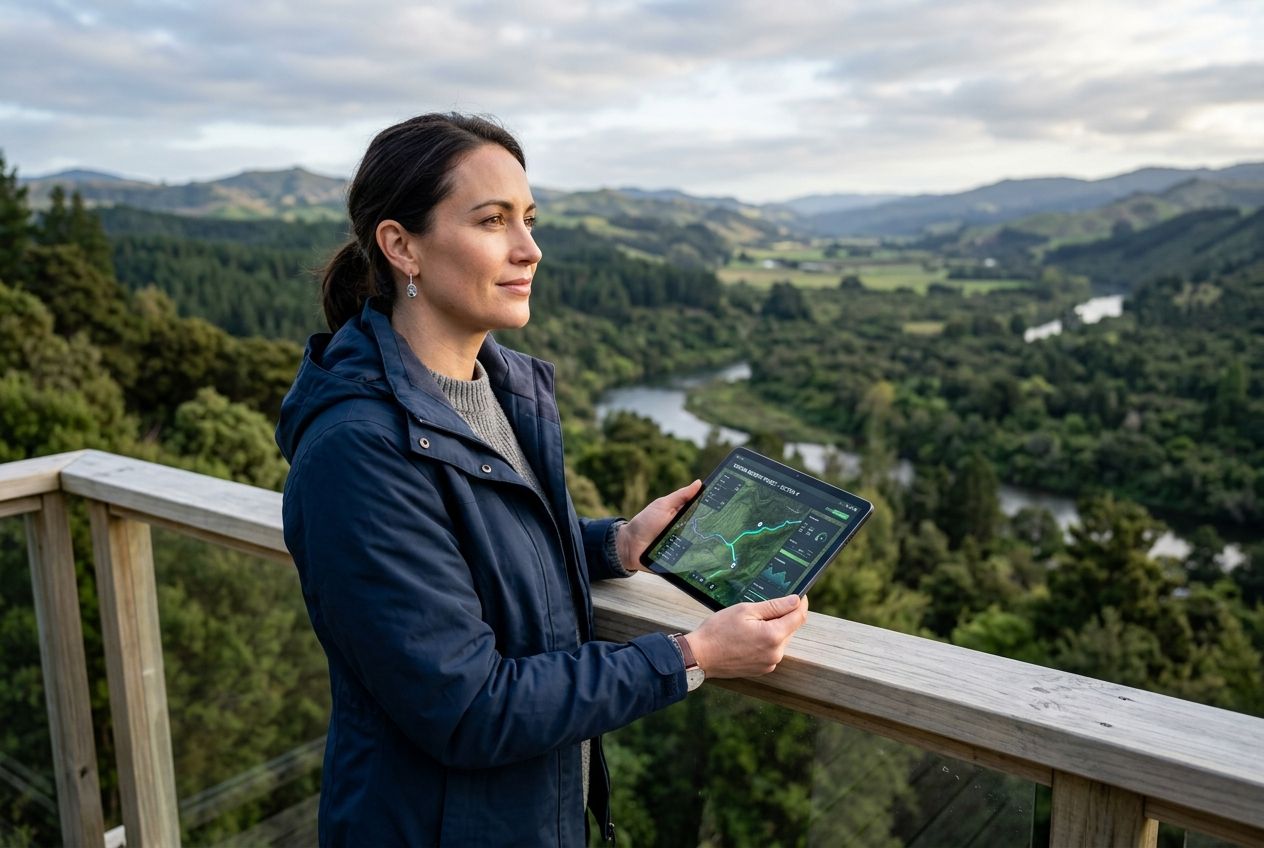
Potential advancements in AI tools for sustainability
Machine learning systems will soon predict climate patterns with stunning accuracy. Scientists are developing AI models that spot environmental changes before they happen.
Experts expect fields like agentic AI and physics-informed neural networks to take center stage. These advanced models can automatically adjust a city’s power grid to balance renewable energy loads without human input.
Carbon tracking technology is getting smarter every year. Companies now use machine learning to measure their emissions reduction efforts in real time.
Green technology companies are building AI platforms that turn sustainability goals into concrete action plans. These advancements transform environmental monitoring into something fast and reliable.
Collaboration between AI developers and climate scientists
These tools show real promise. Yet their full power emerges only when AI developers and climate scientists work side by side. Climate scientists bring deep knowledge about weather patterns and ecosystem behavior. AI developers bring technical skills in data analysis and predictive modeling.
The US Department of Energy currently partners with major tech companies to build better climate models. Research institutions work with software engineers to improve renewable energy forecasting systems.
These partnerships accelerate the pace of green technology development. Scientists get access to cutting-edge computing power. Developers gain a clear understanding of what climate resilience actually requires on the ground.
Advancing AI technologies to reduce emissions globally
AI developers are building smarter tools to cut carbon emissions worldwide. Machine learning systems now analyze energy use patterns across factories, offices, and homes. Data analytics helps industries track their carbon footprint with precision. This reveals where emissions leak out and how to plug those holes.
Companies are investing billions into climate tech startups that use machine learning to solve real problems. Here are a few ways AI drives this change:
- Supply Chain Optimization: Tools like the UPS ORION system optimize routing to move goods with fewer miles driven and less fuel wasted.
- Predictive Maintenance: AI predicts equipment failures before they happen, ensuring machines run at peak energy efficiency.
- Smart Distribution: Energy grids automatically reroute power based on real-time neighborhood demand.
AI is becoming the backbone of our fight against rising temperatures. The gap between invention and action keeps shrinking as these technologies move from labs into the real world.
Wrapping Up
AI tools are transforming how we tackle climate change across every sector. Machine learning powers real solutions that reduce carbon emissions and protect ecosystems. Scientists and tech companies now work side by side. They combine climate modeling expertise with cutting-edge data analytics.
This collaboration creates green technology innovations that actually work in the real world. Your role matters in this shift toward environmental sustainability. Every choice you make pushes the needle forward. Support companies using AI for waste management or advocate for emissions reduction strategies.
The path ahead requires all of us to stay informed about how technology shapes resource management and climate resilience. Technology alone will not solve our environmental challenges. When paired with human action and commitment, it gives us the fighting chance we desperately need.
Frequently Asked Questions (FAQs)
1. How does artificial intelligence help fight climate change?
Artificial intelligence helps fight climate change by processing massive amounts of data to track weather patterns, predict storms, and optimize how our cities operate. For example, Google’s Project Green Light uses AI to analyze traffic patterns across cities like Boston, reducing stop-and-go driving emissions by up to 10 percent in 2025. It acts like a tireless watchdog, finding creative ways to cut energy use and spot environmental problems before they get worse.
2. Can AI really make a difference with pollution?
Yes, AI can absolutely reduce pollution, as seen with the UPS ORION system, which analyzes daily US delivery routes to save about 10 million gallons of fuel and avoid 100,000 metric tons of carbon emissions every single year.
3. What are some real-world examples of AI fighting climate change?
Real-world examples of AI fighting climate change include smart home thermostats that learn your habits to save energy, and advanced agricultural robots working on American farms. Out in the fields, John Deere’s See and Spray technology uses boom-mounted cameras to zap weeds with incredible precision, which helped farmers across 5 million acres save nearly 31 million gallons of herbicide mix during the 2025 growing season. This means we can grow our food while keeping harmful chemicals out of the soil and local water supply.
4. Is using artificial intelligence for climate action expensive?
While using artificial intelligence for climate action often requires an upfront investment, it quickly pays for itself by drastically cutting waste and boosting everyday efficiency. Think of it like buying a high-quality pair of boots instead of cheap flip-flops; you spend a little more today, but the long-term savings are huge. In fact, major US delivery companies are optimizing their routes with AI reports, saving hundreds of millions of dollars annually just on reduced fuel costs.