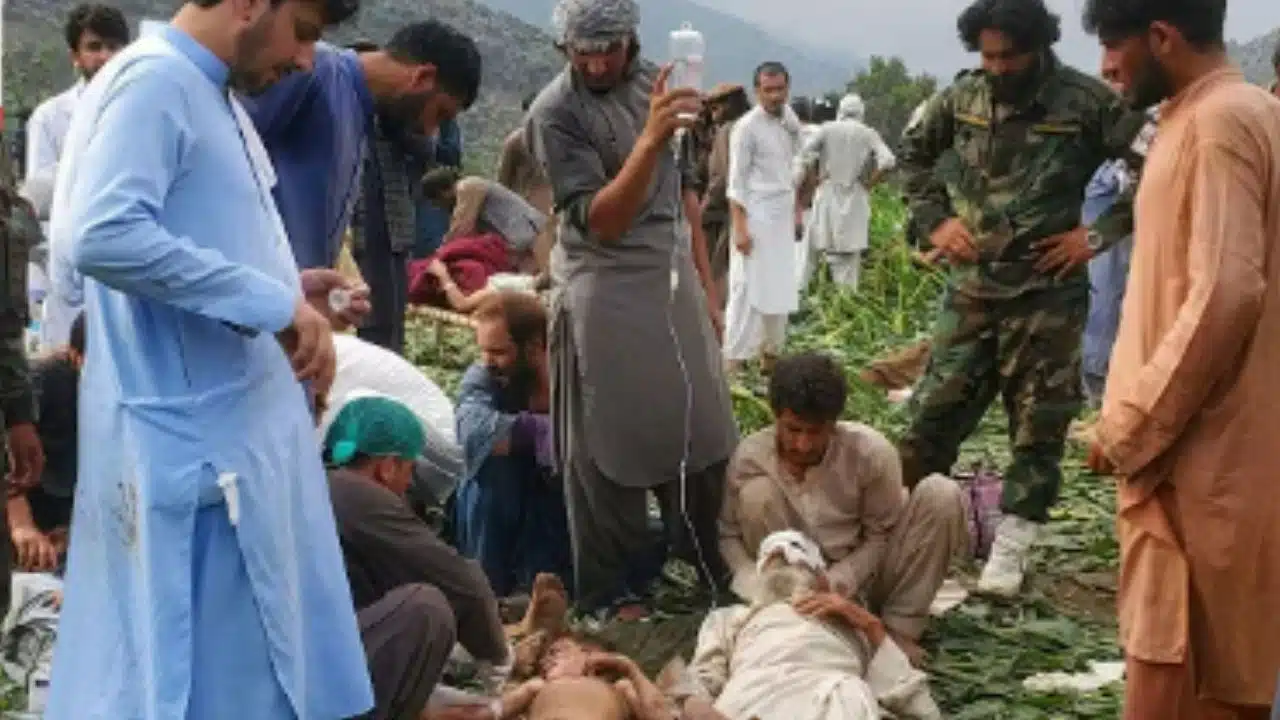
Afghanistan has been struck by another deadly earthquake, once again exposing the country’s vulnerability to natural disasters and its limited resources for disaster management. According to Taliban officials, at least 622 people were killed and more than 1,300 others injured when a 6.0-magnitude earthquake hit the eastern part of the country late Sunday night, August 31, 2025.
The quake struck around 11:47 p.m. local time (3:30 p.m. ET Sunday), with the epicenter located about 17 miles (27 kilometers) from Jalalabad, a densely populated city near the border with Pakistan, according to data from the United States Geological Survey (USGS). Its shallow depth—measured at just 5 miles (8 kilometers)—made the shaking more intense and destructive than deeper quakes of similar strength.
Casualties and Human Losses
The Afghan Ministry of Interior confirmed that most of the deaths occurred in Nangarhar Province, which includes Jalalabad, and neighboring Kunar Province. Many victims were asleep in their homes when the tremors hit, leaving them with little chance to escape collapsing structures.
Officials stated that more than 1,000 injured people have been evacuated to hospitals, many by emergency helicopters. Hundreds of others are still being treated in makeshift medical centers set up in open areas, schools, and mosques as hospitals struggle to handle the surge of casualties. The number of dead is expected to rise as rescuers reach remote mountain communities where communication and transport remain extremely difficult.
Rescue Operations Underway

Afghanistan’s Public Health Ministry spokesperson, Sharafat Zaman, told reporters that “hundreds of rescue workers and volunteers have been mobilized” to help in the affected areas. Mufti Abdul Matin Qani, spokesperson for the Interior Ministry, said teams are working through the night to dig survivors out of rubble and transfer the injured to safer zones.
However, the challenges are immense. The earthquake struck a remote mountainous area, where villages are widely scattered, roads are fragile, and landslides are common. Several mountain passes have been blocked, slowing down the movement of rescue teams and supplies. Some villages remain cut off entirely, with only helicopter access possible.
Aftershocks Keep Survivors in Fear
Since the initial quake, at least five strong aftershocks have been recorded in the region, ranging from magnitude 4.5 to 5.2, according to the USGS. These aftershocks have caused fresh damage and forced many people to remain outside in the open, fearful that returning to their homes could prove deadly if buildings collapse further.
Experts warn that aftershocks may continue for several days and can sometimes cause more destruction than the main quake, especially in structures already weakened. Survivors in Jalalabad and surrounding districts spent the night in the cold, using blankets, tents, and even plastic sheets as temporary shelter.
Why the Quake Was So Destructive
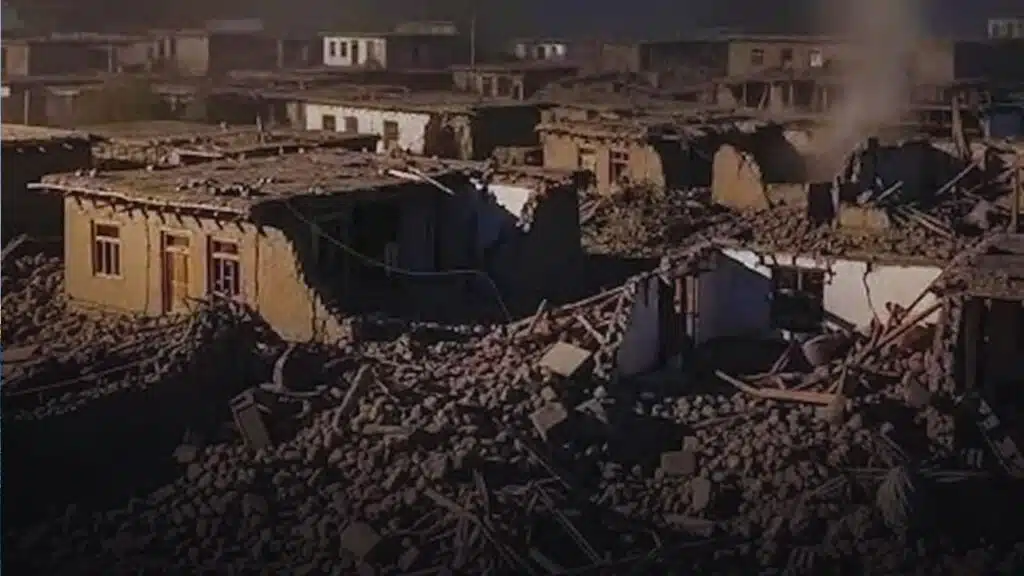
Afghanistan lies in a highly seismic zone, positioned along the collision boundary between the Indian and Eurasian tectonic plates. This makes the country especially vulnerable to earthquakes. In addition, the type of housing in rural Afghanistan—mostly mud-brick and stone structures—is unable to withstand strong shaking.
The fact that this earthquake struck at night, while families were asleep inside, magnified the death toll. The shallow depth of just 5 miles (8 kilometers) concentrated the shaking at ground level, ensuring widespread destruction even though the magnitude itself was moderate compared to quakes seen in other parts of the world.
Comparisons With Past Quakes
This disaster is not an isolated incident. Afghanistan has suffered multiple deadly earthquakes in recent years:
- In June 2022, a magnitude 5.9 quake killed around 1,000 people and injured thousands more in eastern Afghanistan.
- In October 2023, a series of 6.3-magnitude quakes hit Herat Province in western Afghanistan, killing nearly 1,500 people in just one week.
The current tragedy once again highlights the fragile state of Afghan infrastructure and the country’s ongoing struggle to prepare for and respond to natural disasters.
Humanitarian Crisis Compounded
The earthquake comes at a time when Afghanistan is already facing multiple overlapping crises. The country is enduring four consecutive years of drought, which has devastated agriculture, reduced livestock herds, and left millions struggling with food insecurity.
Adding to the crisis, over 2.3 million Afghans have been forced to return from neighboring Iran and Pakistan this year alone, straining already limited resources. According to the Famine Early Warning Systems Network (FEWS NET), many families are unable to store enough food for the upcoming winter, leaving them extremely vulnerable to hunger and poverty.
Now, with thousands suddenly homeless due to the quake, the humanitarian situation is expected to deteriorate even further.
International Support and Assistance
Taliban officials have called for urgent international aid, saying Afghanistan cannot handle the disaster alone. Aid agencies, including the Afghan Red Crescent Society and the United Nations humanitarian teams, have already begun coordinating relief efforts. Emergency supplies of food, tents, medical kits, and blankets are being rushed to the worst-hit districts.
Neighboring countries are also beginning to respond. Early reports suggest that Iran has offered humanitarian and medical assistance, while Pakistan has expressed willingness to help if called upon. However, ongoing political tensions and restrictions on international engagement with Afghanistan under Taliban rule complicate the speed and scale of the global response.
Global Reactions and Warnings
Seismologists stress that Afghanistan will continue to face such disasters because of its geographic position. The country needs urgent investment in earthquake-resistant infrastructure, early warning systems, and disaster preparedness programs. But with its fragile economy and international isolation, progress on these fronts remains slow.
Aid organizations warn that unless immediate relief and longer-term reconstruction aid is delivered, Afghanistan risks facing a prolonged humanitarian catastrophe—with survivors not only dealing with trauma and loss, but also extreme poverty, hunger, and harsh winter conditions in the months ahead.
The 6.0-magnitude earthquake in eastern Afghanistan has already claimed over 600 lives and injured thousands, with the toll expected to rise as rescuers reach remote areas. Entire villages have been flattened, aftershocks continue to rattle the region, and survivors are left homeless in a country already struggling with drought, displacement, and poverty.
This tragedy is not only a reminder of Afghanistan’s seismic vulnerability but also of the urgent need for international solidarity and humanitarian assistance. Without swift, coordinated action, the earthquake could deepen one of the world’s most complex humanitarian crises.
The Information is Collectd from NBC News and Sky News.