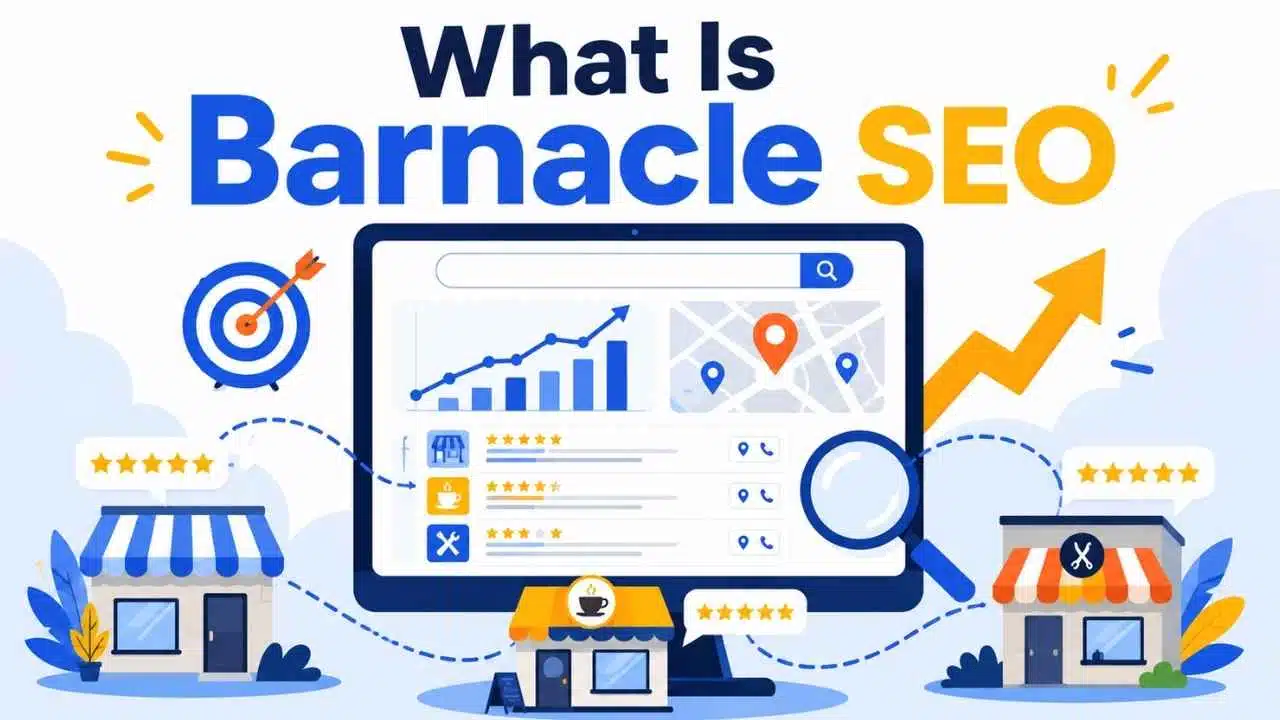
Barnacle SEO is the strategy of attaching your business to high-ranking, established websites so you appear at the top of local search results—even if your own website isn’t ranking first.
When customers search for local products or services, top spots are often dominated by Google Maps, review sites, and online marketplaces. Instead of competing directly against these giants, Barnacle SEO helps small businesses leverage their existing authority. By optimizing profiles on high-traffic platforms like Google Business Profile, Apple Maps, or Tripadvisor, you capture valuable visibility right where your audience is already looking.
What Is Barnacle SEO?
Local-search marketer Will Scott is credited with coining the term Barnacle SEO in 2008.
The idea behind the name is straightforward. A barnacle attaches itself to something larger. In search marketing, a smaller business gains additional visibility by establishing a legitimate presence on larger sites that already have an audience or rank well for relevant searches.
Imagine a customer searching for:
best coffee shop near me
The results may contain:
- Google Maps listings;
- individual café websites;
- review platforms;
- travel sites;
- local editorial guides.
A neighborhood café may not be able to outrank every established platform. It can still appear inside several of them.
That changes the useful SEO question from:
“How do we make our website rank above everyone?”
to:
“Where are potential customers already finding businesses like ours?”
For a small company with limited time and budget, that is often the better question.
Barnacle SEO Is Not Old-Fashioned Directory Submission
The distinction matters. Older local SEO campaigns often involved creating listings on dozens or hundreds of directories because having more citations was assumed to be inherently valuable.
Barnacle SEO should be much more selective.
A platform deserves attention when at least one of these is true:
- it appears prominently for searches that can generate customers;
- people in the target market actively use it;
- it is influential within the business’s industry;
- it can send qualified calls, bookings, visits, or referral traffic.
A directory having an impressive third-party authority score is not enough. If customers never see the platform and it sends no useful traffic, maintaining the listing may be little more than administrative work.
Start With the Search Results
Before creating any new profiles, search for the terms that matter commercially.
A bicycle repair shop could examine:
- bicycle repair near me;
- bike shop in its city;
- bicycle tune-up nearby;
- same-day bicycle repair.
A bakery may care about:
- custom birthday cakes nearby;
- bakery in its neighborhood;
- wedding cakes in its city;
- gluten-free bakery near me.
Look beyond which individual competitors rank.
Pay attention to the types of sites appearing repeatedly.
You may see Google Maps, Yelp, Tripadvisor, trade directories, marketplaces, local news sites, tourism organizations, or neighborhood guides. Those results provide a more useful priority list than a generic article titled “50 business directories you need to join.”
If one platform appears repeatedly for commercial searches relevant to the business, it deserves investigation. If another never appears and has little evidence of customer use, it can probably wait.
Google Business Profile Usually Comes First
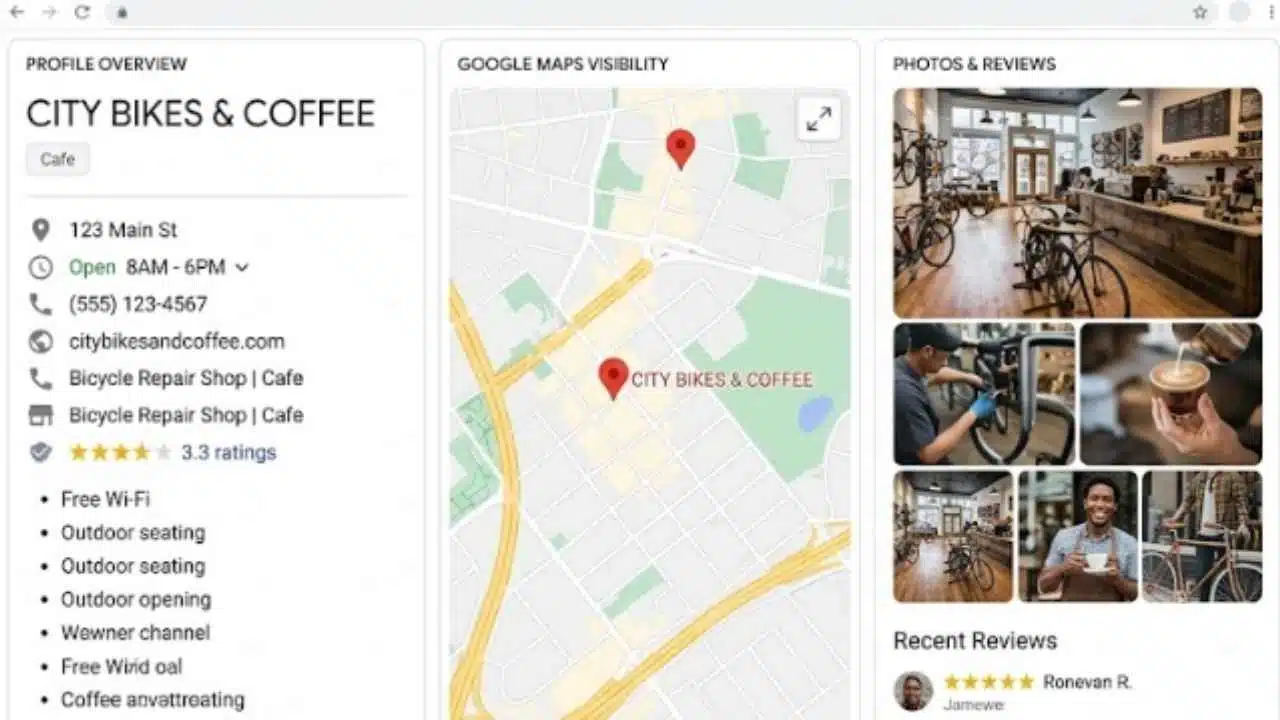
For an eligible local business, Google Business Profile is usually the most important external profile to get right because it can appear directly across Google Search and Maps. Google describes local visibility mainly in terms of relevance, distance, and prominence.
No profile setting can change where a searcher is physically located, but a business can make it easier for Google and customers to understand what it is and whether it fits the query.
That starts with unglamorous details:
- the real business name;
- appropriate categories;
- an accurate address or service area;
- current opening hours;
- a working phone number;
- the correct website;
- useful photos;
- relevant business attributes.
Do not add keywords to the business name simply because competitors appear to be doing it. Google’s guidelines call for using the name the business uses consistently in the real world.
Eligibility matters as well. Google Business Profiles are designed for businesses that make in-person contact with customers, either at a location customers visit or by travelling to customers. Ordinary online-only businesses and virtual offices without genuine operations do not qualify simply because a map listing would be useful.
For a small shop, getting this foundation right is more valuable than chasing obscure optimization tricks.
Apple Maps and Bing Are Worth Checking, but Priorities Differ
Once Google is in good shape, the next step is not automatically to claim every other platform available.
Apple’s business tools allow companies to manage location information that can appear through Apple Maps and other Apple services. A physical shop should at least check whether its location pin, address, phone number, website, and hours are accurate.
That matters even if the business owner personally uses Android. Customers may not. Bing Places also allows businesses to claim and manage local listings. Maintaining accurate information there is relatively straightforward, but the amount of ongoing effort it deserves should depend on the audience and market.
This is a useful principle for Barnacle SEO generally:
Claiming an accurate profile may be worthwhile even when turning that platform into a major marketing project is not.
Do not give every platform equal maintenance time simply because each offers a business dashboard.
Industry Platforms Can Be More Valuable Than General Directories
Some of the strongest opportunities are niche rather than global. A wedding photographer may benefit more from a respected wedding marketplace than from another general business directory. A tourist-focused restaurant may have a strong reason to maintain Tripadvisor. A local accountant may not.
Depending on the industry and location, useful platforms can include:
- tourism organizations;
- professional associations;
- chambers of commerce;
- local news and city guides;
- trade directories;
- healthcare directories;
- property platforms;
- wedding marketplaces;
- automotive directories;
- specialist service marketplaces.
Before committing time or money, check three things.
Does the platform appear for searches that matter?
Are prospective customers actually using it?
Can the listing produce something measurable?
That last question is often ignored.
Visibility that never produces calls, visits, bookings, inquiries, or useful referral traffic has limited business value.
Reviews Make External Profiles Stronger, but the Rules Are Not Universal
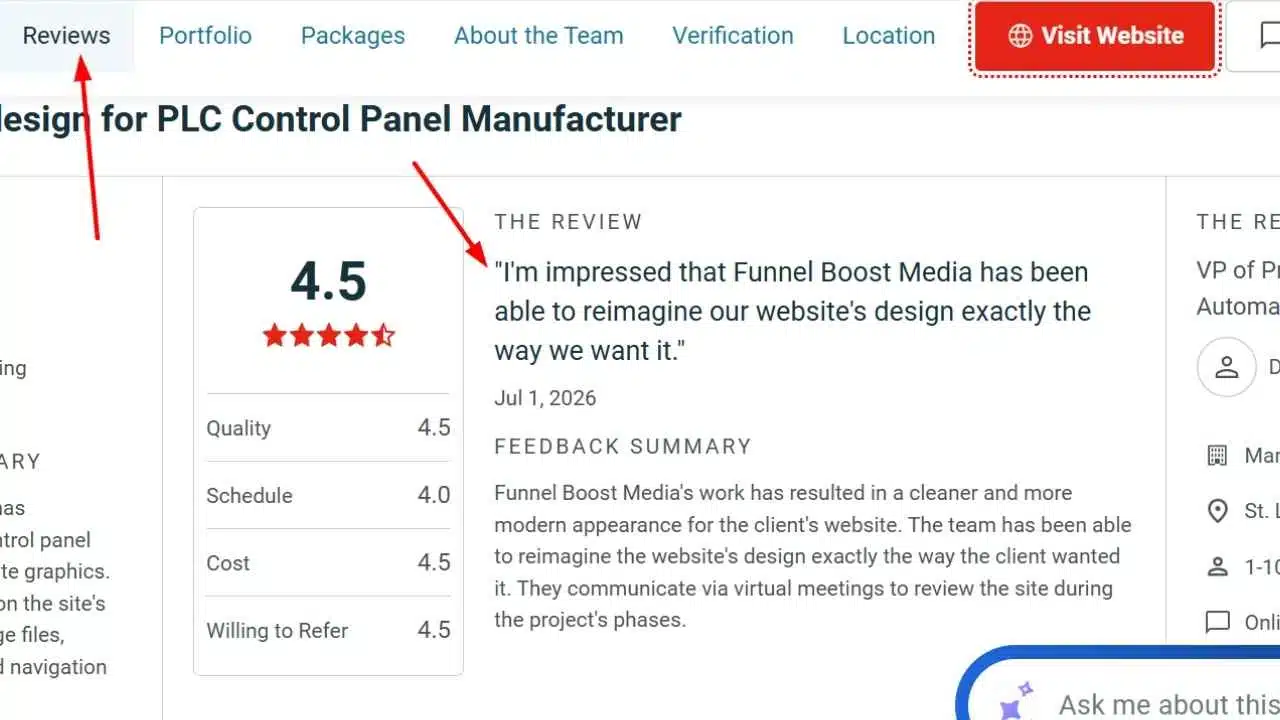
Reviews can make third-party profiles particularly useful because customers often compare businesses before visiting their websites. Businesses should not assume every platform handles review solicitation the same way.
Google allows businesses to ask customers for genuine reviews and provides review links and QR codes that can be shared with customers. Google does not allow businesses to offer money, discounts, free products, free services, or other incentives in exchange for posting, changing, or removing reviews.
Yelp takes a different approach. Its current guidance tells businesses not to ask customers for Yelp reviews.
That difference matters operationally. A shop should not print one generic “review us everywhere” message and assume it complies with every platform’s rules.
Check each service before adding review requests to receipts, post-purchase emails, QR codes, or staff scripts. Buying reviews is an even worse shortcut. Aside from misleading customers, fake engagement can lead to removals and platform restrictions.
Accuracy Matters More Than Typographic Perfection
A business should represent the same real company everywhere customers encounter it.
The important information includes:
- name;
- location or service area;
- phone number;
- website;
- opening hours.
Do not obsess over harmless differences such as “Street” versus “St.”
The real problem is contradictory information.
If Google Maps says a shop closes at 8 p.m., Apple Maps shows 6 p.m., and an old directory still lists a disconnected phone number, customers have a practical problem.
Listings also become stale surprisingly easily. Holiday hours change. A business moves. A phone number changes. A second location opens. Services are added or removed. Treat the important profiles as operational assets that require maintenance, not as citations that can be created once and forgotten.
Give Customers Enough Information to Make a Decision
A profile should do more than technically exist.
For a restaurant, useful information might include current hours, representative food and interior photos, menu access, reservation details, and service attributes.
For a local repair business, customers may care about the services offered, hours, contact methods, real shop photos, and a clear website link. This matters because local searches often end without a conventional website visit. A customer can read reviews, check opening hours, request directions, and call directly from a map or business profile.
That is not lost SEO traffic if the person becomes a customer. Small businesses should judge these profiles by whether they make discovery and decision-making easier, not by how many clicks they force back to the website.
Measure Actions Instead of Counting Listings
“Present on 60 directories” is a weak success metric.
Useful measurements include:
- phone calls;
- website visits;
- direction requests;
- bookings;
- inquiries;
- referral traffic;
- assisted conversions.
Google Business Profile provides performance information for several types of customer interaction where available. Other platforms may provide their own analytics, while referral traffic can be measured through website analytics when visitors click through.
Over time, the data should affect priorities. If a specialist directory produces qualified inquiries every month while several generic directories produce nothing, maintain the specialist profile carefully and stop pretending every listing deserves equal attention.
Small businesses have limited time. Barnacle SEO should reduce wasted effort, not create another maintenance burden.
Barnacle SEO Is Different From Site Reputation Abuse
Barnacle SEO is sometimes discussed alongside “parasite SEO,” but the comparison can be misleading.
A legitimate business claiming its Google Business Profile, maintaining a Tripadvisor page, joining a relevant trade directory, or appearing in a genuine local guide is using those platforms in ways that serve their users.
Google’s site reputation abuse policy addresses a different situation: third-party pages published primarily to exploit ranking signals earned by the host website.
Third-party content itself is not automatically abusive. The useful test is whether the presence naturally belongs on that platform.
A plumber listed in a legitimate local trades directory makes sense to the directory’s users. An unrelated commercial article placed on a powerful publisher’s domain only because that domain ranks well is a very different tactic. Small shops do not need to blur that line to benefit from Barnacle SEO.
Where Small Businesses Waste the Most Time
Three mistakes are particularly common.
Collecting Low-Value Directory Listings
Do not create profiles simply because a directory accepts submissions. Search visibility, customer relevance, and actual referral value matter more than the size of a spreadsheet.
Creating Duplicate Google Profiles
More Business Profiles do not mean more legitimate map coverage. Google generally expects one profile for each eligible real-world business location, with defined exceptions for certain departments and practitioners.
Inventing locations or creating unnecessary duplicates creates risk rather than durable visibility.
Paying for Authority Without Measuring Leads
Some directories and marketplaces sell advertising, enhanced profiles, premium placement, or lead packages.
They may be worthwhile. Evaluate them as paid marketing.
Do not assume that paying a respected platform will improve the organic rankings of the business’s own website.
Ask what the spend produces.
A Simple Barnacle SEO Plan for a Small Shop
The strategy does not need to become complicated. Start with the searches most likely to produce customers.
See which external platforms repeatedly appear. Claim and fully maintain Google Business Profile if the business is eligible. Then add the map services, specialist platforms, directories, marketplaces, or local publications that genuinely matter in that market.
Build each important profile for customers rather than merely completing mandatory fields. Handle reviews according to the individual platform’s rules.
Track calls, directions, bookings, website traffic, and inquiries. Then review the list occasionally and remove low-value maintenance work.
Most importantly, keep improving the company’s own website. Useful service pages, accurate location information, strong conversion paths, original content, and genuine links build an asset the business controls. Third-party visibility should add reach around that asset rather than replace it.
Final Thoughts
Barnacle SEO is useful because small shops do not need to win every search result with their own website. Customers already use maps, directories, marketplaces, review sites, and local guides to decide where to spend money. A business that appears accurately and convincingly on the right platforms gets more opportunities to be discovered.
The mistake is treating every platform as equally valuable. Start with Google Business Profile where eligible. Study the actual search results in your market. Add the external platforms that customers genuinely use. Measure what those profiles produce, and stop investing time in listings that exist only to make an SEO spreadsheet look complete.
Use larger platforms for distribution, but keep building the website you control. That balance is what makes Barnacle SEO useful rather than another form of dependency.