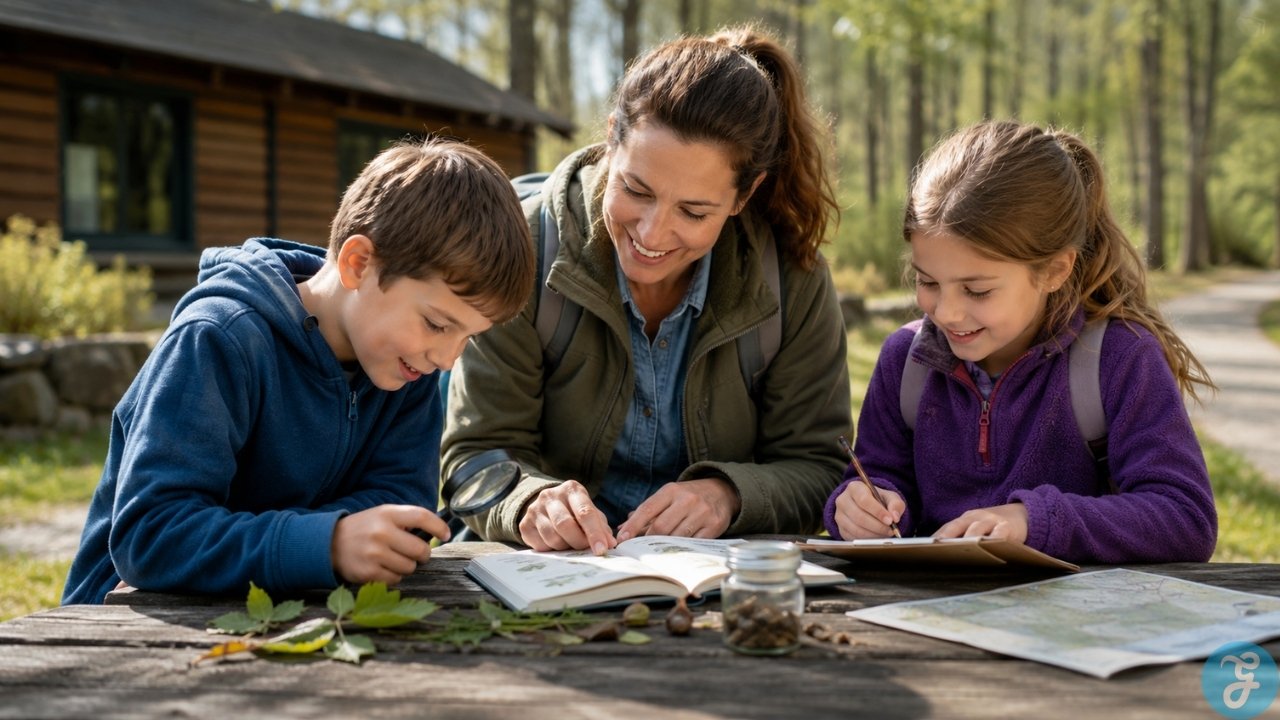
Textbook lessons can only take a student so far. While worksheets provide the academic foundation, real retention happens when children connect conceptual formulas to real-world environments. Integrating regular family education trips into your calendar breaks up textbook monotony and helps children see the practical value of their daily studies.
Transitioning out of the living room does not require a massive travel budget. The most impactful homeschool field trips often utilize standard community infrastructure that parents frequently overlook. Finding the right field trip ideas for homeschool planning relies on identifying locations that challenge a student’s analytical thinking rather than just offering pure entertainment.
The Boring Check That Matters: Group Rates and Permissions
Before executing any learning excursions, parents face a common logistical hurdle: administrative tracking. Many high-value locations restrict educational access exclusively to large public school blocks, ignoring independent family units.
However, calling ahead to request the standard school discount rate frequently yields success. Many organizations will willingly extend these exact discounts to independent educators if you present your state-issued homeschool declaration paperwork. Additionally, joining forces with two or three local families can help you hit minimum group counts, which sometimes sit as low as ten children, keeping individual costs between five and ten dollars per child.
7 Field Trip Ideas for Homeschool Families: Field Trip Ideas for Homeschool
The following collection of destinations covers industrial processes, ecological science, local civil infrastructure, and the fine arts.
1. Wastewater Treatment Plants
This choice is decidedly niche, but it provides an unmatched look at practical chemistry and engineering. Instead of reading about water filtration cycles in a textbook, students view the physical mechanics of large-scale environmental management. It is best suited for older children who can grasp basic microbiological concepts, though younger kids will still appreciate the massive mechanical infrastructure.
2. State Park Ranger Stations
Nature centers offer an immediate portal into local botany and zoology. Rather than strolling aimlessly down a trail, coordinate a structured walk focused entirely on a single ecological element.
-
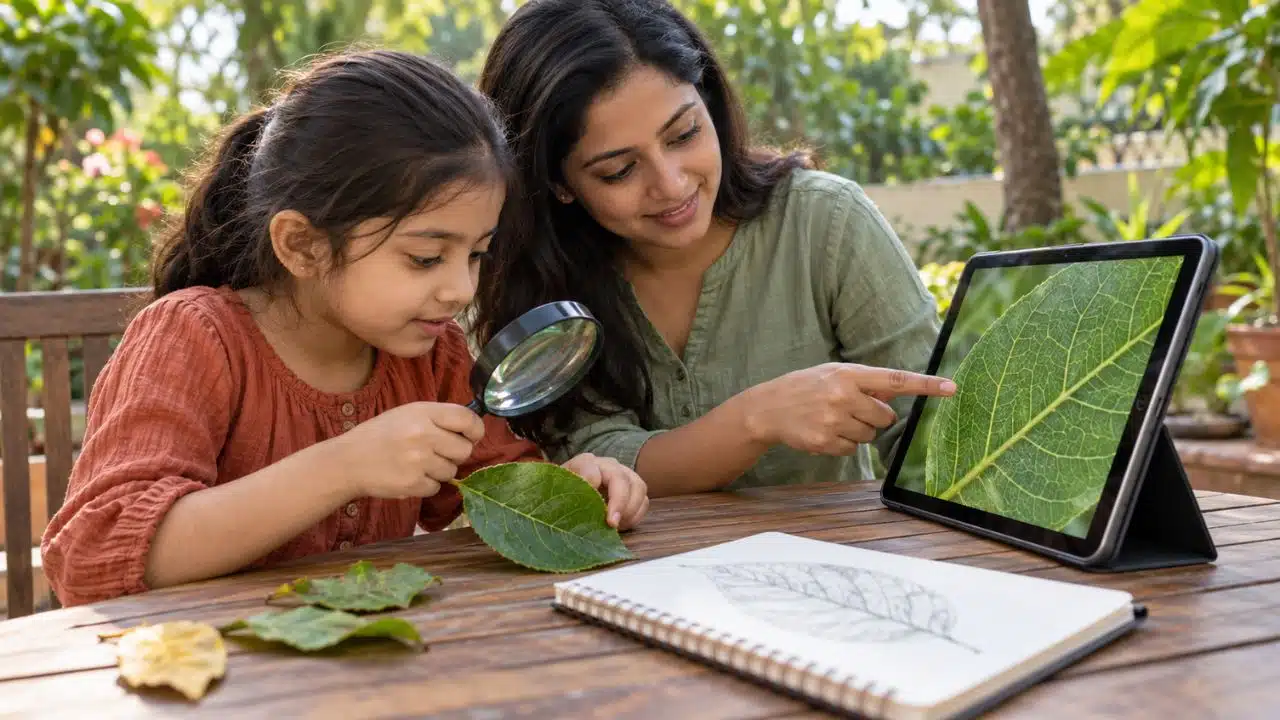
Younger students can use simple charts to identify leaf structures or local insect groups.
-
Older students can gather water samples from local creeks to track pH levels using basic testing strips.
-
The primary operational warning here involves seasonal timing; spring outings offer optimal botanical viewing but bring high tick exposure.
3. Local Bakeries and Print Shops
Watching industrial production lines introduces children to supply chain logistics and assembly workflows. A tour through a functional local bakery highlights precision measurement, raw material storage, and temperature management variables.
| Production Type | Primary Academic Focus | Key Logistic Friction |
| Commercial Bakery | Mathematical scale and chemical reactions | Strict sanitation rules require small tour sizes |
| Local Print Shop | Mechanical automation and graphic alignment | Active heavy machinery demands close supervision |
4. Historical Downtown Districts
Instead of driving out to expensive living history museums, turn your local downtown square into a research zone. Architecture reflects shifting economic eras, making older buildings highly effective visual aids for social studies. Have your students sketch historical masonry patterns, search for original dedication stones on civic facades, or track down local library archives to compare century-old photographs with the modern streetscape.
5. Fire and EMS Stations
Ideal for early childhood development blocks, a civil infrastructure visit introduces the mechanics of emergency services. Children learn basic safety protocols directly from first responders while analyzing the specialized equipment housed inside rescue vehicles. This trip requires zero preparation, though parents must remember that stations remain operational and tours may be abruptly cut short if an active emergency call comes through.
6. Open Symphony Rehearsals
Fine arts exposure can easily strain a household budget if you buy standard evening performance tickets. Many regional orchestras solve this friction by offering low-cost admission to their daytime open dress rehearsals. Students witness the collaborative friction between musicians and conductors, showing the intense discipline required to coordinate complex creative systems.
7. Grocery Store Supply Chains
Do not take your children on a standard grocery run and label it an outing. Instead, arrange a structured economic study. Give your children a strict fixed budget and a list of raw ingredients required to prepare a specific family meal. They must calculate unit pricing manually, compare imported versus domestic product costs, and analyze the store layout to see how retail environments intentionally guide consumer spending habits.
How to Turn a Basic Outing Into an Academic Portfolio Piece
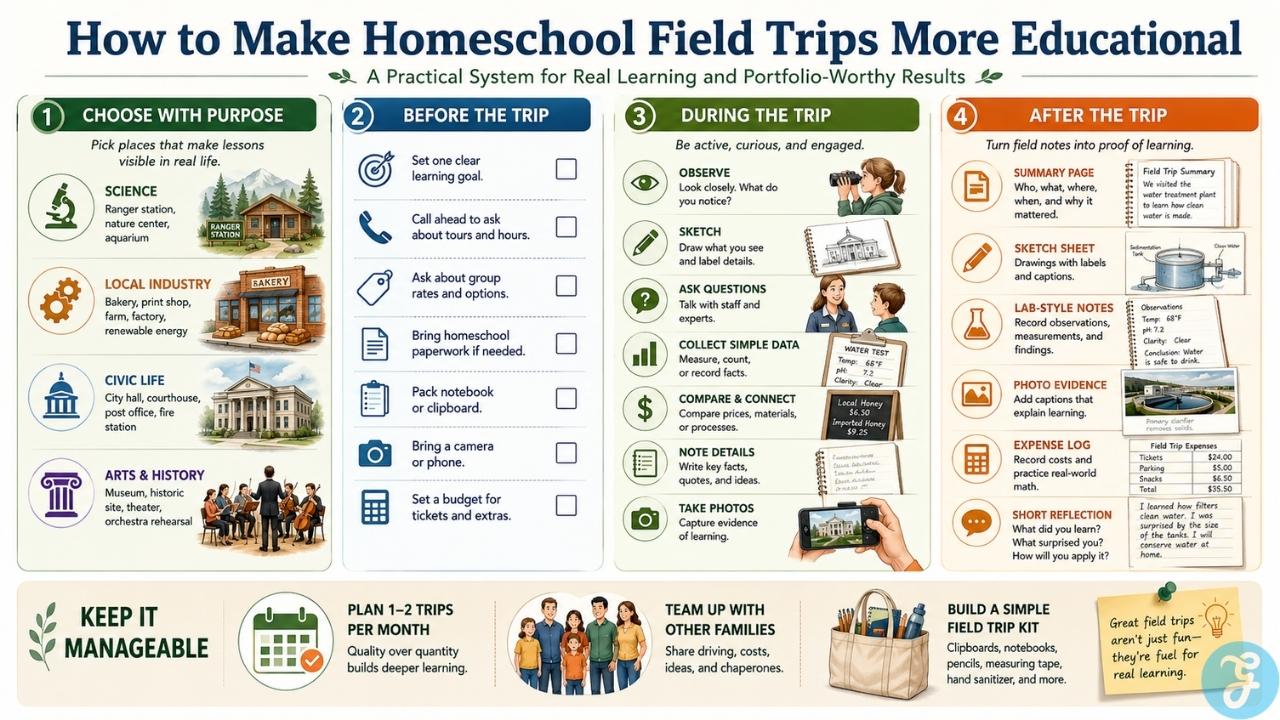
State evaluations and annual portfolio reviews often require tangible proof that a field trip was truly academic rather than just a casual day off from school. Simply listing a destination on a log sheet rarely satisfies strict compliance officers. To transform a standard family education trip into a rigorous portfolio entry, parents must establish a clear workflow that spans before, during, and after the excursion.
Phase 1: Defining the Academic Intent
Before leaving the house, assign the outing a clear learning objective aligned with your current curriculum goals. If you are visiting a local state park ranger station, the goal might be identifying three native tree species or tracking local soil erosion patterns. Having a predefined focus prevents children from wandering aimlessly and gives them a specific target for their subsequent field notes.
Phase 2: Active Documentation in the Field
Encourage your students to collect raw data during the trip. This practice shifts the experience away from passive viewing toward active analysis.
-
Provide a small clipboard with a blank observation sheet or a simple lined notebook.
-
Have students sketch specific architectural details, write down historical plaque transcriptions, or tally specific items.
-
Let children use a digital camera to document mechanical workflows, geographical formations, or museum exhibits that directly answer their pre-trip questions.
Phase 3: The Post-Trip Synthesis
The actual portfolio piece is created at the kitchen table after the trip concludes. Have the student synthesize their field notes into a structured final product. For younger children, this might look like a short narrative summary accompanied by their hand-drawn sketches. Older students can produce a formal lab report, a historical comparative essay, or even a detailed financial ledger breaking down the trip expenses to fulfill practical mathematics requirements. Binding these artifacts together creates a comprehensive project display that clearly demonstrates academic value to any external reviewer.
A Simple Way to Start
Developing a functional routine around family education trips works best when you plan along seasonal blocks rather than tracking random opportunities. Schedule one or two targeted learning excursions per month to keep your academic momentum high without causing scheduling fatigue. By using these field trip ideas for homeschool planning, you transform your immediate geographic region into an active extension of your kitchen table curriculum.