Canada is currently undergoing its most significant technological shift since the digital revolution. With the 2026 update to the National AI Strategy, the federal government has pivoted toward a model that prioritizes Sovereign AI Infrastructure over foreign dependence. This strategy isn’t just about faster computers because it focuses on ensuring that the data and the hardware stay firmly within national borders.
As the global race for compute capacity intensifies, understanding how this domestic infrastructure secures our digital future is essential for any business leader or researcher.
How We Selected Our 7 Best Sovereign AI Infrastructure Insights
To ensure this guide provides the most relevant and actionable information, we utilized a specific set of criteria focused on the 2026 federal mandates. Our selection process involved filtering through the latest budgetary allocations and Treasury Board of Canada guidelines. We focused on the following filters:
- Financial Scale: We prioritized initiatives with significant federal backing like the large scale compute fund.
- Data Residency: We selected points that directly impact how and where Canadian data is stored.
- Industry Impact: We focused on developments that bridge the gap between research and startup viability.
- Sustainability: We included updates regarding green energy mandates for new national data centers.
7 Core Insights into the 2026 National AI Strategy and Sovereign AI Infrastructure
The move toward silicon sovereignty is a complex undertaking involving public partnerships and massive hardware procurement. The following list outlines the most critical elements of the new Canadian approach to digital independence and technological security.
1. The $2.4 Billion Sovereign AI Infrastructure Injection
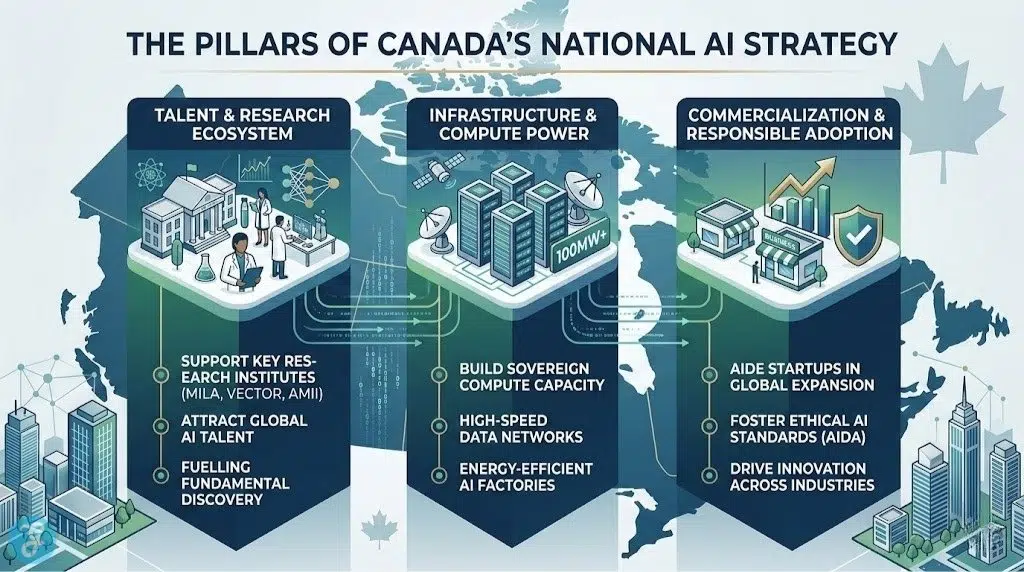
Canada has committed a massive financial package to build out domestic high-performance computing clusters. This investment ensures that researchers and startups no longer have to rely on waitlists for foreign owned GPUs. By bringing this hardware onto Canadian soil, the government aims to accelerate local innovation cycles through dedicated national resources.
Best for: Canadian AI startups and academic researchers
Pros: • Reduced latency for data processing
- Guaranteed access to high end hardware
Things to consider: The physical rollout of these data centers will take several years to reach full capacity.
2. The AI Compute Access Fund
This specific fund is designed to subsidize the cost of processing power for small and medium enterprises. It acts as a bridge to ensure that the infrastructure benefits more than just large corporations. It levels the playing field by providing affordable credits for domestic cloud usage.
Best for: Small businesses looking to integrate machine learning
Pros: • Lower overhead costs for AI development
- Dedicated support for local firms
Things to consider: Competitive application processes may limit immediate availability for some users.
3. Data Residency and National Security Mandates
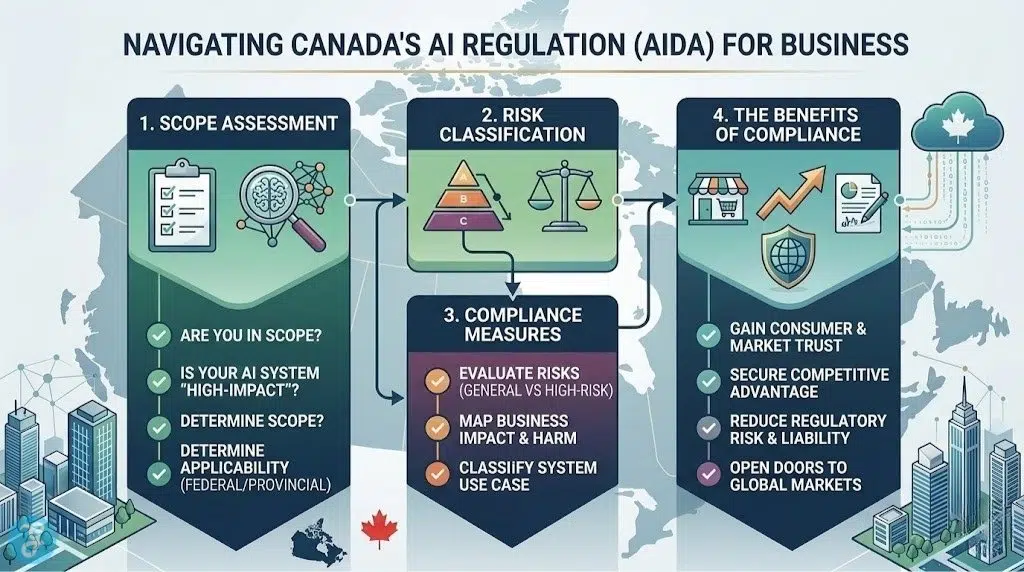
A core tenet of the strategy involves keeping sensitive Canadian data within geographic borders. Sovereign systems prevent jurisdictional overreach from foreign governments and protect national security interests. This move is critical for sectors like healthcare and finance where data privacy is a legal requirement.
Best for: Public sector agencies and highly regulated industries
Pros: • Enhanced protection against foreign data requests
- Strict adherence to Canadian privacy laws
Things to consider: Operating within domestic silos can sometimes complicate international data sharing.
4. The 100MW Green Data Center Initiative
The new infrastructure is not just about power but also about sustainability and climate goals. Canada is leveraging its renewable energy grid to power massive 100MW data centers with minimal carbon footprints. This aligns the technological push with the country’s broader net zero mandates for 2026.
Best for: Eco-conscious tech companies and ESG focused investors
Pros: • Clean energy sourcing for AI training
- World-class cooling efficiency due to the northern climate
Things to consider: Initial construction costs for green-certified facilities are significantly higher.
5. Domestic Supply Chain Partnerships
Rather than just buying solutions from global giants, the strategy emphasizes partnerships with local firms. This fosters a domestic supply chain for specialized AI servers and hardware components. It reduces the risk of global supply chain disruptions affecting national progress in the AI sector.
Best for: Canadian hardware manufacturers and infrastructure engineers
Pros: • Creation of high-tech jobs within Canada
- More resilient national tech stack
Things to consider: Domestic providers may face stiff price competition from established global vendors.
6. Public Service Integration via the RAII
The Regional Artificial Intelligence Initiative focuses on deploying sovereign AI tools across the federal public service. This ensures that government workers use tools that are vetted for security and cultural relevance. It marks a shift toward AI first governance powered by internal infrastructure rather than third party platforms.
Best for: Federal employees and citizens interacting with government digital services
Pros: • Improved efficiency in processing public requests
- Better data handling and information security
Things to consider: Large-scale training is required to ensure staff can use these new tools effectively.
7. National AI Workforce Strategy
Infrastructure is useless without the talent to run it which is why the strategy includes a massive training component. A significant portion of the plan focuses on training specialized system administrators and AI engineers to manage these national assets. This creates a pipeline of experts who understand the nuances of Canadian sovereign systems.
Best for: Technical students and mid-career professionals in the IT sector
Pros: • Targeted scholarship programs for AI infrastructure
- High-demand career pathways within the public sector
Things to consider: The global talent war means Canada must work hard to retain these trained experts.
Quick Overview
To summarize the current landscape, the following sections provide a comparative look at the strategy and its primary impacts.
Comparison Table
| Feature | Legacy Decentralized Model | 2026 Sovereign Model |
| Data Storage | Multi-national cloud regions | Strictly domestic Canadian soil |
| Hardware Access | Market-based competition | Guaranteed federal compute credits |
| Regulatory Control | Subject to foreign jurisdictions | Governed by Canadian privacy law |
| Sustainability | Variable energy standards | Mandated renewable energy use |
Our Top 3 Picks
While all seven pillars are necessary, these three are the most vital for immediate impact.
- The Capital Injection: This provides the essential hardware foundation for all other AI goals.
- Data Residency: This is the legal foundation that makes the infrastructure truly sovereign.
- Workforce Development: Humans remain the most critical component in managing complex AI systems.
Buyer’s Guide: How to Choose the Right Sovereign AI Infrastructure
If your organization is looking to transition to domestic systems, you must follow a structured selection process to ensure alignment with the new laws.
The Selection Framework:
- Compliance Certification: Verify if the provider is officially recognized under the 2026 National AI Strategy guidelines.
- Scalability: Ensure the domestic compute cluster can handle sudden spikes in training requirements.
- Data Portability: Confirm that moving your data within the sovereign infrastructure is seamless.
Decision Matrix (Table):
| Choose Sovereign Public Cloud If… | Choose Private Domestic Infrastructure If… |
| You are a startup needing rapid scaling. | You handle classified or top-secret federal data. |
| You want to utilize the AI Compute Access Fund. | You require custom-built hardware configurations. |
| You have limited internal IT staff. | You manage massive datasets with steady growth. |
The Final Checklist
Review these five points before finalizing your transition to the national framework.
- Has your project been vetted for the AI Compute Access Fund subsidies?
- Is your current data storage compliant with 2026 residency mandates?
- Do your developers have access to the specific Canadian compute clusters?
- Have I calculated the environmental credits from using green data centers?
- Is there a clear exit strategy for moving data between sovereign providers?
Advancing the Future of Sovereign AI Infrastructure
The shift toward a nationalized tech stack represents a turning point for the Canadian digital economy. By investing in Sovereign AI Infrastructure, green energy, and local talent, the nation is securing its place as a global leader in responsible development. Whether you are a developer or a business owner, these changes provide the tools necessary to innovate without compromising on security or national values.